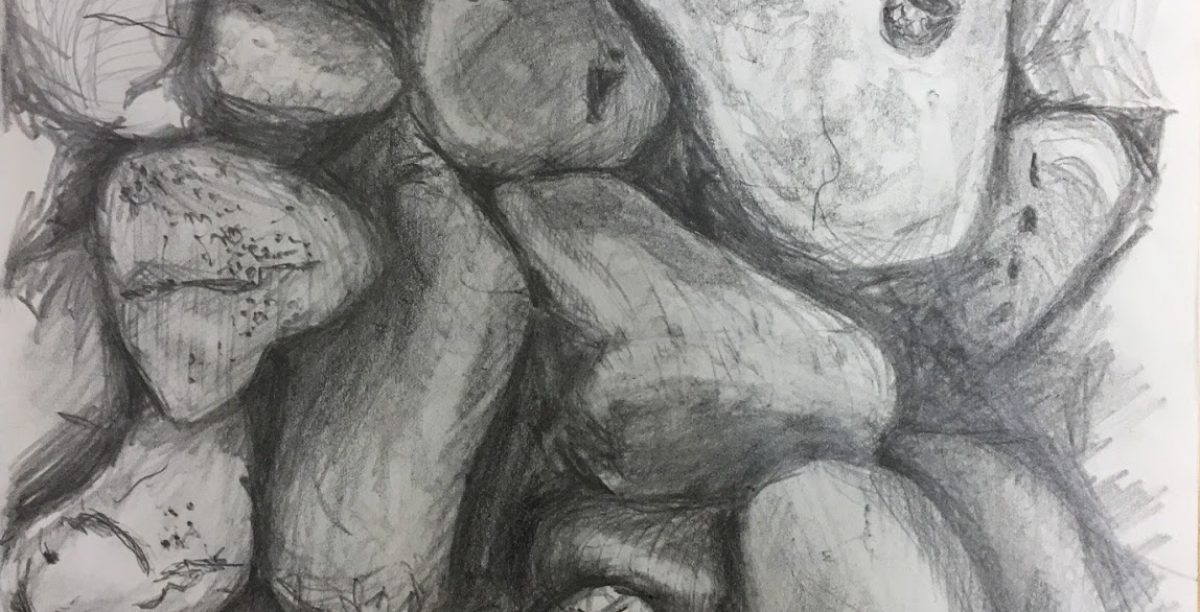
(My comments in green)
Overall Comments
Many thanks for sending me your 4th assignment.
Looking through your online blog I appreciate that you have not sent everything for comment but the first thing that attracts my attention are your drawings illustrating Line Play.
This post, Line Play, was a post of my own art that I was working on in between exercises. So, nothing to do with my course.
There is no comment attached to these so I am at a loss to know where they came from and what is their inspiration. The obsessive use of line combined with watercolour in the greeny/blue flower picture is quite evocative as is the pylon type drawing with the discs, which I presumed are collaged on. This is the problem with looking at work digitally – I cant see how it is made – but I am impressed with the freshness and the contemporary feel to this drawing. I noticed a similar feel to a print by OCA tutor Doug Burton that is useful to point out.
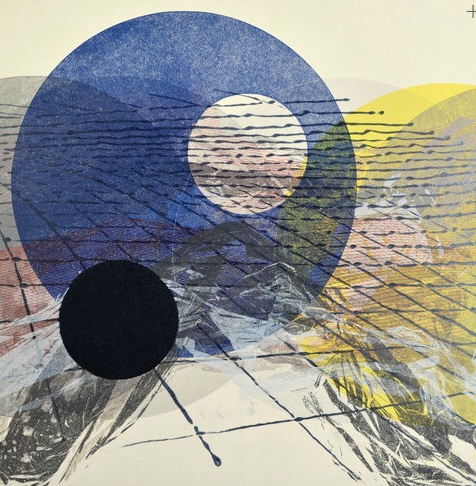
Doug Burton
I think I mention before your ability with the pen as opposed to the pencil and I see this also in your drawing of drapery which is less linear and more an exercise in tonal arrangements. Youtube demonstrations are very useful and a quick look on youtube throws up this demonstration which although a bit long winded shows the folds being realised in pen through hatching and if you looked you would find others.
https://www.youtube.com/watch?v=g5Mdbo-yu4U
****
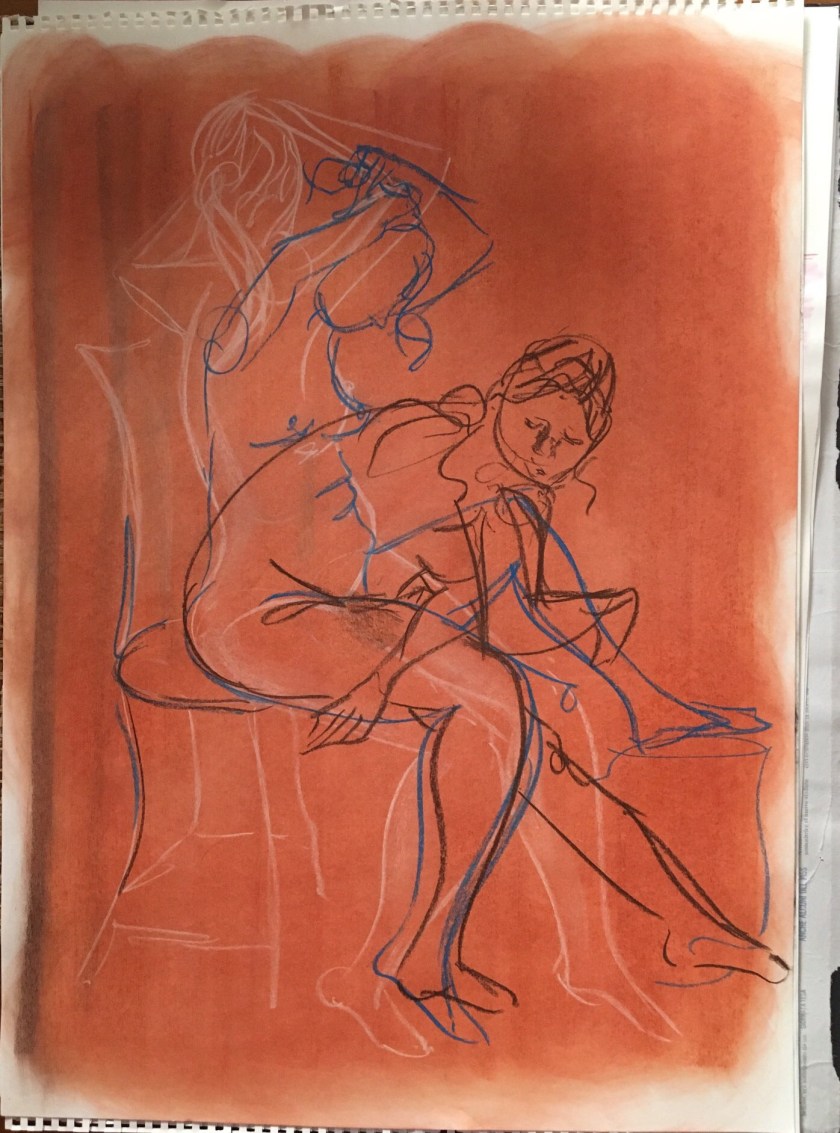
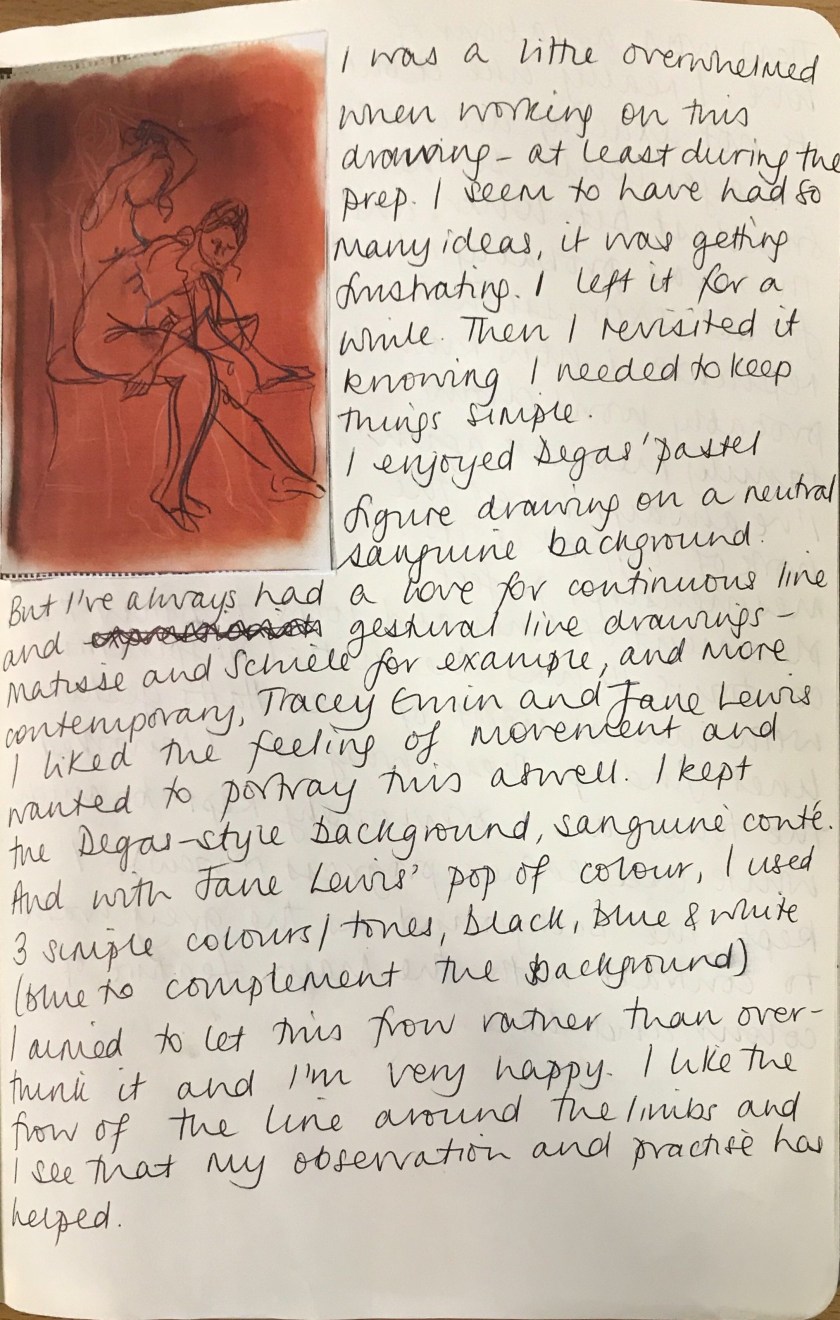
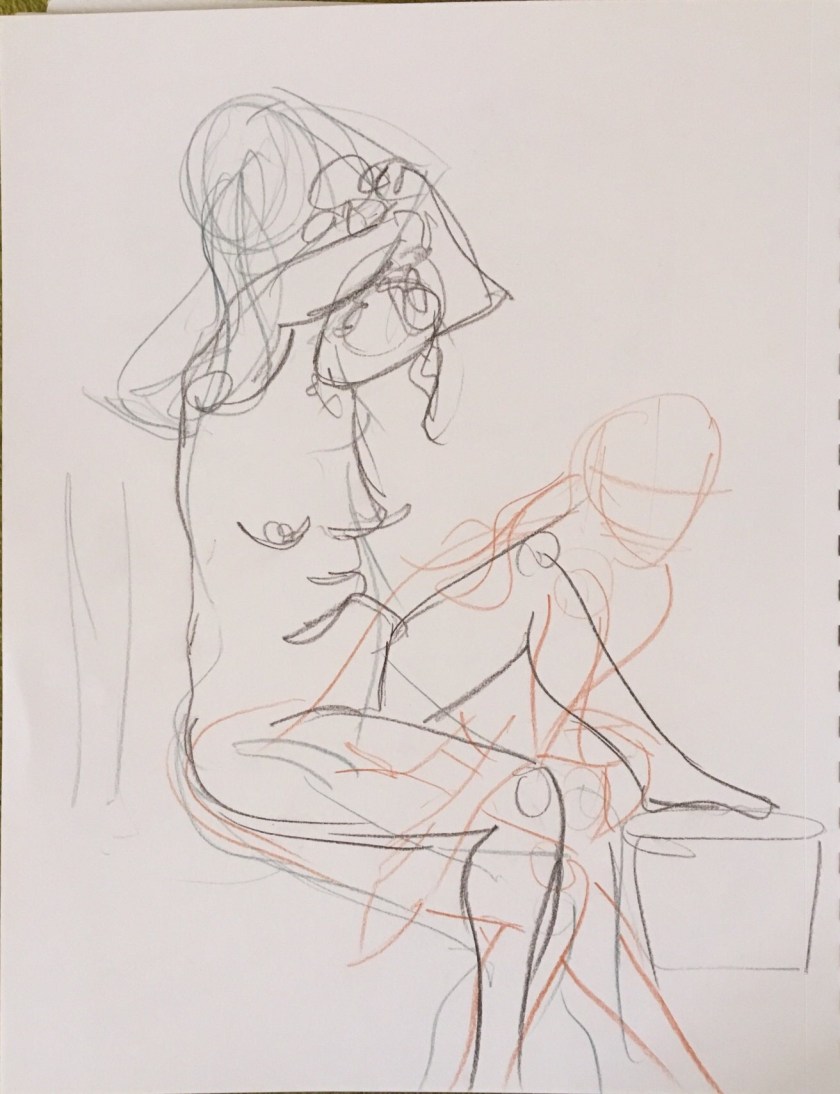
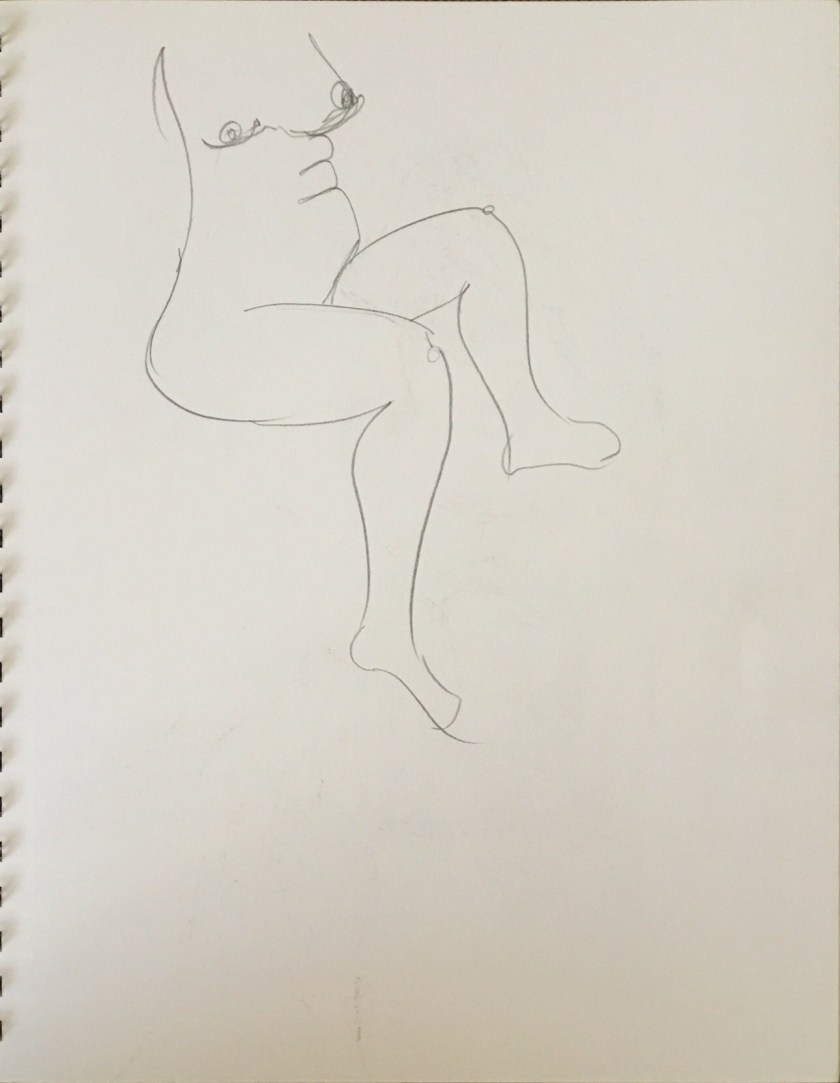
Moving on to the life drawings,the quick studies show a variety of approaches and mediums and as quick sketches they have a vitality that can produce in places some passages of accomplished drawing. The problem is to combine all the best bits into a longer more realized drawing. The charcoal drawing sent is quite impressive the stance is arresting and indicates movement the fact that the head and feet are too small and the arm too long and the stance awkwardly proportioned is neither here or there. It’s the intention that matters. El Greco with his elongated figures is a case in point. **(research El Greco). But I do think its important to get the proportions right and various strategies can be used as I am sure you know. Measuring out the figure is important, getting the angles and proportions right and of course realising that your figure will inevitably move means being willing to alter what you have done to follow the body. And of course leave out doing the head until a later opportunity presents itself.
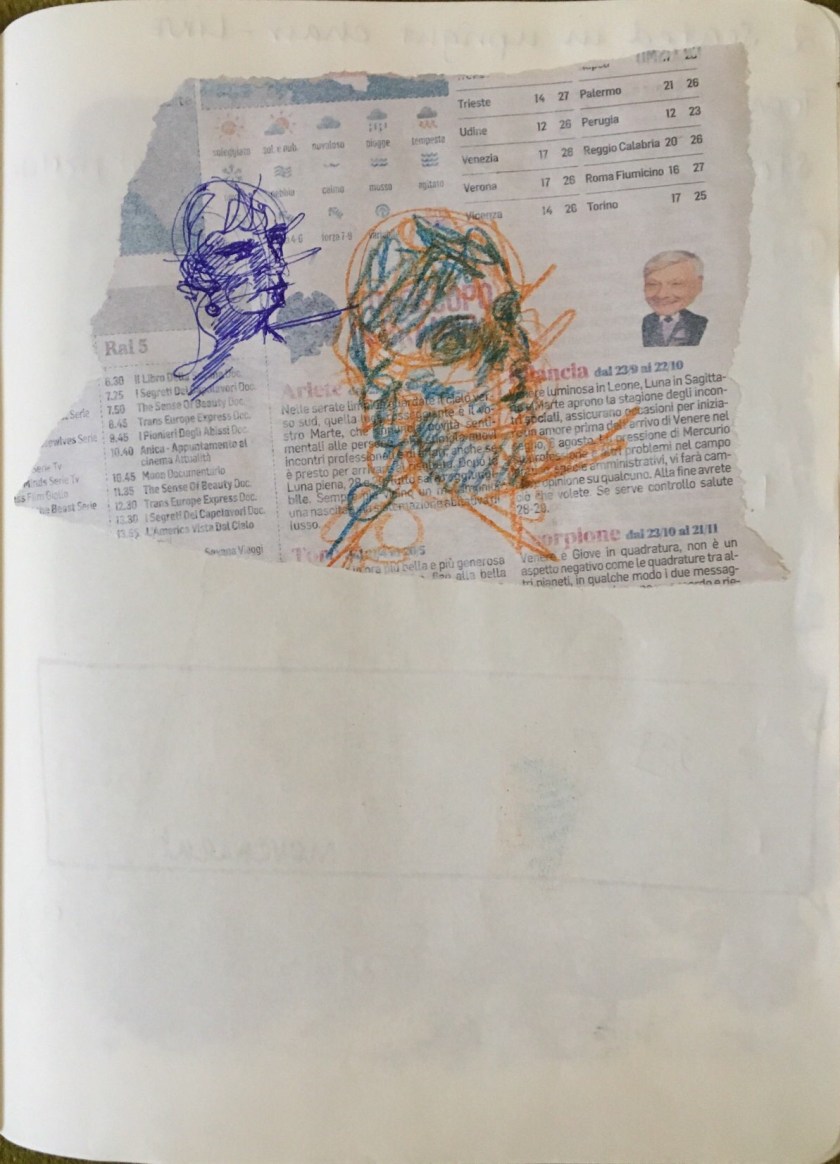
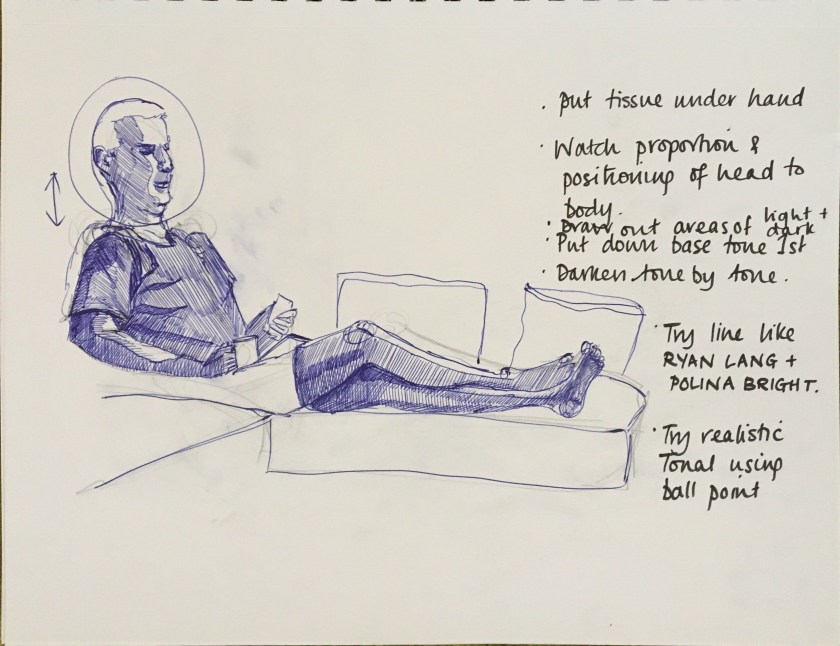
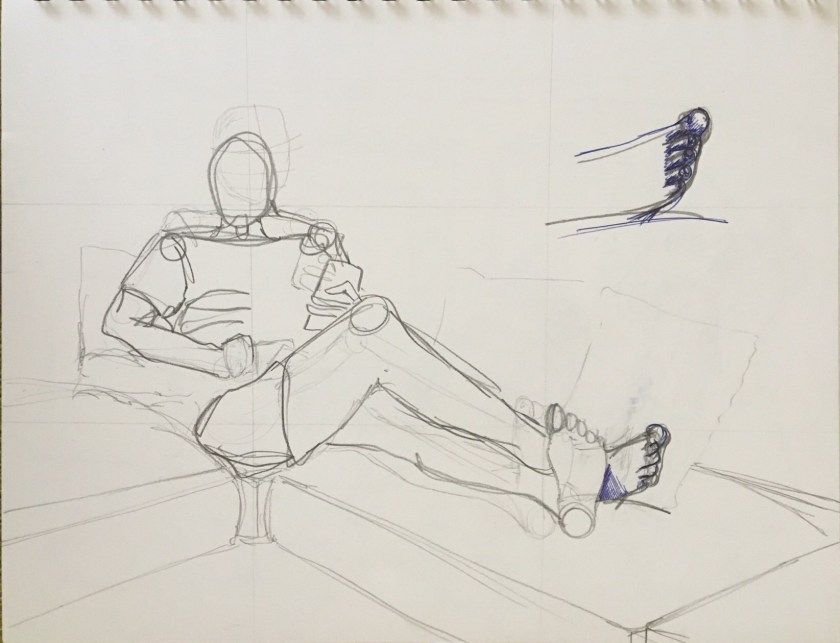
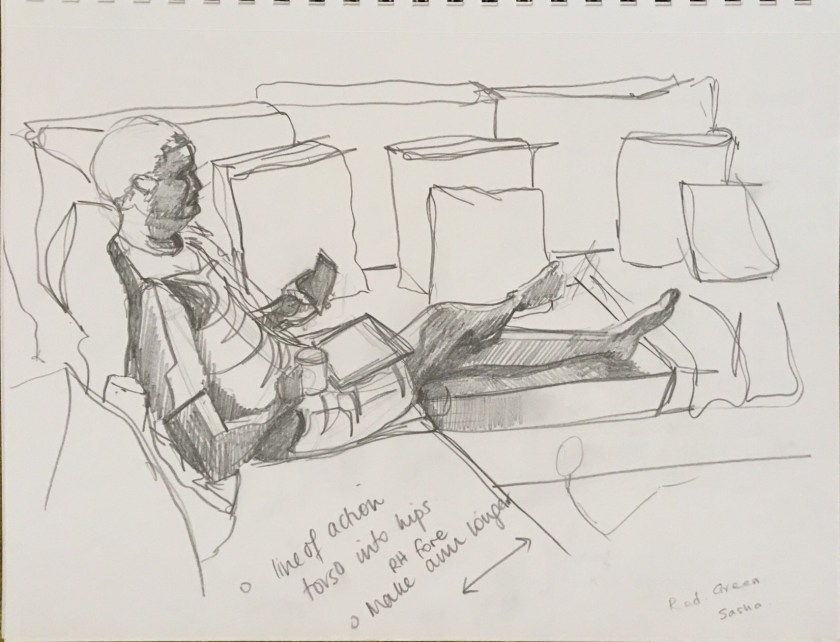
The seated figure drawing in black pen in the sketchbook is well done especially the hatching in the T Shirt . I think the leg is too long but I appreciate this is a quick drawing and I see this has been corrected on the next page but the other leg to compensate seems to have got bigger. (I was aware of this from the outset and I tried too hard to correct, overcompensating essentially and losing my ‘eye’). No matter but when it comes to doing the finished drawing then measuring techniques should come into play and triangulation using a straight edge or a ruler is important.
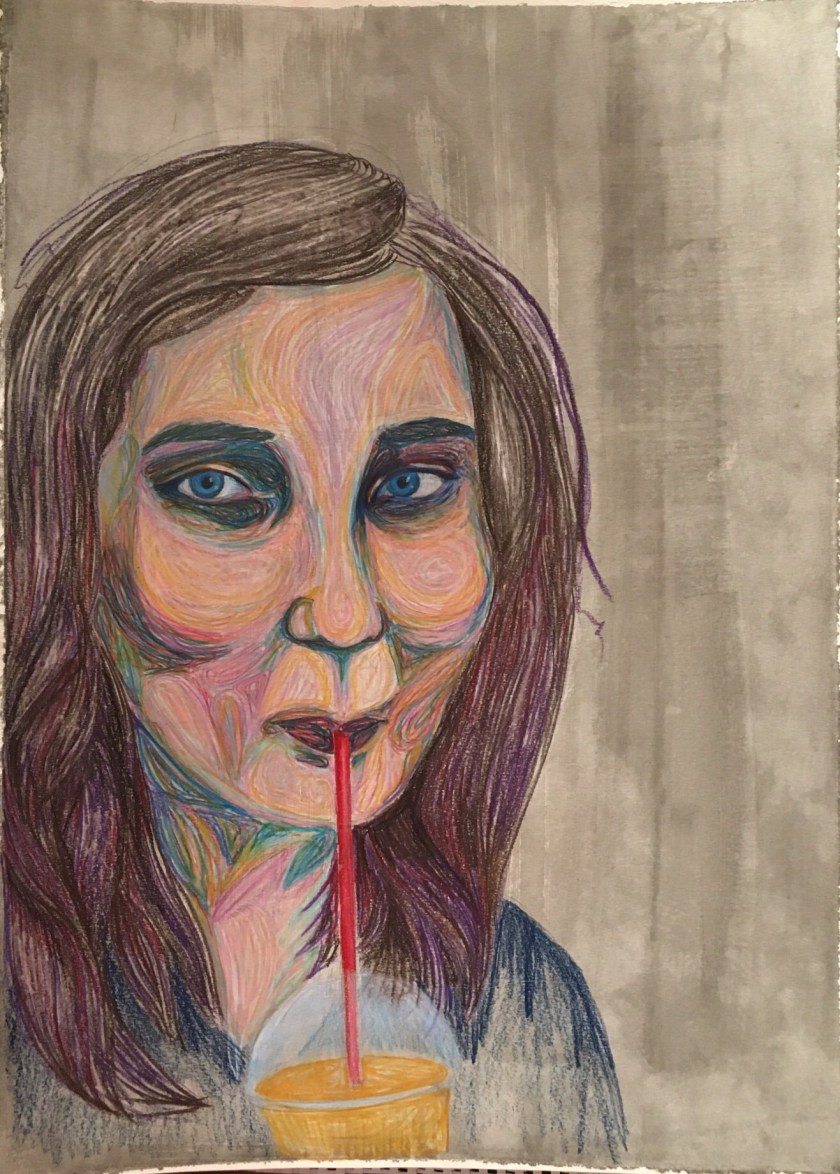
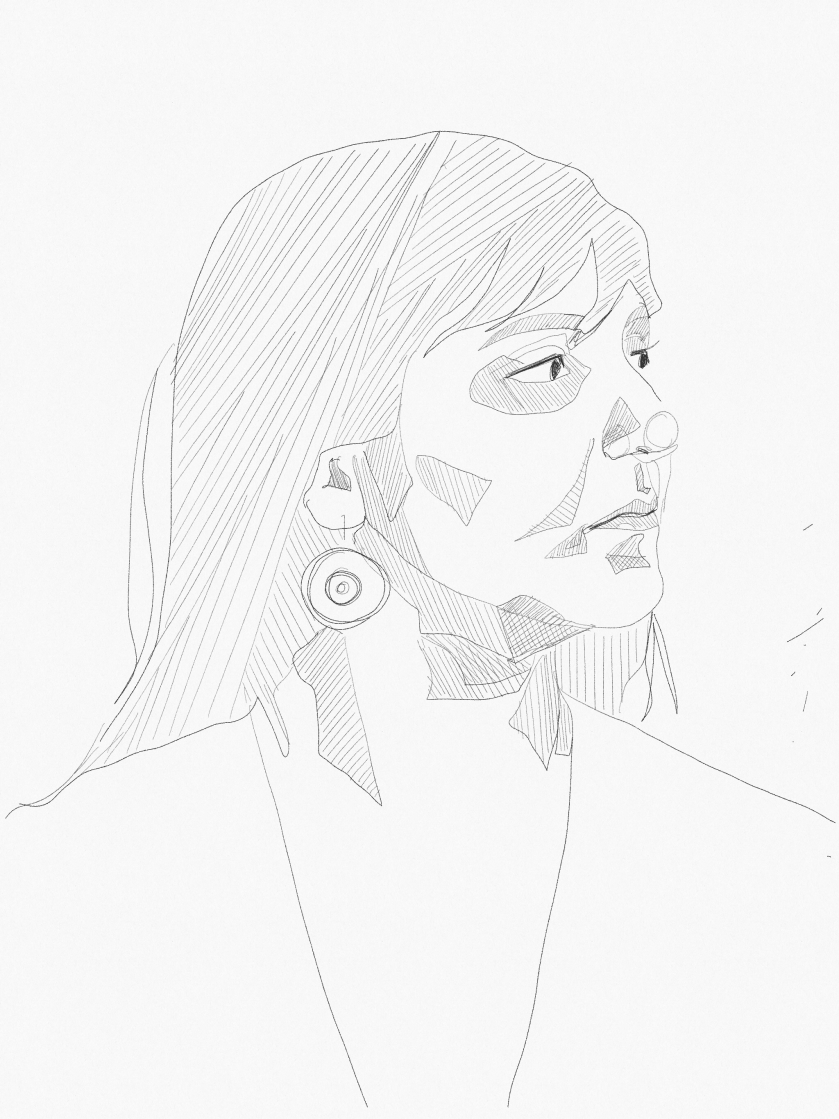
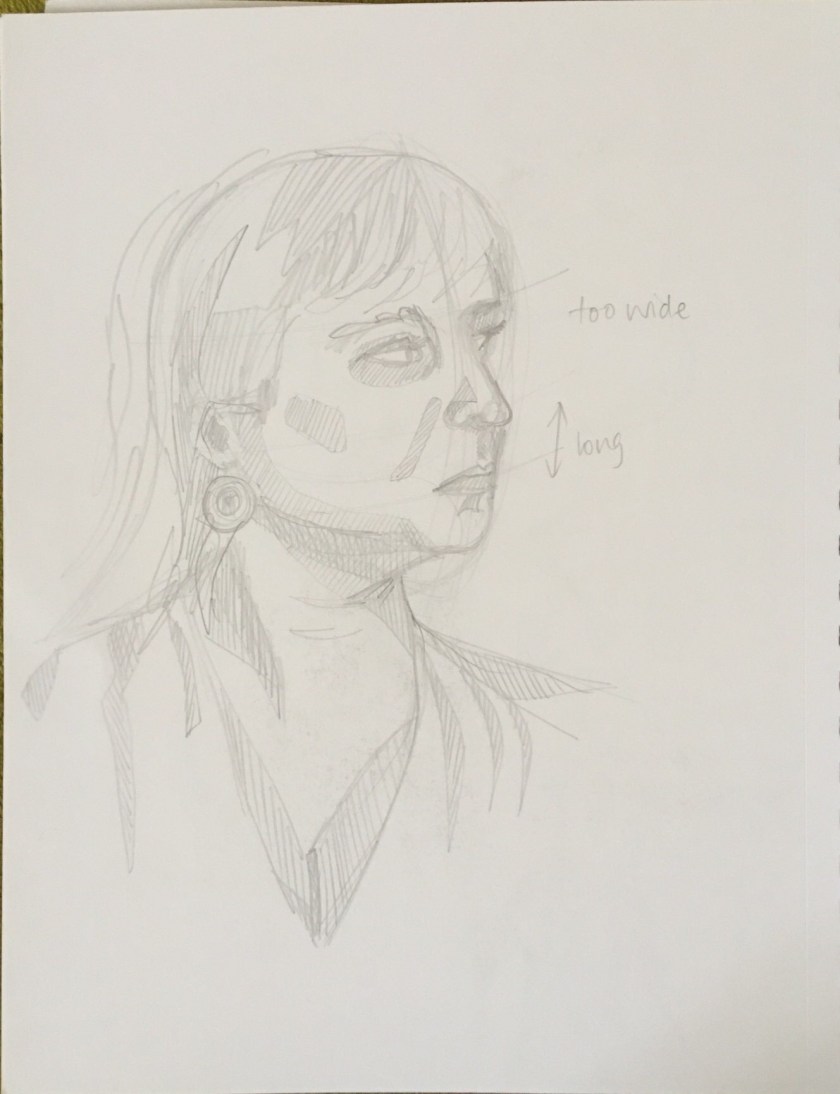
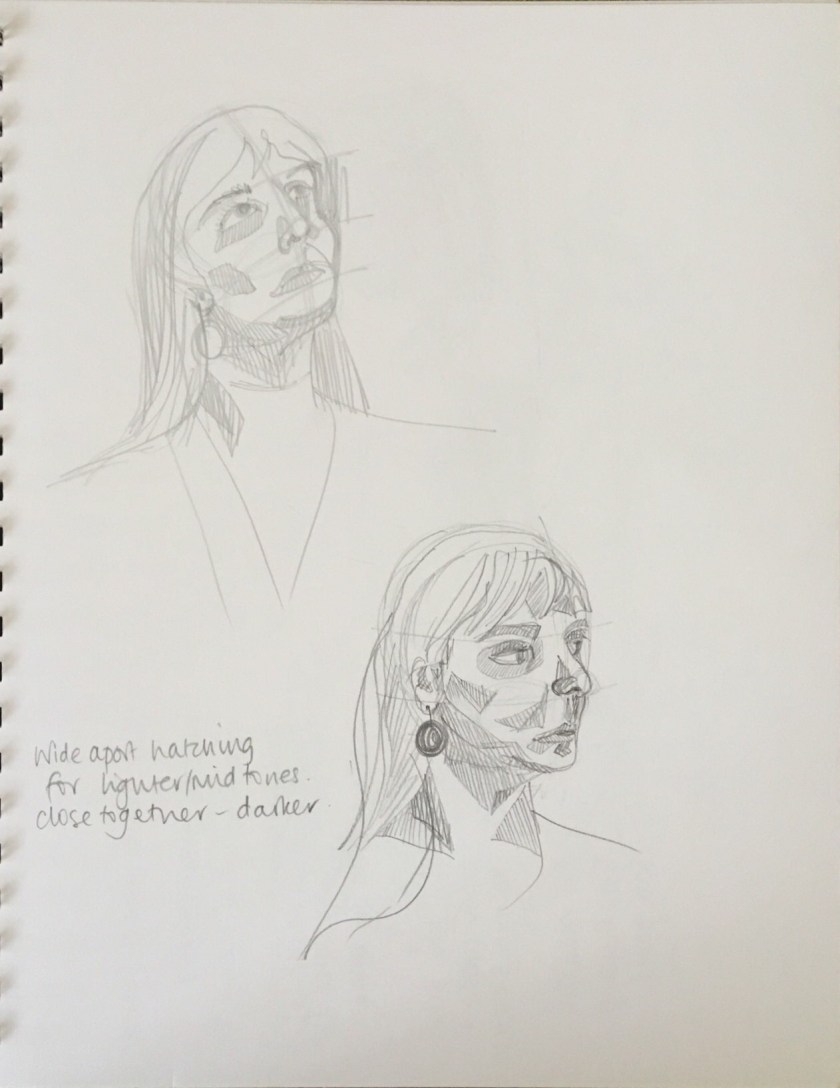
Portraits are next on the menu and can present their own challenge . Looking at the work of great portraitists from Rembrandt to Lucian Freud and many others will help and I think that copying an example is the best of all. It may looked down upon in todays educational climate but it is a tried and tested method in the past and one still worth using. I acknowledged this in my own reflection.
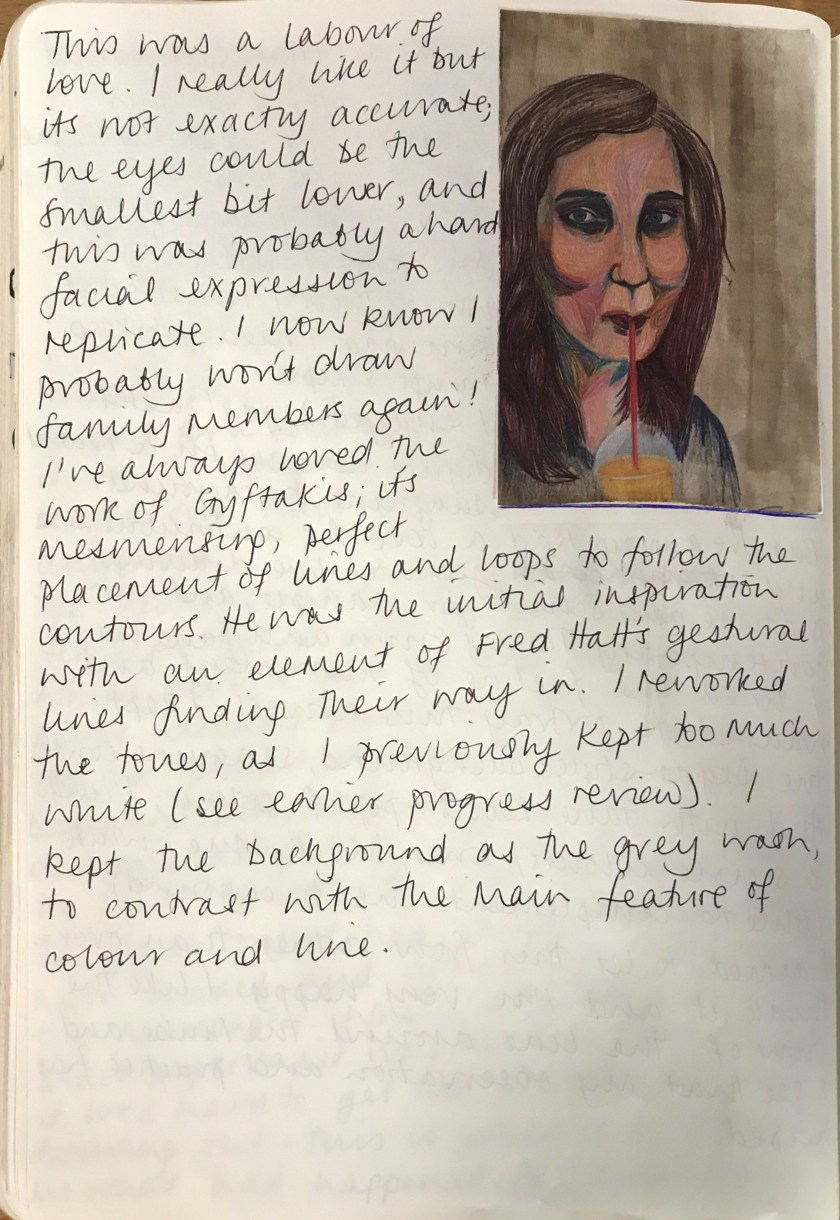
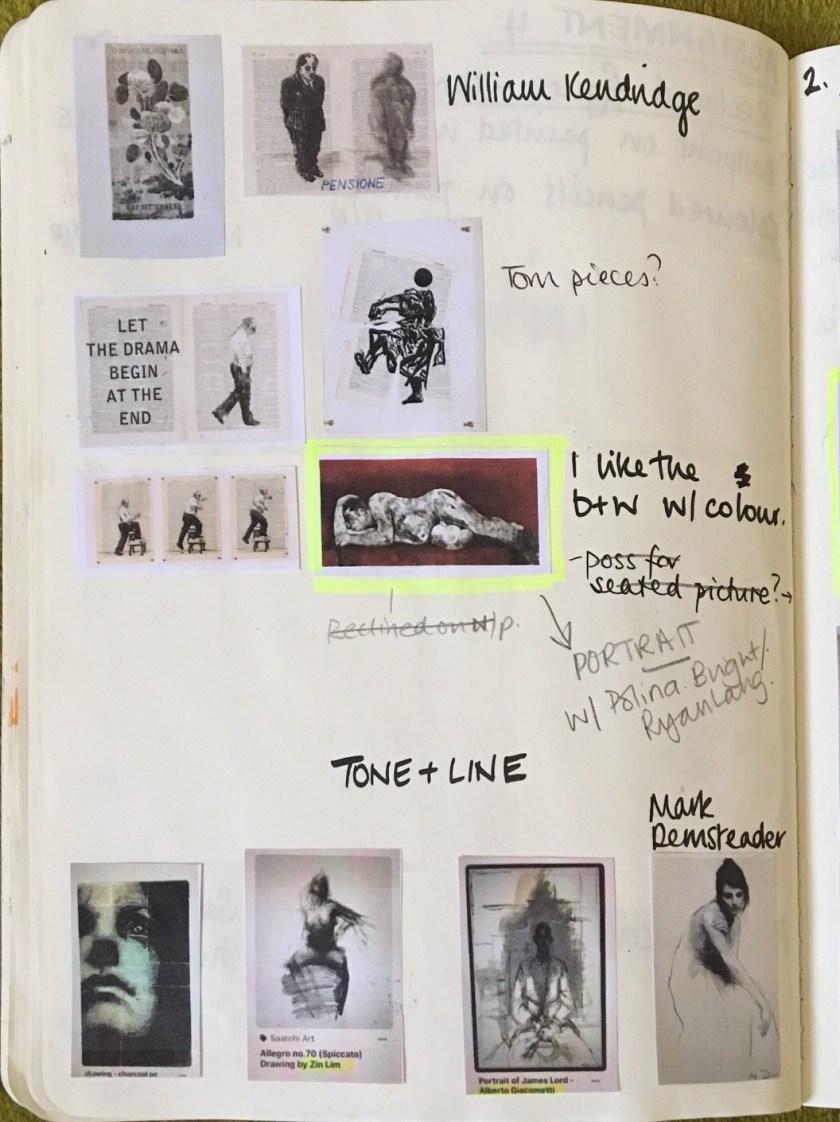
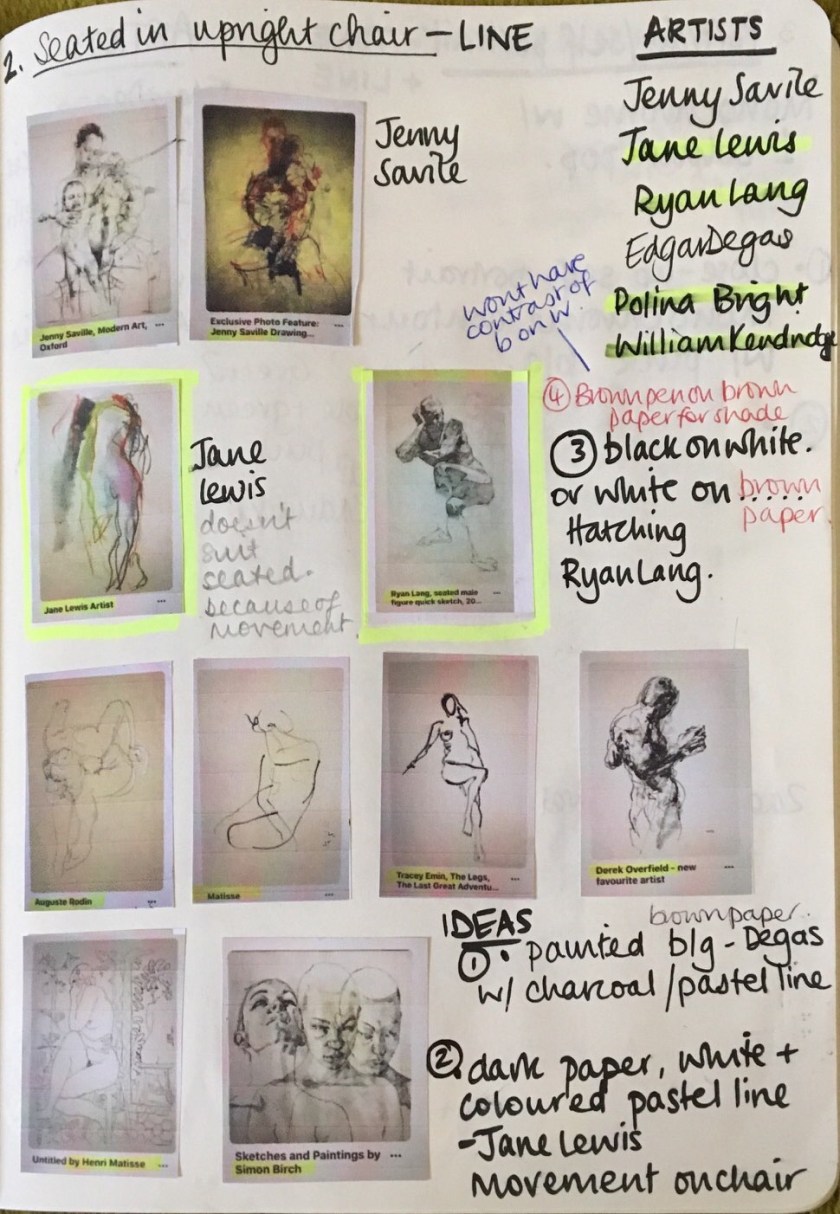
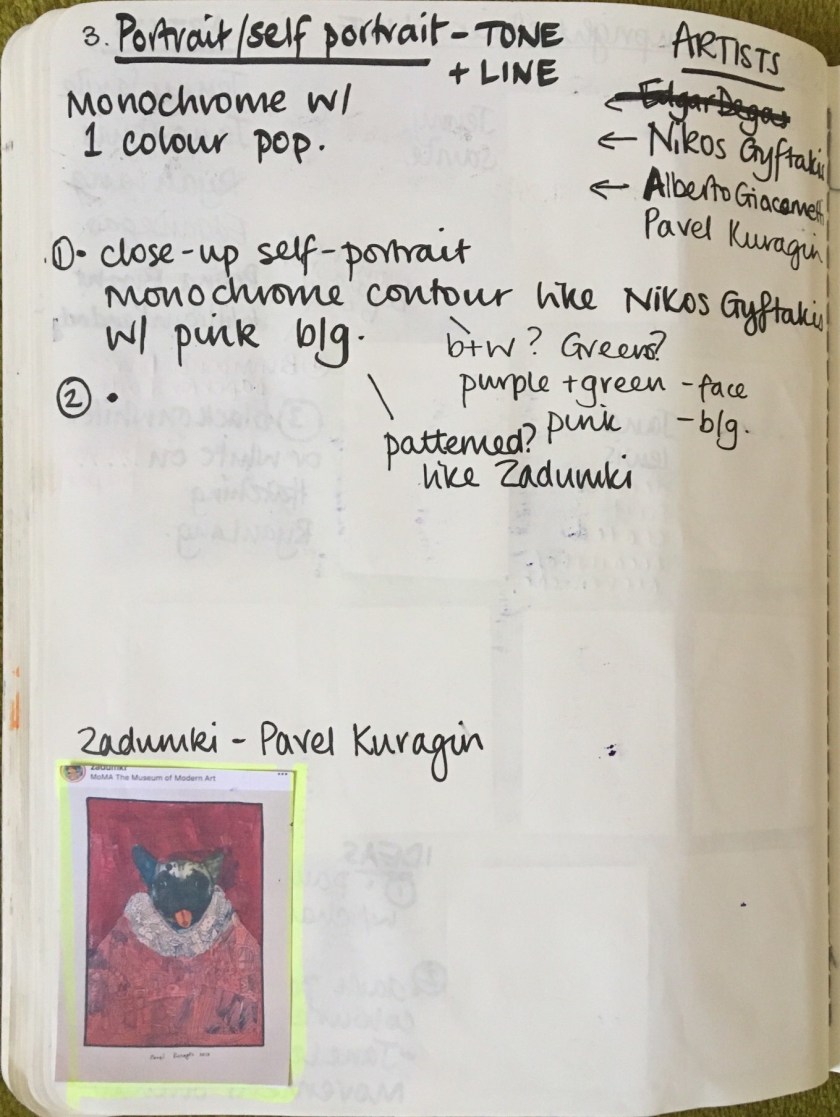
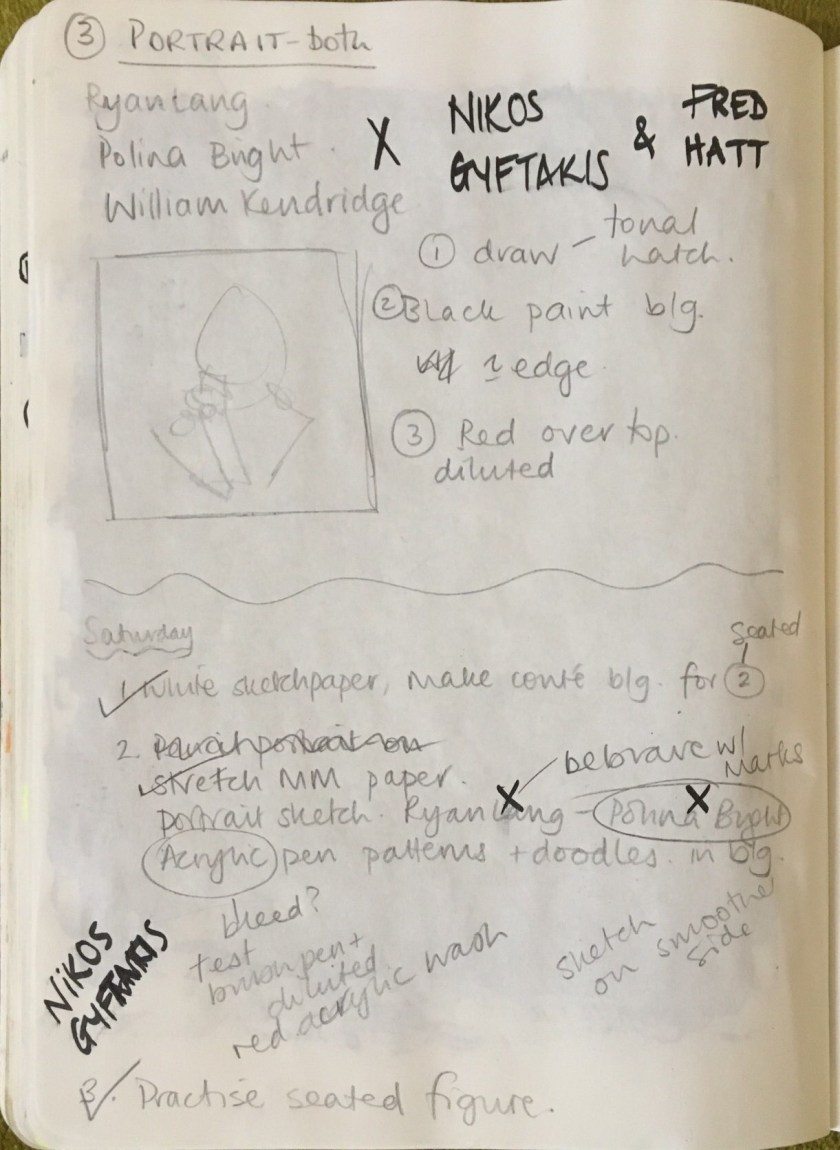
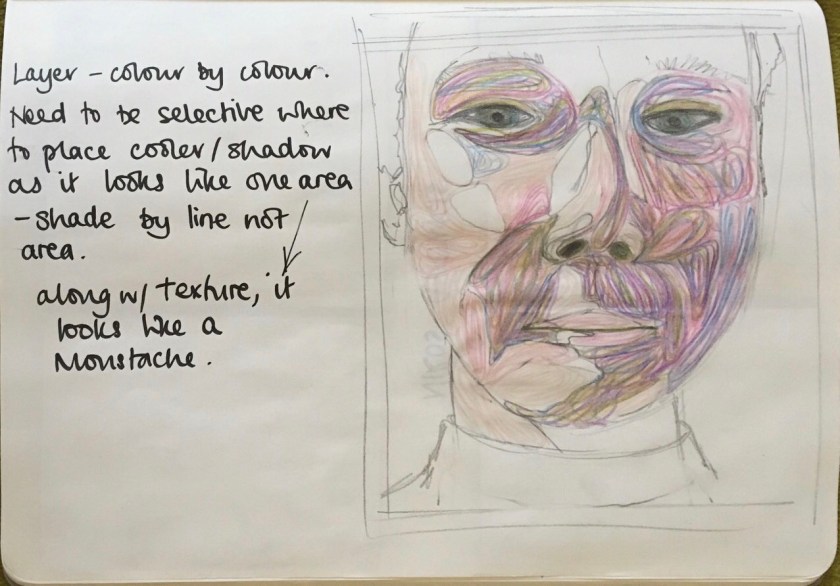
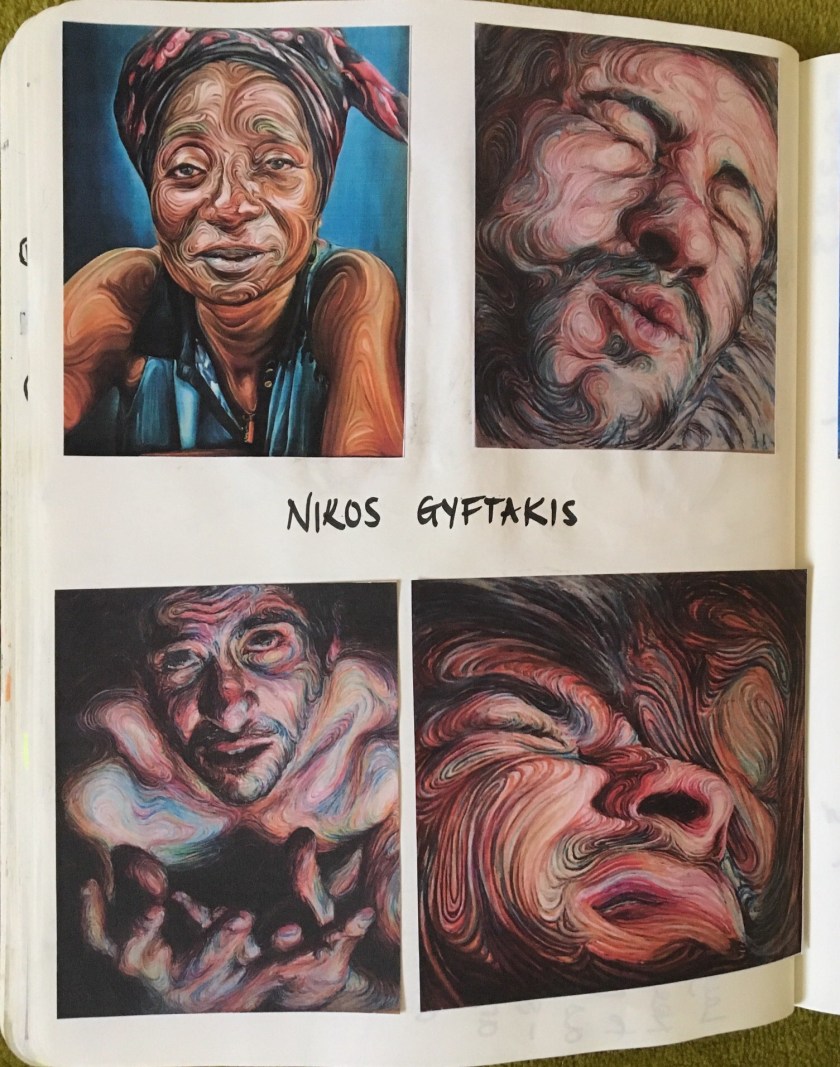
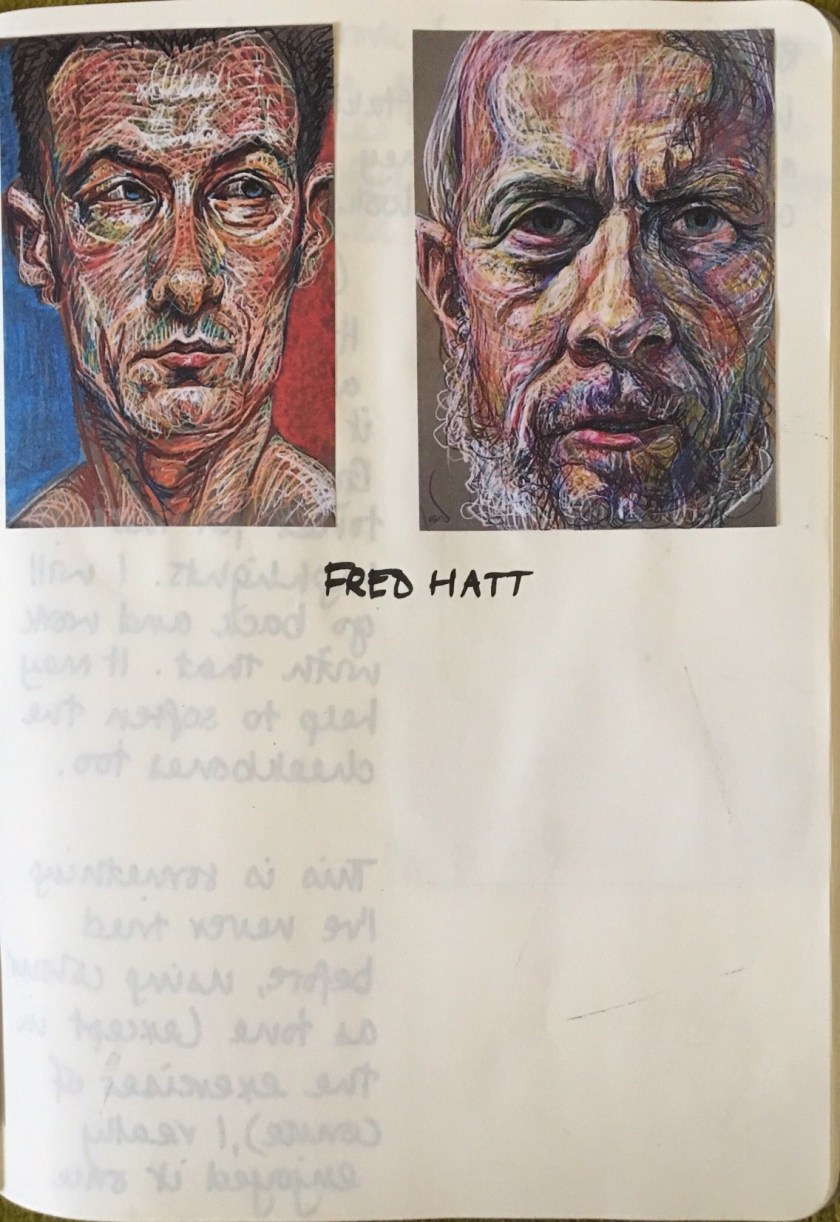
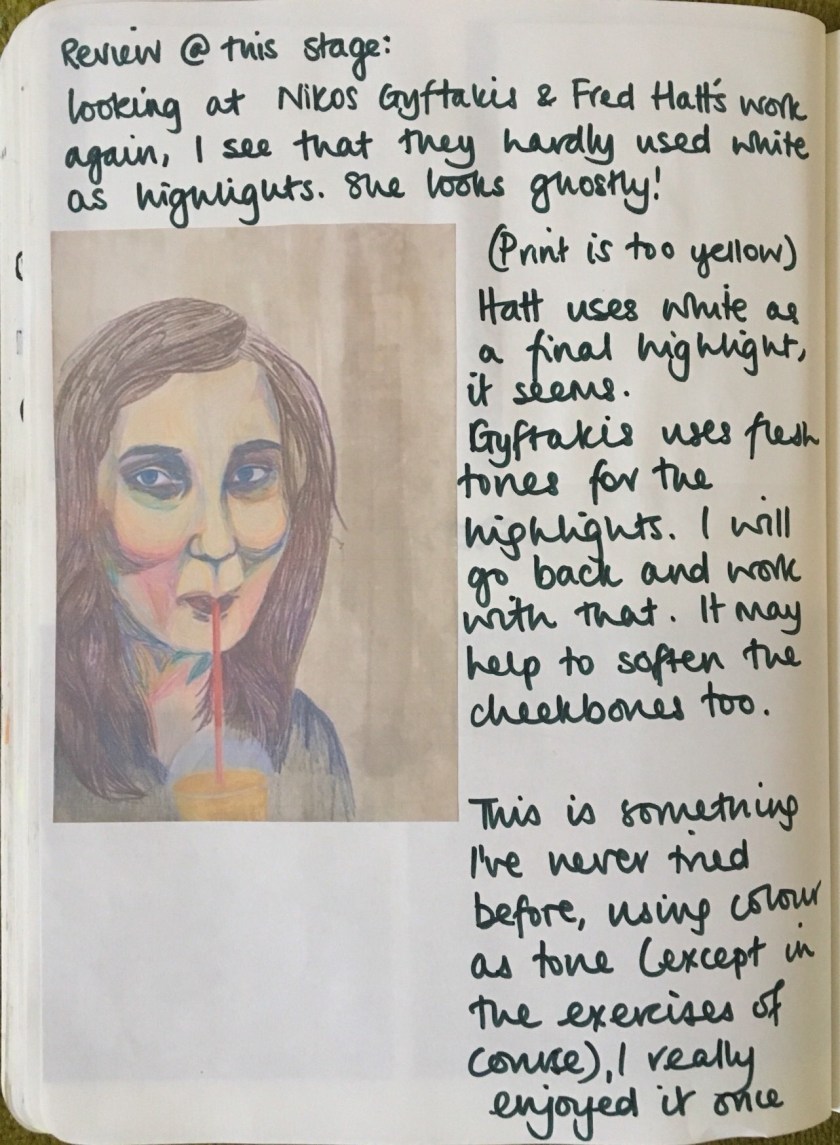
The model you seem to have chosen is the contour drawing method of Nikos Griftakis. There is however a hierarchy in the world of art and it is better to look at the work of established and well regarded artists such as Jenny Saville, Lucian Freud or even Glen Brown if you want to emphasis contours in an interesting way.
I have a real problem with art hierarchy. And am beginning to feel like I shouldn’t be having this problem and I should be understanding. Art is so subjective. I think I just need to have it explained to me why I should study Jenny Saville, whose work I do love, and not Nikos Graftakis or Fred Hatt, whose work I am fascinated by. I appreciate time to be established is a big factor but how else are other artists expected to compete and raise themselves in the art world? But then I’m just a teacher studying art in my 40s…
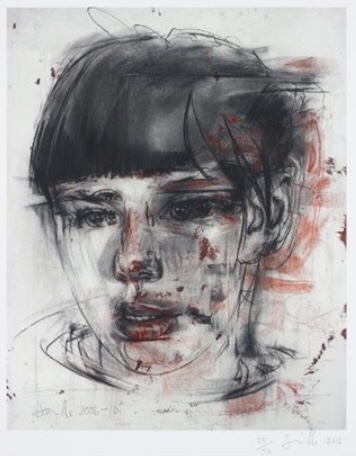
Jenny Saville
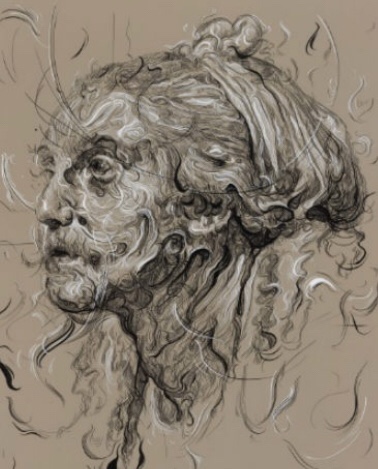
Glen Brown
Your own drawing interestingly uses contour lines that don’t emphasis the roundness of the forms but I’m not sure if you intended that effect.
I acknowledged I struggled to replicate the true form in this style. I’d like to try and copy Brown’s work, a name I have not seen before. A very interesting example, a contemporary approach with a Renaissance feel.
Feedback on assignment
Demonstration of technical and Visual Skills, Quality of Outcome, Demonstration of Creativity
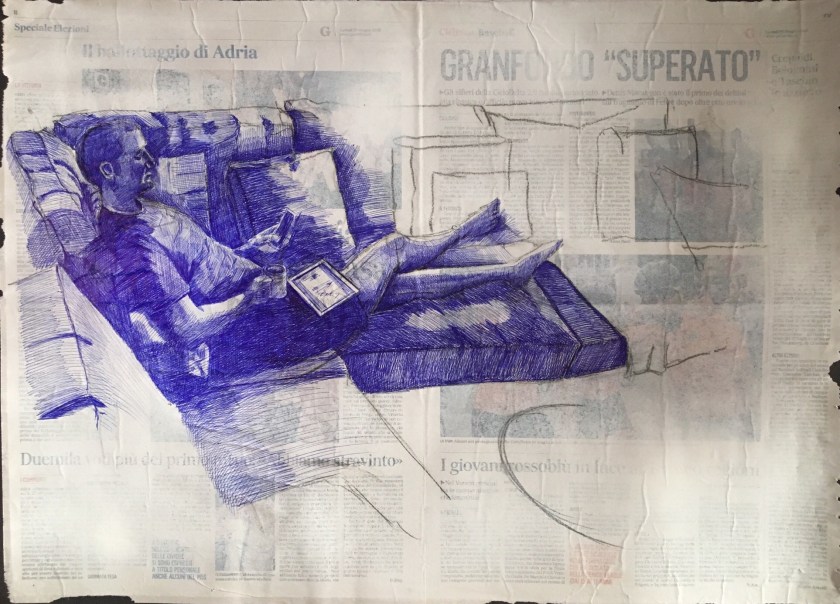
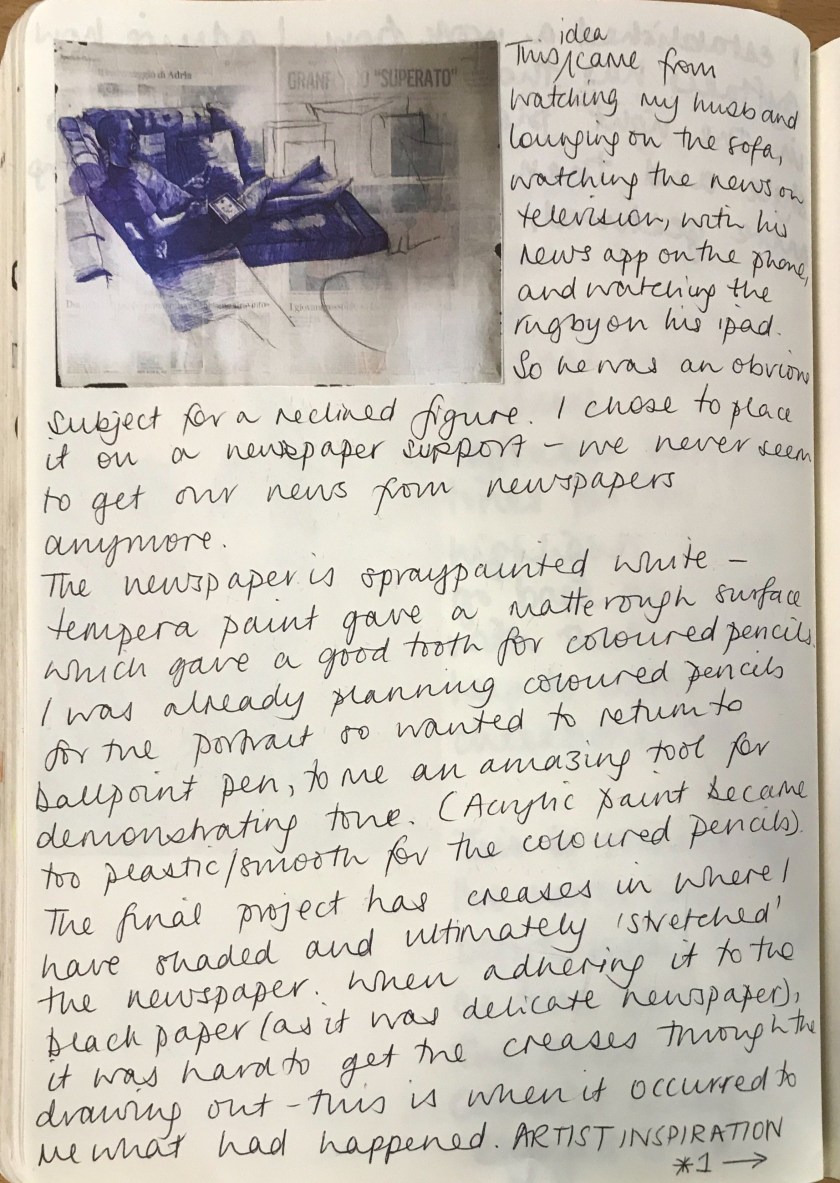
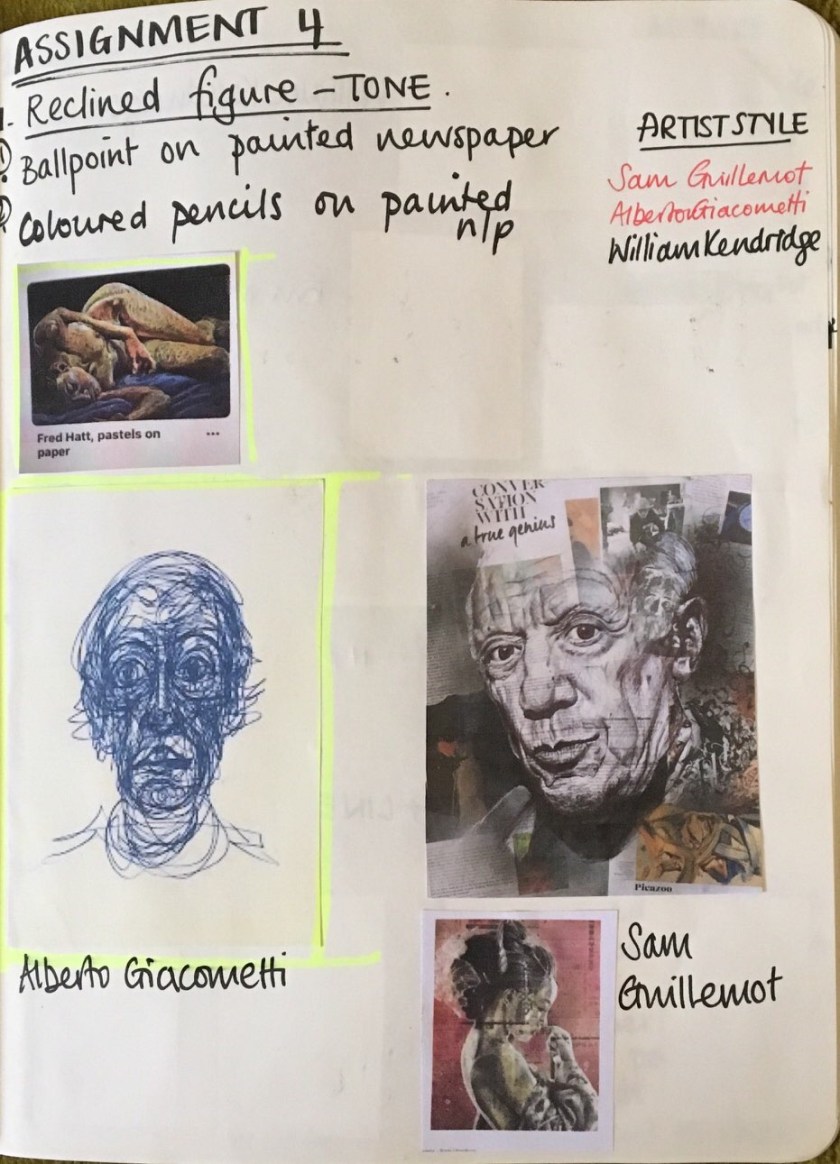
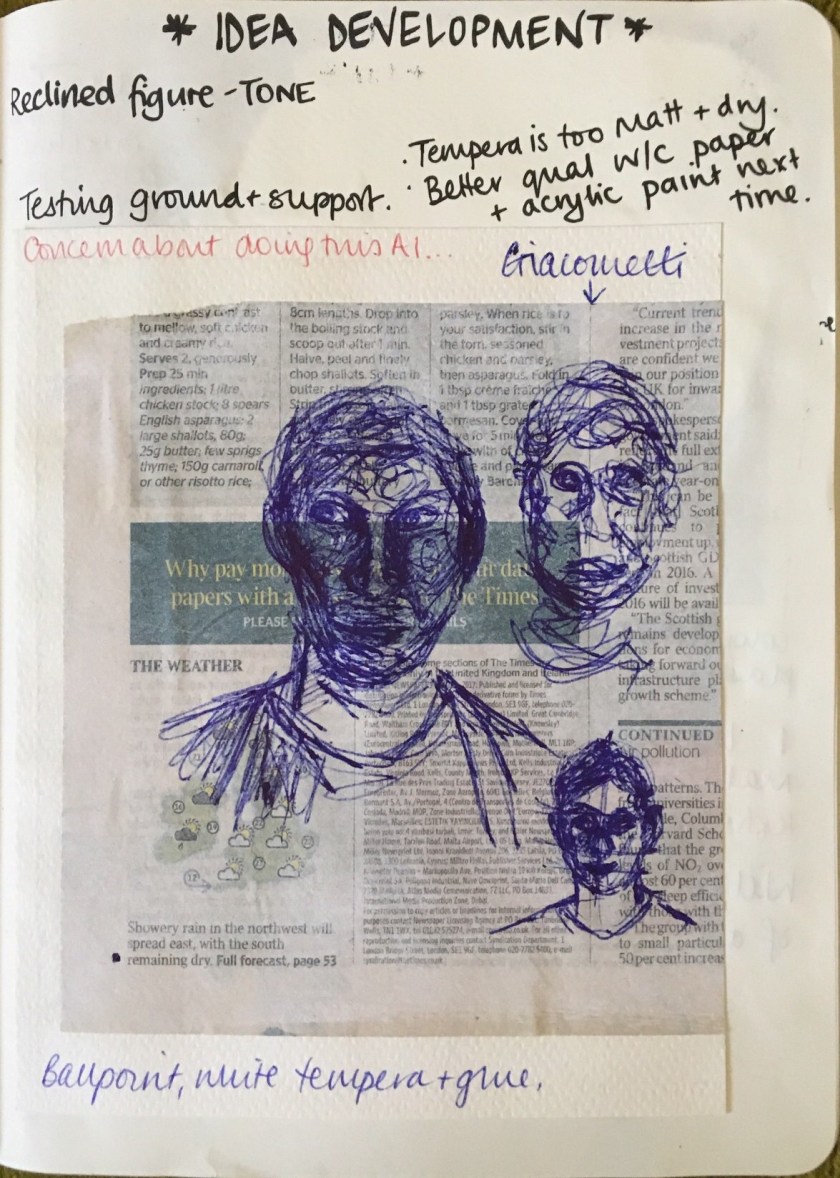
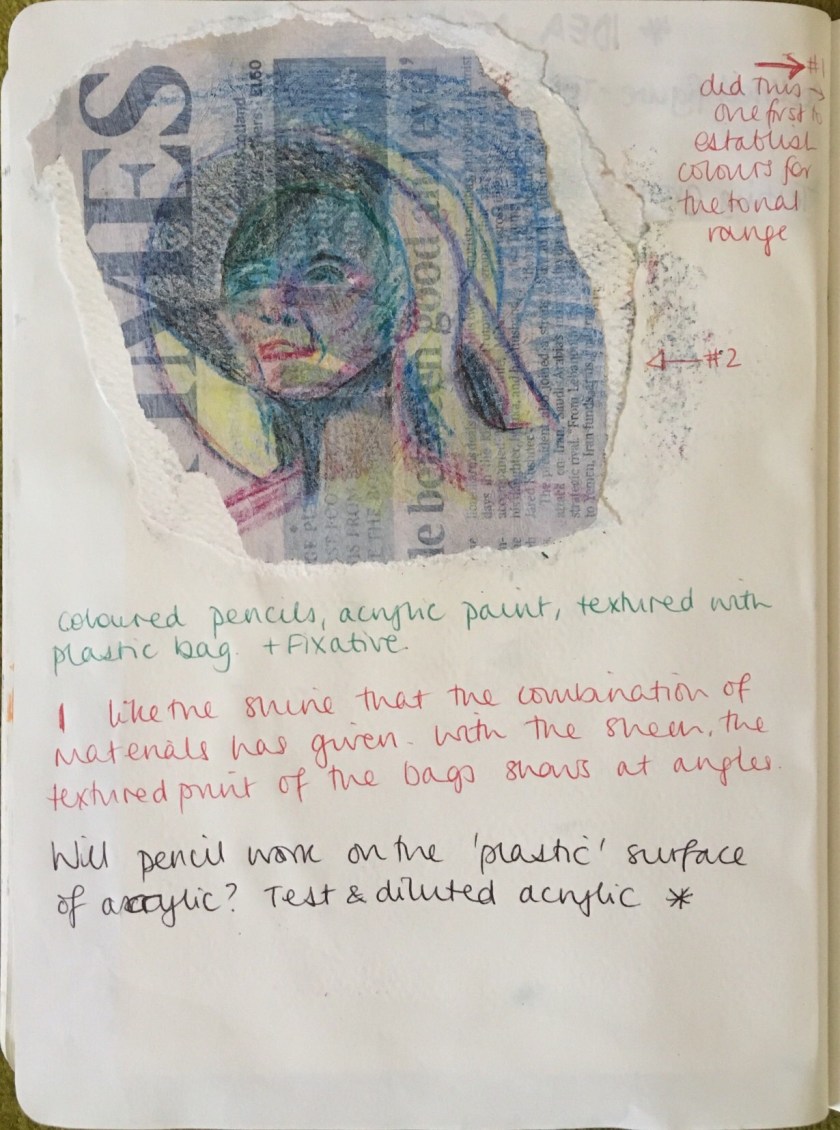
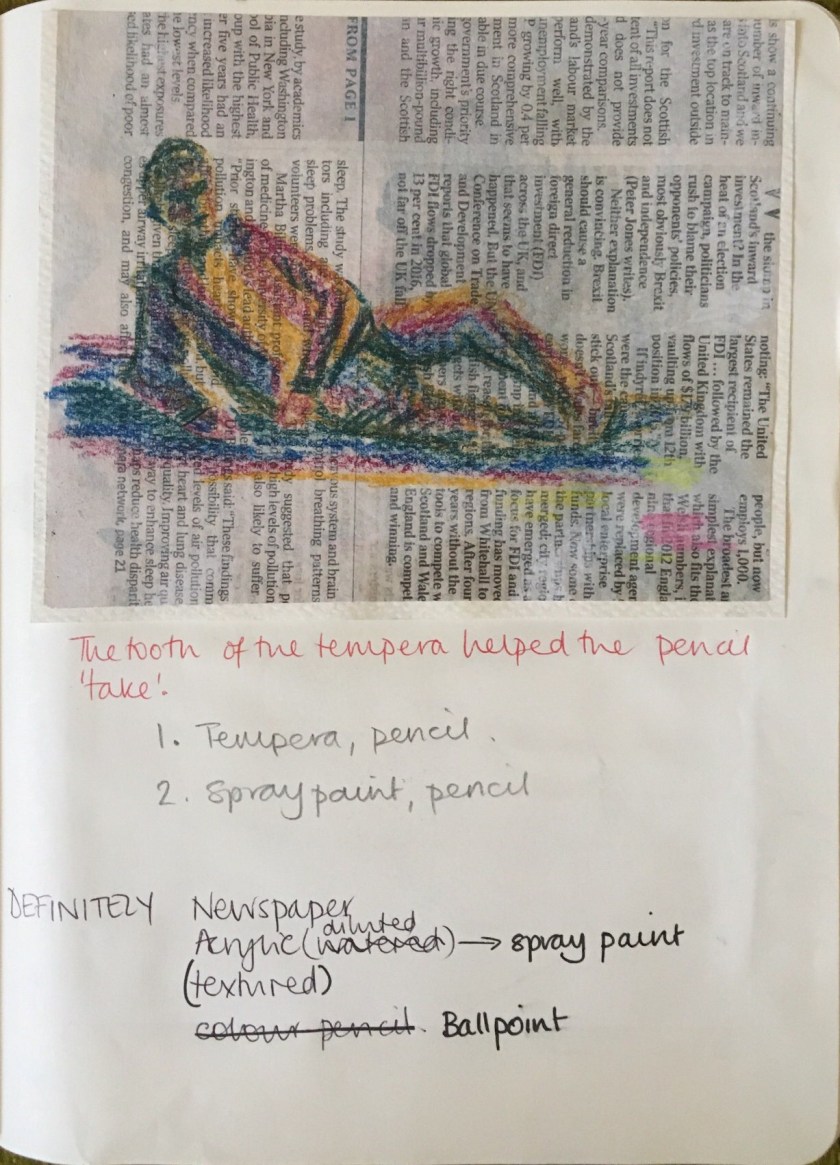
For your assignment you have chosen to be experimental and work on newsprint which is not the best paper to use but giving it a light coat of white paint helps you to work on the drawing. As a background it seems too blanched out and perhaps it should be more integrated into the overall image. In retrospect and in hindsight it might have been better to prepare the background first sticking it down on a more solid surface and then varying the transparency of the white let some area come forward and others go back before starting the drawing.
I did attach it to a board. I could have varied the depth of spray paint.
On the drawing itself, the positioning of the body where you are looking down at an angle allows for a perspectival opening up in the picture. There is very effective use of a blue ballpoint with intense hatching which enlivens the surface , the drawing is accurate and in proportion and the lighting is very effective . So it is down to integrating the background in some way.
The options are
1. Looking at the Lisa Brice paintings, paint a glaze of blue over some areas of the background. This sounds appealing as I like her work very much.
2. Recollage the background around the picture to integrate the background imagery more.
3. Cut out the drawing and re collage it on another background.
3. Leave it as it is as a work in progress.
Sketchbooks
Demonstration of technical and Visual Skills, Demonstration of Creativity
The Sketchbooks are being used well with lots of drawing and the opportunity for insights.
Research
Context, reflective thinking, critical thinking, analysis
Research is also effective with context being given to the work. You are looking at other artists work and learning from them.
Learning Logs or Blogs/Critical essays
Context, reflective thinking, critical thinking, analysis
The blog is well written and if possible should contain more analytic reviews of artwork seen and researched.
Suggested reading/viewing
Context
For drawing of course the Scheile and Klimpt exhibition stands out at the Royal Academy while the next big exhibition at Tate Modern is the Bonnard and although primarily a painter and colourist if you can get to see it it will be worthwhile .
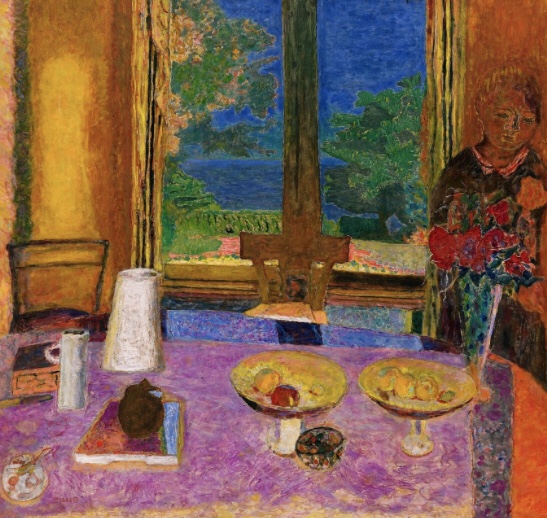
Bonnard
Pointers for the next assignment
● Reflect on this feedback in your learning log.
Strive for more accuracy in drawing.
 Tea and Doodles