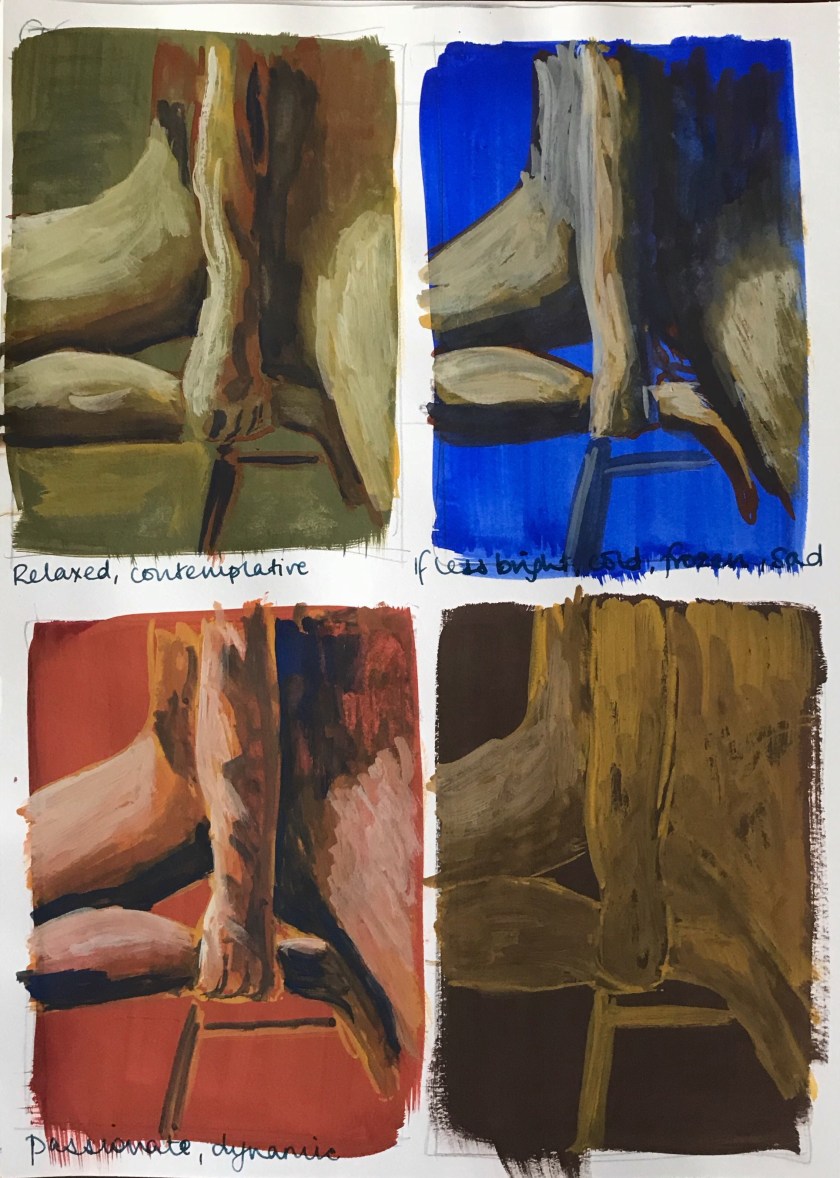
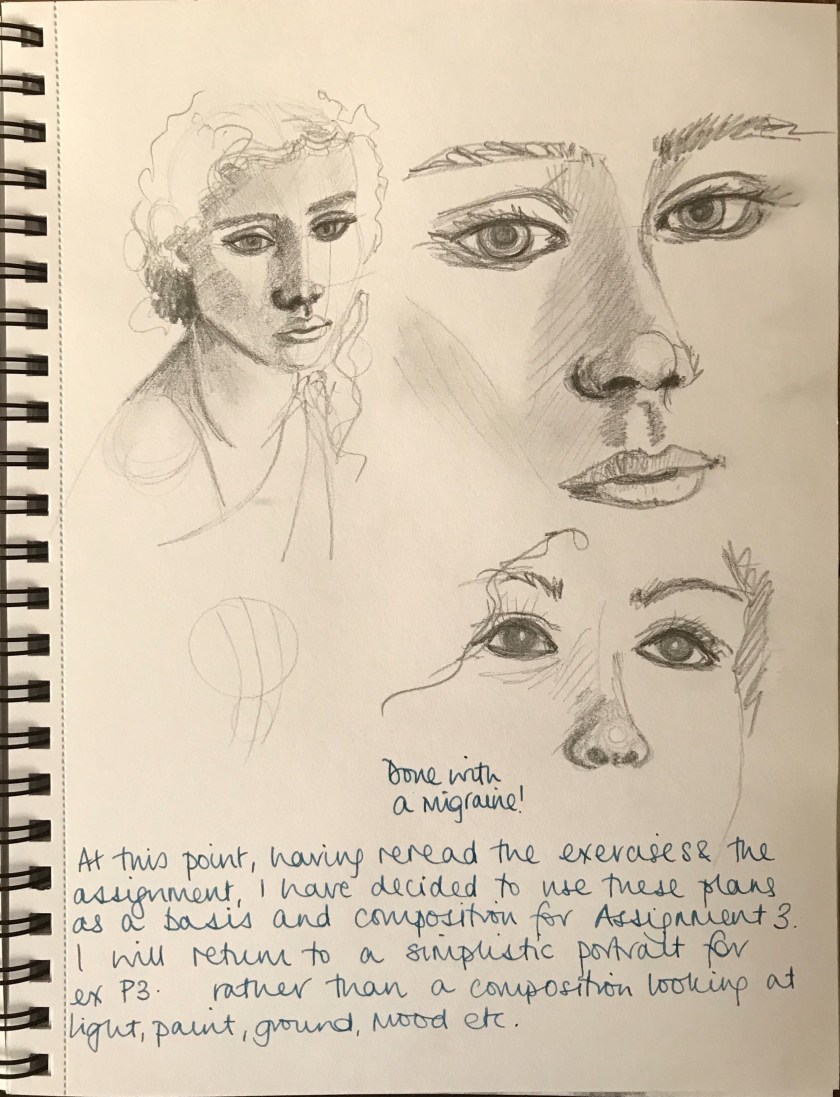
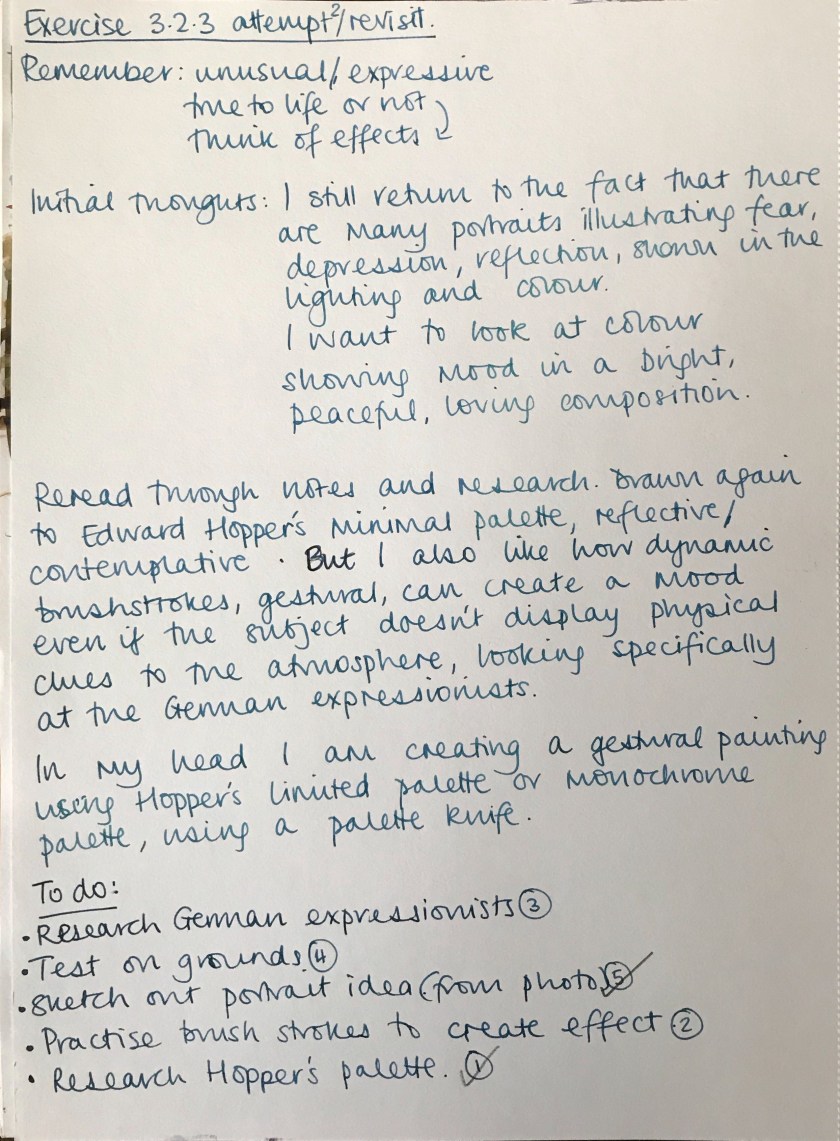
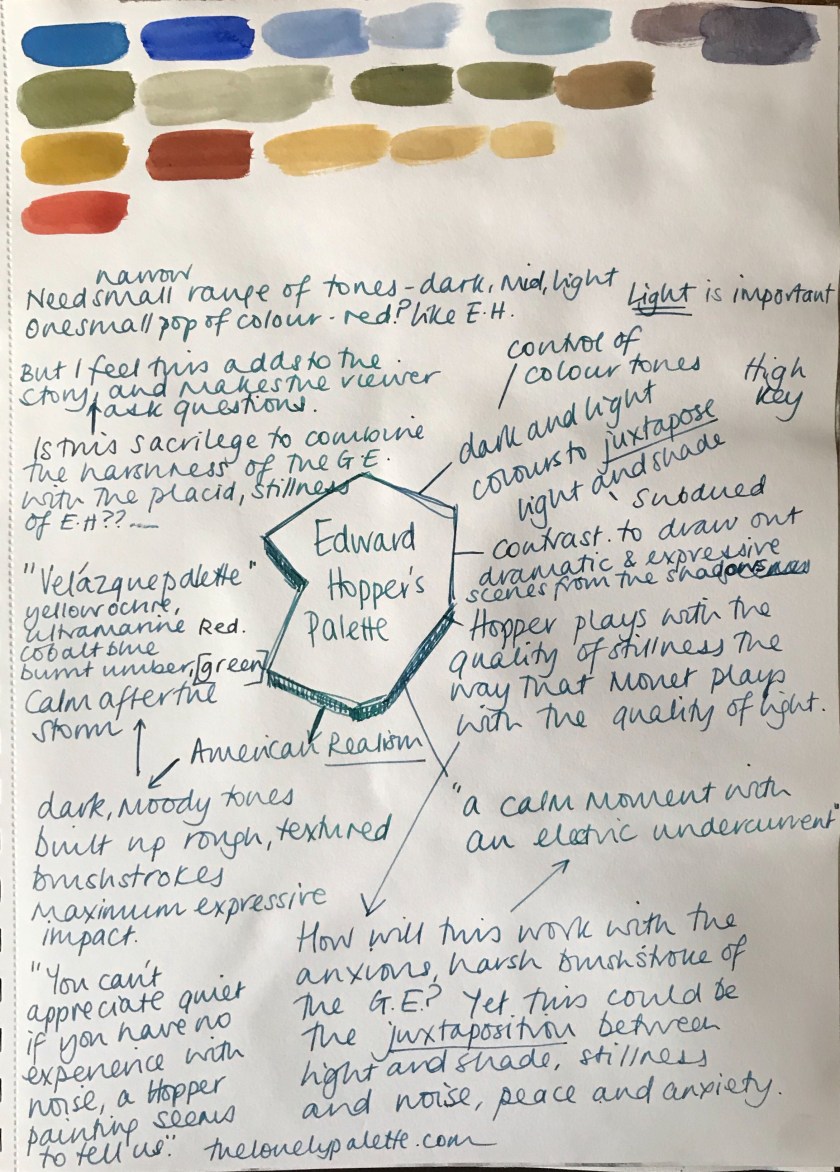
P3.2.3 – Creating mood and atmosphere

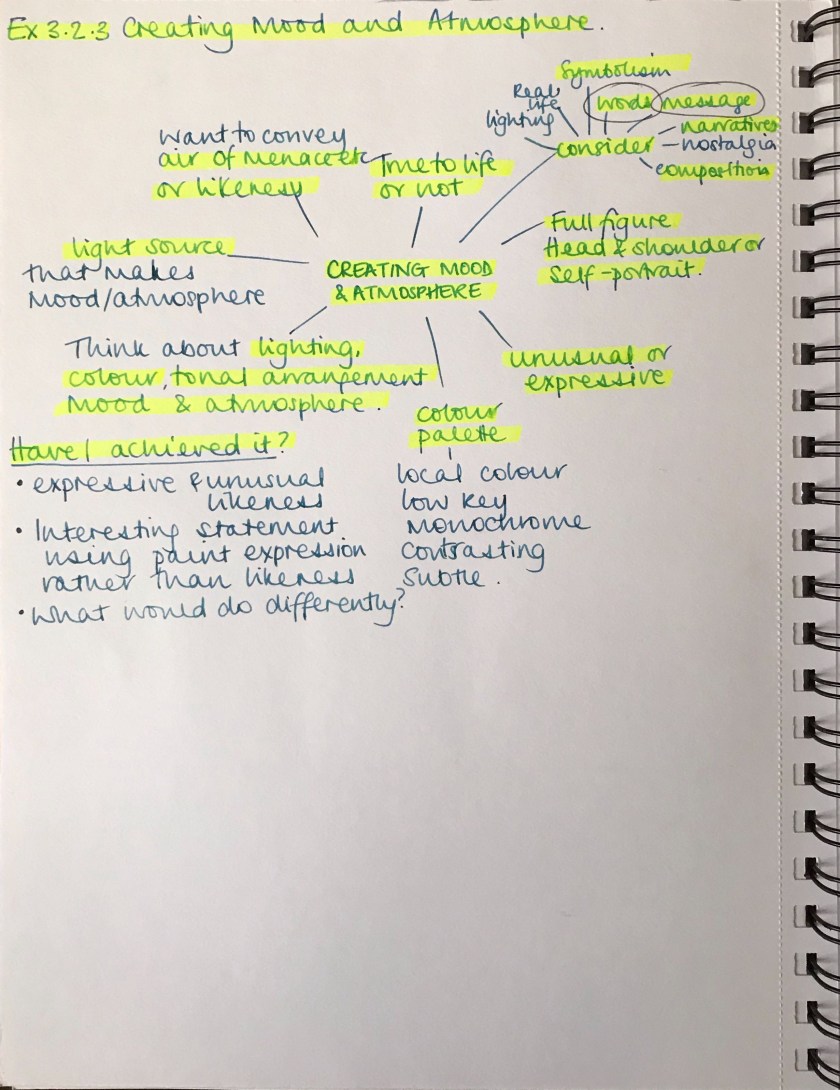
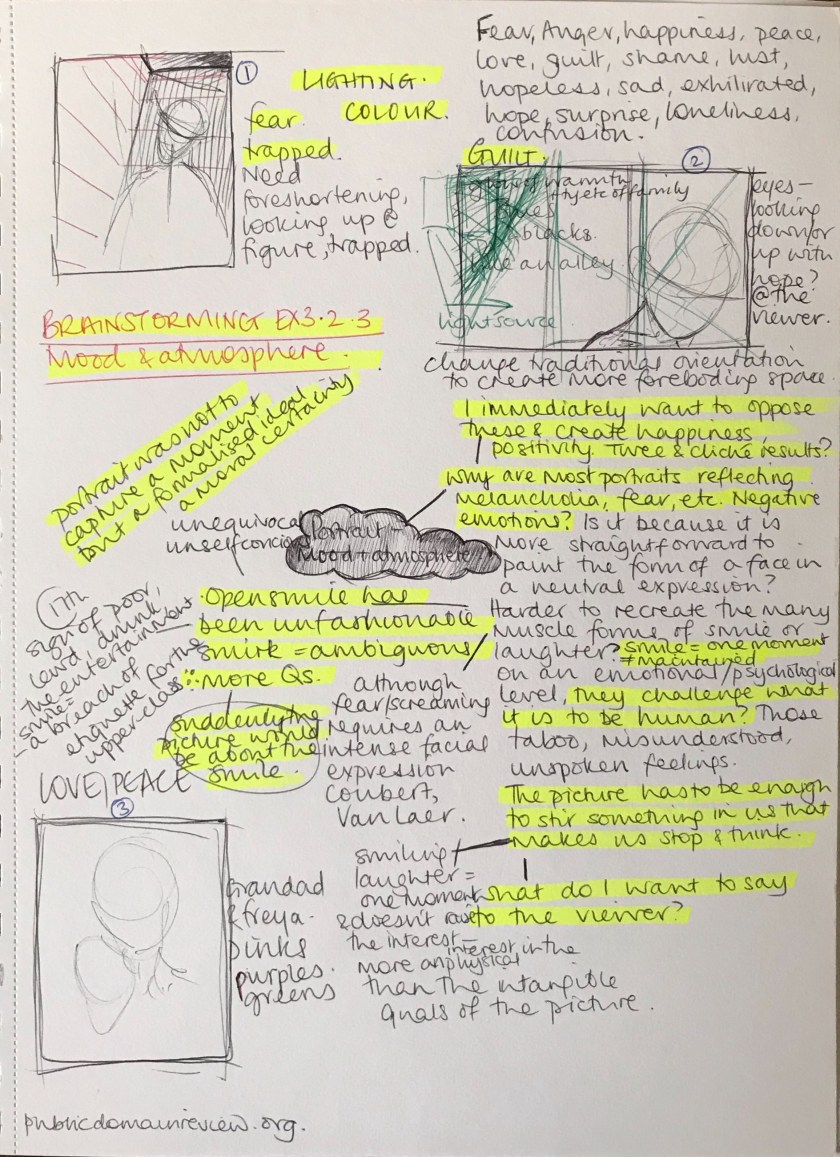
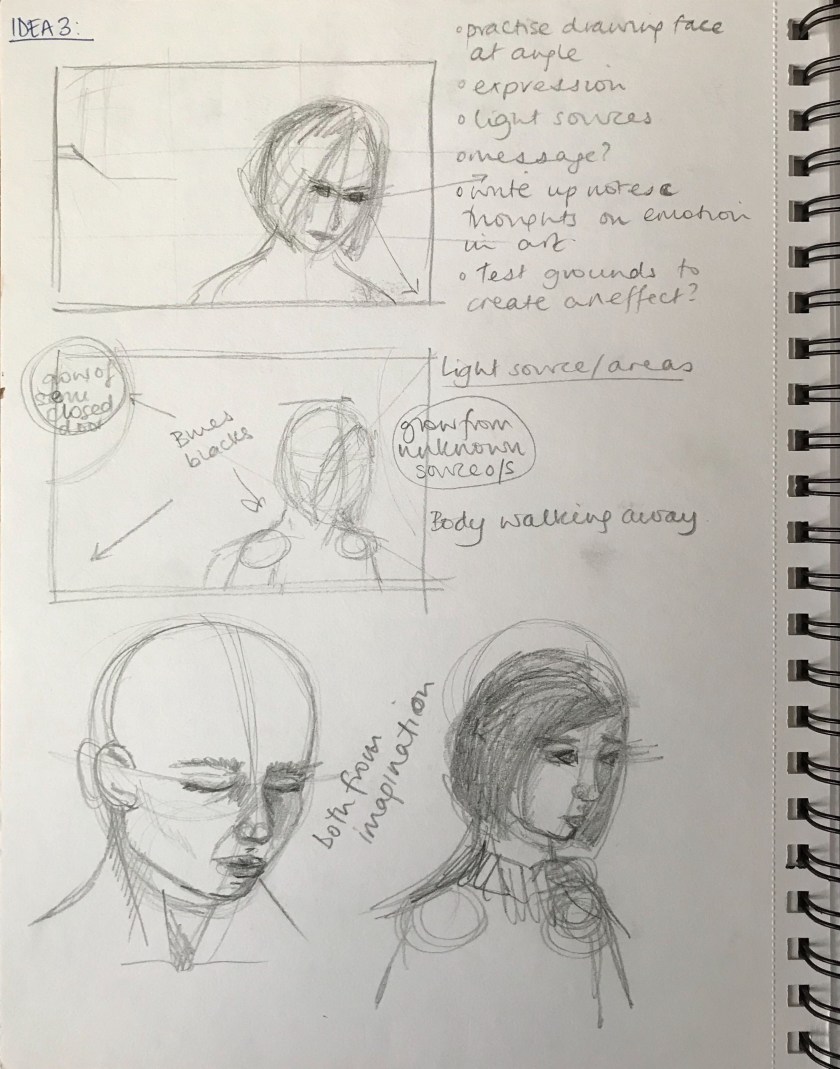
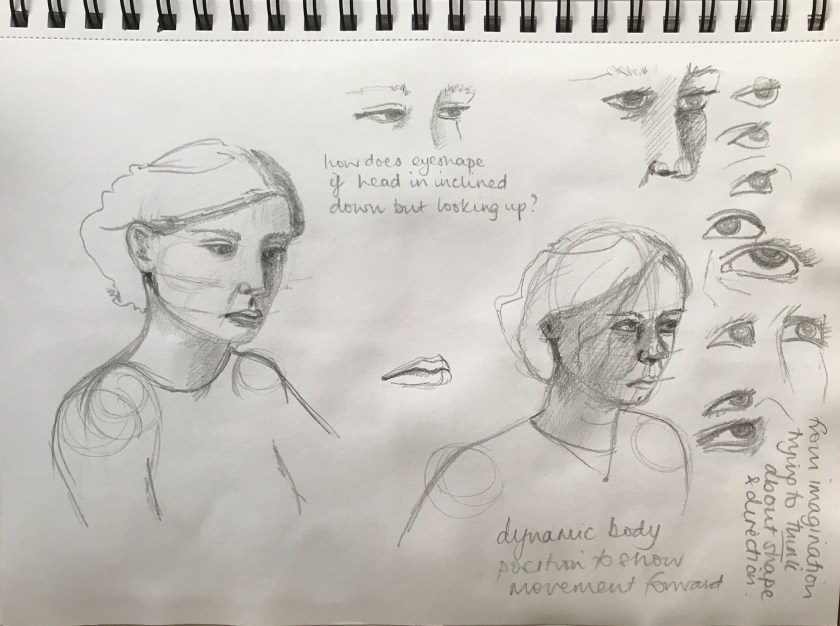
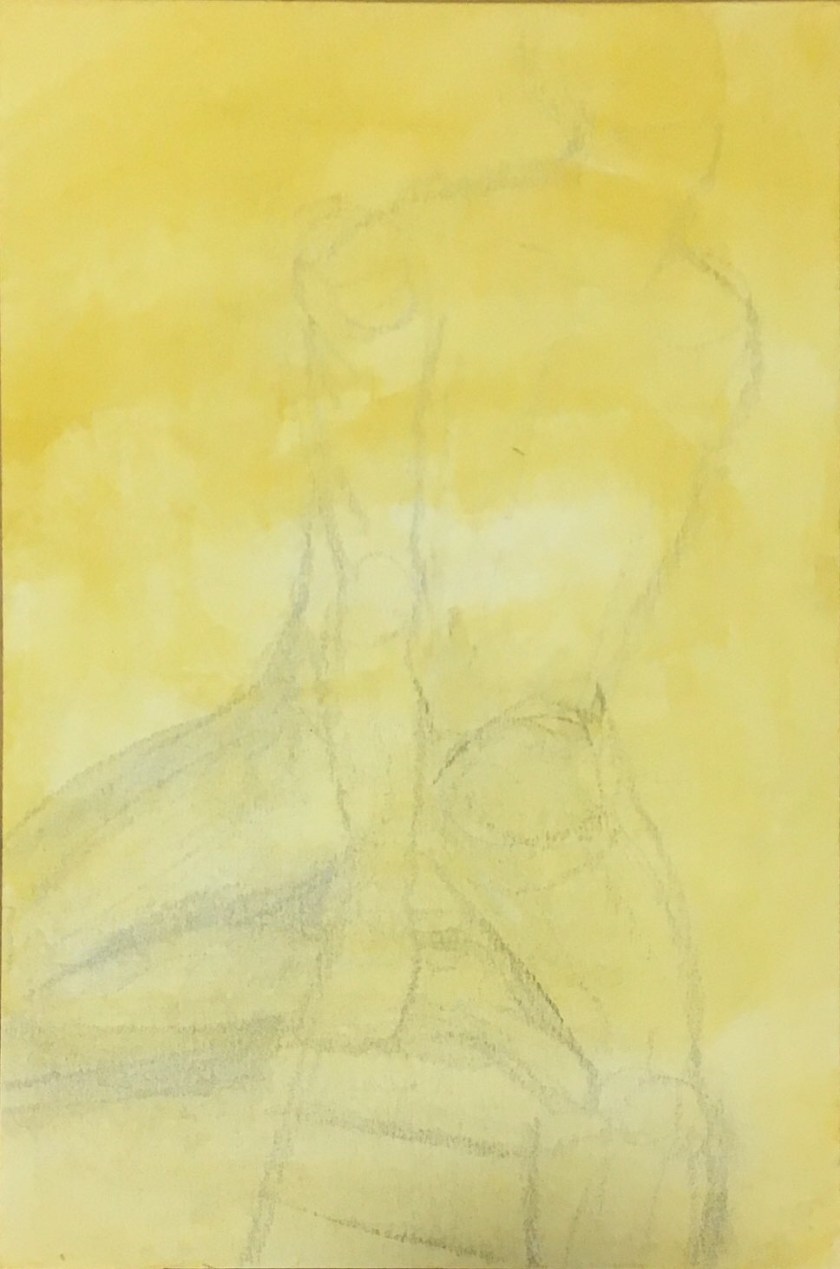
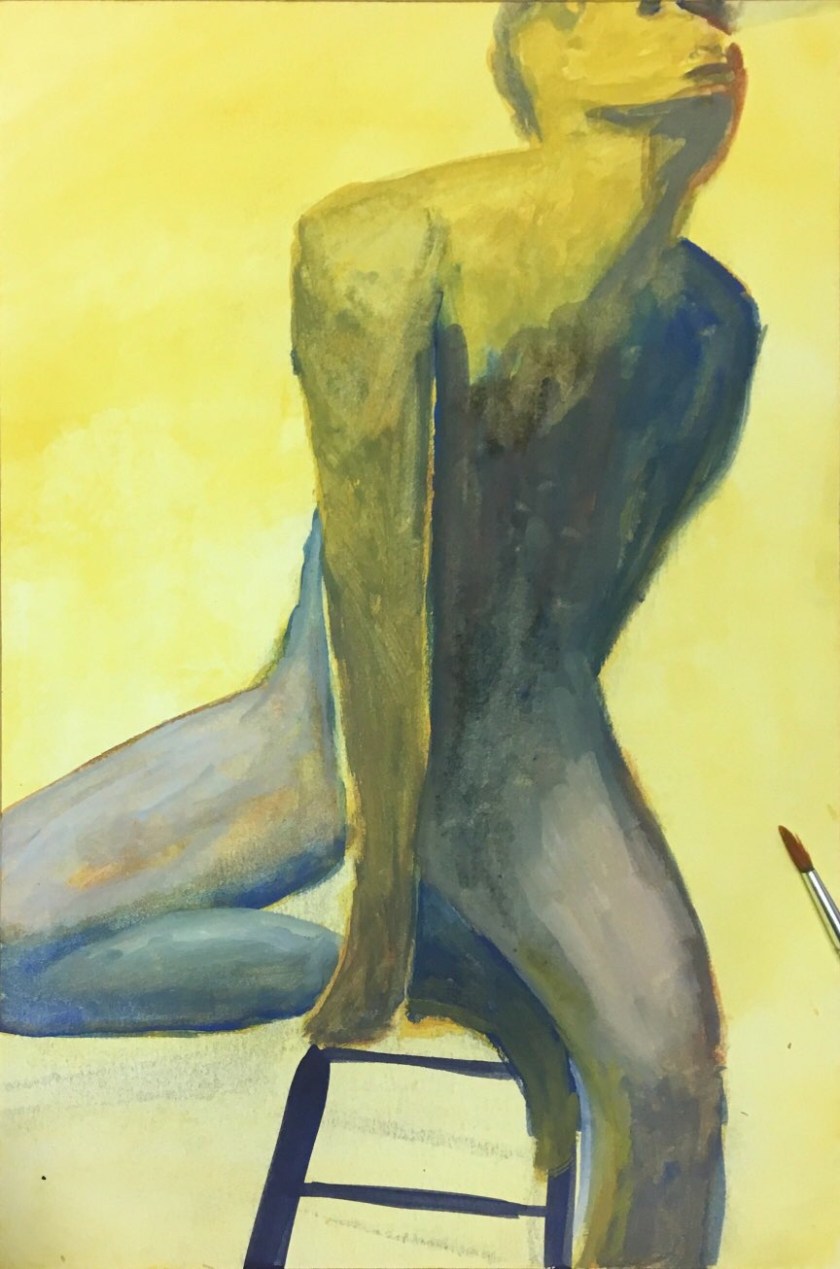
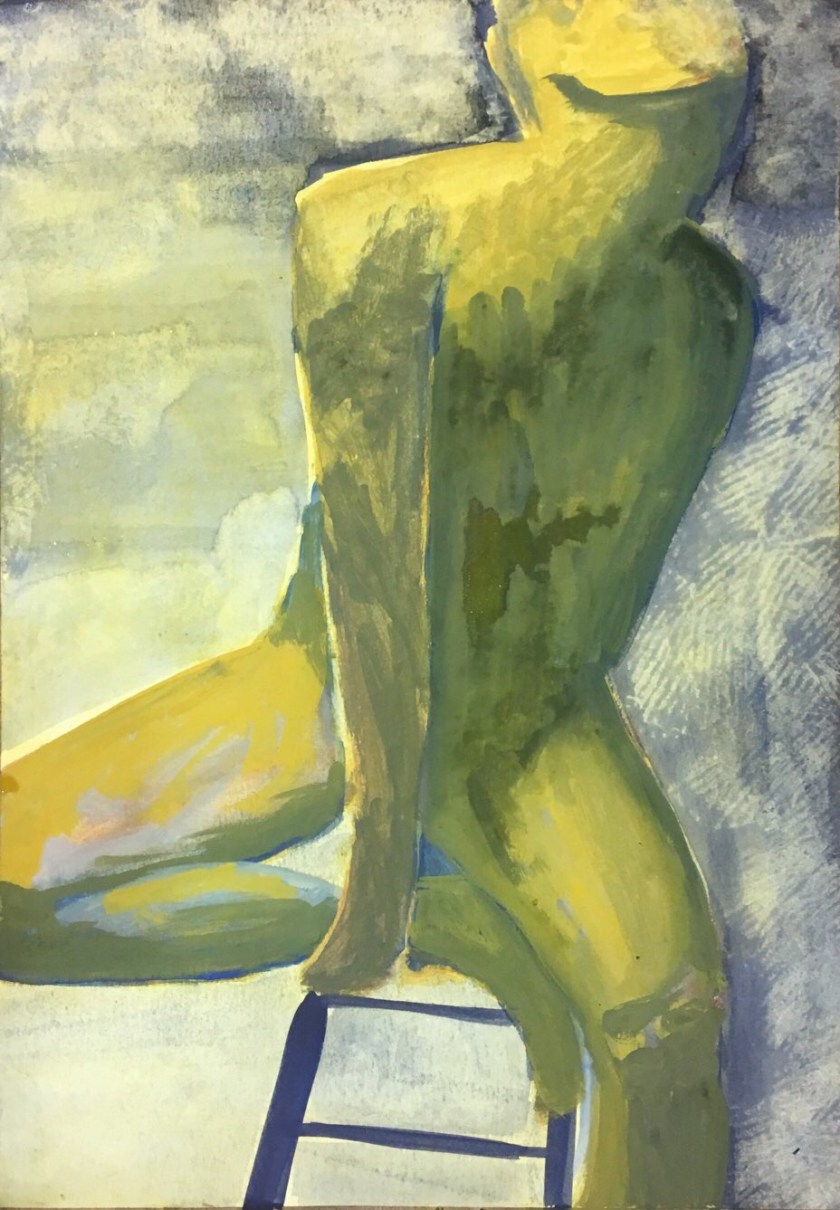
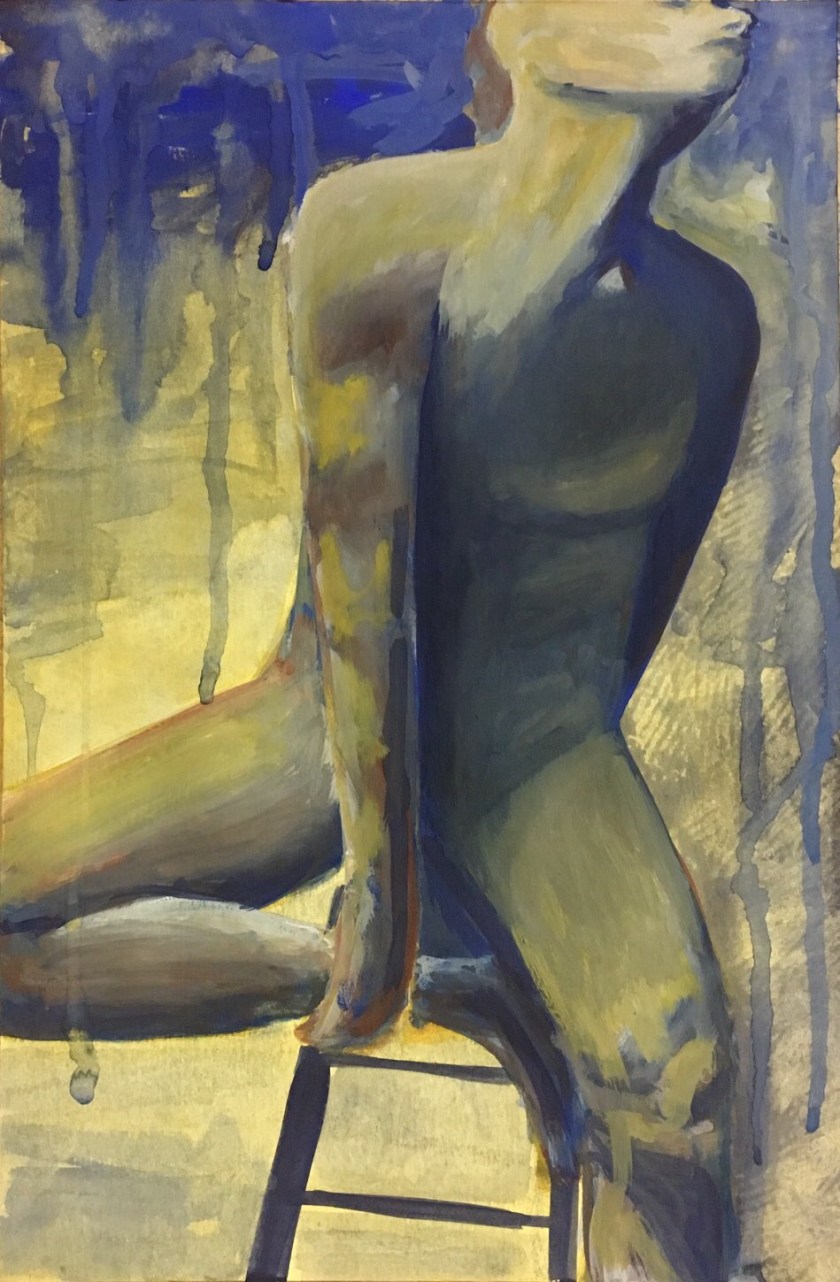
For this exercise you can choose to paint a full figure portrait, a head and shoulders portrait or a self-portrait. Your finished portrait should be unusual or expressive in some way.  It can be true to life or not, depending on the effects you wish to achieve.

Decide what you’re trying to achieve at the outset and make some notes in your learning log.

Next, decide on your light source as this will determine both the effect of solidity that you’re able to capture and convey mood and atmosphere.

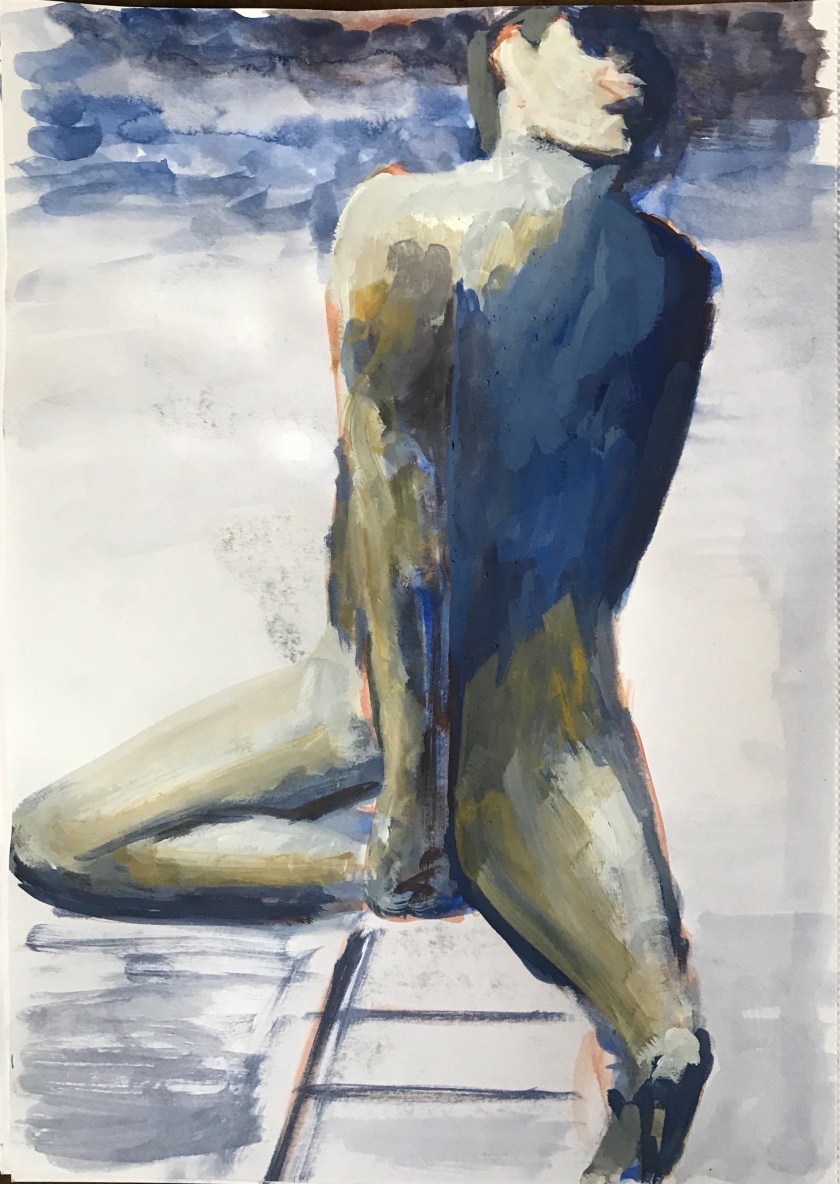
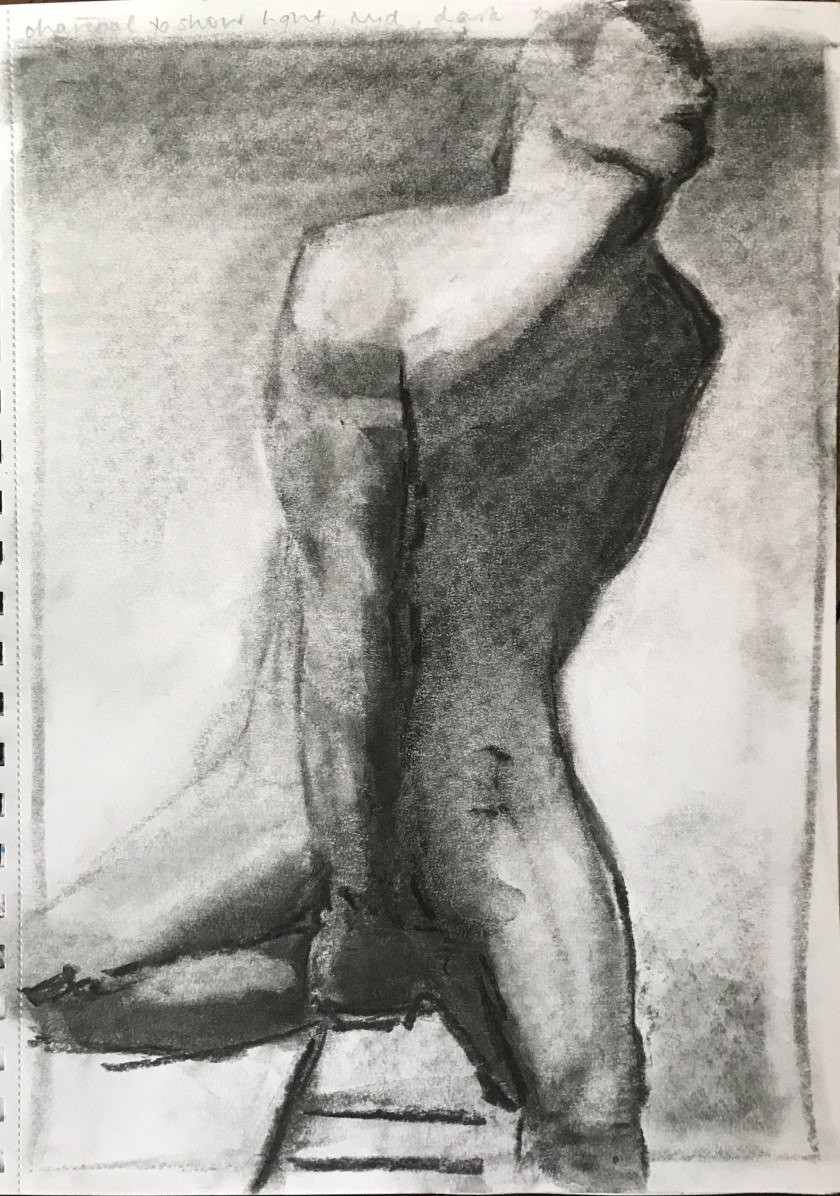
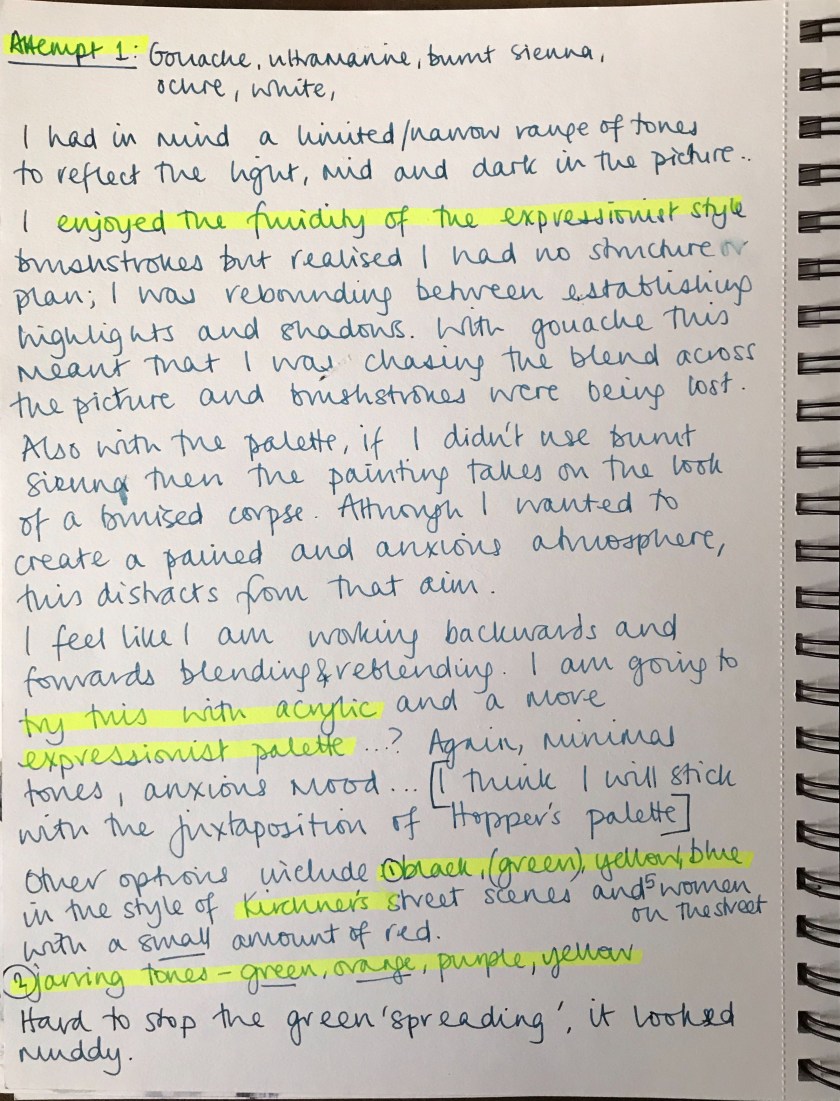
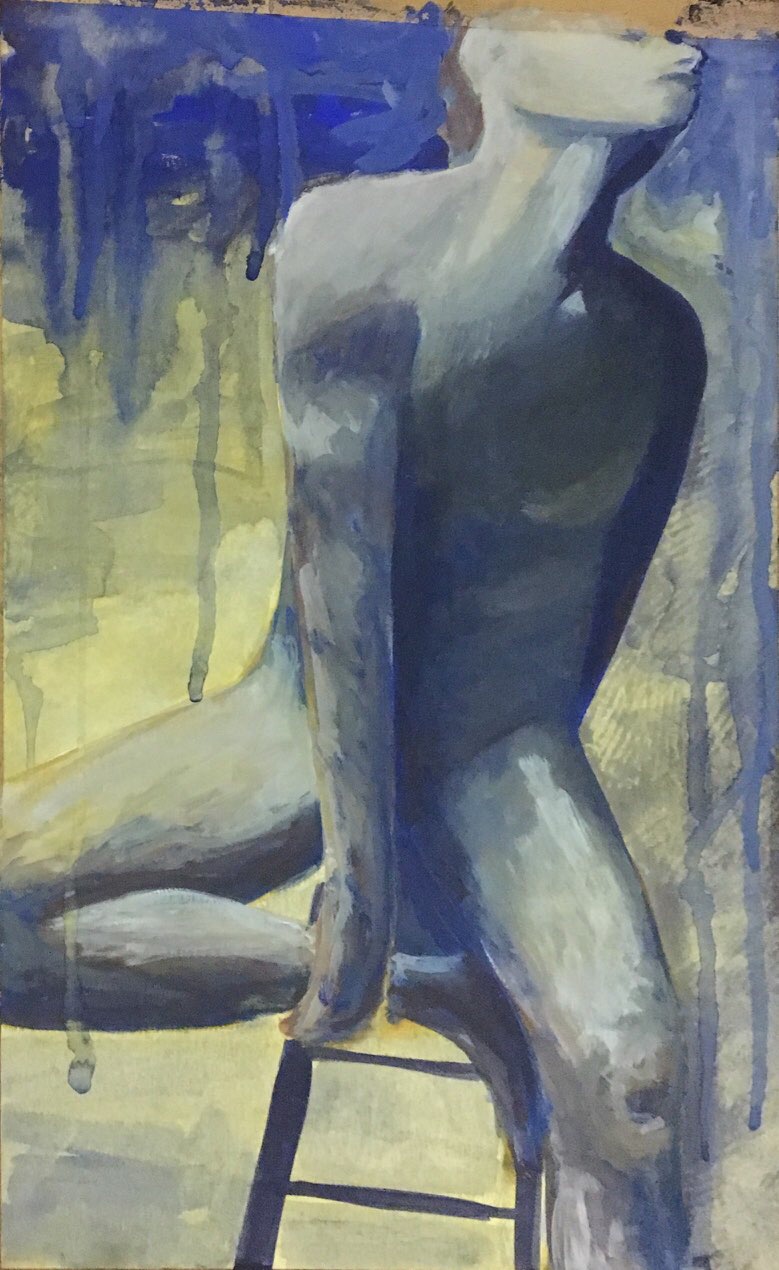
Sketchbook study portrait in gouache and then charcoal.
It was easier to get the muscle definition and tone rather than paint

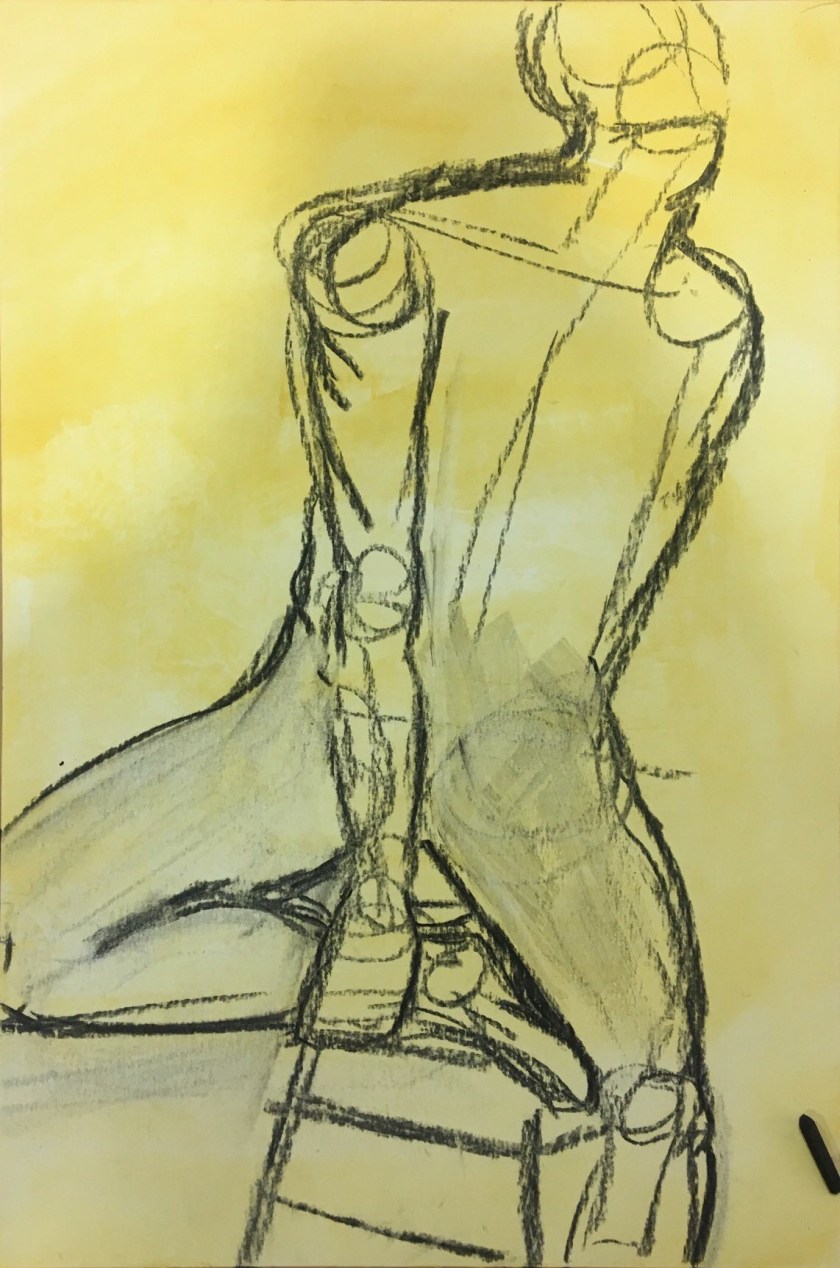
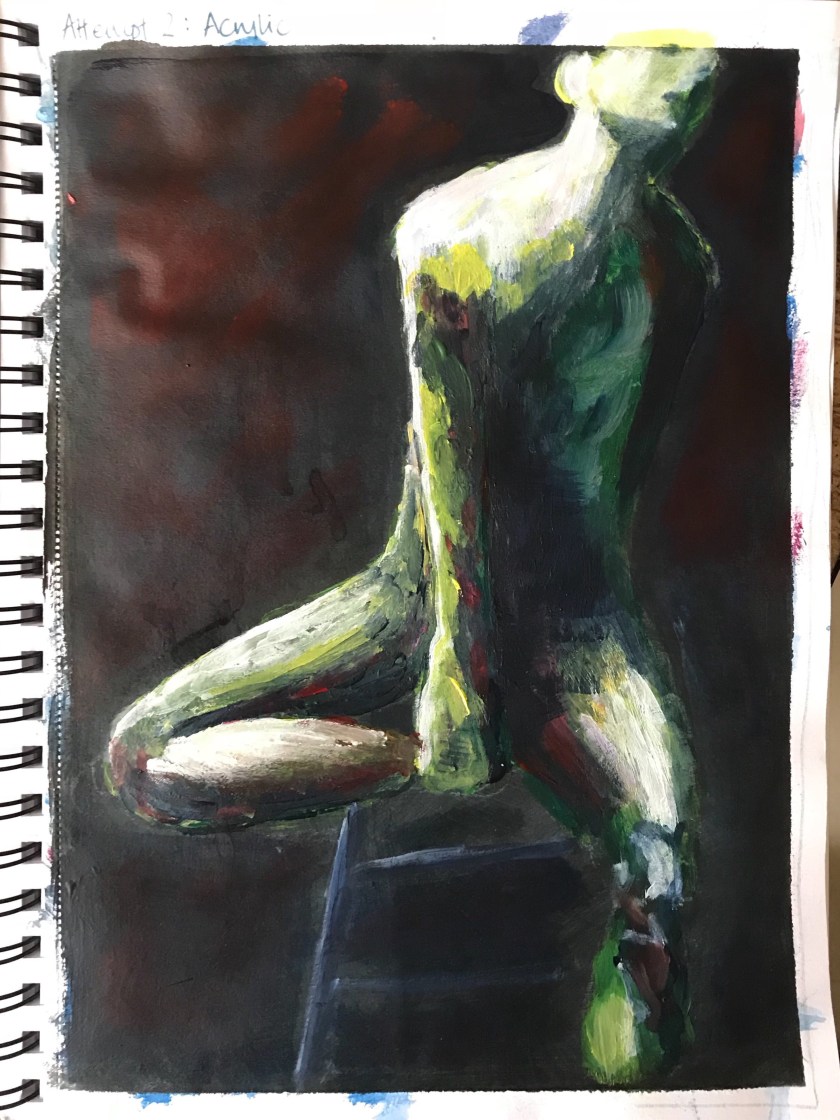
Attempt 2: Acrylic in sketchbook

2019-05-13 14-41

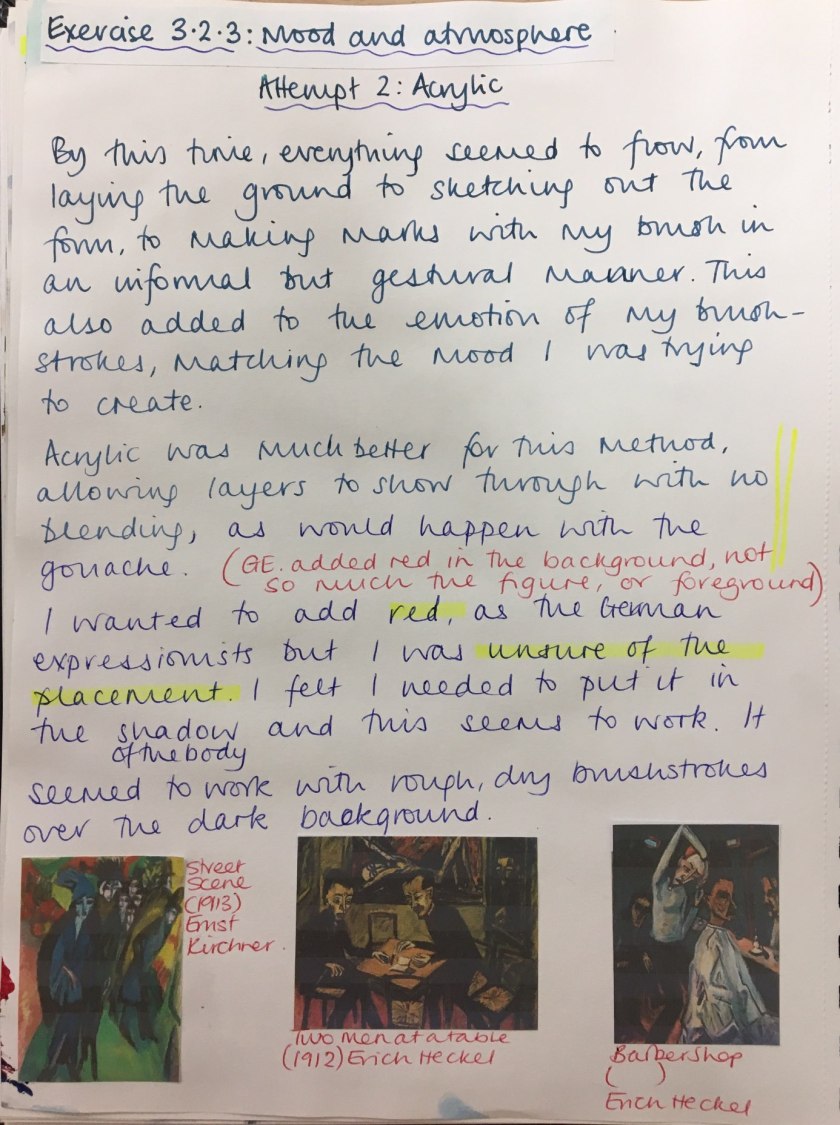
I really enjoyed the freedom of the mark making in the German Expressionist style. I understood how they sought to reflect inner feelings and emotional state through their colour choice and brushstrokes.

I want to know how to get that muscle definition I found using charcoal, without placing perfect brushstrokes.

PoP 2.3.5 – Still life with colour to evoke mood

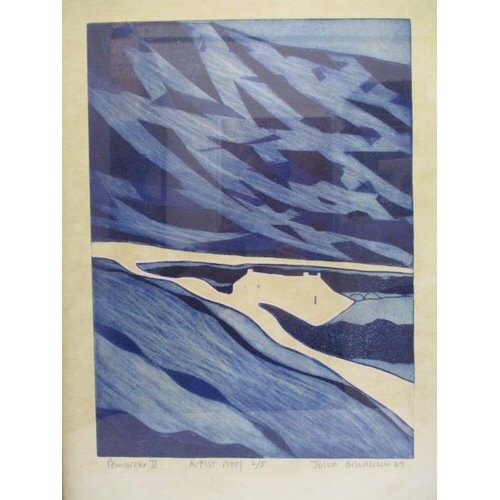
https://www.bourneendauctionrooms.co.uk/catalogue/lots/89FBD8D97A92BED8B2DFF647744A4C84C3CF33BCAACAD3A0BF12CC6DFA19E8FA/DF552CF371F2E3A723B4EBDB4BF38E80/antiques-collectors-sale-incorporating-wines-spirits-lot-184/?d&action=4

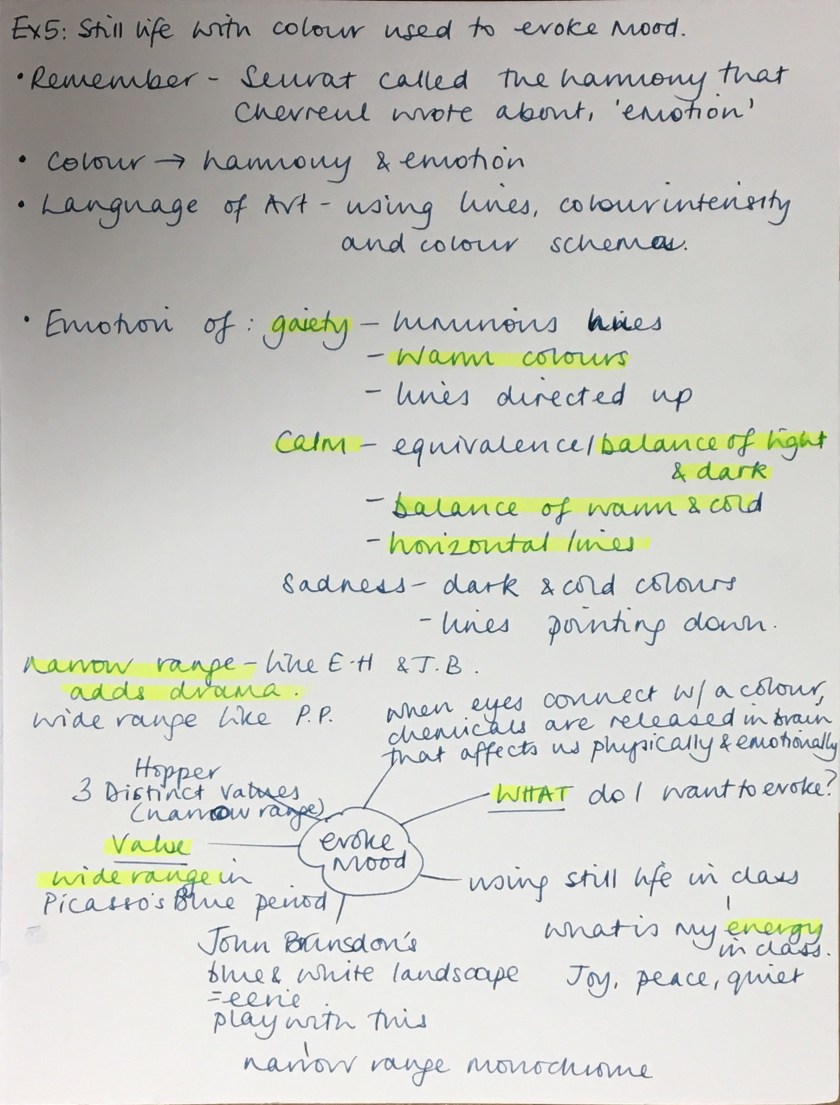
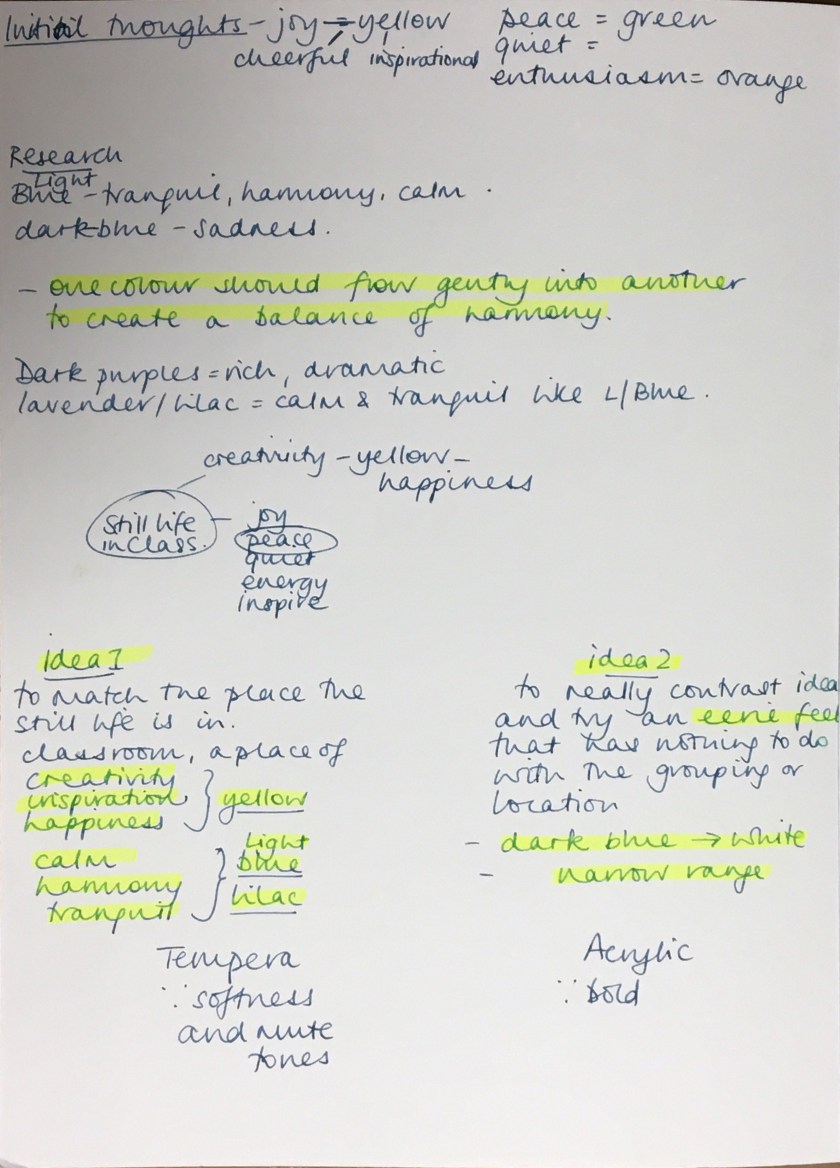
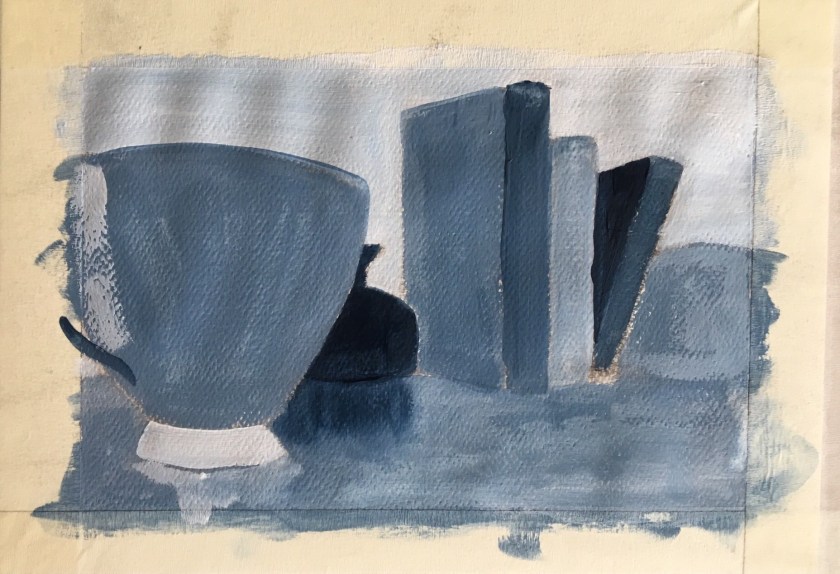
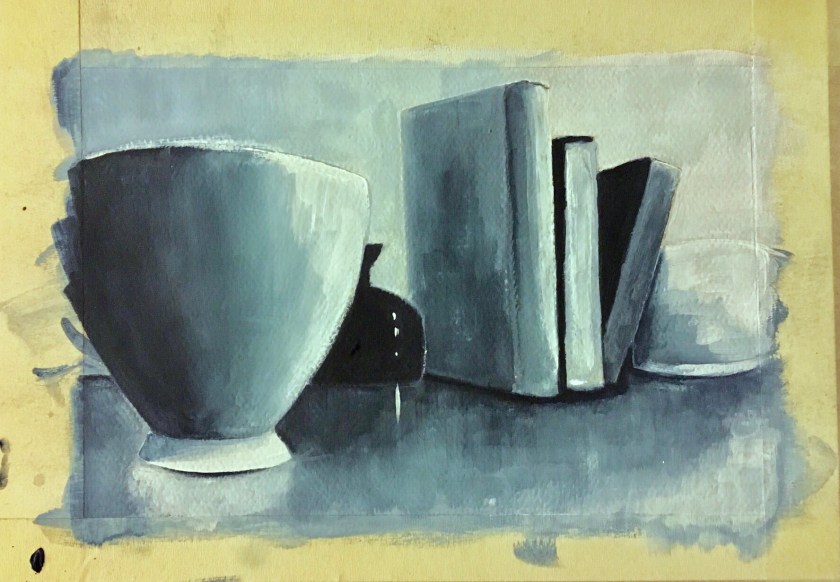
I’ve always liked John Brunsdon’s Pembroke II for the way he used a narrow range of tones, evoking, to me, an eerie atmosphere. When I show this to the children in my class, they mostly say they feel scared or nervous; it has a sense of foreboding. Some children feel nervous but hopeful when they think the house is a respite after being lost in the mountains. I decided to try to replicate a sinister, cold feel, just to be contrary as I always want to focus on the energy I feel when I’m painting, peace, calm…so I decided to play a bit. Same still life grouping but viewed from a different angle to generate a dominance of the objects.

I took on board the ‘language’ that Chevreul and Seurat, where sadness or other negative emotions could be interpreted through dark and cold colours with lines pointing down. With the latter, there are no obvious lines to point down but I found I was brushing in a downward direction, maybe subconsciously taking on this language.

(I need to be aware of white balance affecting tone when taking photographs of my work. The first photograph is truest to colour).

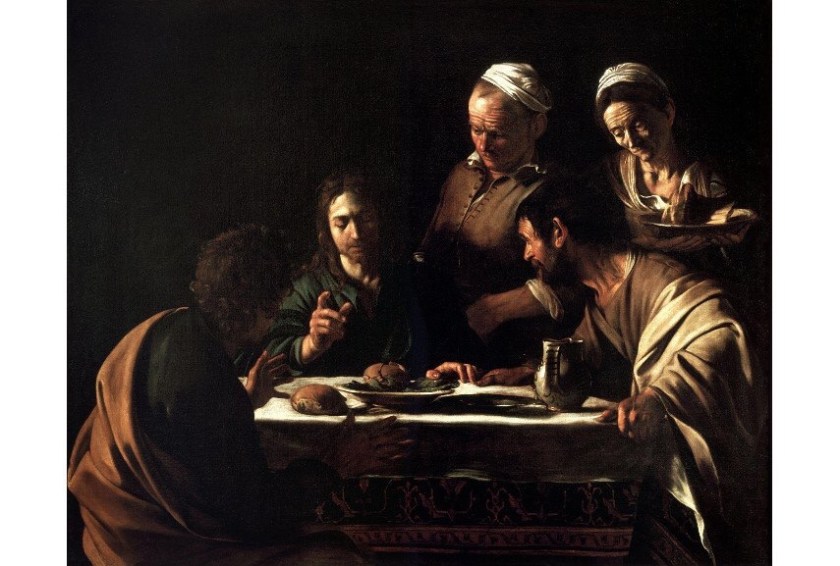
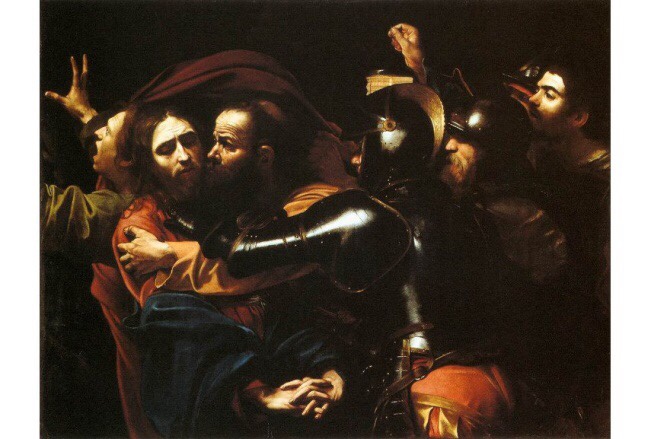
PoP Research – Chiaroscuro

Supper at Emmaus (1606) by Caravaggio. Image via art history project.com
The Taking of Christ by Caravaggio (1602). Image via Wikipedia.org

Chiaroscuro’s Place in the Contemporary World of Art and Artists

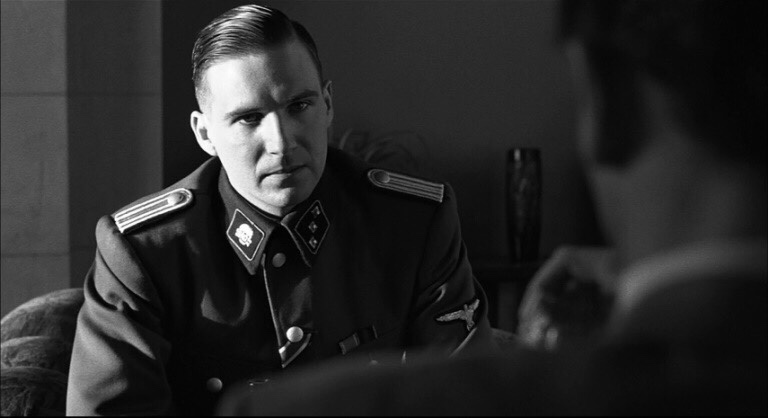
Today, the term chiaroscuro is frequently applied to a wide array of dramatic lighting effects and it is used as a technical word linked to many mediums and kinds of art[3]It is related to literally any form of expression that possesses something dark and moody with strong slashes of shadow[4] that emphasize the dramatic effect. Interestingly, the traditional power of the chiaroscuro pictures and the tense action within their frames had a massive influence on cinematography as the genres such as Film Noir heavily based their visuals on it. Many filmmakers have stated that this technique shaped the final looks of their movies – for example, Martin Scorsese actually referenced Caravaggio as one of his biggest inspirations behind many of his films.

Ralph Fuentes in Schindler’s List (1993). Image via sleeplessthought.com

Jesse Lane

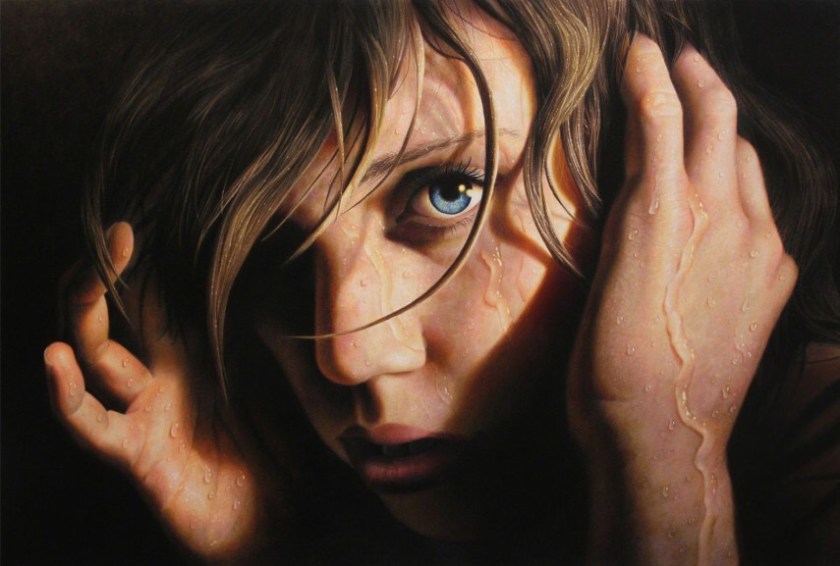
Staying true to Caravaggio’s original roots of realistic depictions, Jesse Lane is an American painter who combines the concepts of Hyperrealism and chiaroscuro. His paintings aim to channel the emotional impact and capture intimate moments wrapped into a single instant presented to the audience. Lane’s pieces are rather open-ended, as the artist himself explained on many occasions, and his goal is to make the viewers create the narrative on their own. When observed from a technical standpoint, it’s hard to find a more talented painter than Jesse Lane both in regards to Hyperrealism and chiaroscuro.

Echoes by Jesse Lane, 2016. Image via Jesselaneart.com

Nicola Verlato

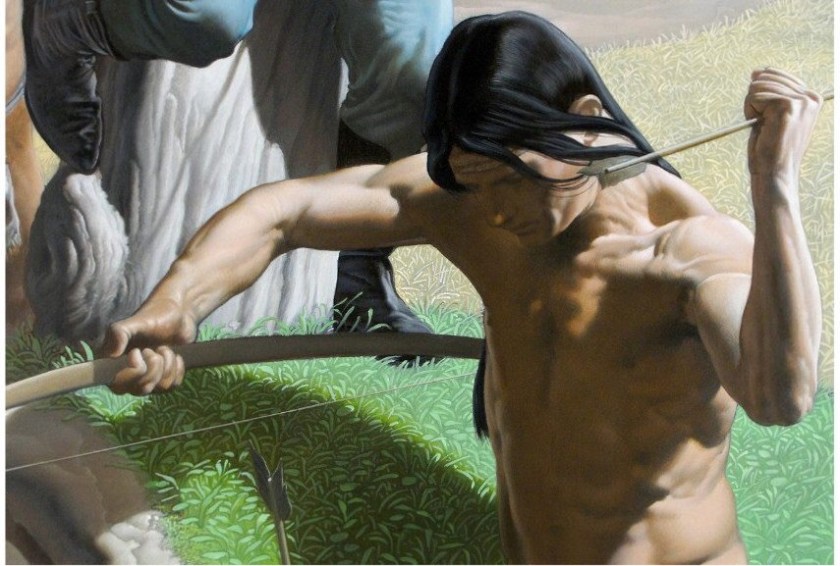
With his specialty being found in the fusion of popular imagery and traditional painting techniques, it’s no wonder that Nicola Verlato‘s amazing painterly world enjoys such a high level of respect within the art community. This Italian artist is primarily known for his highly refined allegorical surrealism that features spectacular light effects, twisting nude figures and dense compositions, all underlined by a commanding application of chiaroscuro. Wonderful and bizarre, his compositions are a true delight to analyze.

Nicola Verlato – The Settler, 2015 – Image via nicolaverlato.com

Chiaroscuro in Contemporary Photography

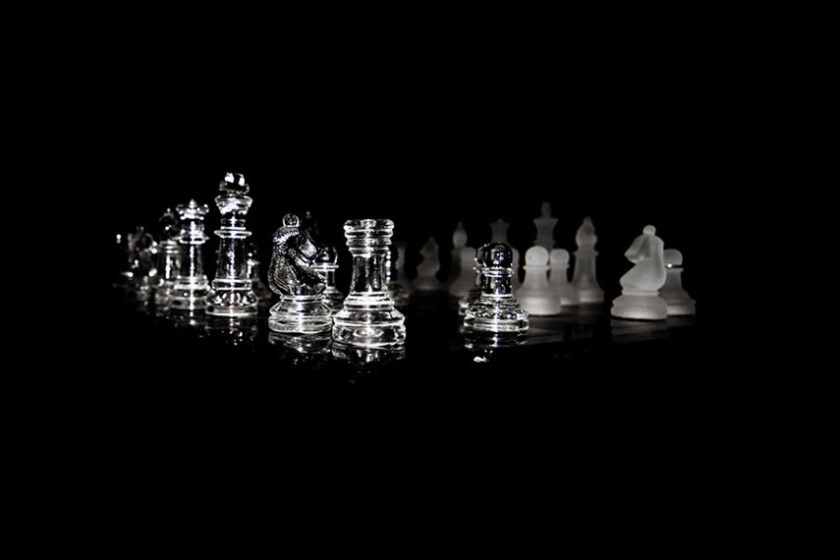
When used as a photography technique, the chiaroscuro style is often referred to as clair obscur or extreme low keyJust as the case is with movies, it’s rather interesting to investigate how this shading method traditionally associated with painting has evolved in order to become a viable option for modern artists. As far as the realm of photography is concerned, chiaroscuro kept its strong and bold contrasts between light and dark areas. Of course, the dramatical effects such photos are able to channel is often the reason why photographers opt to use this method of picture-making.[5] The chiaroscuro style of photography is often well-suited for portraits[6]still life compositions and boudoir. The pioneering attempts to translate this technique into the vocabulary of camera images can be traced to the early developments of black and white imagery – for instance, Alfred Stieglitz was one of the oldest practitioners to successfully use a form of chiaroscuro in his work.

Stepan Mazurov – Your Move – Image via thephotoargus.com

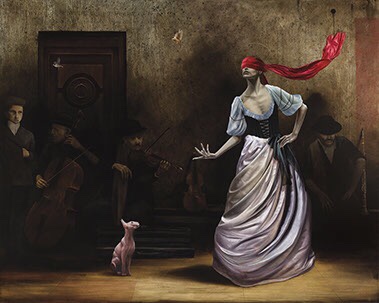
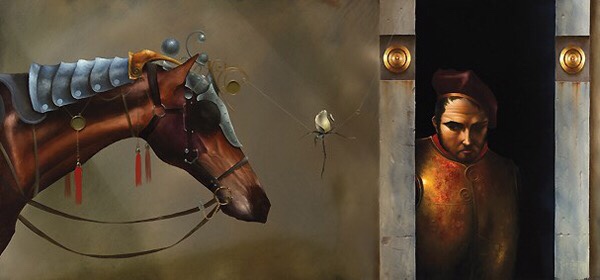
Tim Cantor

Charade by Tim Cantor. Image via Timcantor.com
Temptation of Difference by Tim Cantor. Image via KOjewel.com

Completed Assignment 2 & Reflection

  • This assignment is designed to pull together the fine observation and practice that you’ve done on this part of the course. 
  • You’re free to choose your own source material and media, provided that you take account of the factors listed below. You can either work on a still life, or interior scene – or a combination of these. 
In the work you produce now you must demonstrate a growing understanding of:
  • the use of colour in drawing
  • the most appropriate medium for the subject
  • composition and context
  • mark-making and contrasts of line and tone
  • accurate and expressive depiction of form, experimentation with idea, material and method.
  • Is this a creative composition? 
  • Is my subject interesting? 
  • Am I using the most appropriate medium, colour, method, etc.?
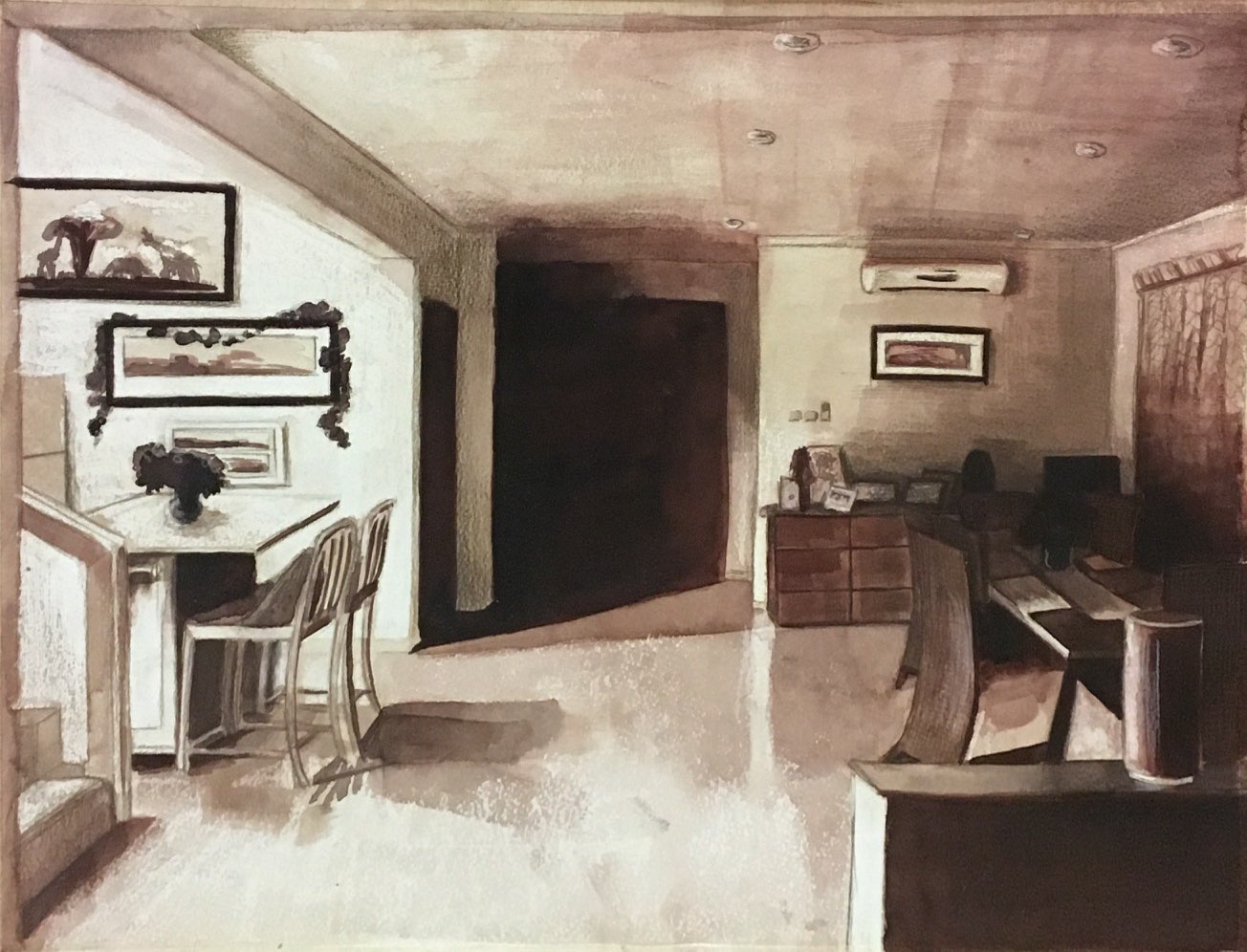
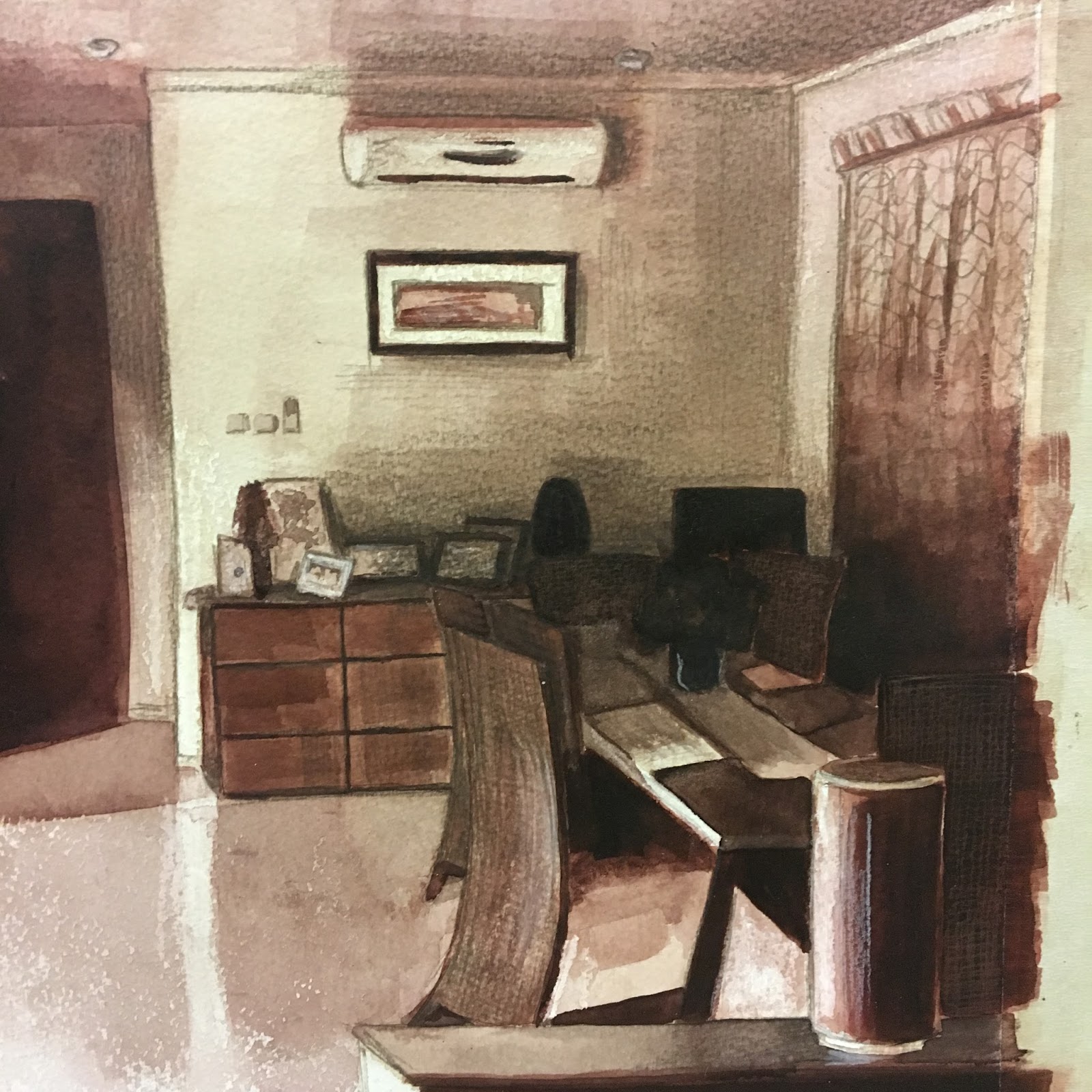
In my previous posts here and here I have shown my sketching and preparation for this assignment. I enjoy perspective and I liked the idea of combining a little still life of sorts with an interior scene. I am always on the lookout for interesting light shapes and tonal contrasts; I see how they could evoke a mood maybe in a photo and I would love to portray that in a drawing. 

Reflection

  • the use of colour in drawing
  • composition and context
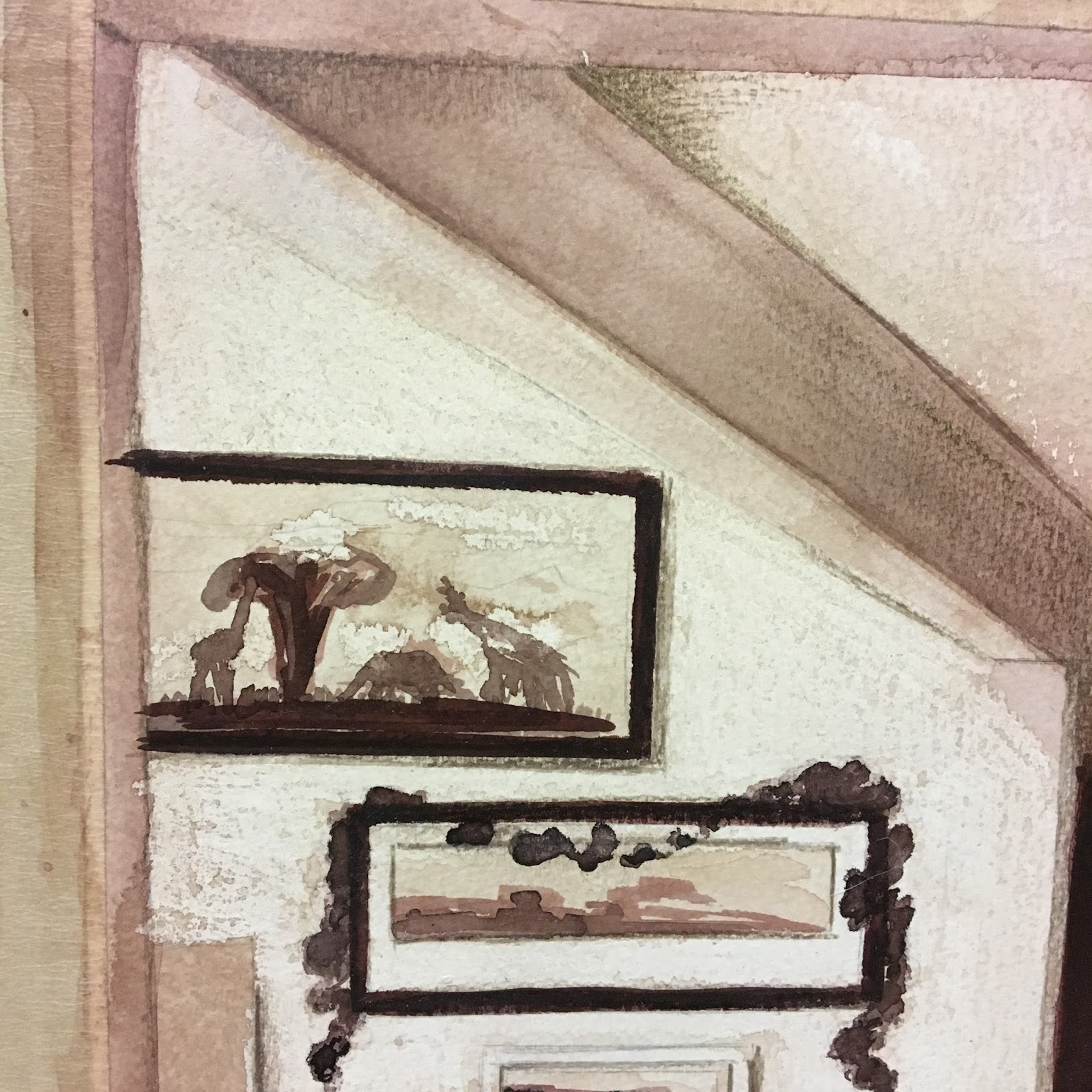
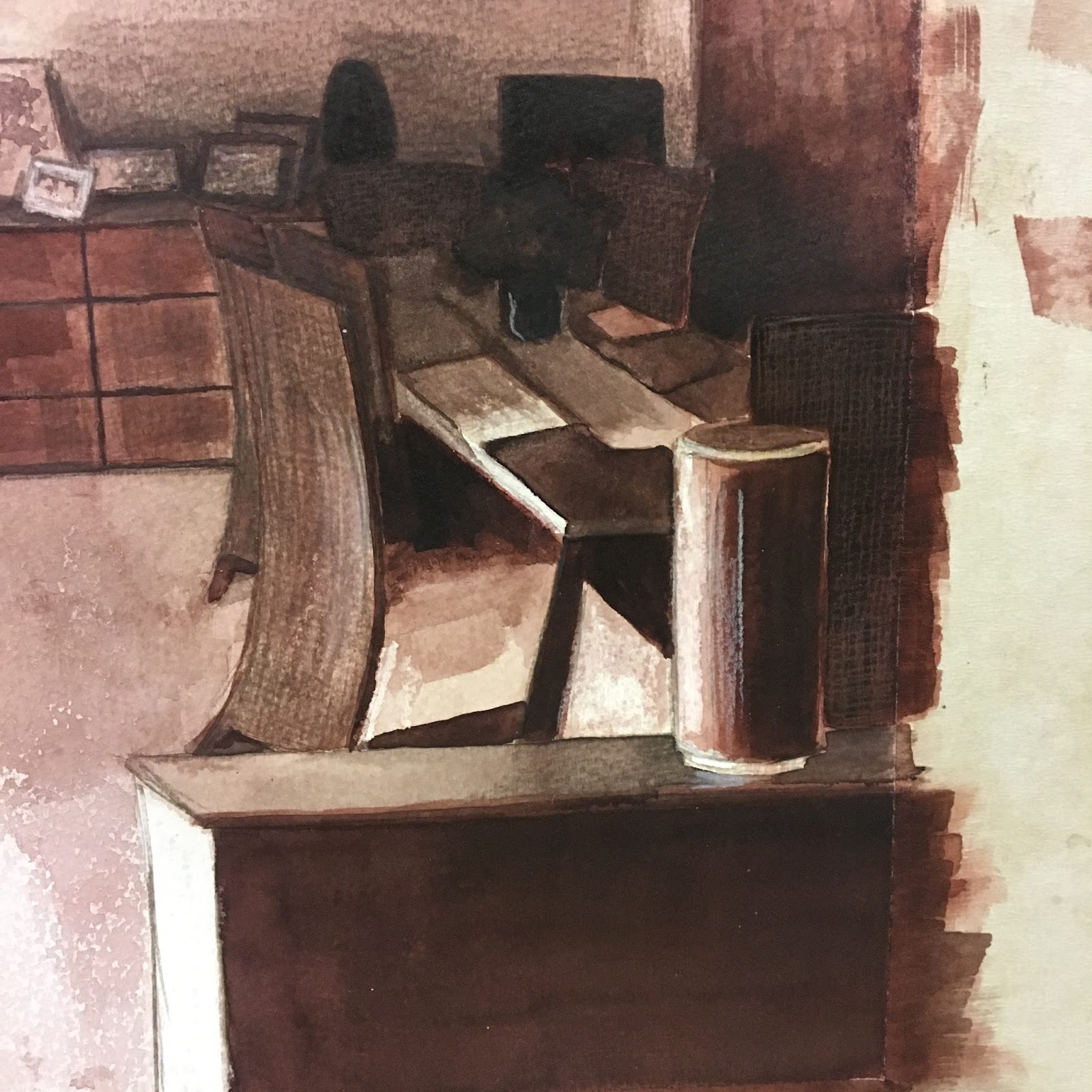
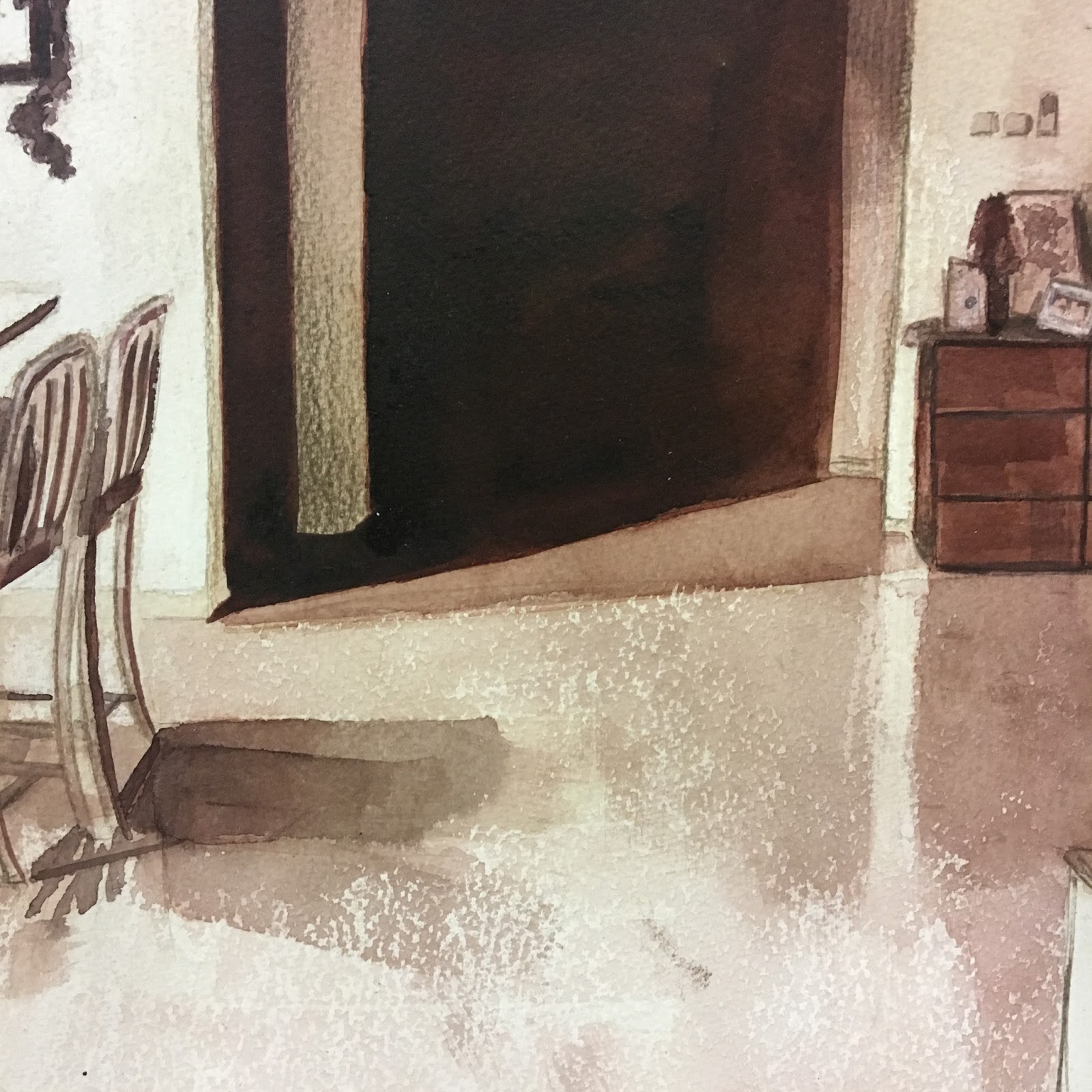
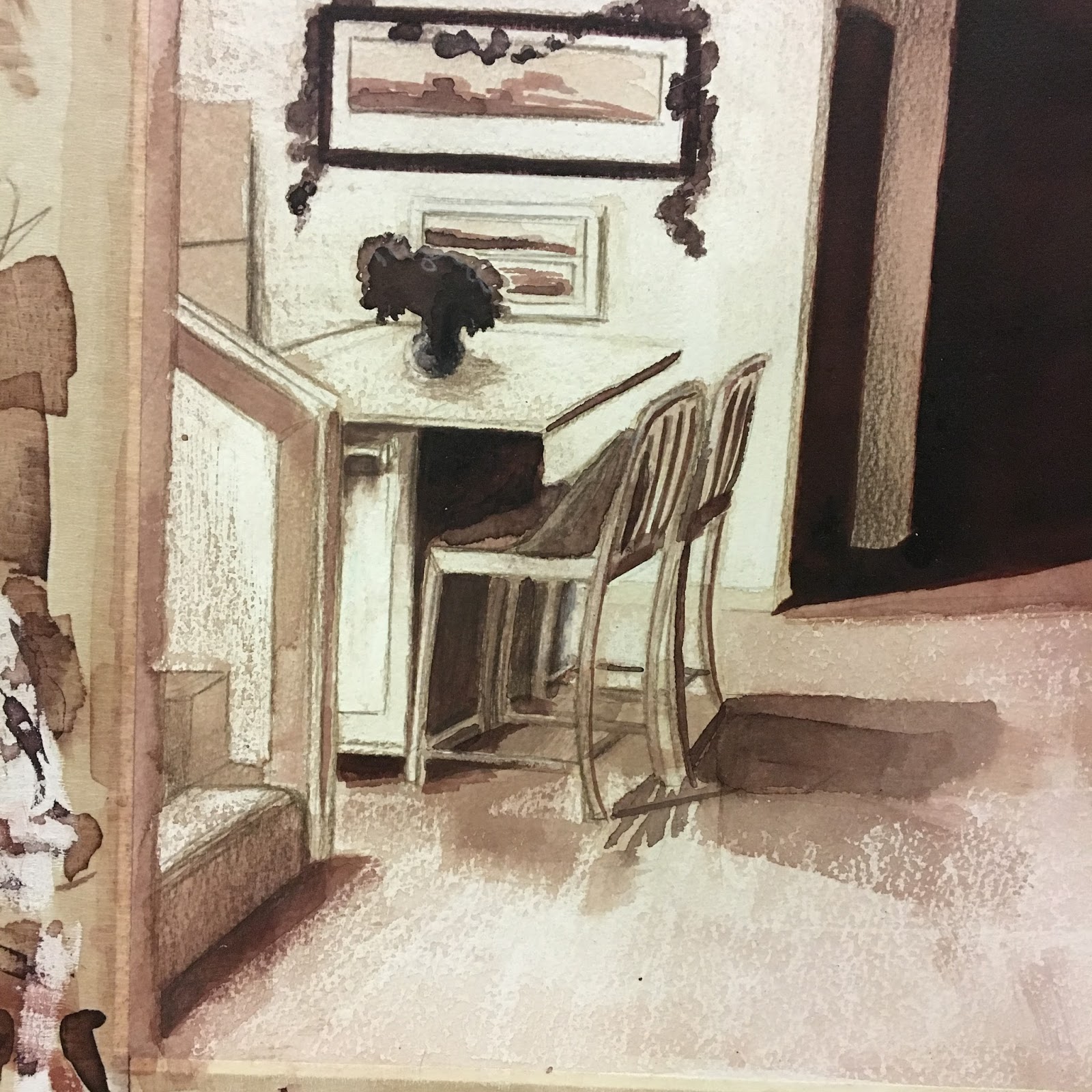
After preparing mostly in black and white, I chose to complete my final assignment piece in warm sepia tones to create a welcoming warmth to the room. If I worked with too many colours it would suggest a more balanced, natural light across the room. It was the late evening, with the house in darkness apart from one landing light, shining down the stairs to the left of the picture.  ‘Leave a light on for me’ seemed an appropriate title as I noticed the shot when I came into my home late at night and everyone was in bed.

I think the shot struck me instantly as it was balanced in its composition without me having to tweak too much. It was in thirds from left to right – the bright light, bar area and stairs to the left, the darkness of the kitchen door to the centre and rear and the shadows of the dining table to the right.


  • the most appropriate medium for the subject
  • mark-making and contrasts of line and tone
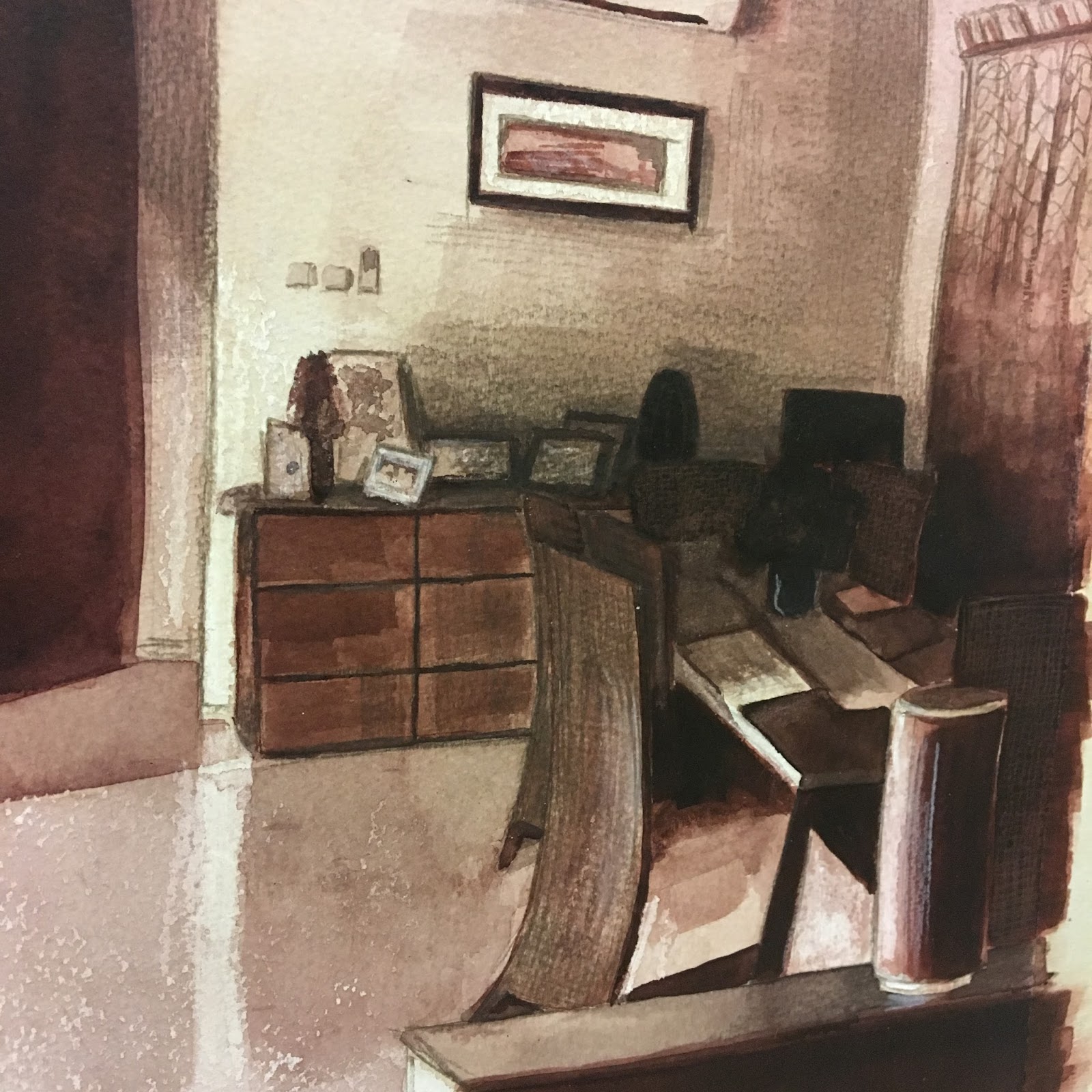
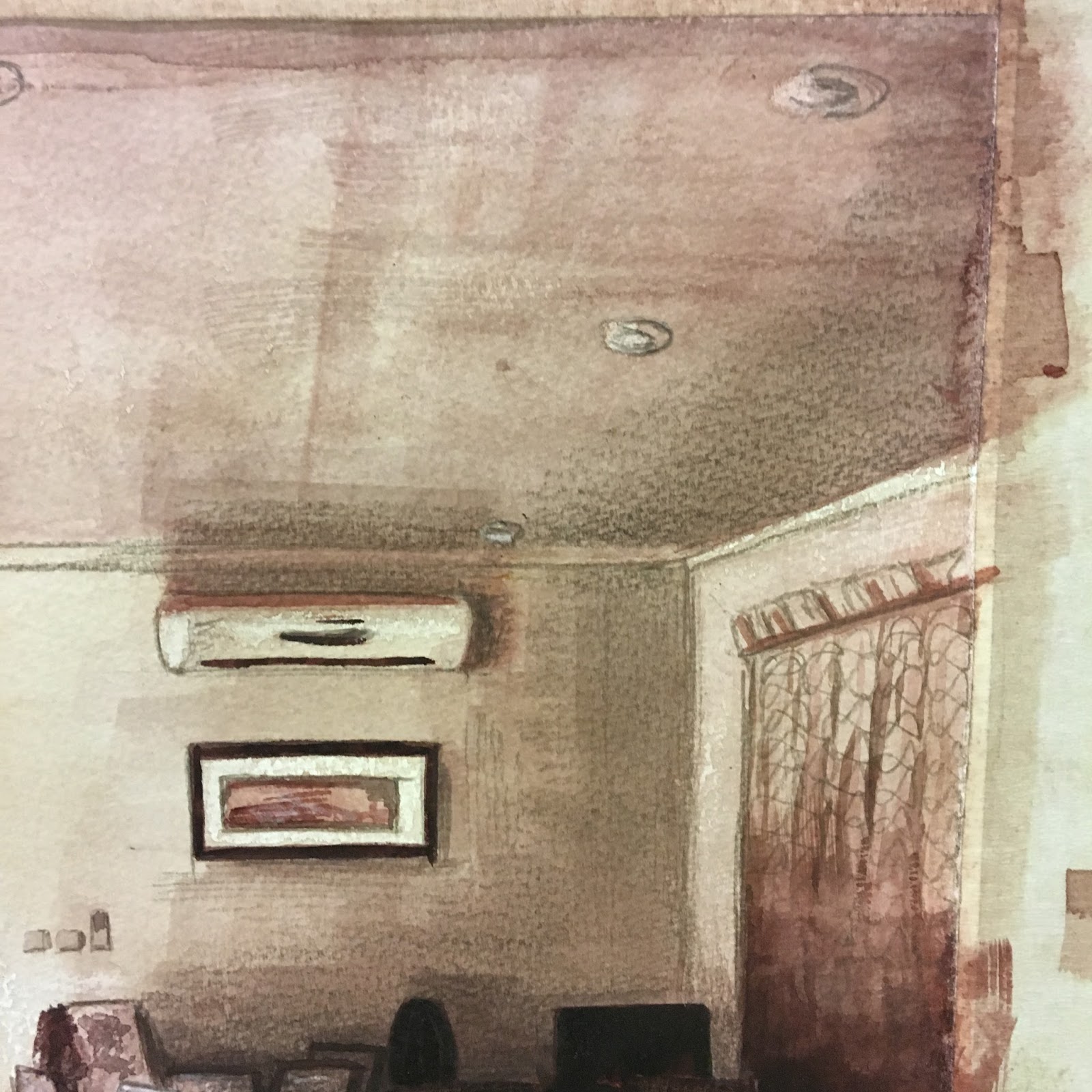
An inviting, warm atmosphere required similar materials to recreate such a feeling. I started in black pen for all the sketches I did and, as much as I love pen line, it was too ‘matter of fact’. I had ink wash in mind from early on; I liked the way it ‘worked’ with oil pastel in its resist effect and it worked well to create that artificial lightness without risking it being muted by the ink wash. Maybe pencil to add definition and detail as the last stage. I thought chalks would be ideal for the soft, peaceful, ethereal effect but are not defined enough. I knew that mixed media approach would be ideal to show definition as well as effect. I finally settled on mixed black and Indian Red inks in various dilution helped to make a warm sepia picture, with subtle pencil detail. The pencil worked as an additional layer to show detail and contrast; it helped me to define the pattern in the sheer georgette curtain to the far right. A layer of pencil also gave a ‘veil’ to suggest tangible shadow.
  • accurate and expressive depiction of form, experimentation with idea, material and 
    method.

I was working to get a perfectly accurate picture as is my usual wont, but whilst I was completing this, an ongoing discussion was being had on the Drawing 1 forums regarding assignments, expectations and ability on the OCA drawing course.

There is some frustration that people come to a drawing course with little formal training and the OCA accepts them on a degree course/module. This might suggest that the OCA wants people who are willing to experiment, investigate and think outside the box rather than provide accurate depictions of still life. But then feedback given on the experimental and progressive assignments might be critical in the lack of technical skills. And it becomes a catch-22 situation; is this a technical course or an application of knowledge?

With that in mind, I seem to want to approach my work with a freer, more flowing sense, trying to think outside of the box, which is a contrast to how I have always worked in many aspects of my life. I am becoming more relaxed and I want to apply this to my art. A more expressive, investigative approach appeals to me. 
I have really enjoyed this assignment in that, as the title suggests, it is an intimate look at my space, my home. I am entirely happy with my assignment, I really like it. Technically, I could do better; some straight lines are a little off and I am bothered with this. It was a little hard with a brush and the fluidity of ink.

Staying on a technical level and process, I stepped back and realised I had created a workflow without realising it. I initially thought, and maybe hoped that I worked more spontaneously.  I focussed on what I wanted to achieve – an atmosphere and feeling of the place at that moment in time. This led me to practice with materials and find which suited the aim. 

Completed Assignment 1 & reflection

[post edit: my submitted work for this unit was lost in the post on return to me. I am already thinking of assessment submissions and am so sad that I do not have this unit to include.]
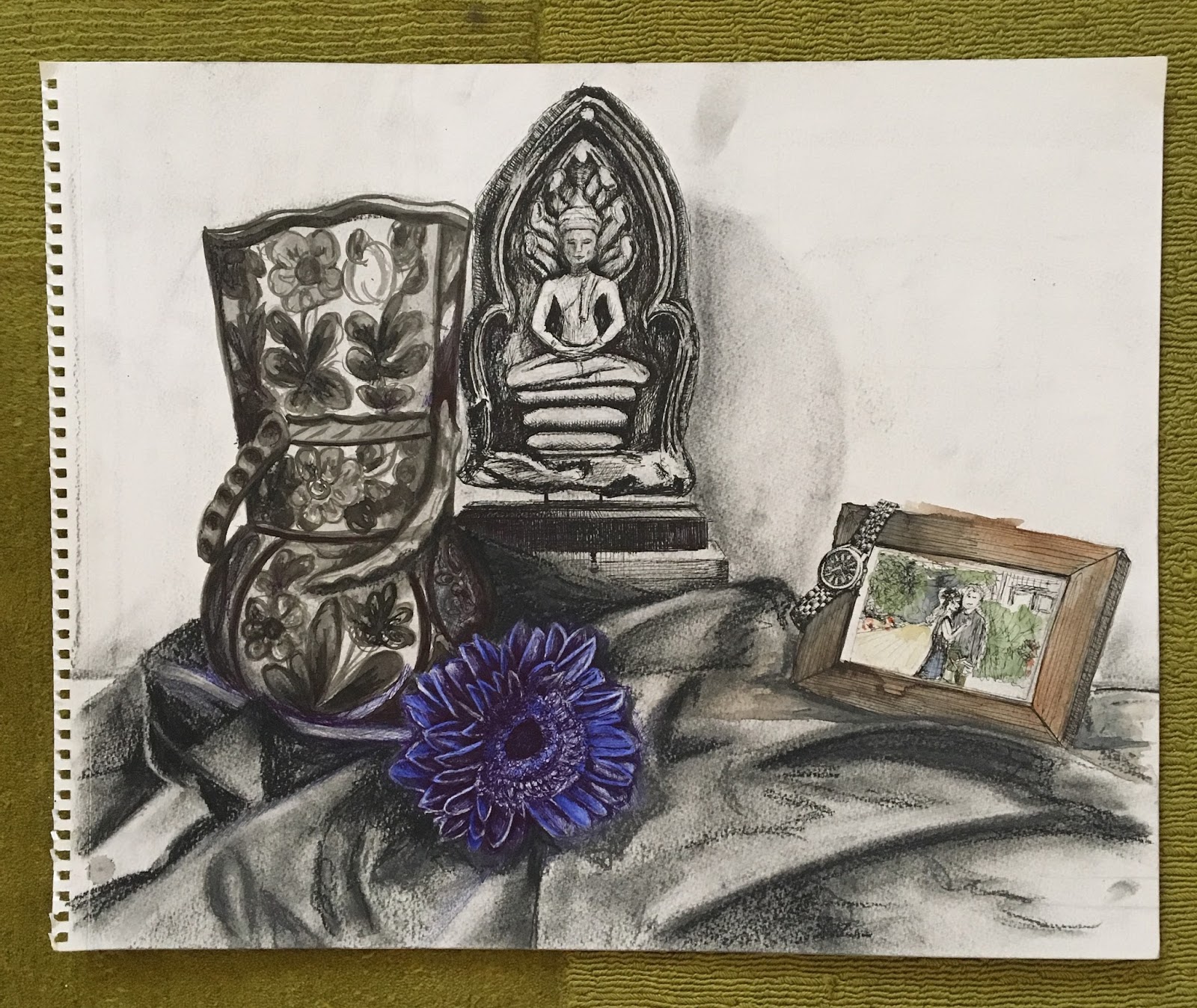
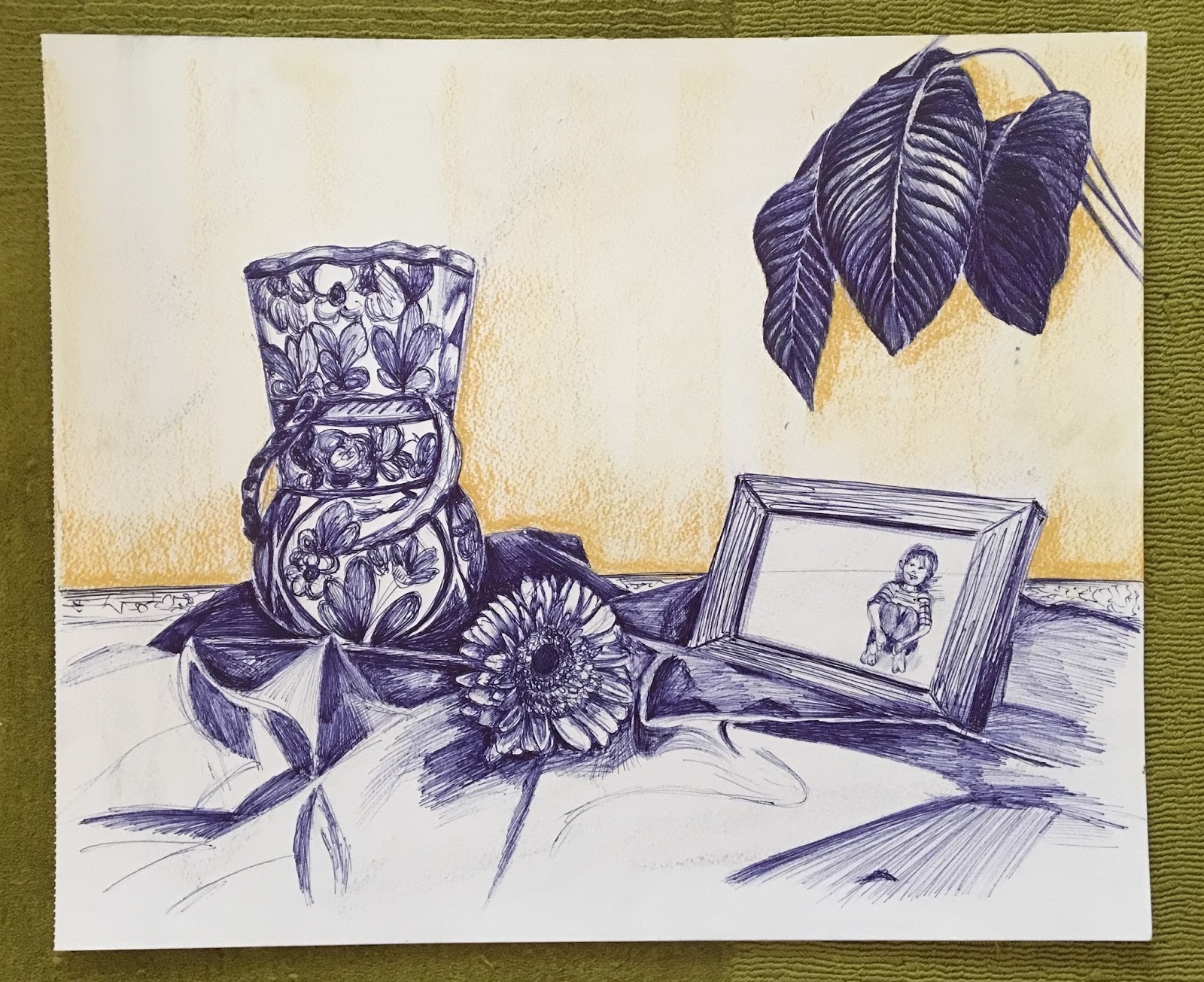
In my previous blog outlining my preparation for the first assignment, I brainstormed several objects around me that meant something in some way. Referring back to the mark-makimg exercises and the emotive response I needed to reflect on, I knew I needed to have a variety of reactions to the objects in order to deepen my drawing response. I  also mentioned that the media I would choose for each object reflect the marks I want to make, I feel they matched the mood I would be trying to create in each part.
 
I see myself as a little nostalgic, happy to sit reminiscing about the smallest thing. I specifically started to look for objects that spark a memory with me.
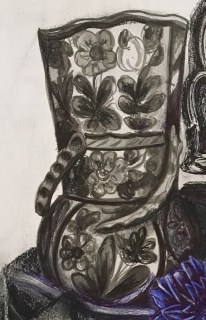
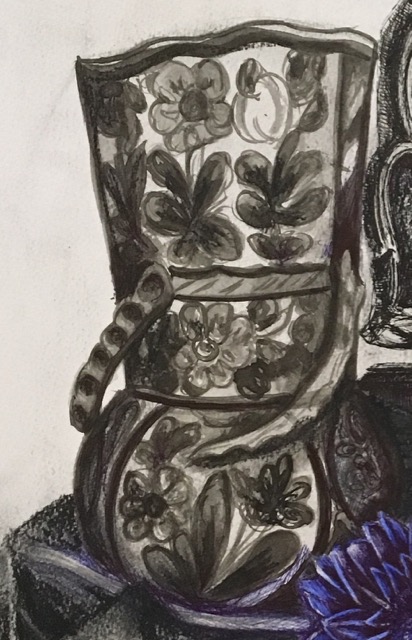
The coloured vase takes me back to my childhood; I remember it sitting in the hallway of my grandparent’s house. It was a gift from my Great Grandad to my Great Nanny. It gives me a feeling of place, a grounding, a sense of belonging in a loving environment. Words I feel when I take myself back – happy, content, fun, cosy, interesting, creative, flowing.  The gesture and marks need to be as flowing and free, and so brush and ink allowed me this movement.

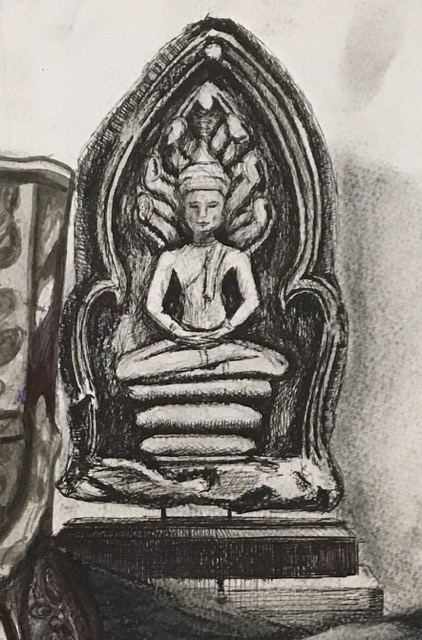
I chose the Buddha statue as it evokes some mixed reactions. I am interested in the Buddhist philosophy and have enjoyed it teachings. This statue reminds me of this peace and structure. However, in a previous house, it had been blown down from the window sill by the blinds caught in the breeze. The stone statue landed on the floor where I usually laid my baby. She was in the cot at the time. There is a chip in it to constantly remind me but also to teach me a lesson! Straight, quick sharp marks with a black pen matched the emotion.
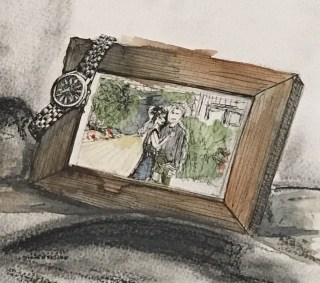
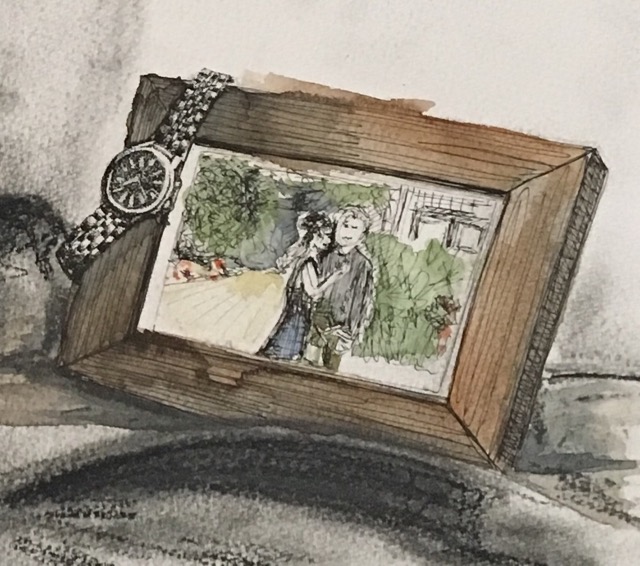
Simple and expressive contour lines for the photo frame helped to reflect a flowing and free time as I was finding my feet in life, shown by the photo taken the first year I met my husband 23 years ago.

The pointillism in the watch symbolises every movement in the time that I need to acknowledge (I said I reminisce!). Time is such a constraint that we have put on ourselves, that we don’t appear to be in that moment. The objects are on a baby blanket that I made whilst pregnant with my first child. I got so completely lost in making it and so here I was making the moment count. Charcoal allowed a soft, effect to accentuate the tones of the folds of fabric.
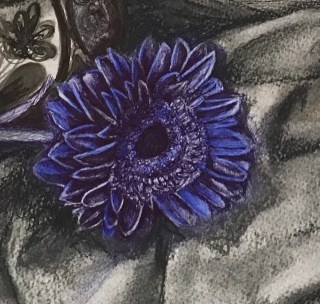
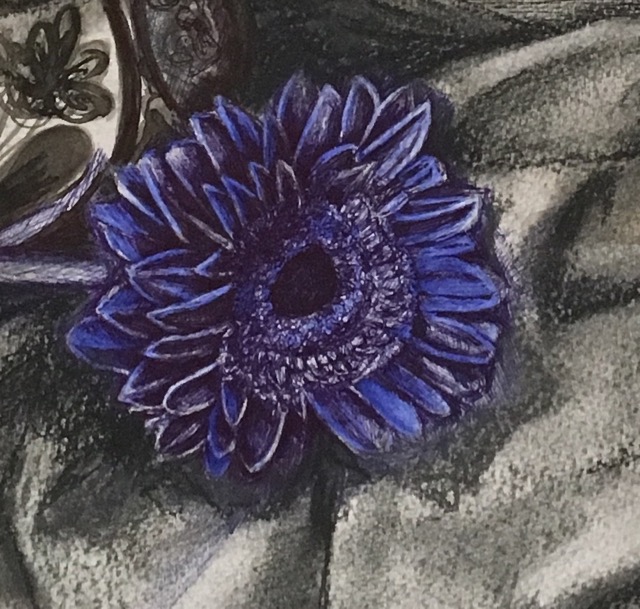
The gerbera was a flower in my wedding bouquet, soft, peaceful but carefree marks to match the memory of young love and laughter. I used a ballpoint pen which I now love. I wanted a contemporary and striking effect and the coolness and glow of the pen helped to gain this.
The assignment text seemed to suggest that I should use a variety of drawing tools and marks. As mentioned before in a previous blog, I thought I would use this obstacle and link the media. It didn’t have the softer effect I was imagining.
Looking back on this first attempt, I realise that a lot of my work needs to have meaning and symbolism. This is obviously no bad thing and is what the assignment text asked, but I would like to work with a spontaneous response to a subject and so maybe this will be possible in future exercises.
However I decided to have another go, making a simpler and quicker response to the objects. Firstly, fewer objects and secondly, using mostly one medium.

So much happier with this attempt, it is not so complex because of fewer objects and one medium. The marks may not be so apparent but the gesture and flow that I drew with reflected the feelings of the object.

Assignment 1 reflection using OCA assessment criteria for Drawing 1

Demonstration of technical and visual skills

I have definitely noticed an improvement in my observational skills over the last few years especially. As a primary school art teacher, I have go back to the basics with the children and find myself relearning along the way with them too. In drawing activities, I direct them to  draw what they really see, and it’s not as easy as it sounds. I find myself often looking at objects wondering how to represent them best in drawing, what material or technique, where are the blocks of light and shadow.

I am getting braver in what material to use and in doing so I hope my perfectionism fades a bit. I would like to be more spontaneous and maybe with a less familiar tool, this would help me be more relaxed as I learn how to use it.

Through teaching the young children, I start to introduce composition to them in its simplest form. I try to apply this to my work but often I become too abstract and random and just try to get a feel for balance along the way. This doesn’t often make for balanced work but it does offer a more fluid spontaneous way of working…hmm, how to get both?!

I purposely planned the composition first of all in this assignment and noticed it didn’t really impede on the rest of my work flow. One bit of effort at the beginning can make for a more flowing drawing. I will make more of my composition planning in future.

Quality of outcome

I am pleased with the outcomes of both attempts, especially the second drawing as it is simpler.  I feel I have managed to capture the light and shadow and also unified the picture to some degree despite using various drawing tools. However, I think I have tried too hard and it’s not ‘fluid’ enough; as I have mentioned before I would like to be more relaxed and spontaneous. I would like to do more with continuous and gestural line drawings. I am surprised about the effect of blue ballpoint pen and am glad I have another tool to my arsenal; I usually can’t stand it when the children write with it, but art is a different matter now!

Demonstration of creativity

I think I have demonstrated creativity in this assignment. I have interpreted the text my own way; I dealt with the original obstacle and thoughts on using more than one drawing medium, I have added personal meaning to the drawing and allowed my mark making to reflect this. I wonder if I could have actually practised my need for fluidity and produced another attempt in such a way. However, I think this owl have lost the original aim of the assignment in that mark-making in response to the text would not have been the focus.

Context reflection

No research was completed in this, it was more about me finding my feet in this module. I enjoyed researching Redon and in hindsight would have looked up and emulated some other artists but all I wanted to do was put my own pencil to paper at this stage. This is the first time I have completed my learning log online so I am still getting used to posting with some frequency. I have also got to get used to the 21st century social media problem of not getting any viewers or comments! I have to remember that is not why I am writing the blog 🙂
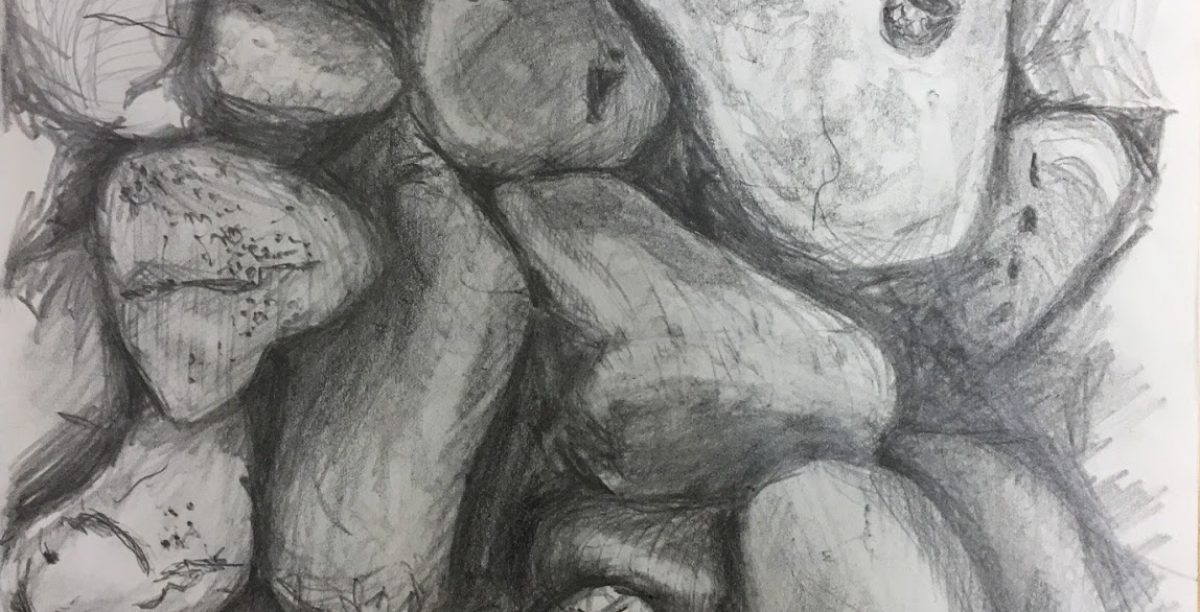
PART 1 P1: Exercise 1 – Experimenting with expressive lines and marks

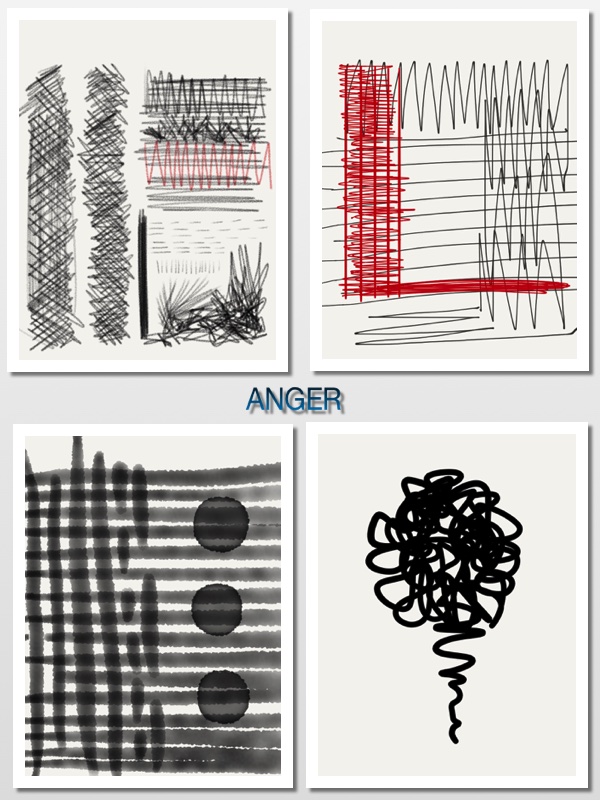
Experimenting with expressive lines and marks


I haven’t had chance to get the right size paper for the activity yet. But I thought this would be a good opportunity to try out my new Pencil for Paper 53. My first foray into digital drawing.

What follows are all digital drawings using only Paper 53 and its pencil. It is NOT a review of the technology, although I have already realised a massive difference in the techniques used to produce a similar effect. Nothing beats a graphite pencil/ink and nib…in my opinion.

It is a given that the process of art in all forms should, in its purest form, be a means of expression for the artist. Inner feelings, emotions, contemplation, memory,  therapeutic…the act of making art can be a release regardless of the emotion. 

Drawing is an expression in a simple, accessible form. The emotion at the time of mark-making, could be expressed in some manner to reflect them. Yet, a mark made in joy by one person will appear different to another. This is what I love about the pure expressionism of art; it is truly individual. We may share the same opinion but our narrative is our own. Non-objective objects were created, lines, marks, and abstract shapes. Certain emotions were transformed into such marks.

These are the digital results.


CONFUSION/FRUSTRATION
Design a site like this with WordPress.com
Get started