Assignment 2 and reflection

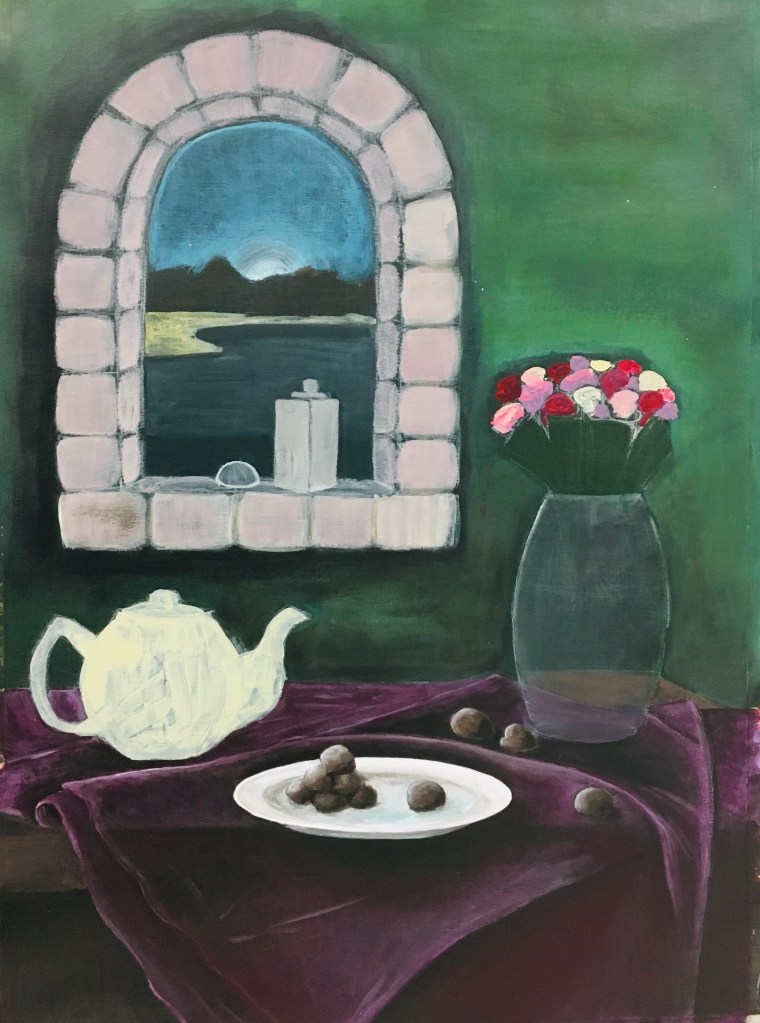
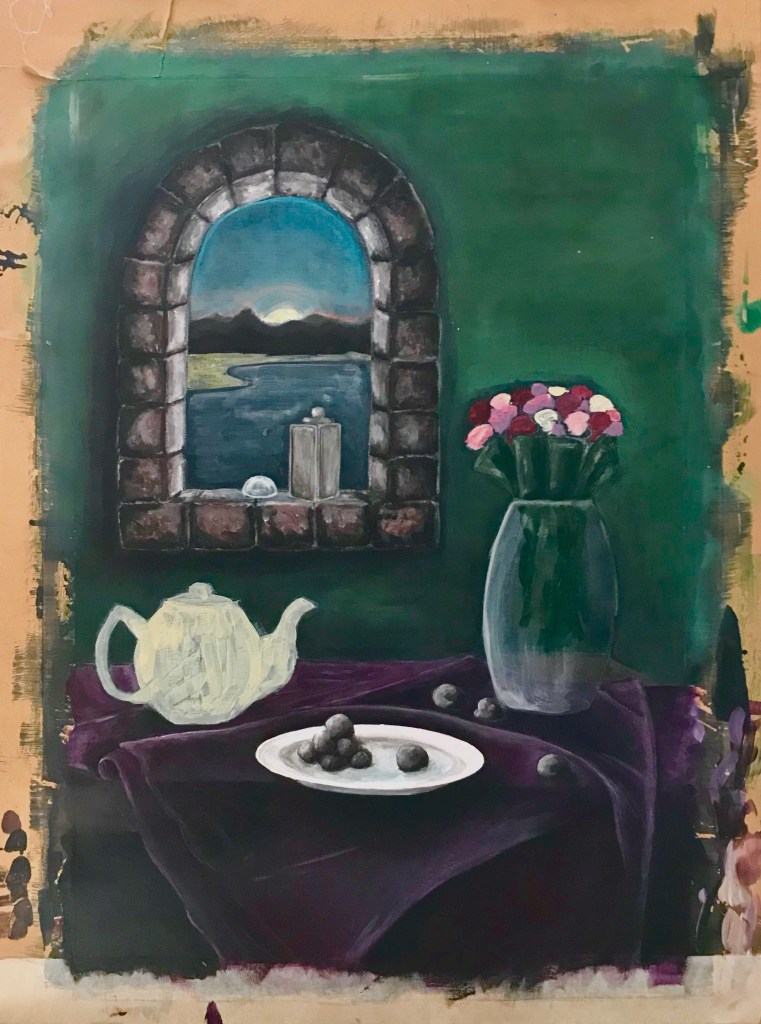
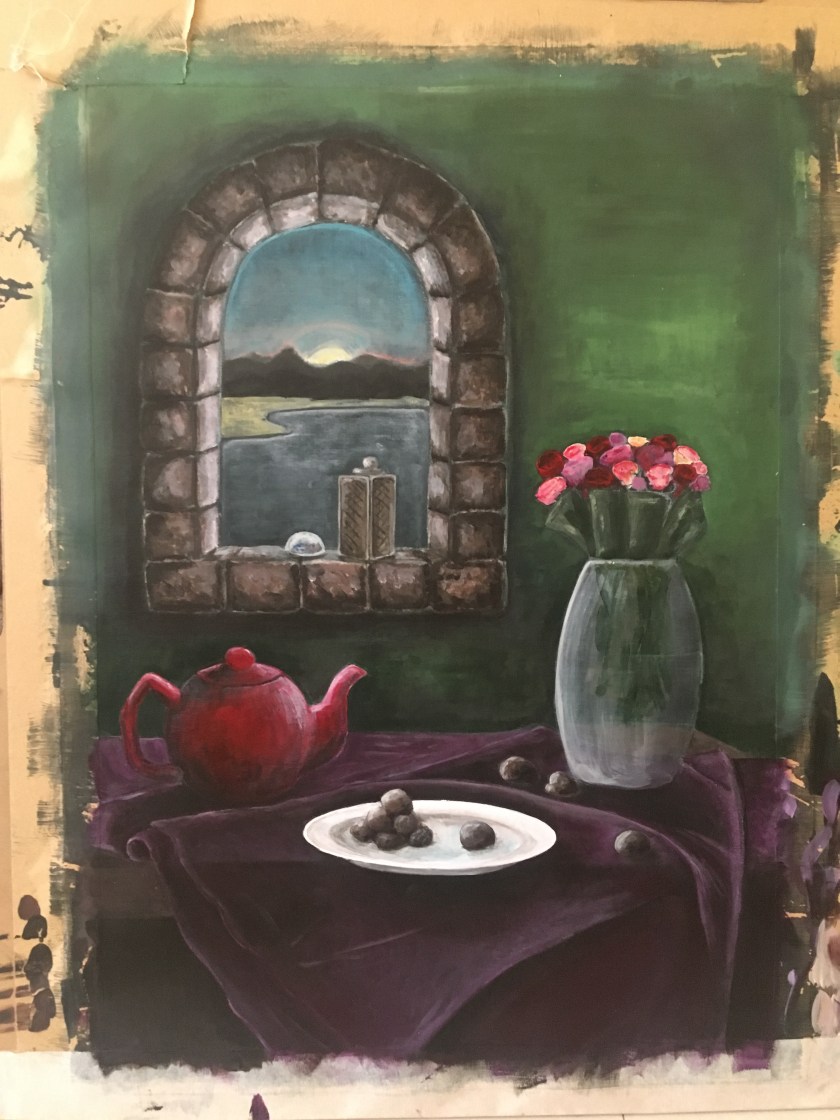
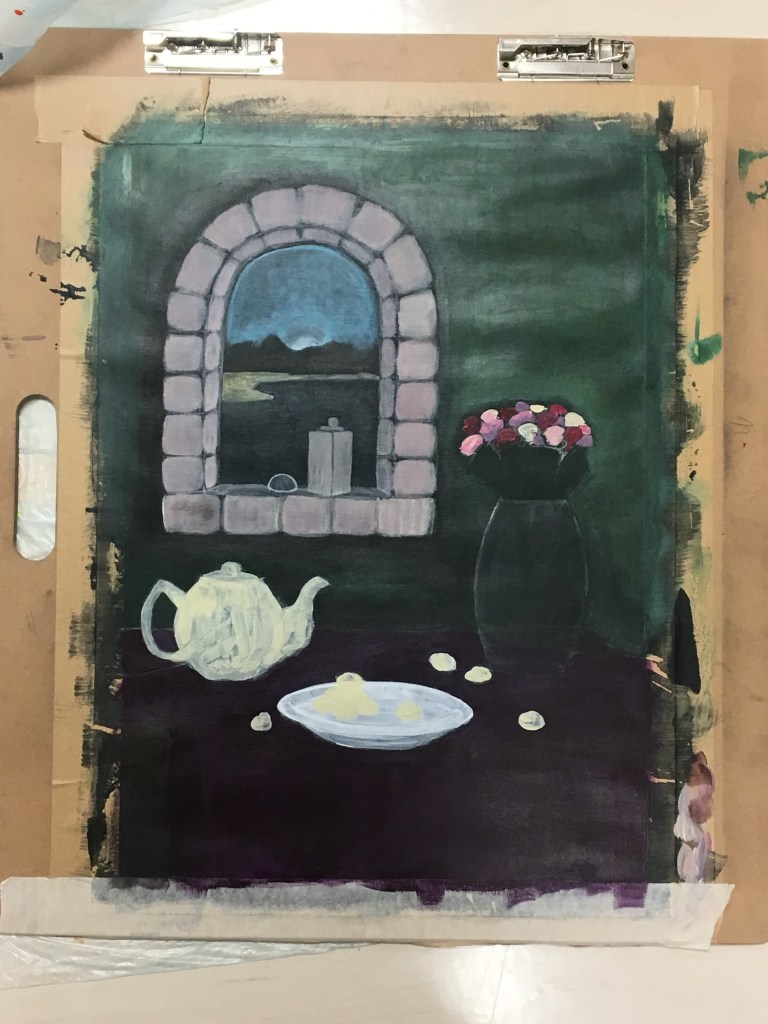
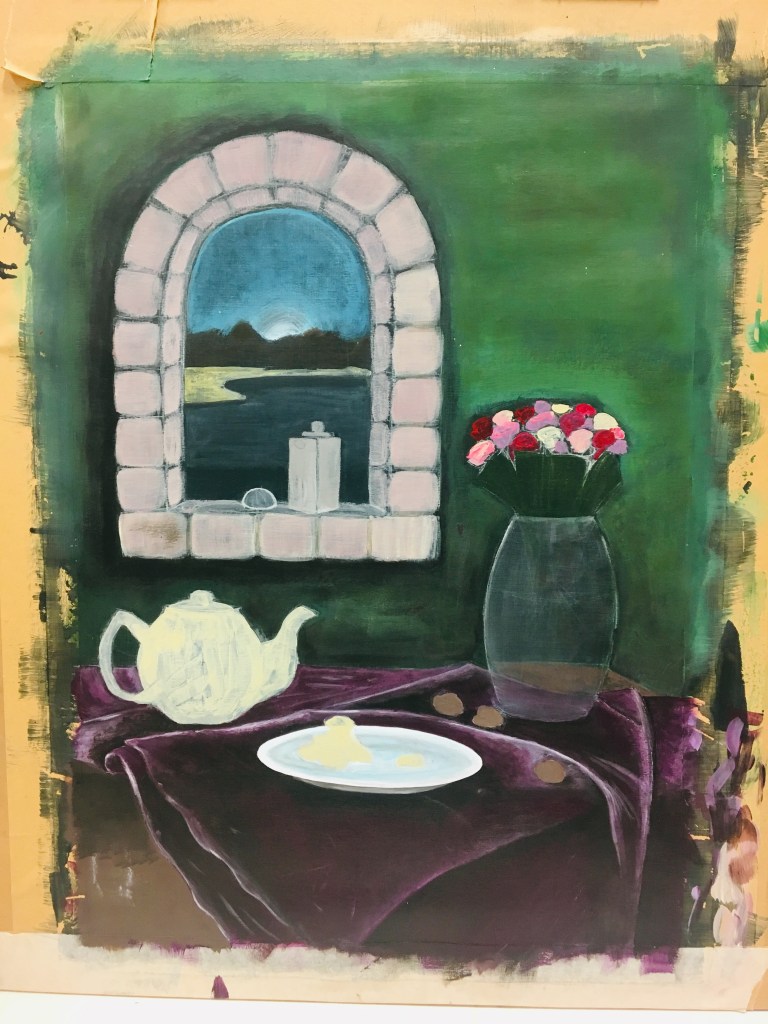
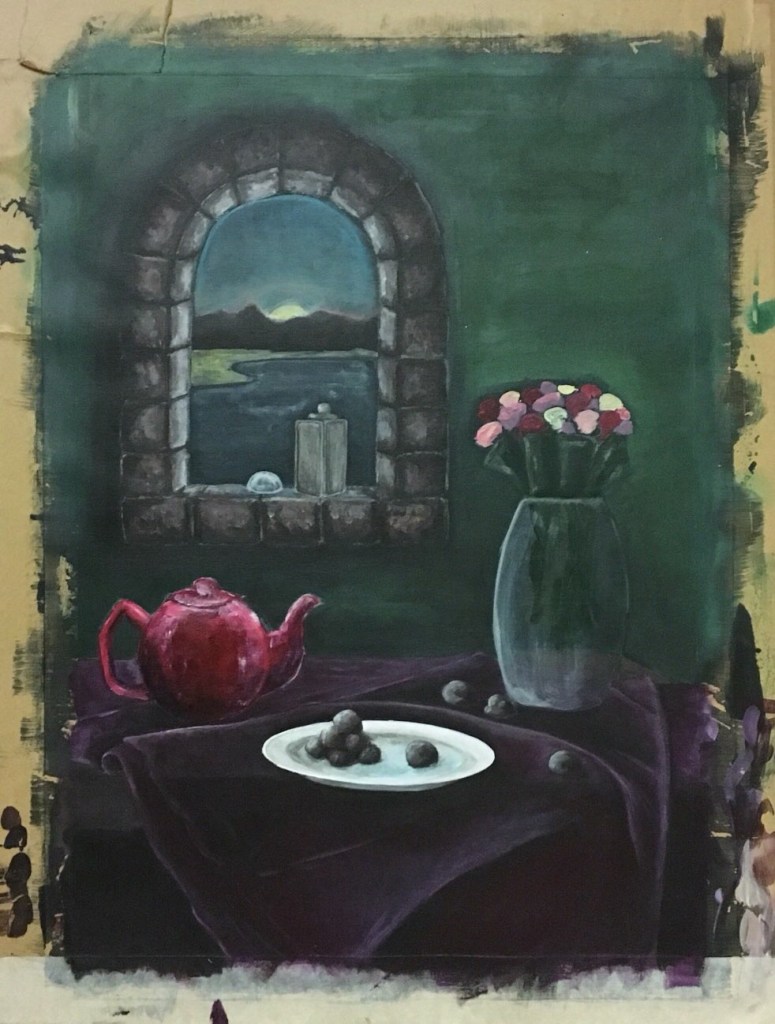
This still life was inspired by the incredible skills and arrangements of the Dutch Golden Age painters. I have been in awe of their richness and detail and am already a little concerned that the perfectionist in me will struggle with making this picture become realistic without looking cartoony.
img_0979
Blocking in the tones
img_1007-1
Adding detail and lifting tone

img_10182019-04-22 15-52img_1019

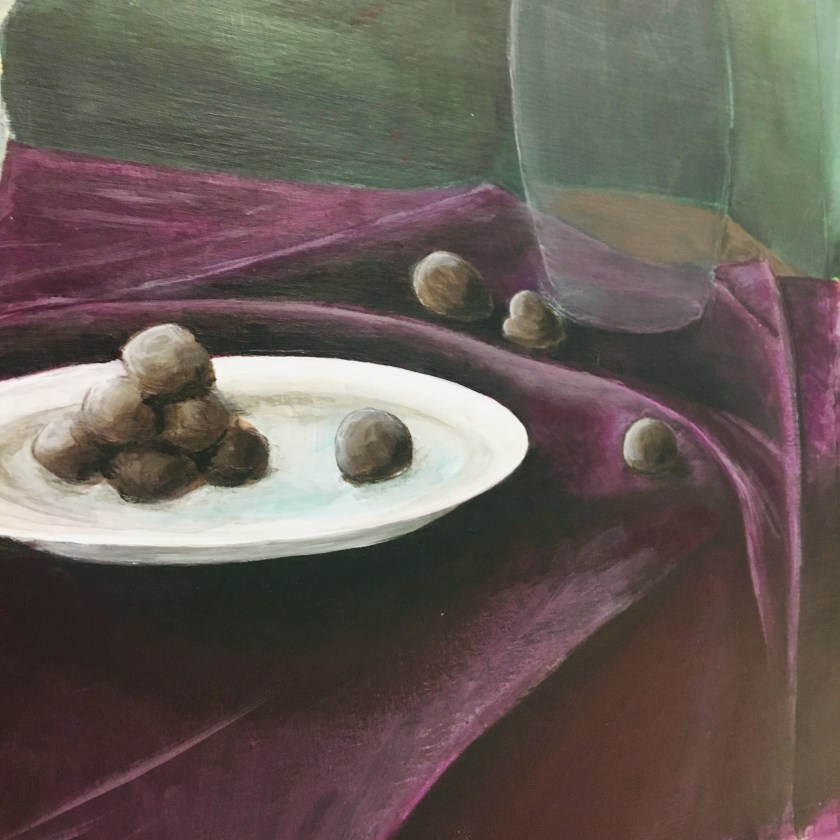
I initially enjoyed working on the fabric but ended up spending all my time on it. I had to move away from it. I was struggling with the making the tones looked realistic and accurate. I realise that I have probably made work for myself in making the painting up by referencing and observing only parts at a time.
2019-04-22 22-36

img_1231

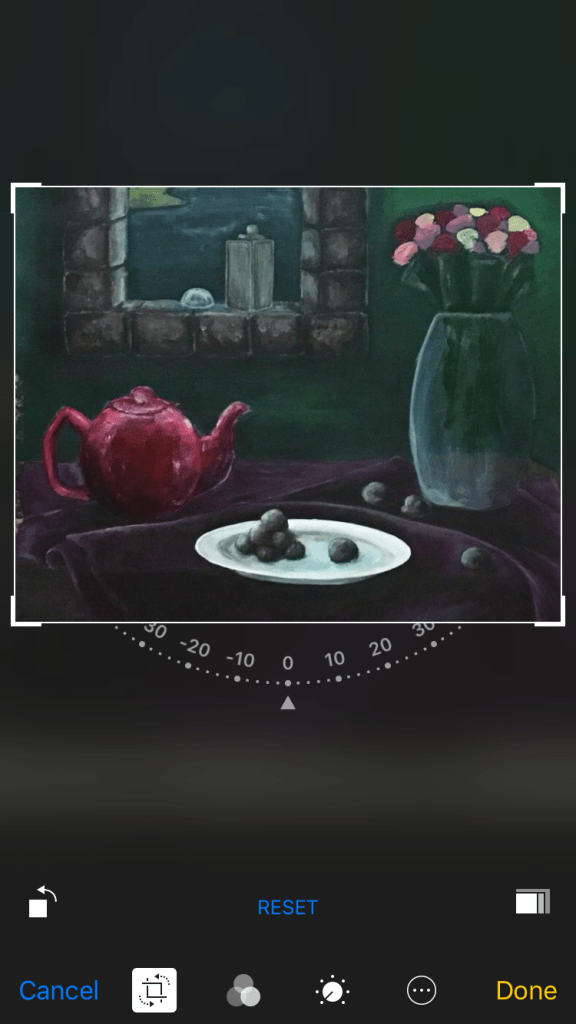
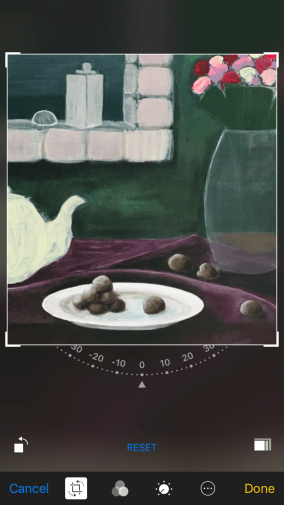
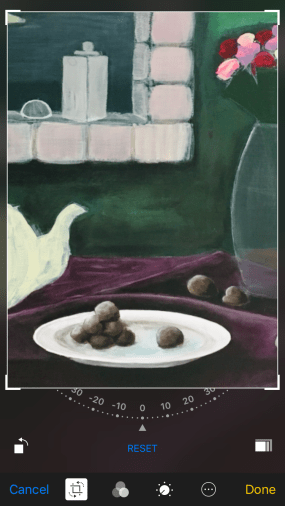
As I have progressed through this piece, I think what I would do differently. A more cropped version is a possibility.
img_1028                       img_1220

2019-04-23 14-37

IMG-1253
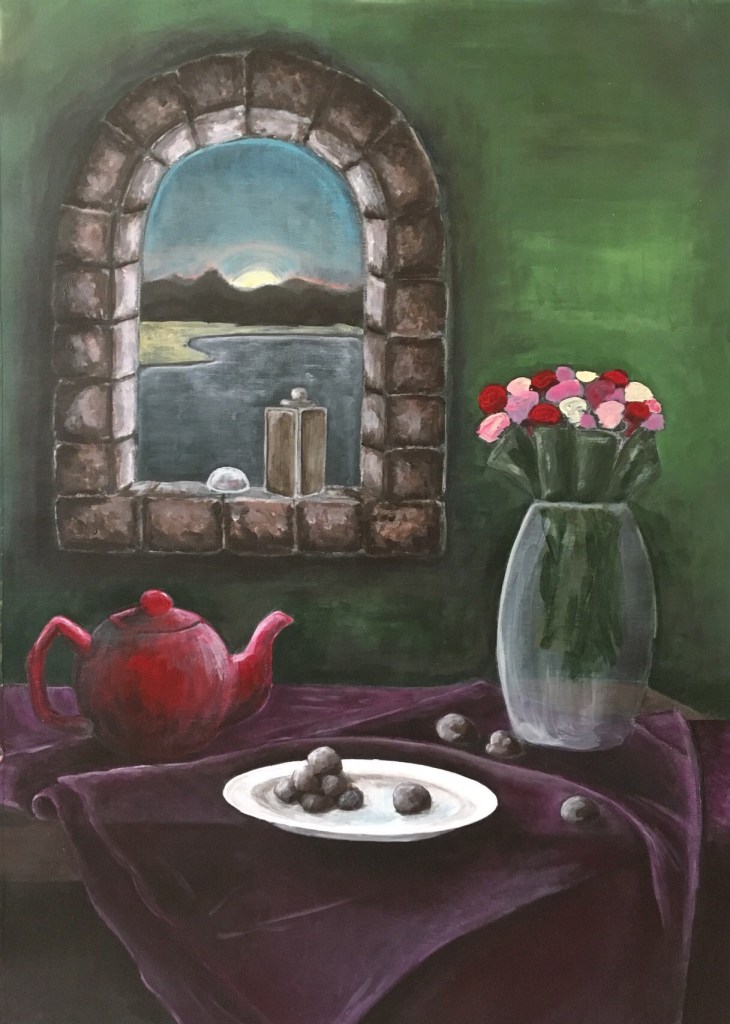
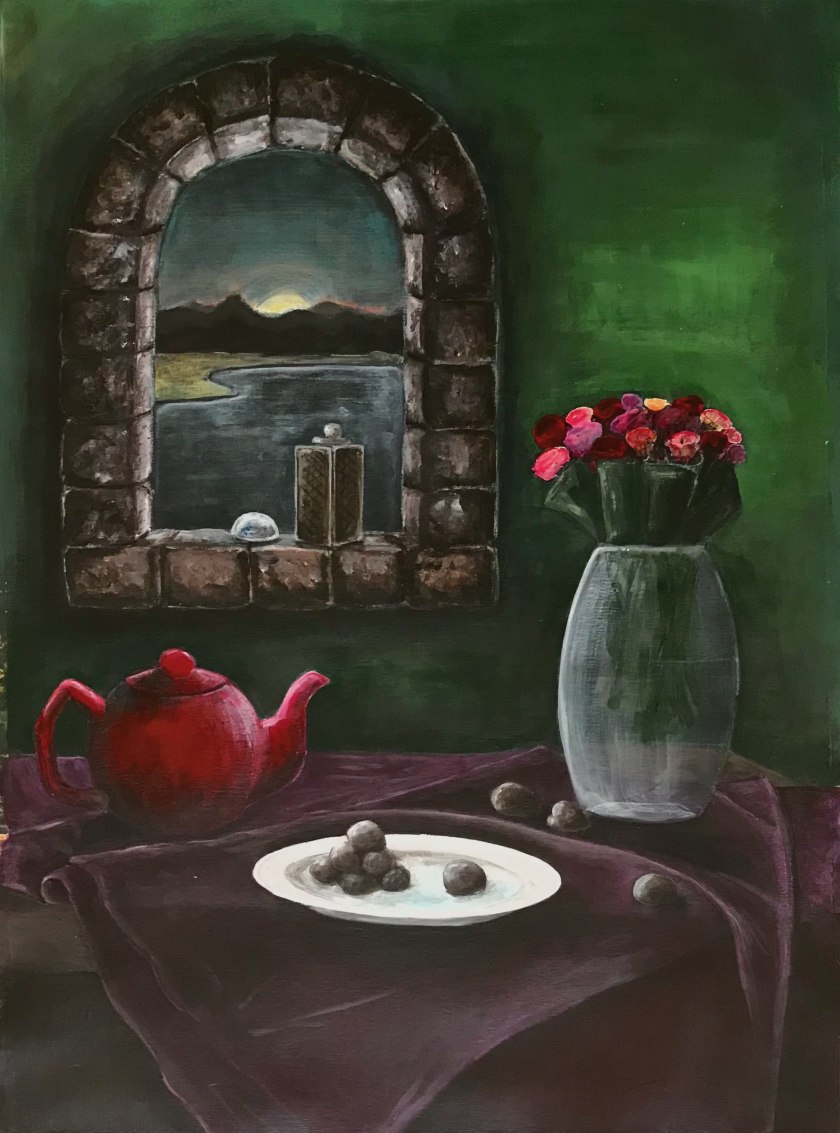
Completed Assignment 2 – idea 3

In the feedback given to Assignment 1 I made noisy brushstrokes on the stool holding the flower pot. I remember thinking I liked the effect as it was  a rough wooden trunk. Looking at it, it seems that it was a noisy effect across the whole picture. I thought this was a more relaxed, fluid approach that some artists have, with brushstrokes being visible. Maybe it was the texture of the paper making the noise. I think I have avoided that in Assignment 2 with smooth working and texture across the most part.

Looking back over the process of this painting, I see I have lost myself in each element and although I think I have flowed from one to the other in my composition, it feels disjointed to me. I could work on several aspects differently if I were to try this again. For a start, I would relax more. This took some time as I was constantly observing my still life elements in parts. Looking at the photograph of my painting I see that I need to add more shading on the flowers, leaves and the lantern and mountain shadow on the beach. I need to work on the glass vase as well. The perspective on the window stones is glaring at me. I think I could have made the window aperture bigger. With an infinite amount of time I could work on this continuously to amend and perfect. I will spend one more session amending and will call it a day.

I added a dark translucent wash over the blue sky as well as the beach.
2019-04-23 21-53
Completed Assignment 2 – idea 3

Completed Assignment 2 & Reflection

  • This assignment is designed to pull together the fine observation and practice that you’ve done on this part of the course. 
  • You’re free to choose your own source material and media, provided that you take account of the factors listed below. You can either work on a still life, or interior scene – or a combination of these. 
In the work you produce now you must demonstrate a growing understanding of:
  • the use of colour in drawing
  • the most appropriate medium for the subject
  • composition and context
  • mark-making and contrasts of line and tone
  • accurate and expressive depiction of form, experimentation with idea, material and method.
  • Is this a creative composition? 
  • Is my subject interesting? 
  • Am I using the most appropriate medium, colour, method, etc.?
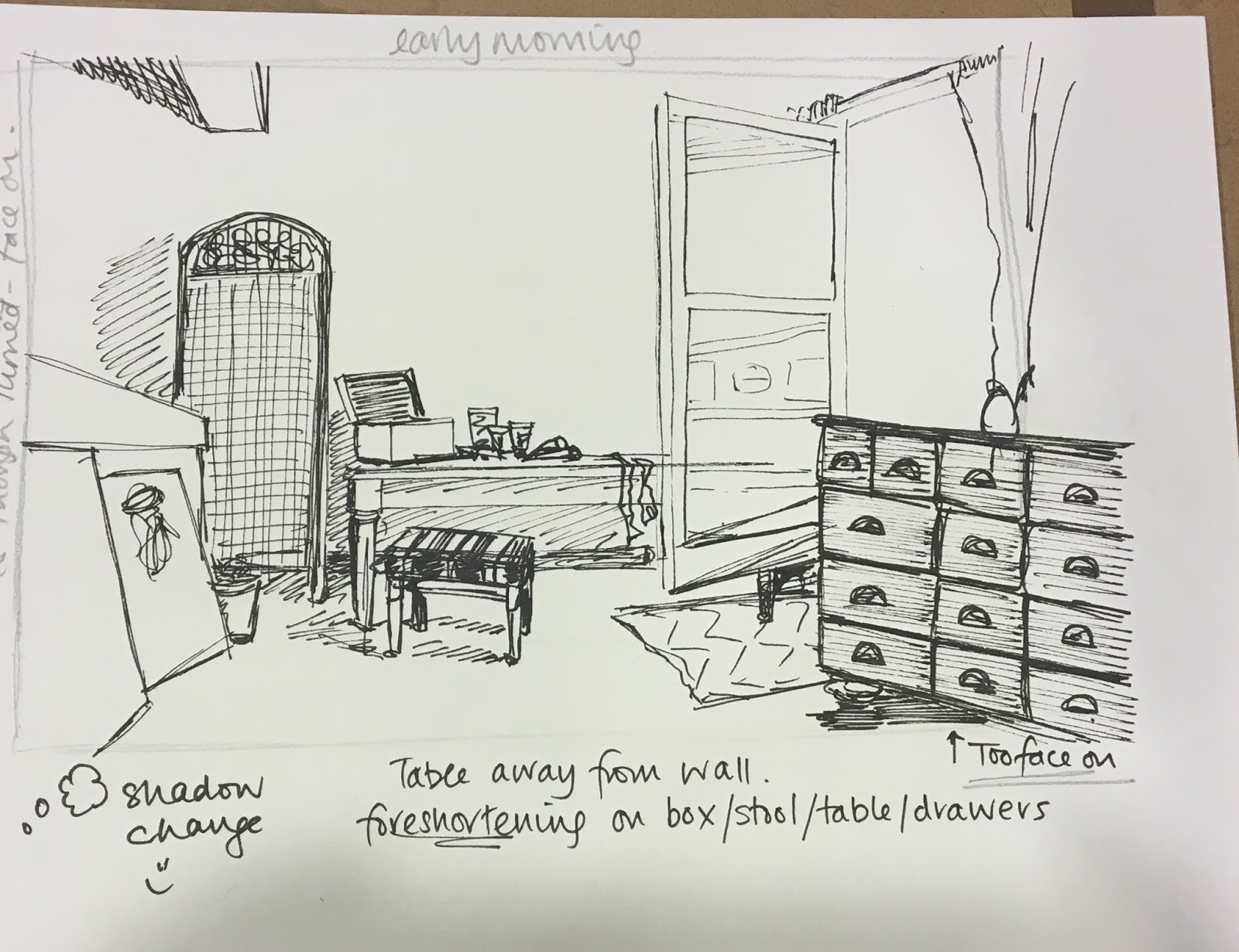
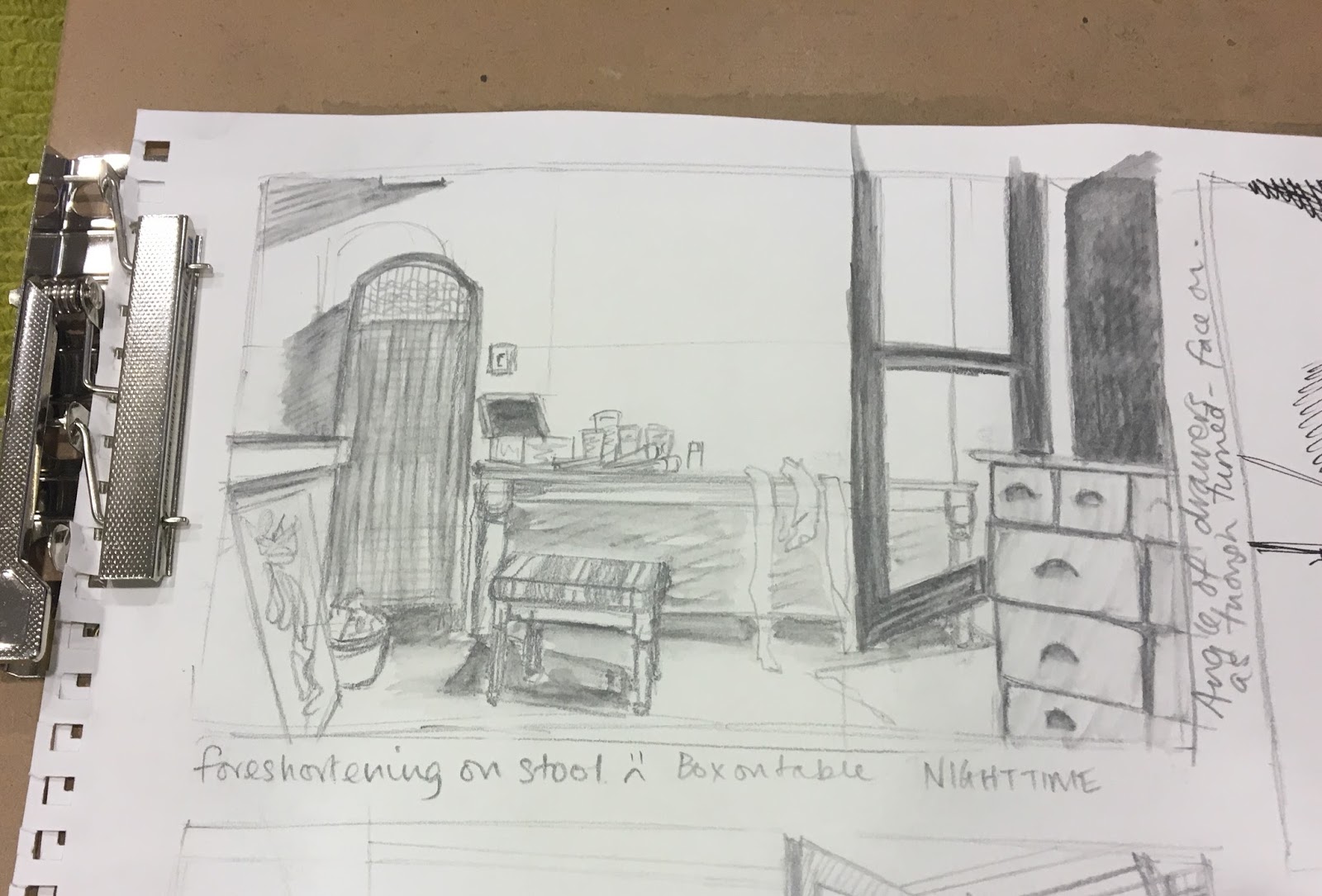
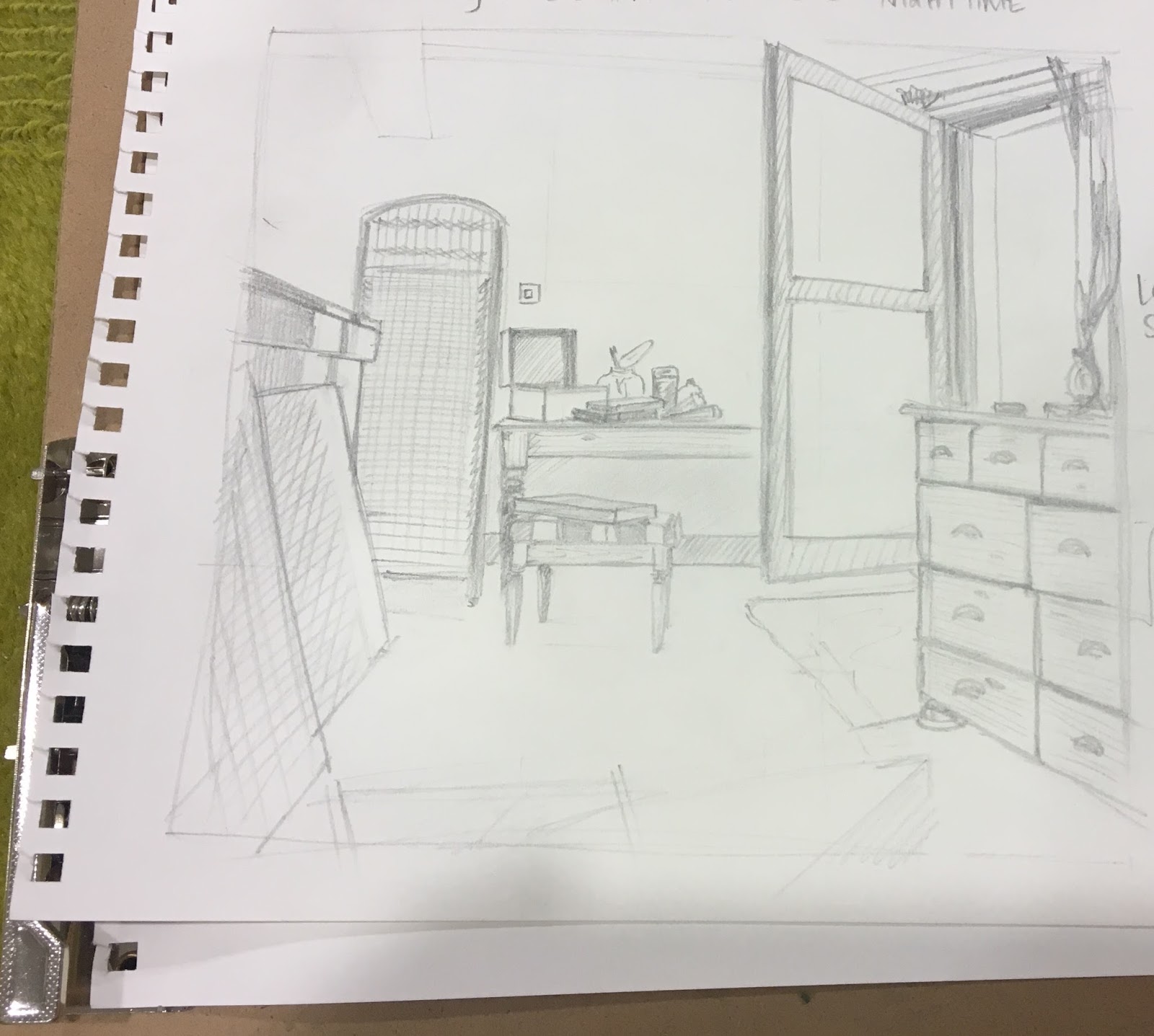
In my previous posts here and here I have shown my sketching and preparation for this assignment. I enjoy perspective and I liked the idea of combining a little still life of sorts with an interior scene. I am always on the lookout for interesting light shapes and tonal contrasts; I see how they could evoke a mood maybe in a photo and I would love to portray that in a drawing. 

Reflection

  • the use of colour in drawing
  • composition and context
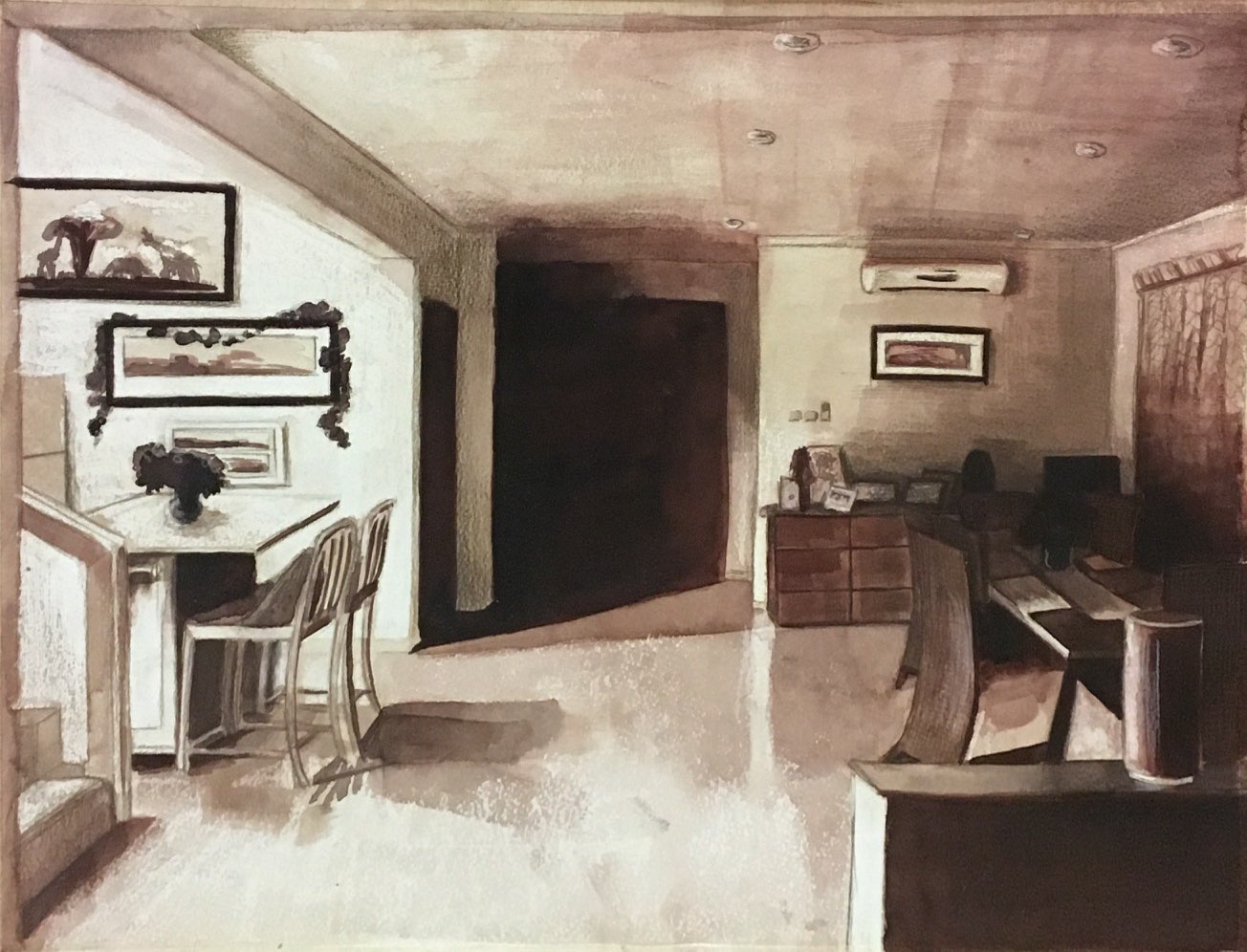
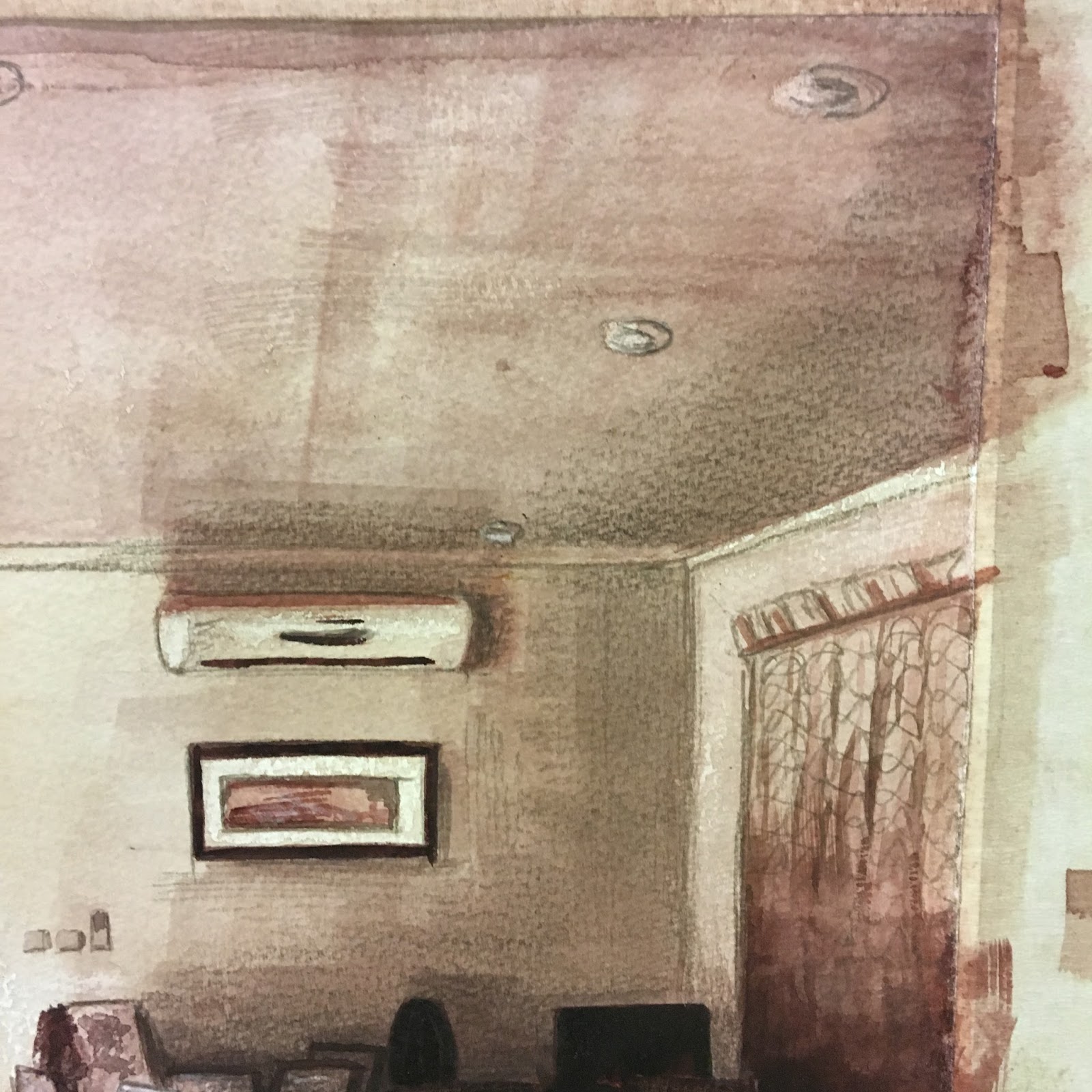
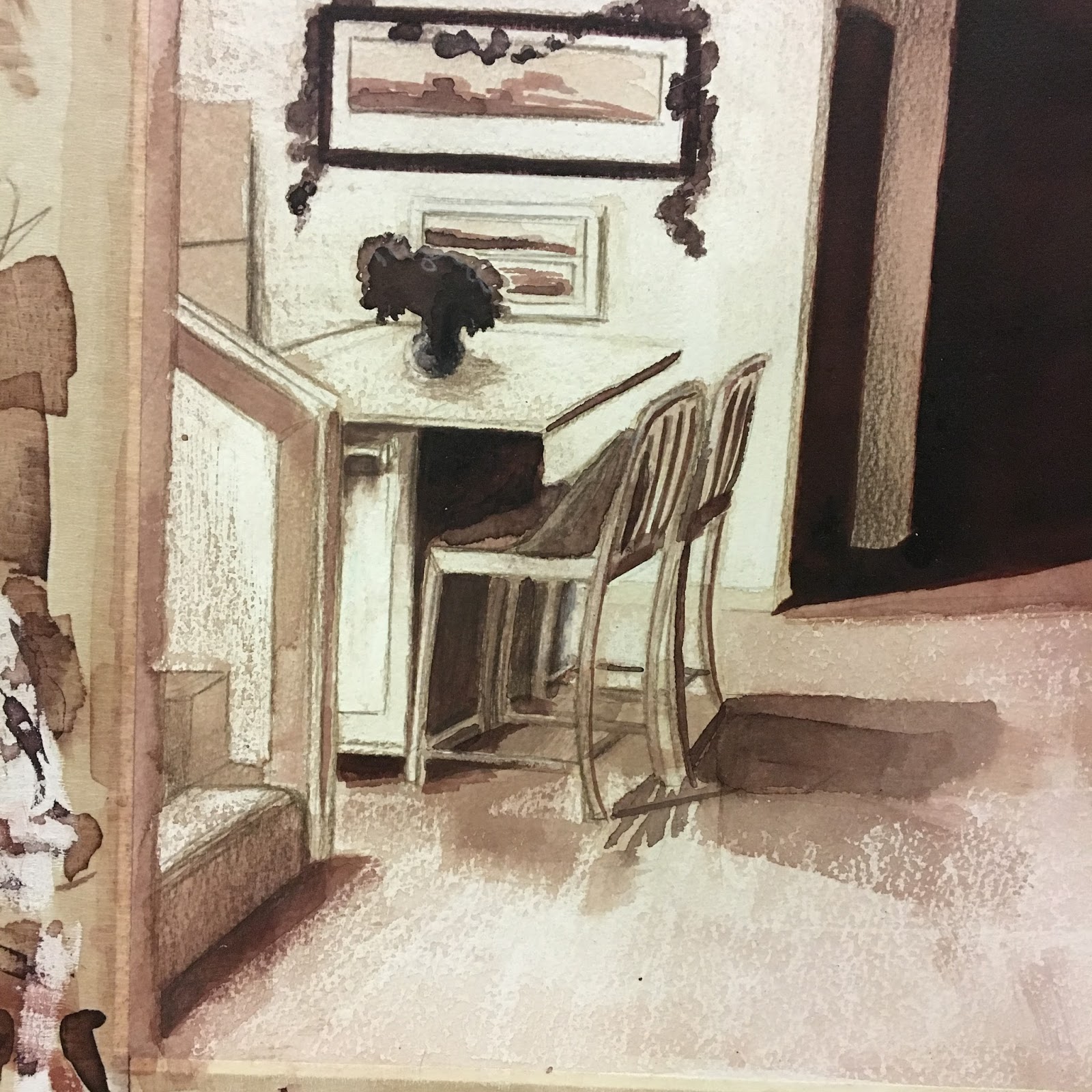
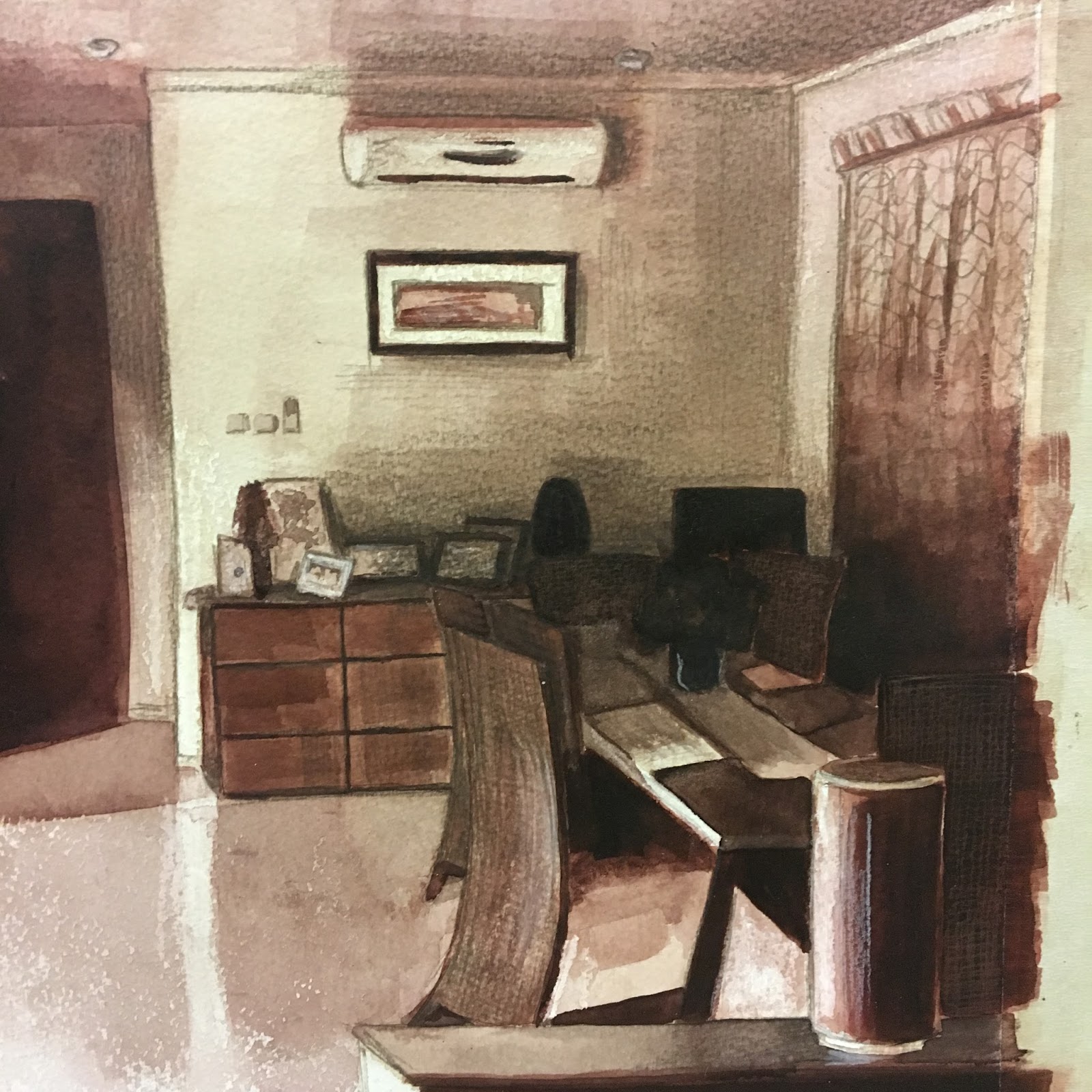
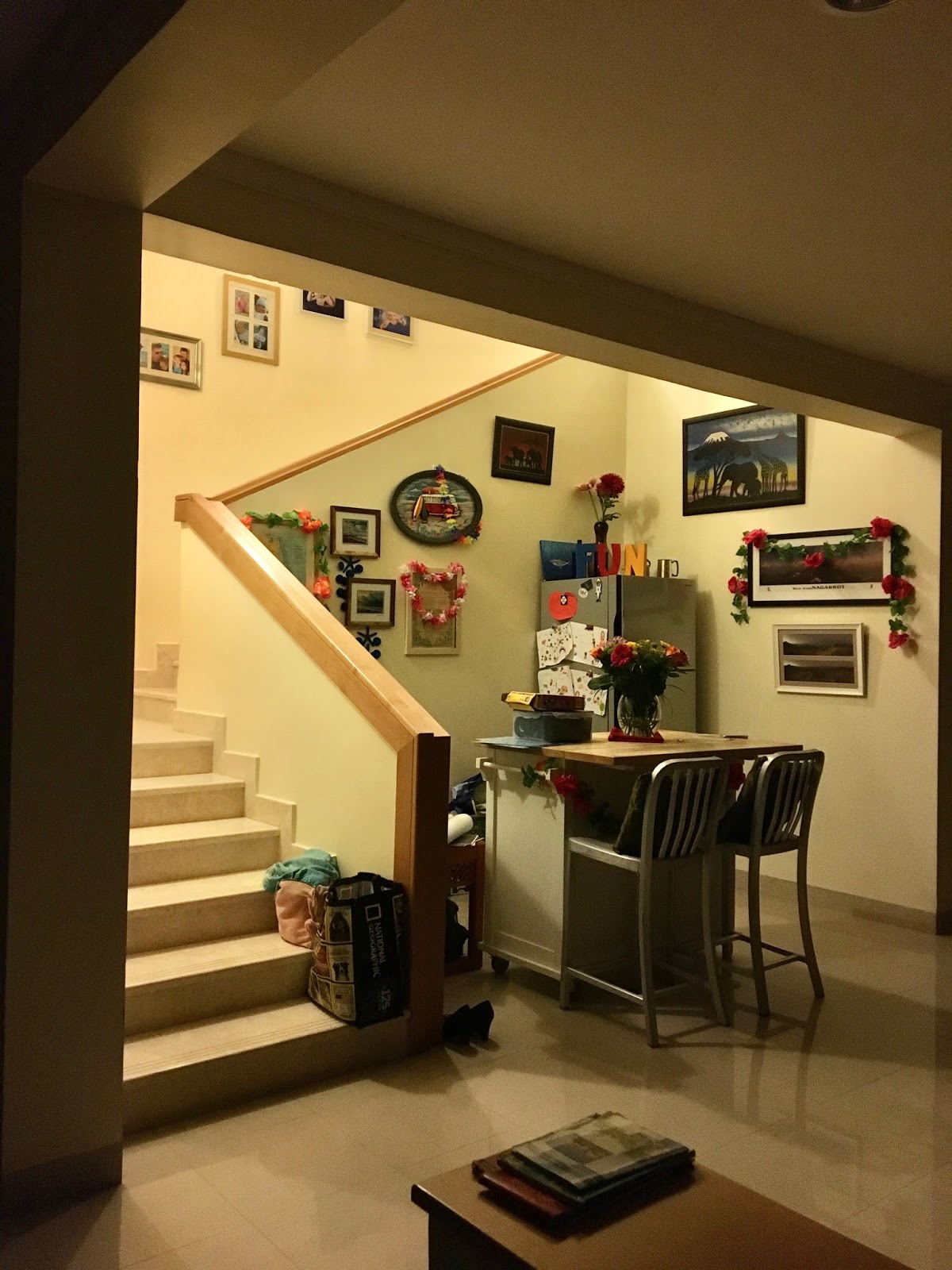
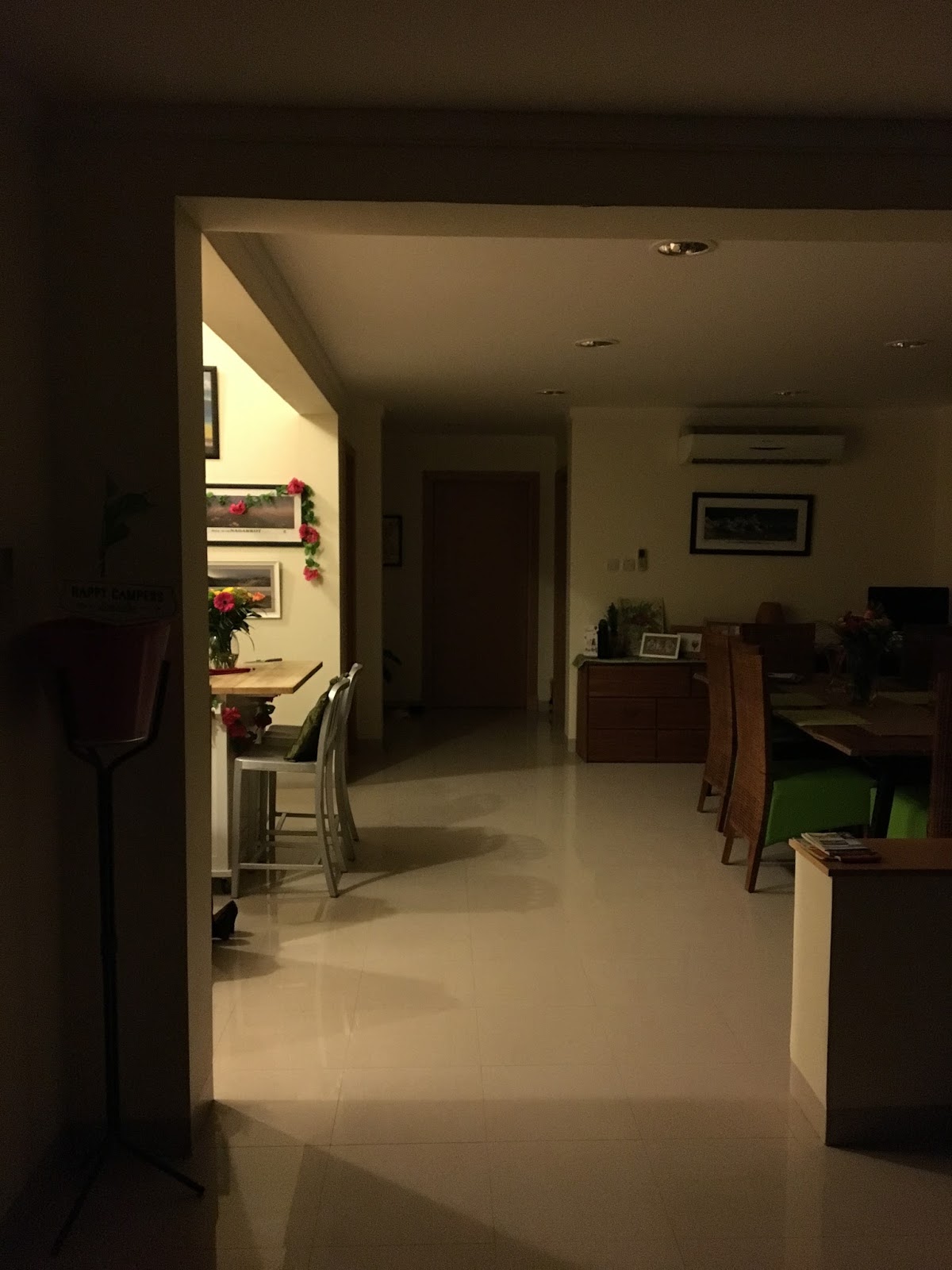
After preparing mostly in black and white, I chose to complete my final assignment piece in warm sepia tones to create a welcoming warmth to the room. If I worked with too many colours it would suggest a more balanced, natural light across the room. It was the late evening, with the house in darkness apart from one landing light, shining down the stairs to the left of the picture.  ‘Leave a light on for me’ seemed an appropriate title as I noticed the shot when I came into my home late at night and everyone was in bed.

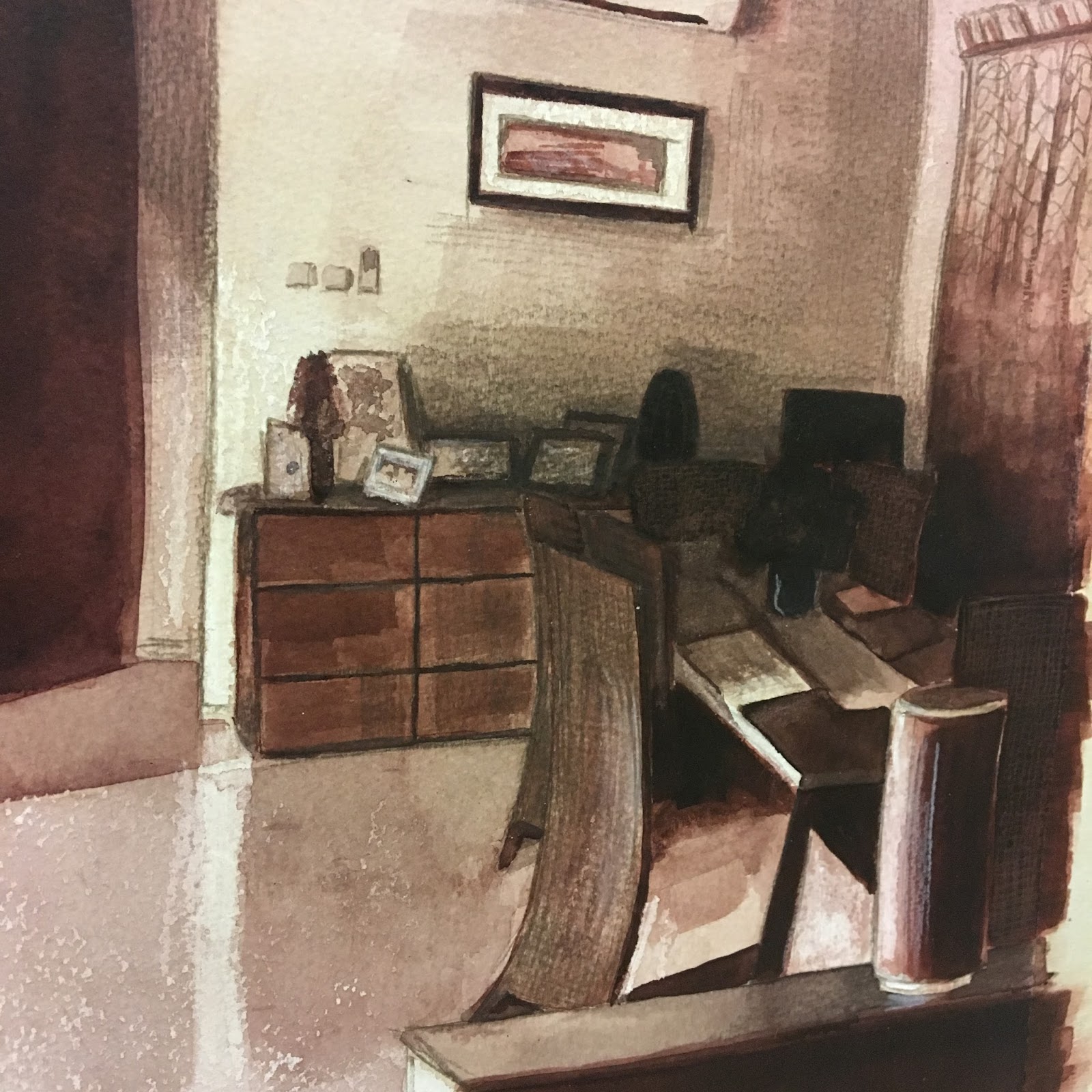
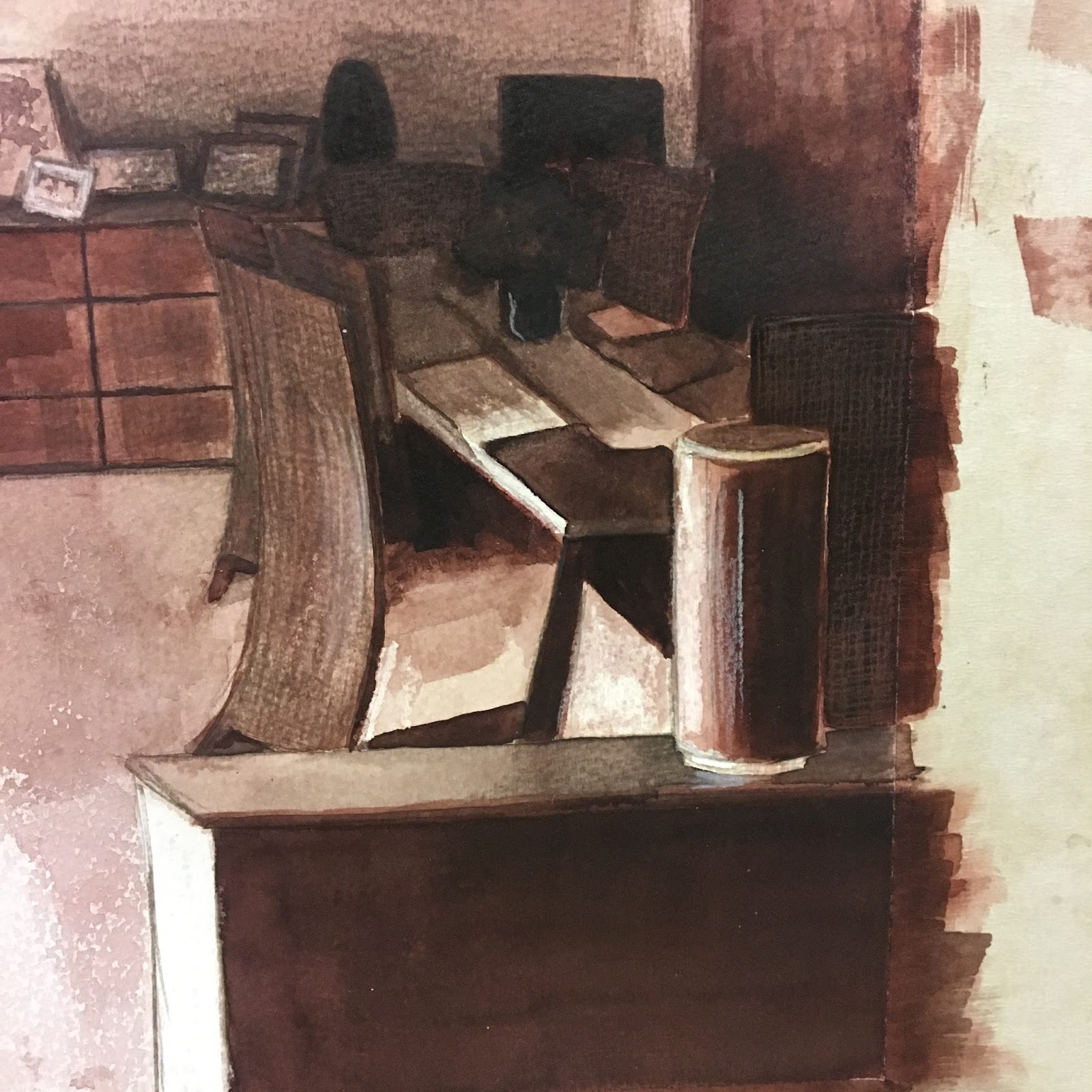
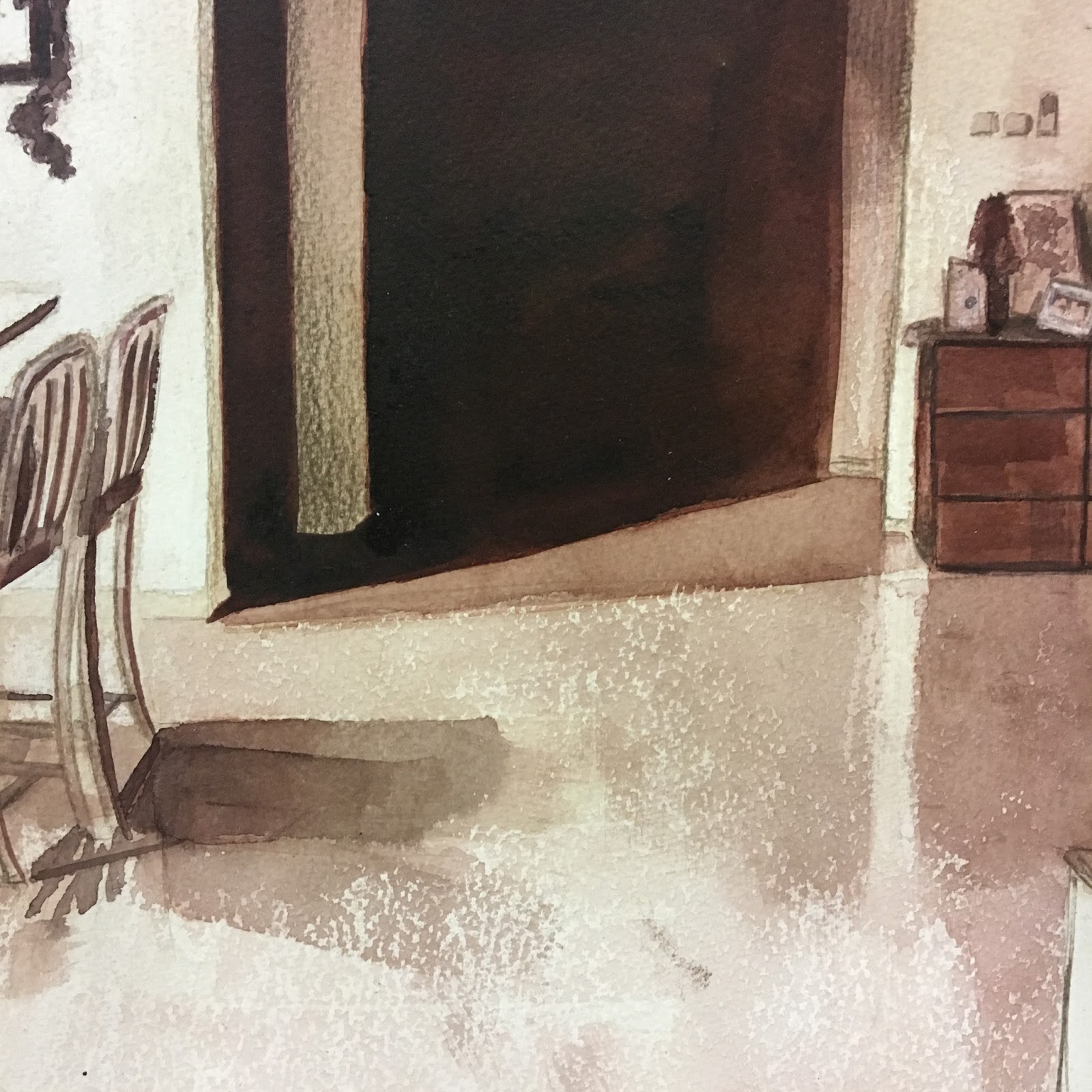
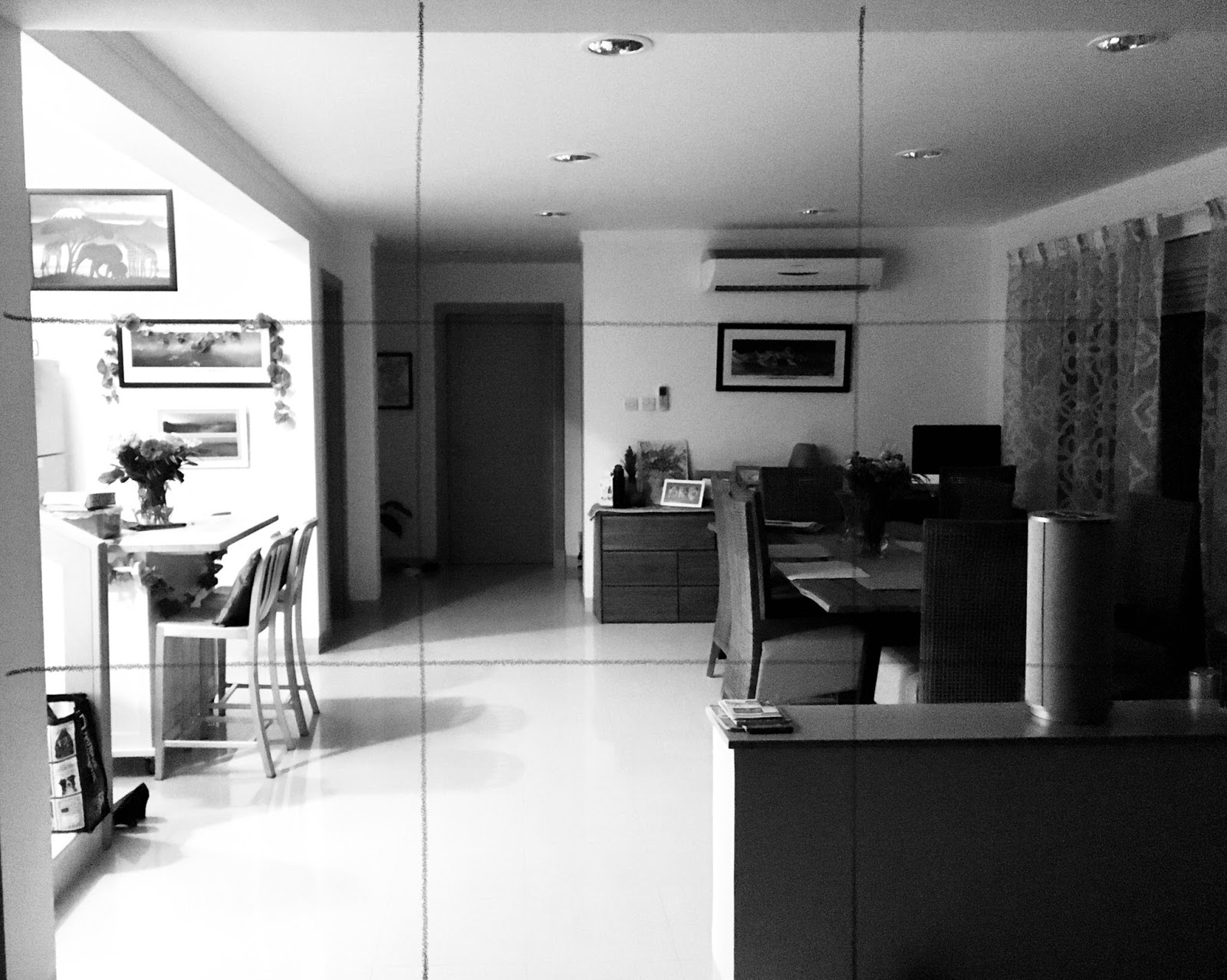
I think the shot struck me instantly as it was balanced in its composition without me having to tweak too much. It was in thirds from left to right – the bright light, bar area and stairs to the left, the darkness of the kitchen door to the centre and rear and the shadows of the dining table to the right.

  • the most appropriate medium for the subject
  • mark-making and contrasts of line and tone
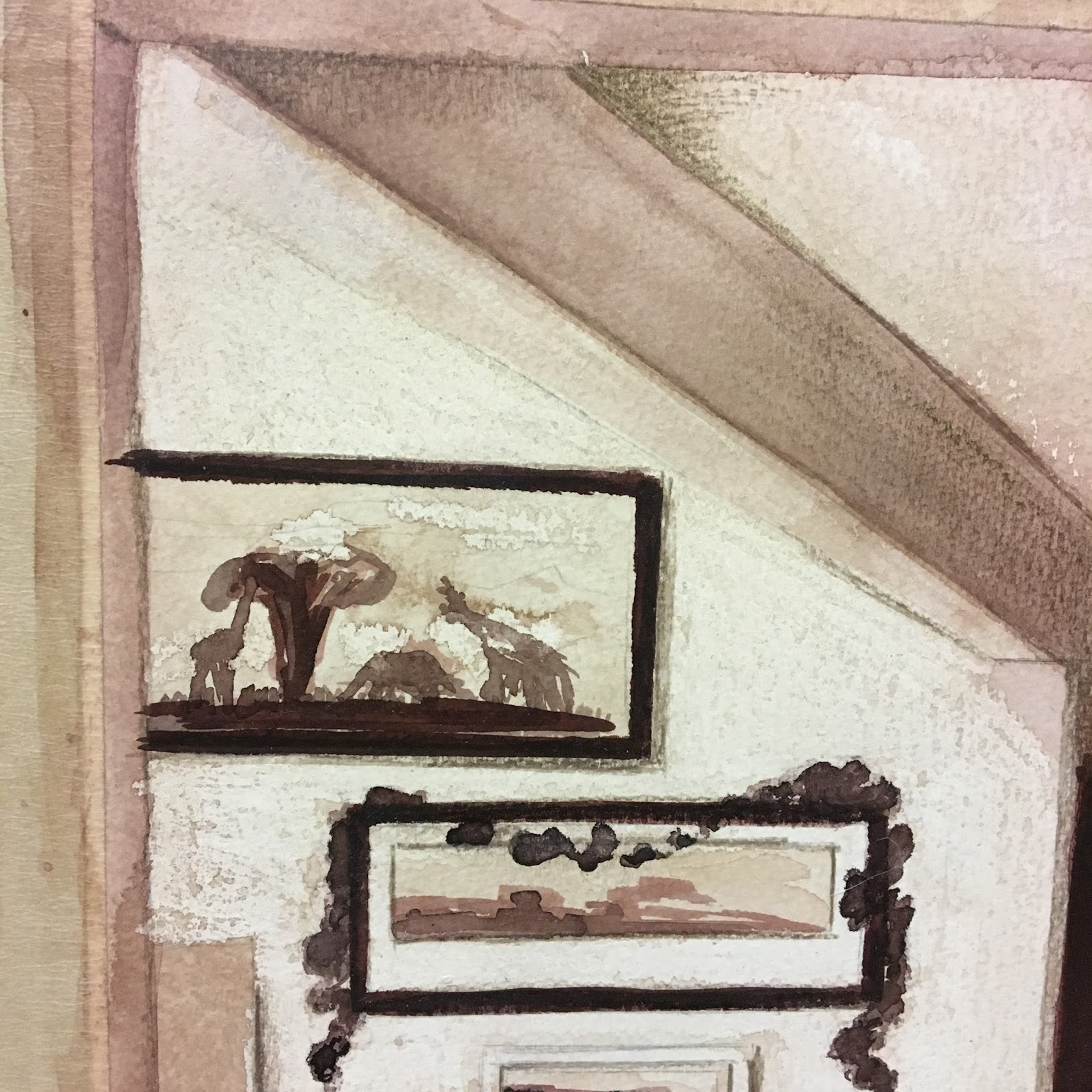
An inviting, warm atmosphere required similar materials to recreate such a feeling. I started in black pen for all the sketches I did and, as much as I love pen line, it was too ‘matter of fact’. I had ink wash in mind from early on; I liked the way it ‘worked’ with oil pastel in its resist effect and it worked well to create that artificial lightness without risking it being muted by the ink wash. Maybe pencil to add definition and detail as the last stage. I thought chalks would be ideal for the soft, peaceful, ethereal effect but are not defined enough. I knew that mixed media approach would be ideal to show definition as well as effect. I finally settled on mixed black and Indian Red inks in various dilution helped to make a warm sepia picture, with subtle pencil detail. The pencil worked as an additional layer to show detail and contrast; it helped me to define the pattern in the sheer georgette curtain to the far right. A layer of pencil also gave a ‘veil’ to suggest tangible shadow.
  • accurate and expressive depiction of form, experimentation with idea, material and 
    method.

I was working to get a perfectly accurate picture as is my usual wont, but whilst I was completing this, an ongoing discussion was being had on the Drawing 1 forums regarding assignments, expectations and ability on the OCA drawing course.

There is some frustration that people come to a drawing course with little formal training and the OCA accepts them on a degree course/module. This might suggest that the OCA wants people who are willing to experiment, investigate and think outside the box rather than provide accurate depictions of still life. But then feedback given on the experimental and progressive assignments might be critical in the lack of technical skills. And it becomes a catch-22 situation; is this a technical course or an application of knowledge?

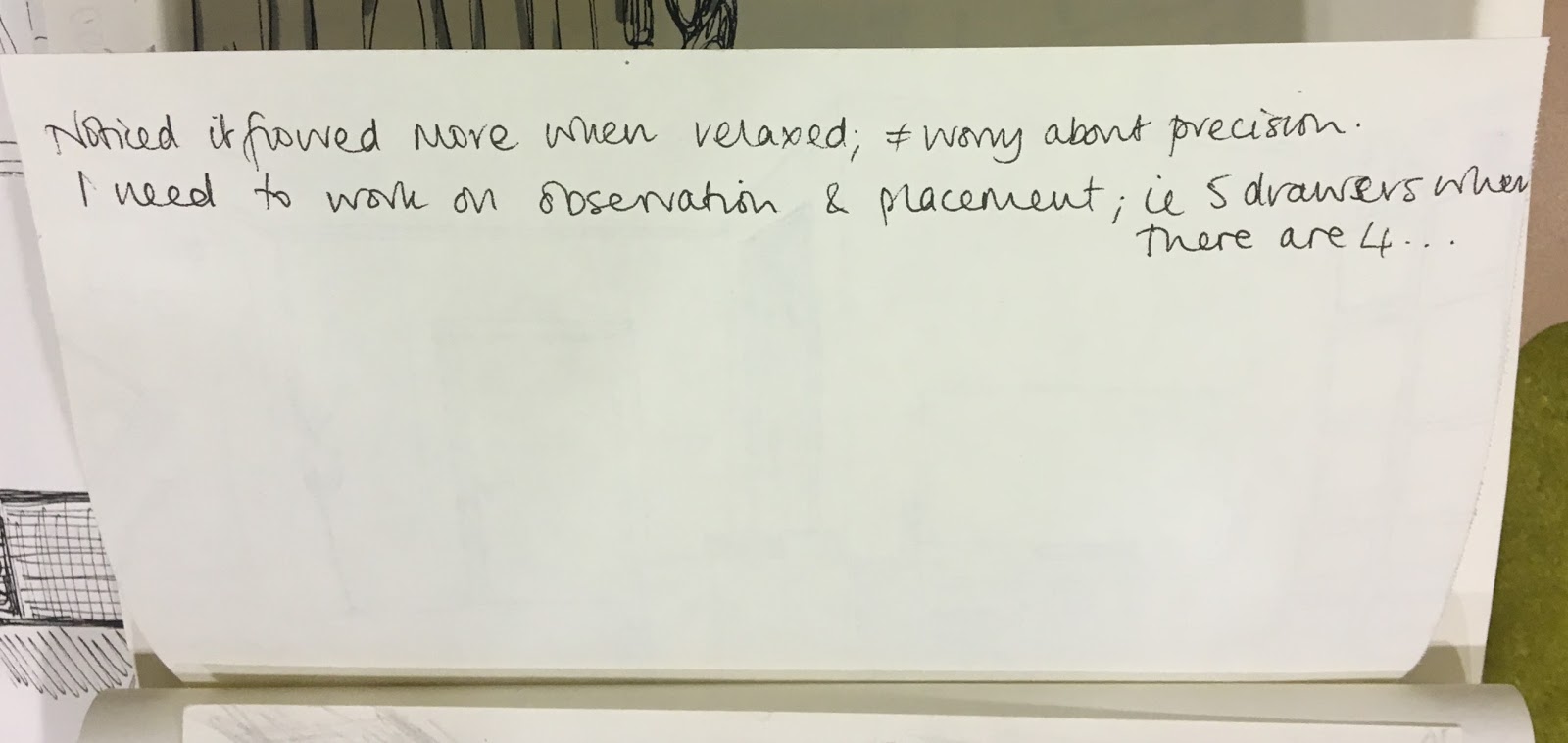
With that in mind, I seem to want to approach my work with a freer, more flowing sense, trying to think outside of the box, which is a contrast to how I have always worked in many aspects of my life. I am becoming more relaxed and I want to apply this to my art. A more expressive, investigative approach appeals to me. 
I have really enjoyed this assignment in that, as the title suggests, it is an intimate look at my space, my home. I am entirely happy with my assignment, I really like it. Technically, I could do better; some straight lines are a little off and I am bothered with this. It was a little hard with a brush and the fluidity of ink.

Staying on a technical level and process, I stepped back and realised I had created a workflow without realising it. I initially thought, and maybe hoped that I worked more spontaneously.  I focussed on what I wanted to achieve – an atmosphere and feeling of the place at that moment in time. This led me to practice with materials and find which suited the aim. 

PART 2 P3 Ex 2: Composition – an interior

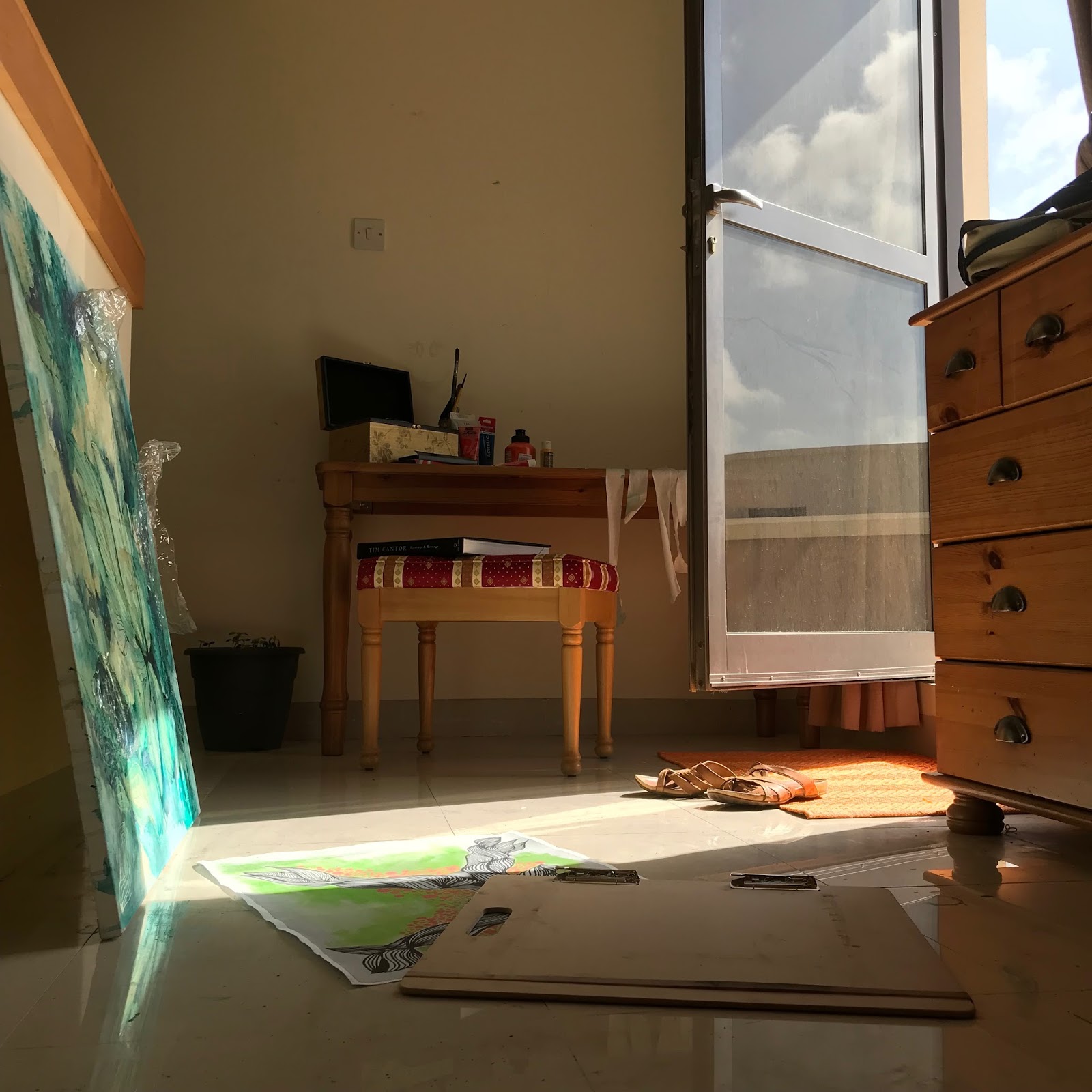
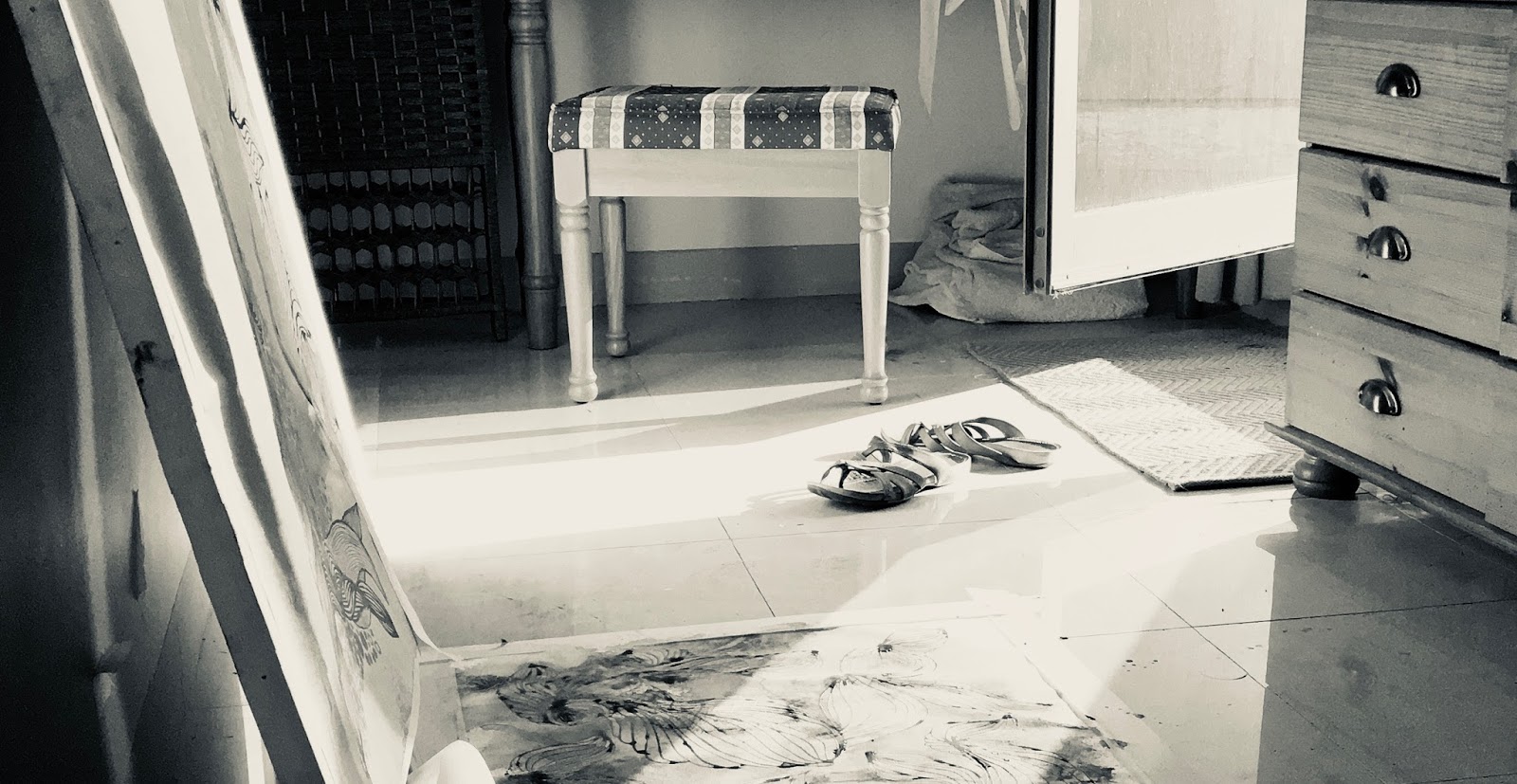
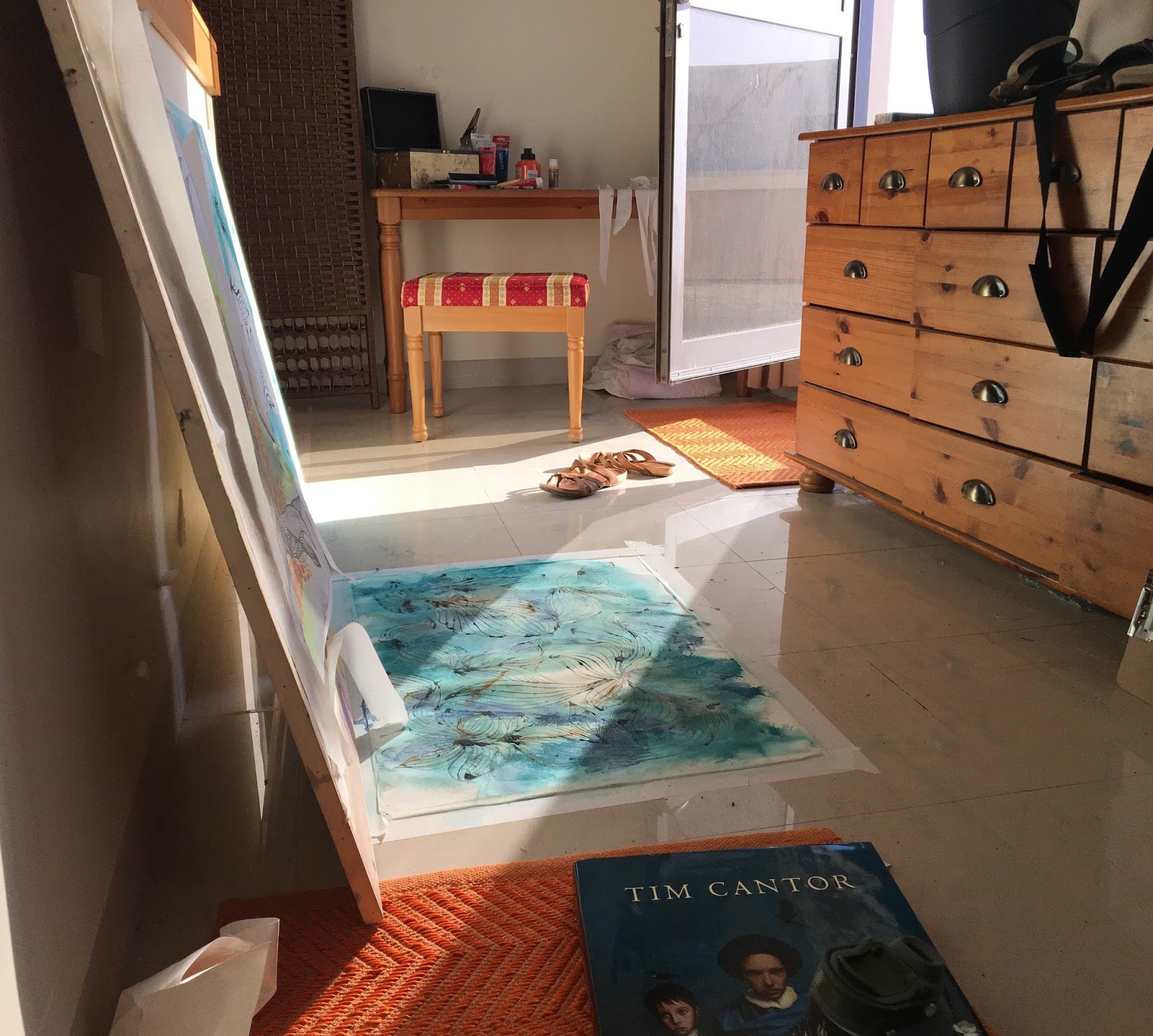
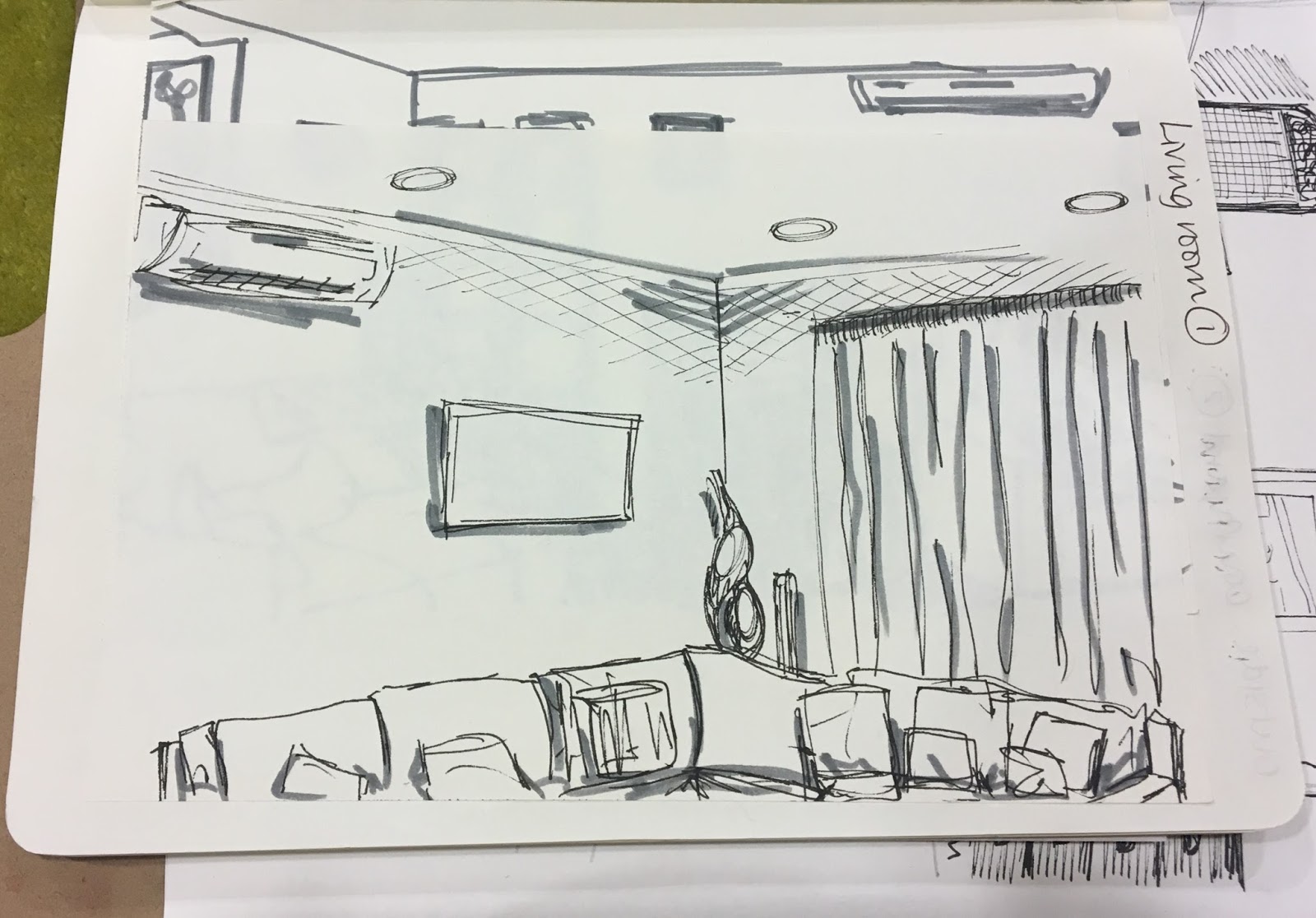
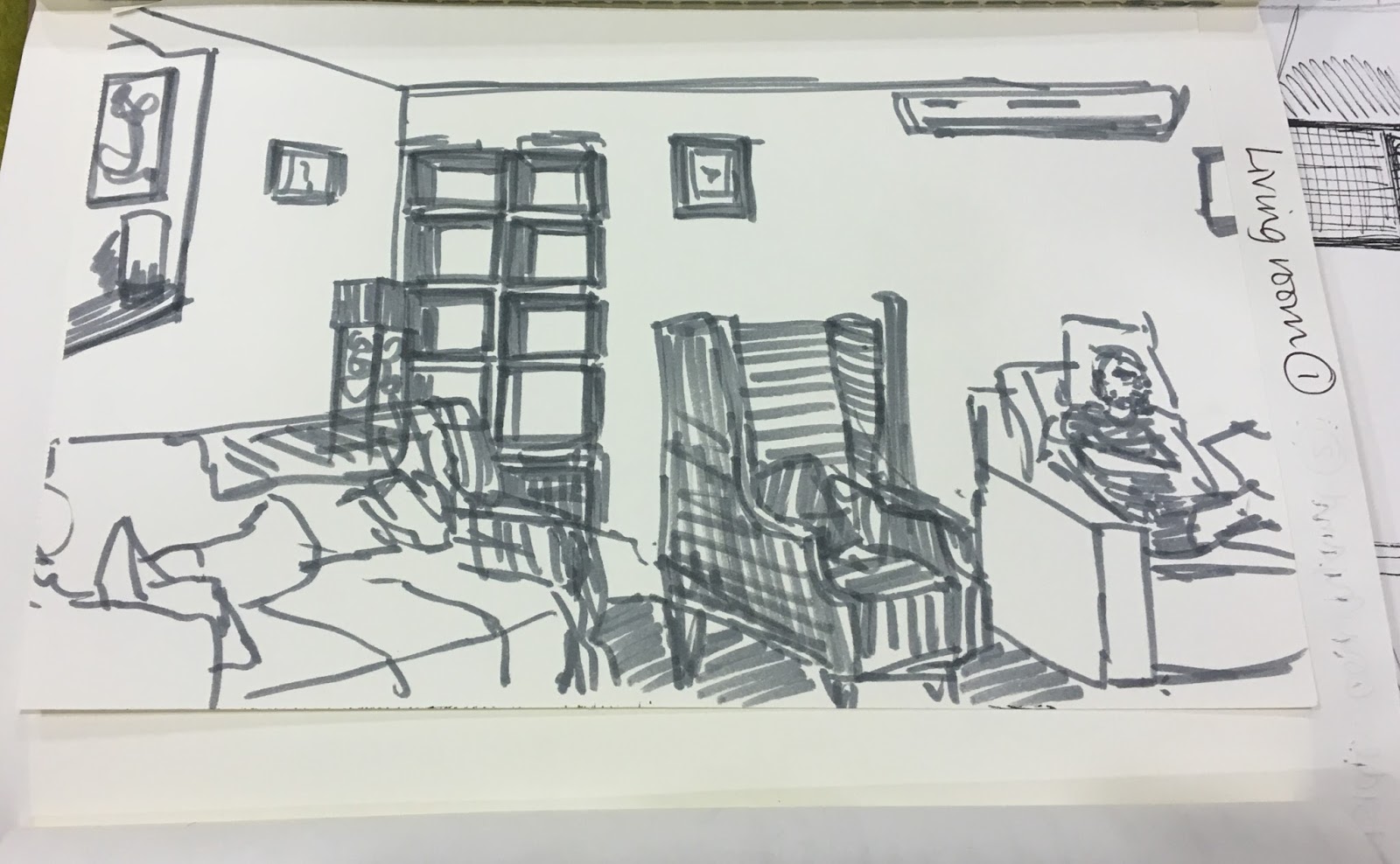
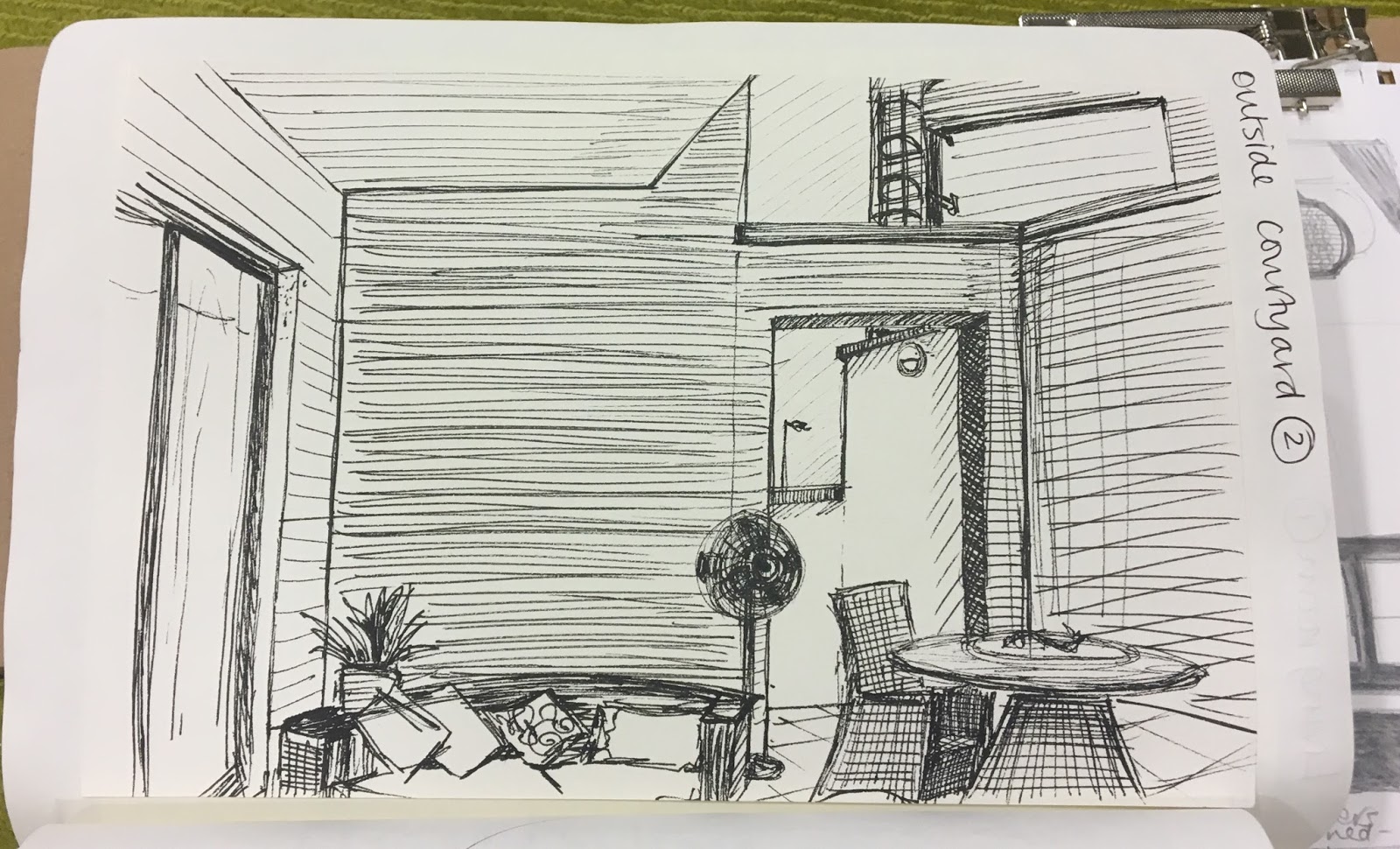
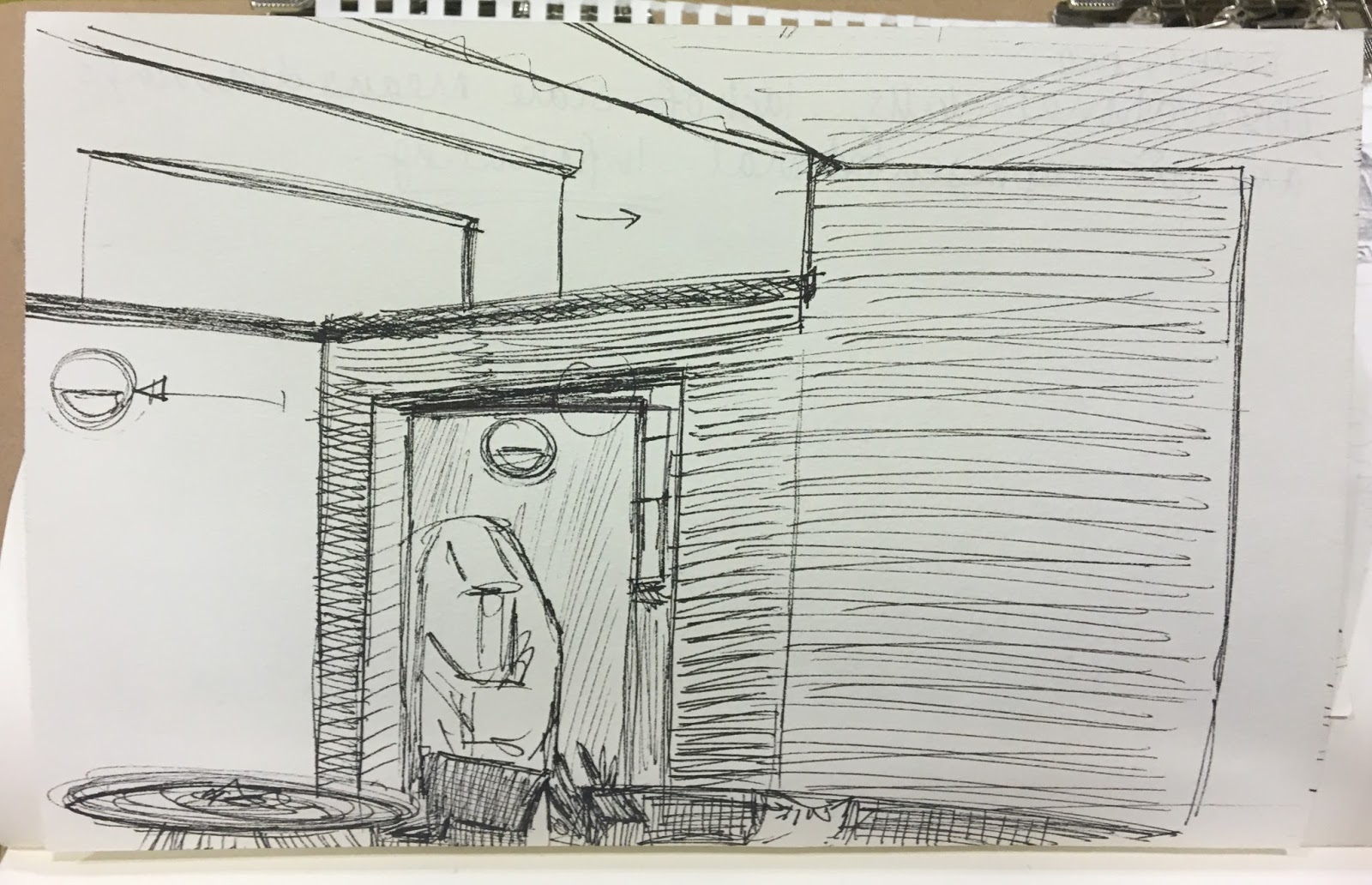
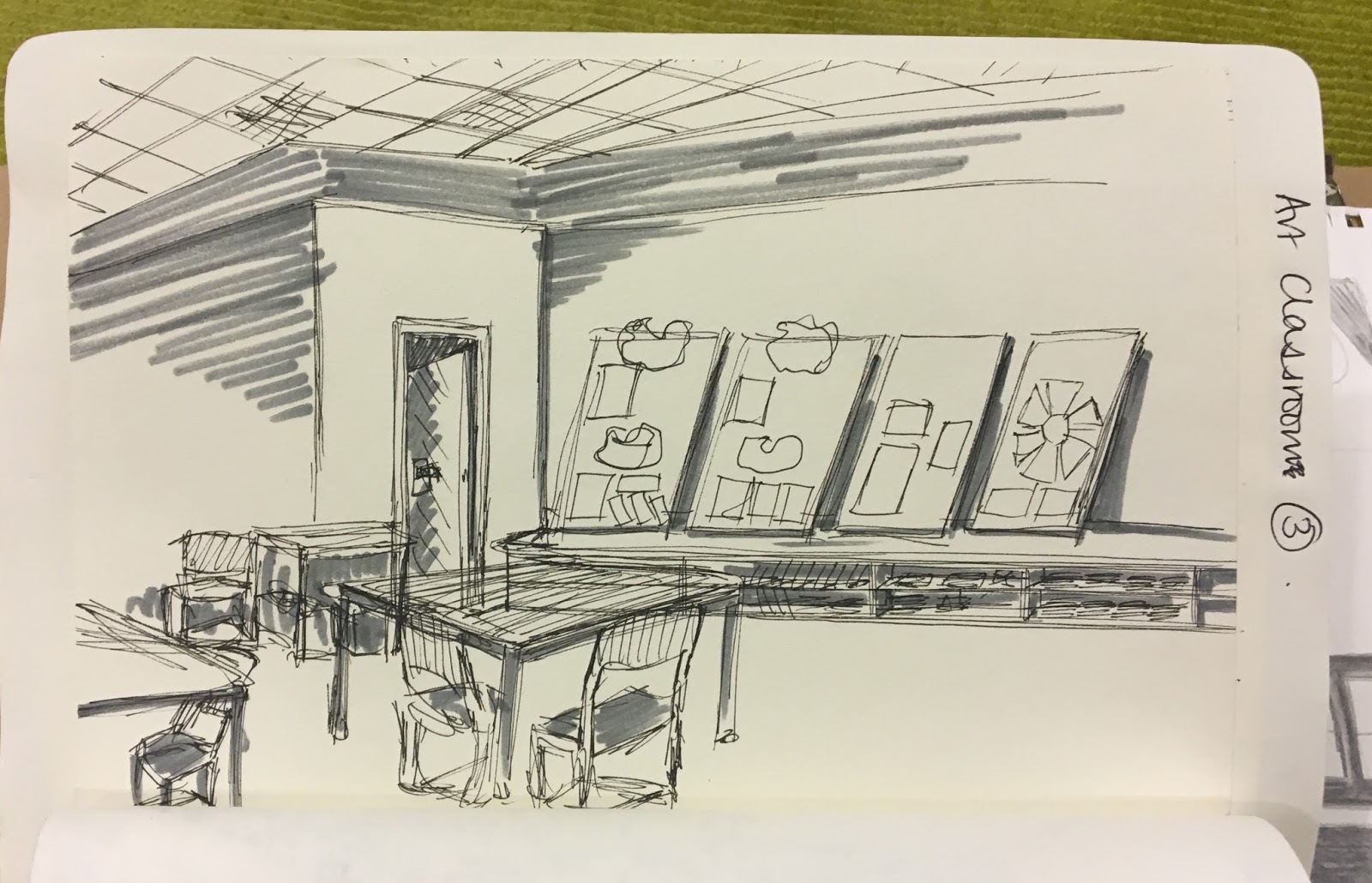
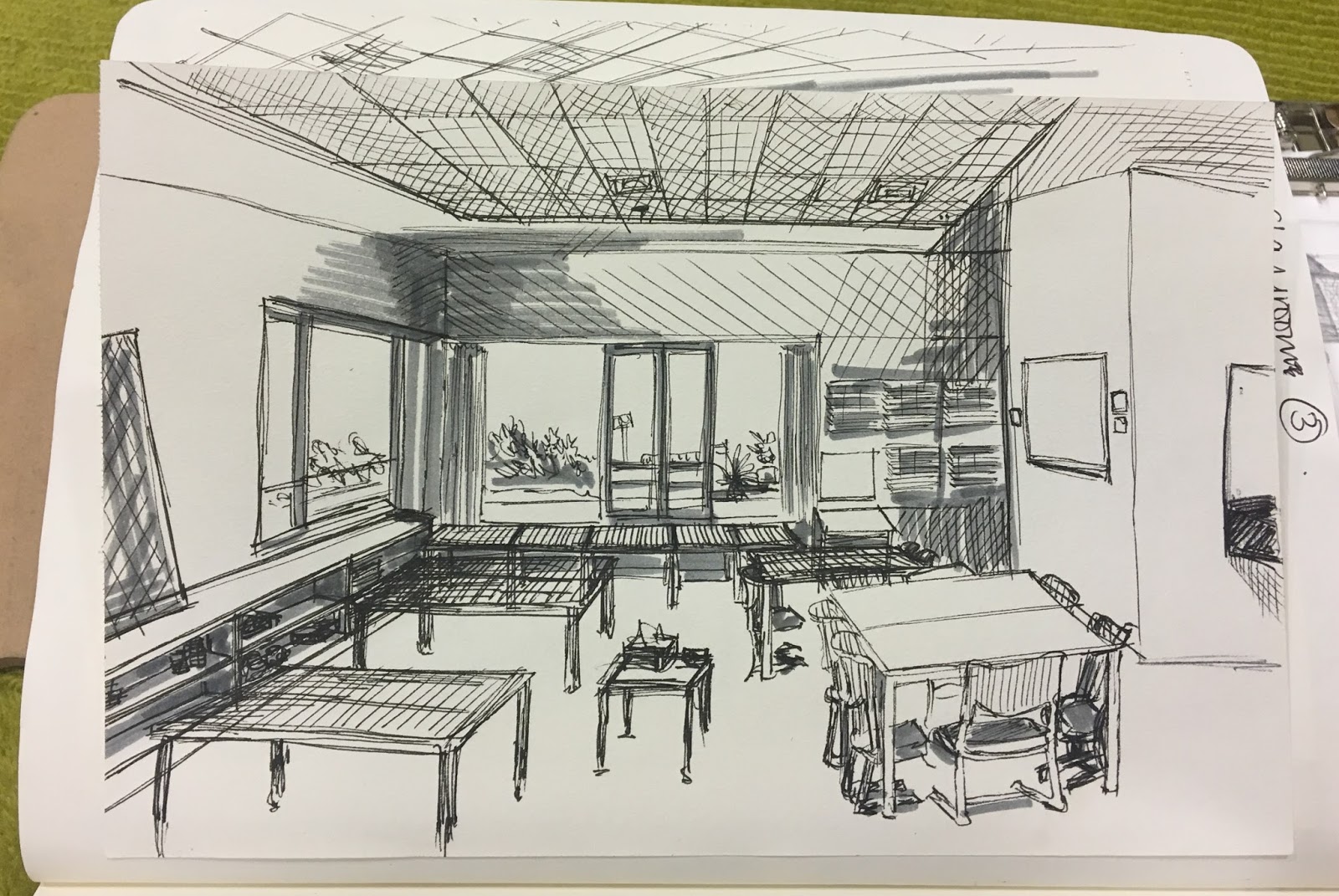
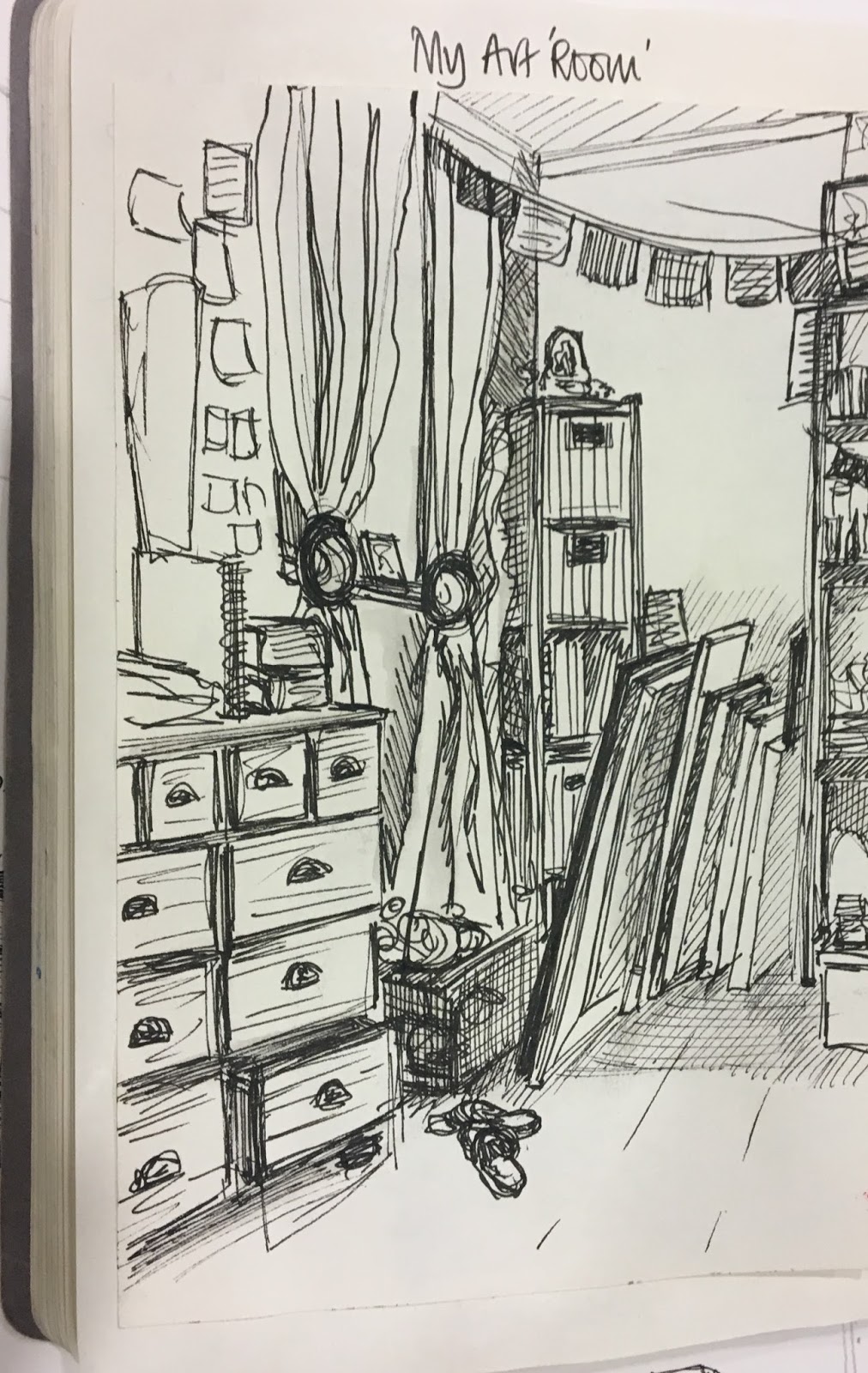
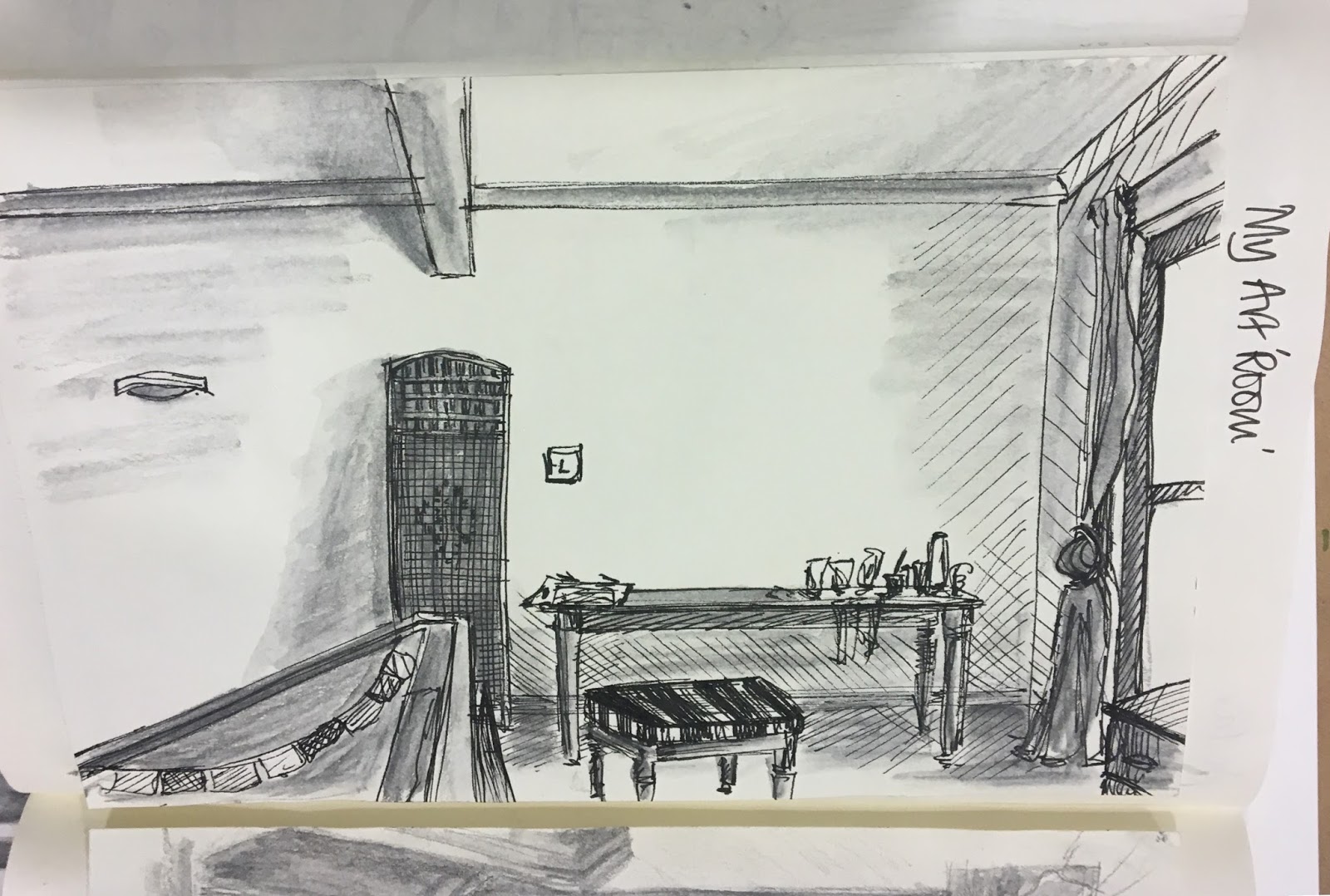
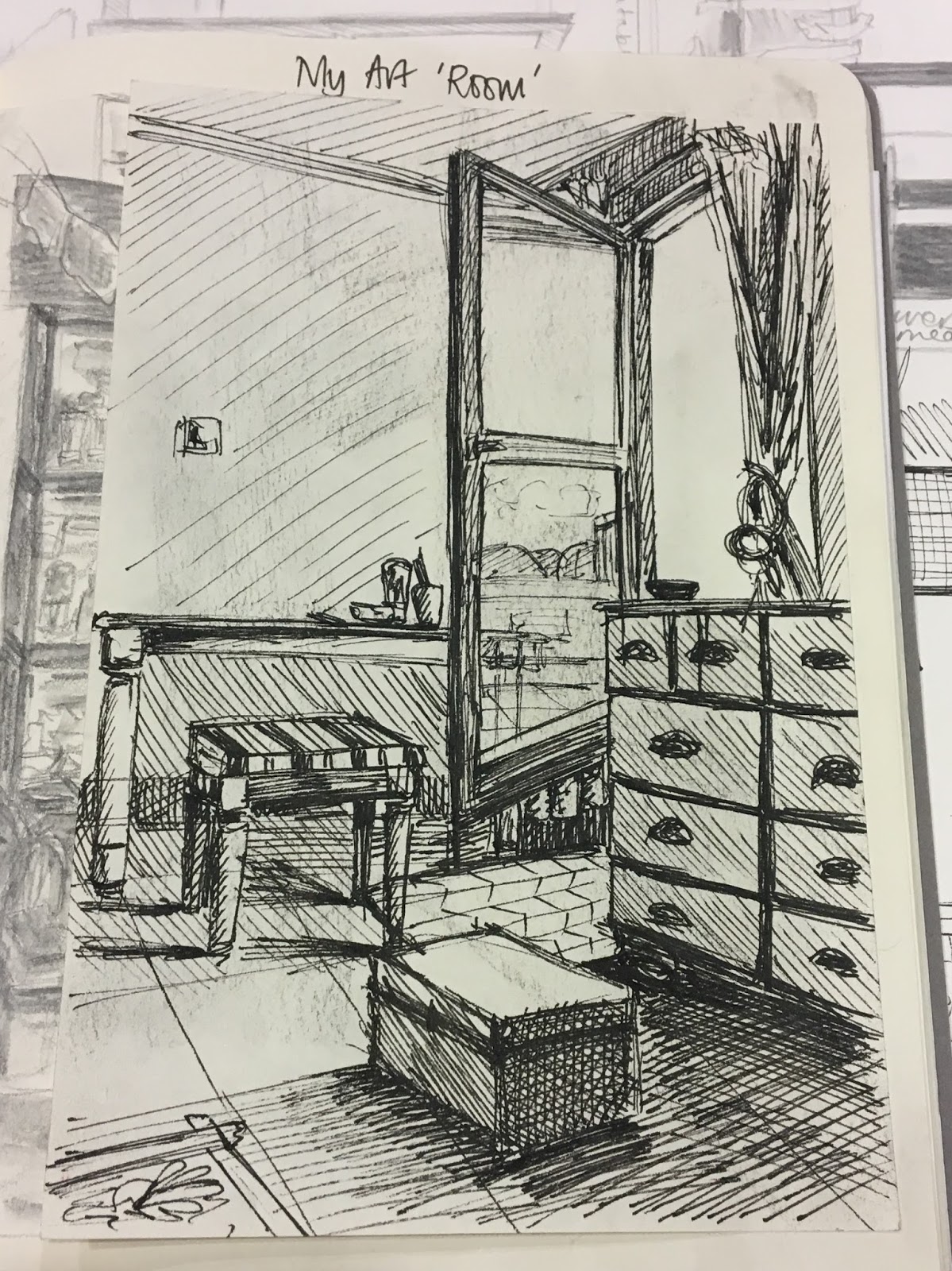
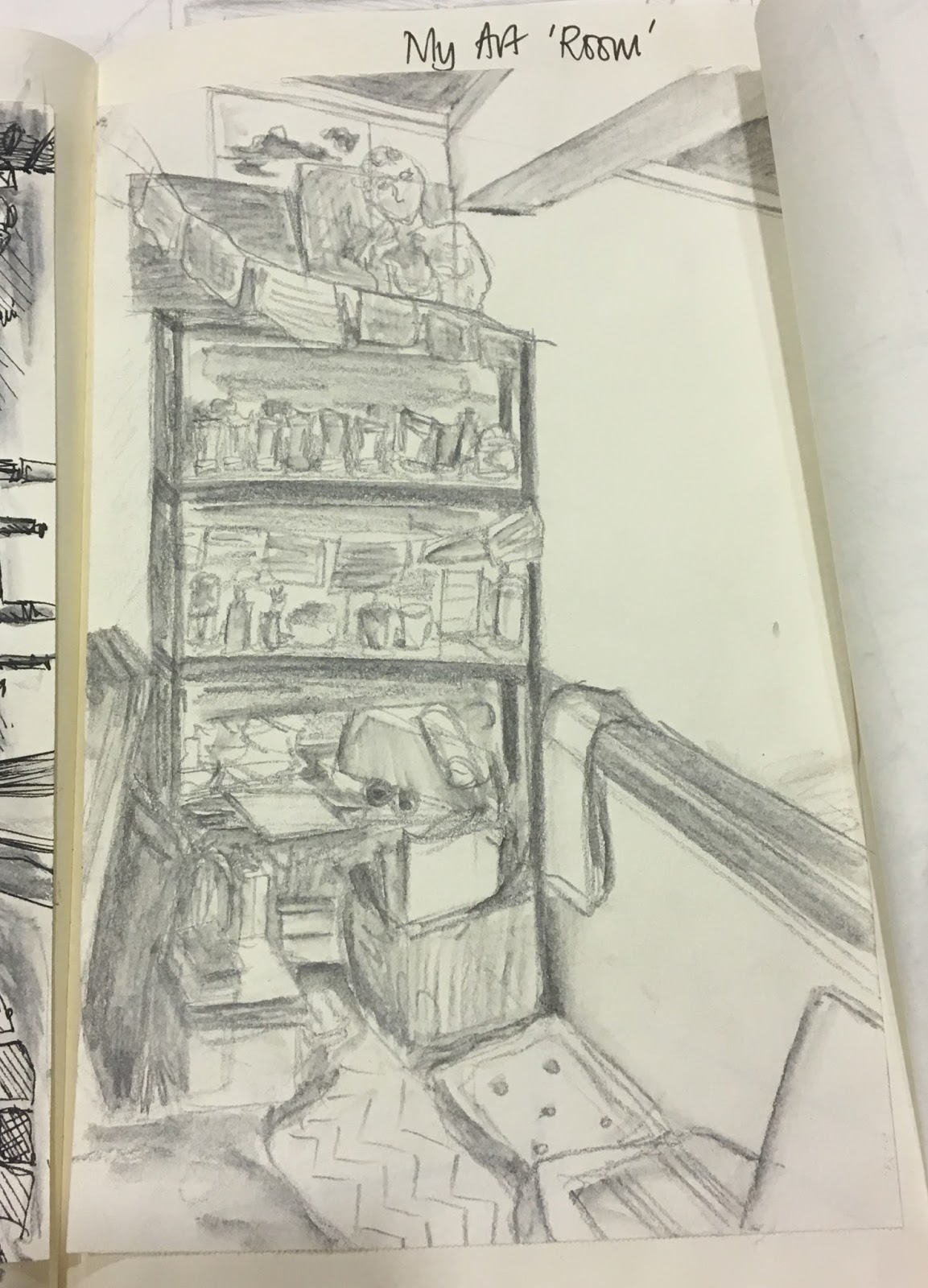
I have had no shortage of places to draw in the house. I had in mind I would draw my art ‘room’ at the top of the house as it is my bolt hole and a place to relax that nobody else visits. I found some beautiful light play and reflection at different times of the day and I was excited that this could make a good composition and assignment.  

However, sometimes things can be overworked and I may have been forcing this line of investigation too far as I was losing the sanctuary and peaceful feeling of the room. Plus it was getting too hot to continue working up there.

I then found another area of the house at a certain time of day that invokes all sorts of feelings that I wanted to capture in a drawing – or at least see if I could. 

I was locking up the house at bedtime and switching off the lights when I came across this view:


It is very peaceful, but almost eerie. Not a soul except me awake. The landing light being left on to guide me upstairs. Shadows and reflections being cast on the tile floor. What is where the light is? What does it lead to? 

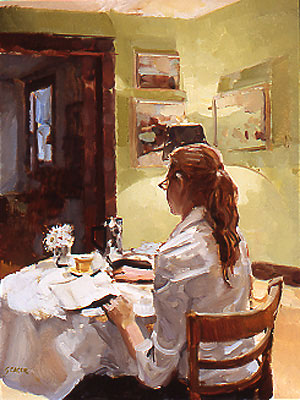
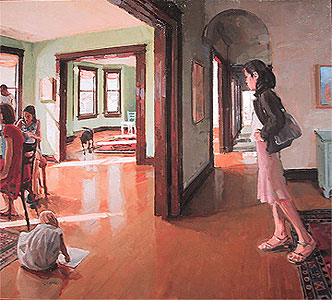
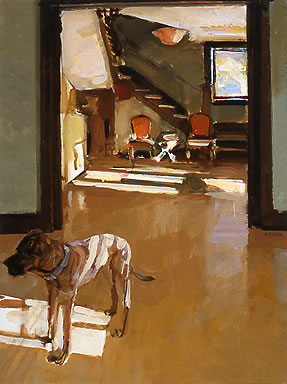
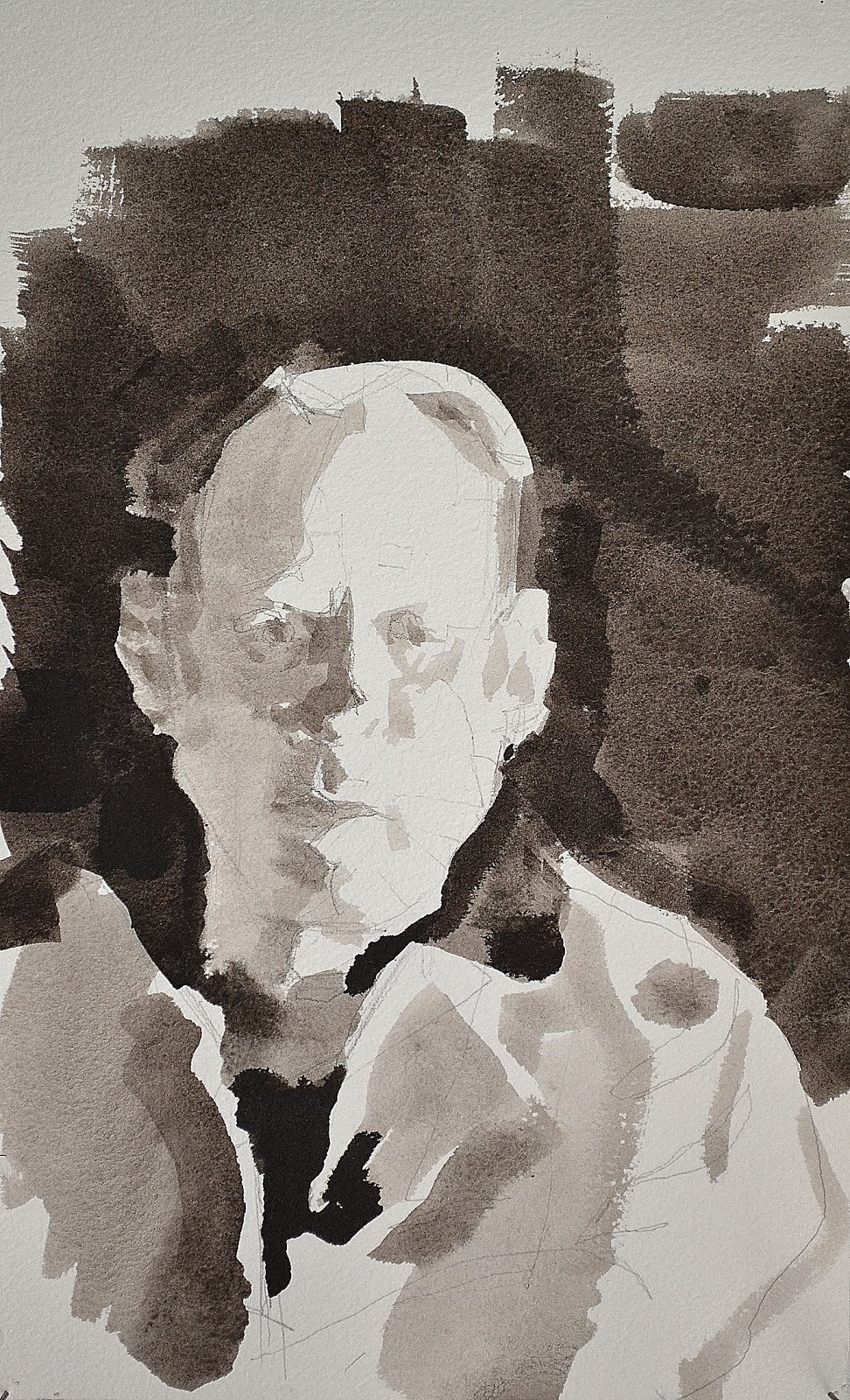
This could be a great inspiration to combine Philip Geiger’s simplistic domestic scene with more focus on tone and atmosphere.

PART 2 P3 At home. Research Point

I originally left the research point until later on as I was behind in my work for Assignment 2. Now I am preparing for the assignment I have revisited this section for further inspiration.
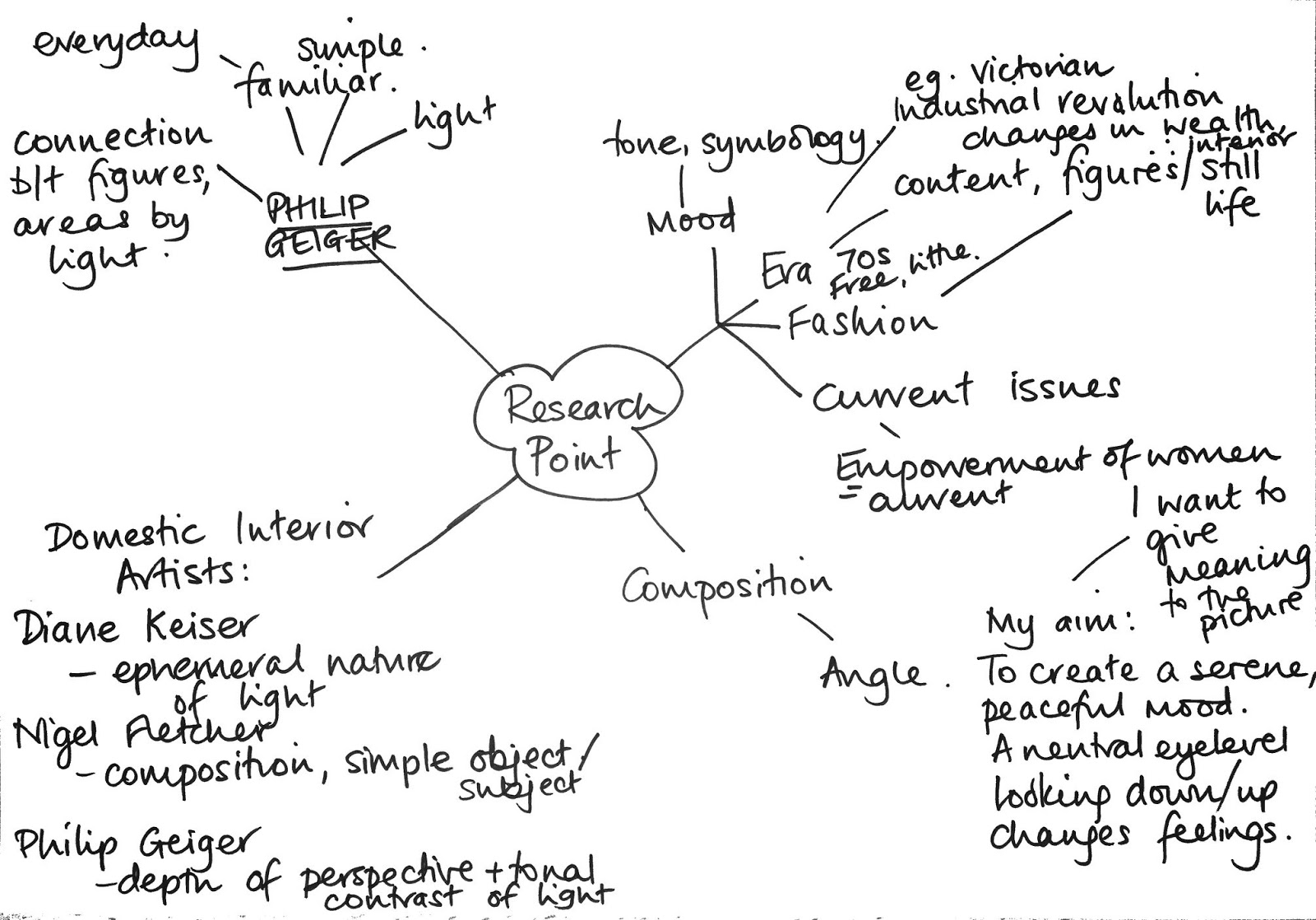
My thoughts and research so far (I am still adding to this brainstorm):

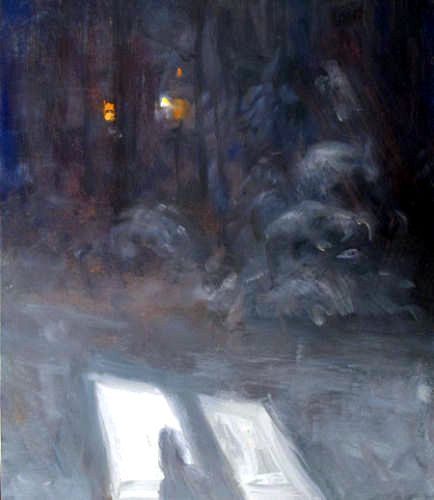
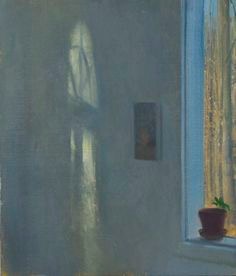
Philip Geiger is my chosen artist. An instant love of his content and work.


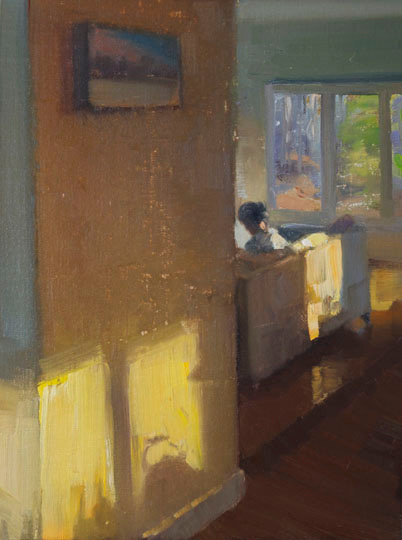
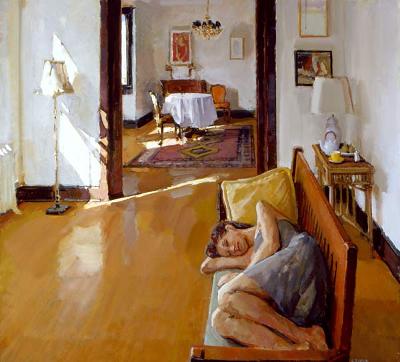
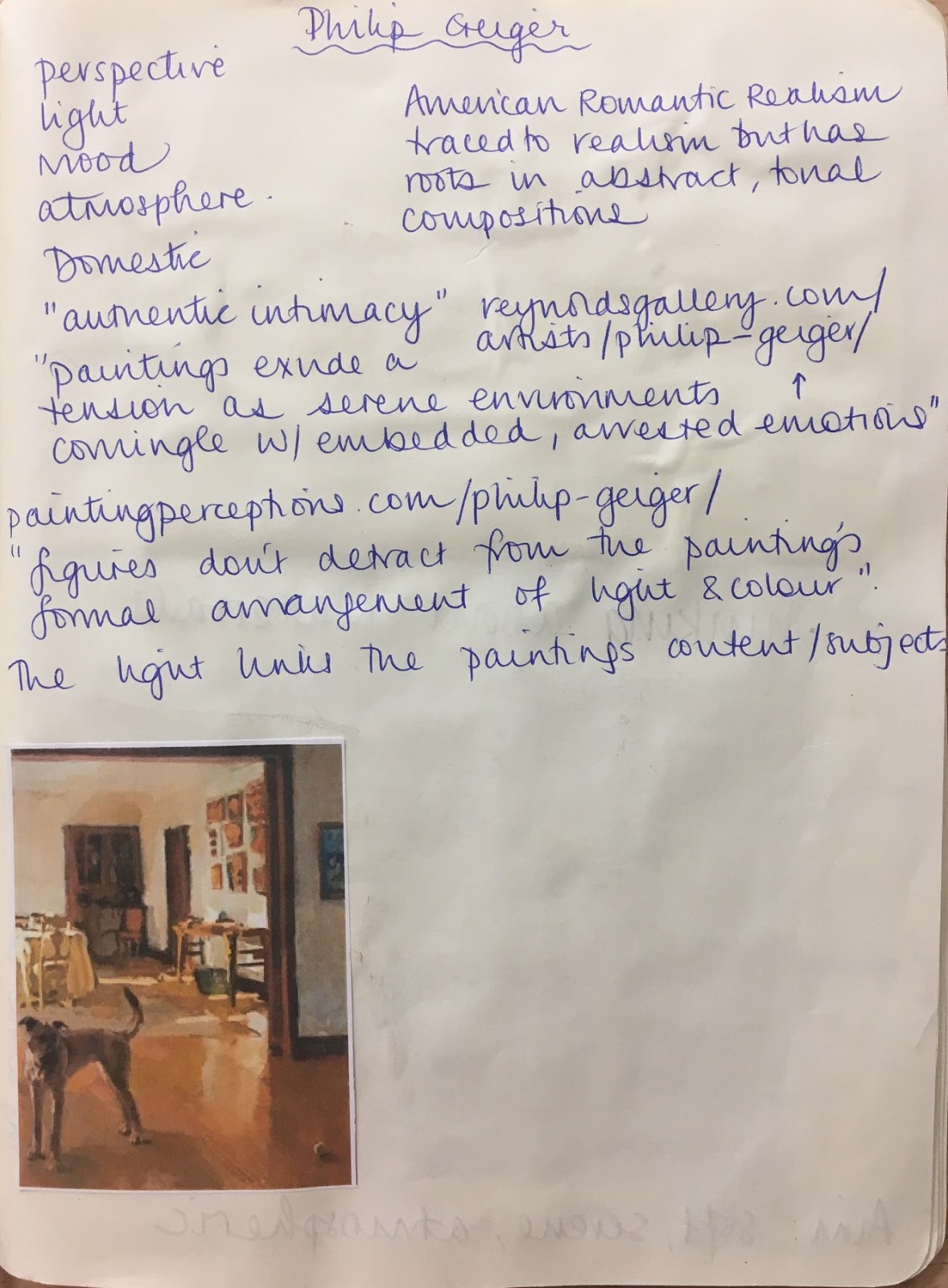
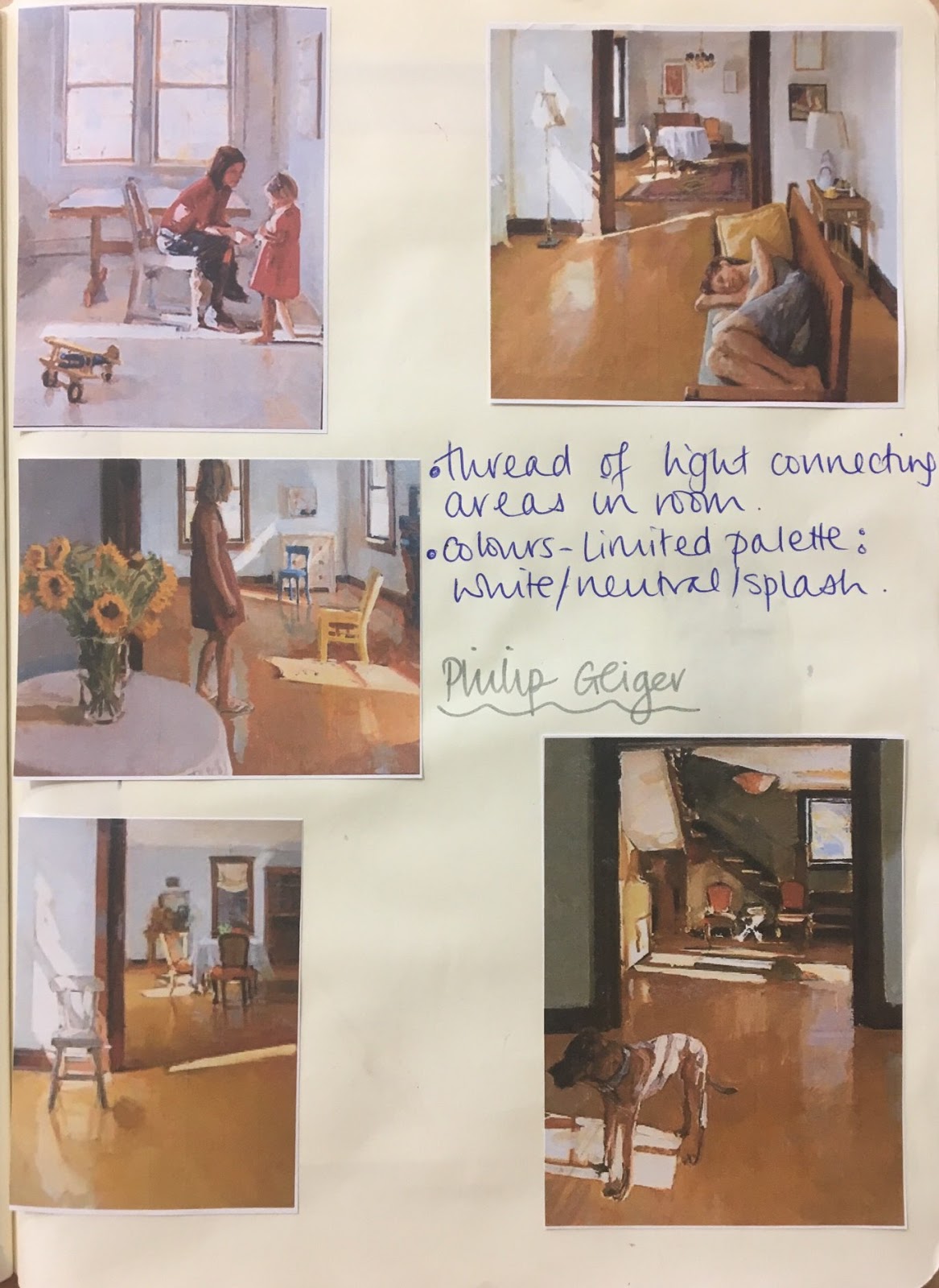
The overriding theme is simplicity. It feels familiar in its snapshot of life. Light is a theme in all of his pictures, with a stream of light connecting the people or areas of the rooms. He is an American Romantic Realist whose work can be traced to realism. He has roots in abstract, tonal compositions.


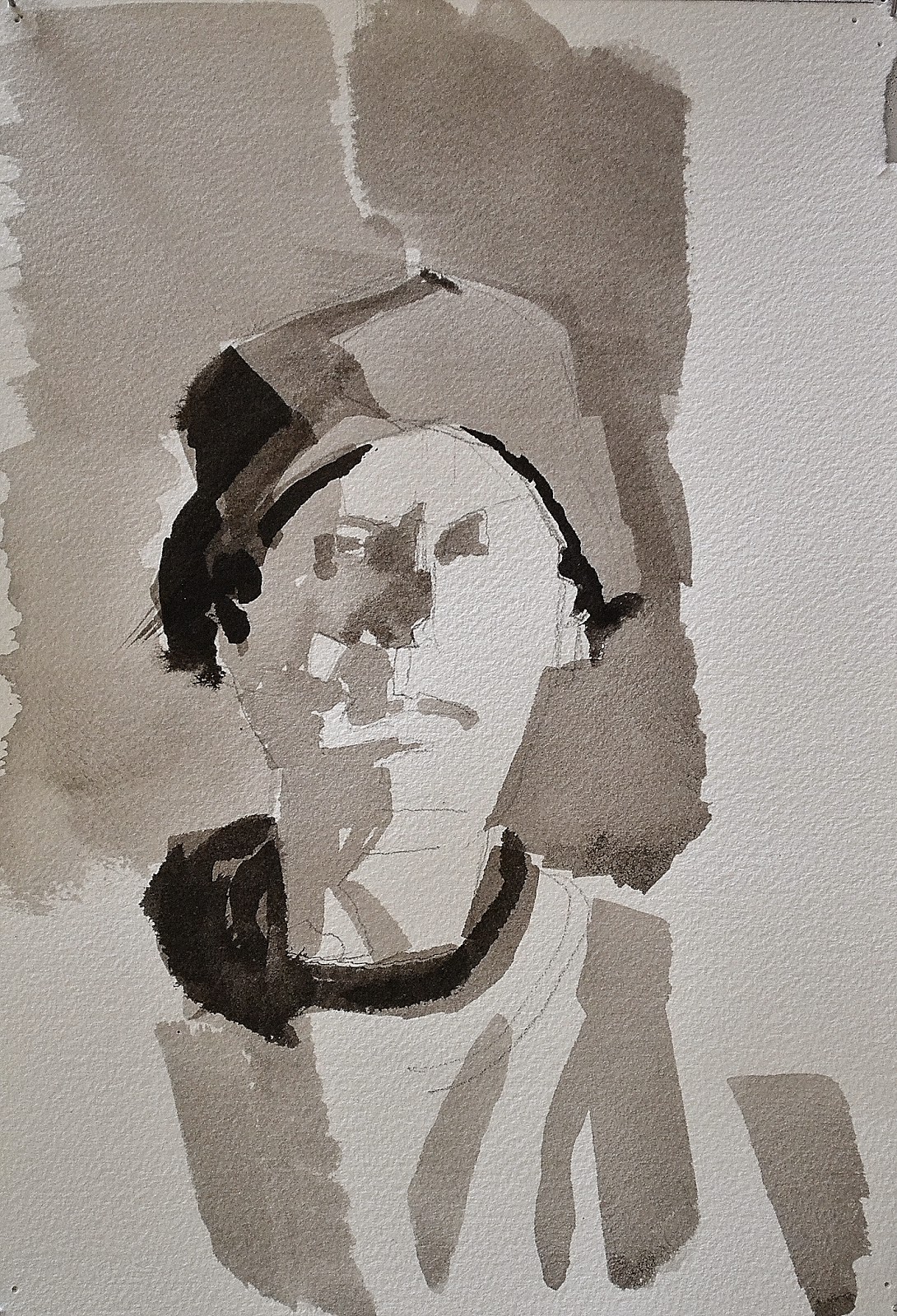
I enjoy how Geiger does not necessarily focus on the detail of the subject and the environment. He is offering a moment in time glimpsed through the placing of light and tone.
I felt inspired at this point in combining his blocked tonal ink studies with his interior domestic everyday.
Design a site like this with WordPress.com
Get started