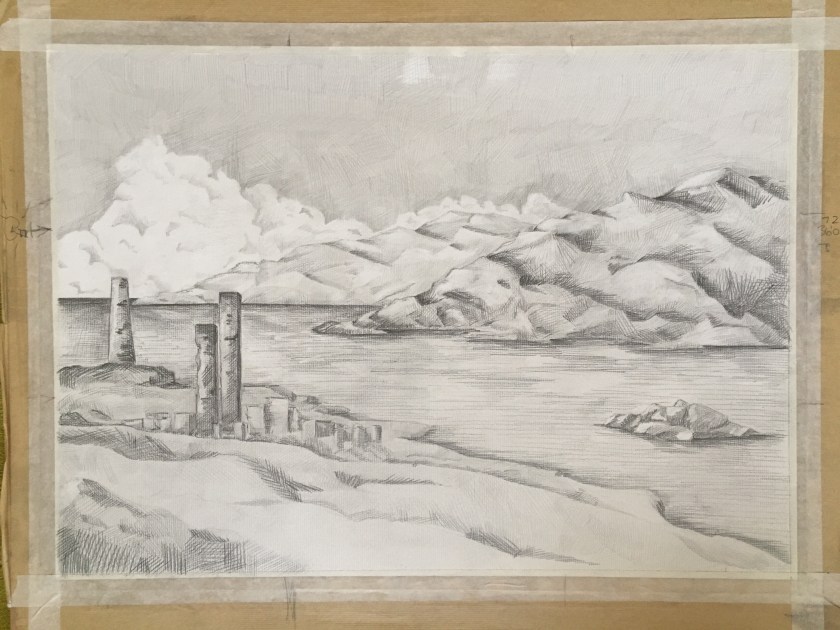
Draw an outdoor scene of your choice. Try to find a view that includes some natural objects – trees, shrubs, pot plants, fields, garden plants. Also try to find a view that will allow you to demonstrate your understanding of aerial or linear perspective – in other words a view that has some demonstrable depth to it. Look for a view that offers an opportunity to draw straight- lined objects as well as items drawn from nature: buildings, walls, fences, gates and so on. This may seem like a lot to look for, but most views from windows and doors will offer you a bit of all of these things.
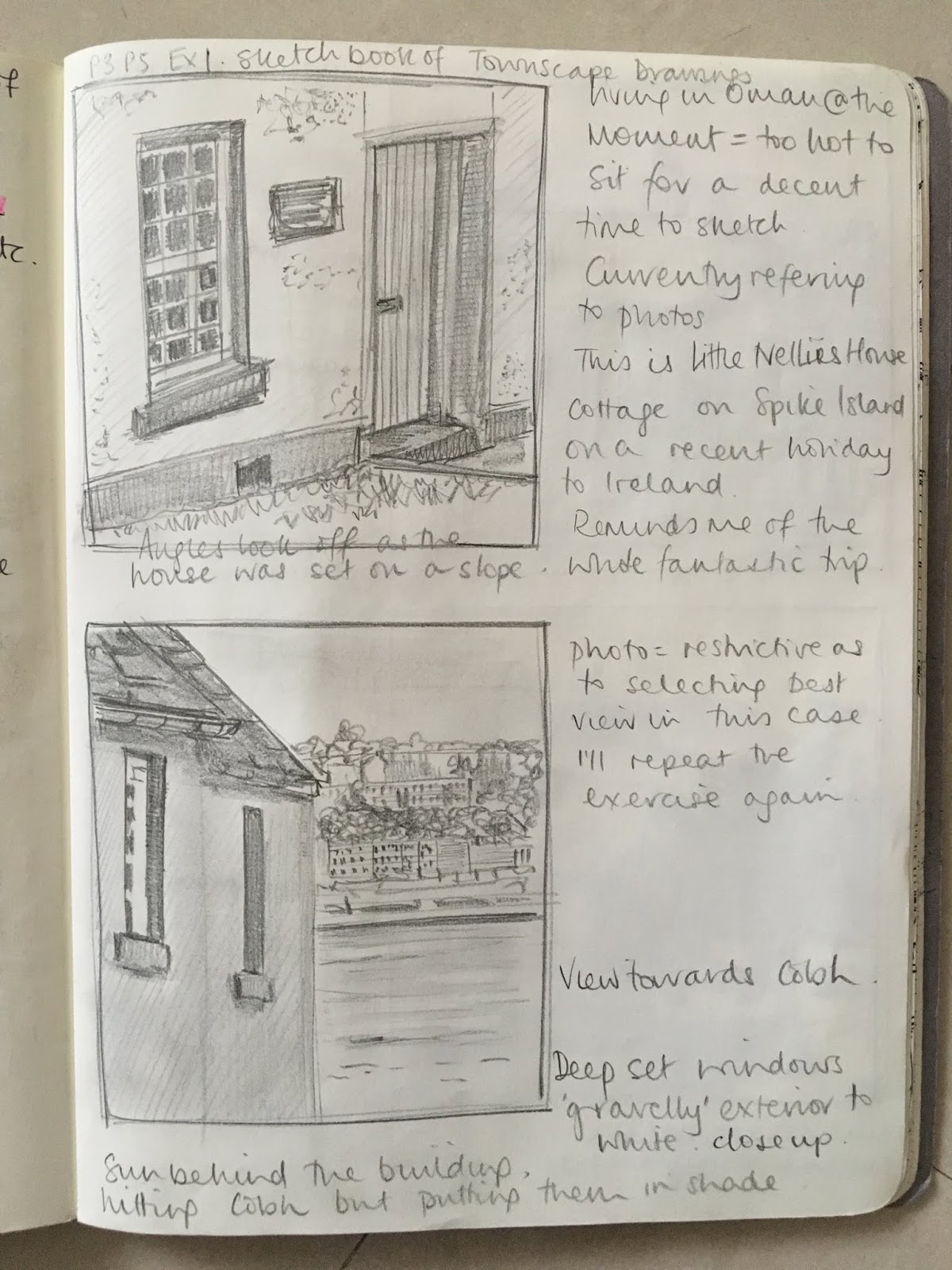
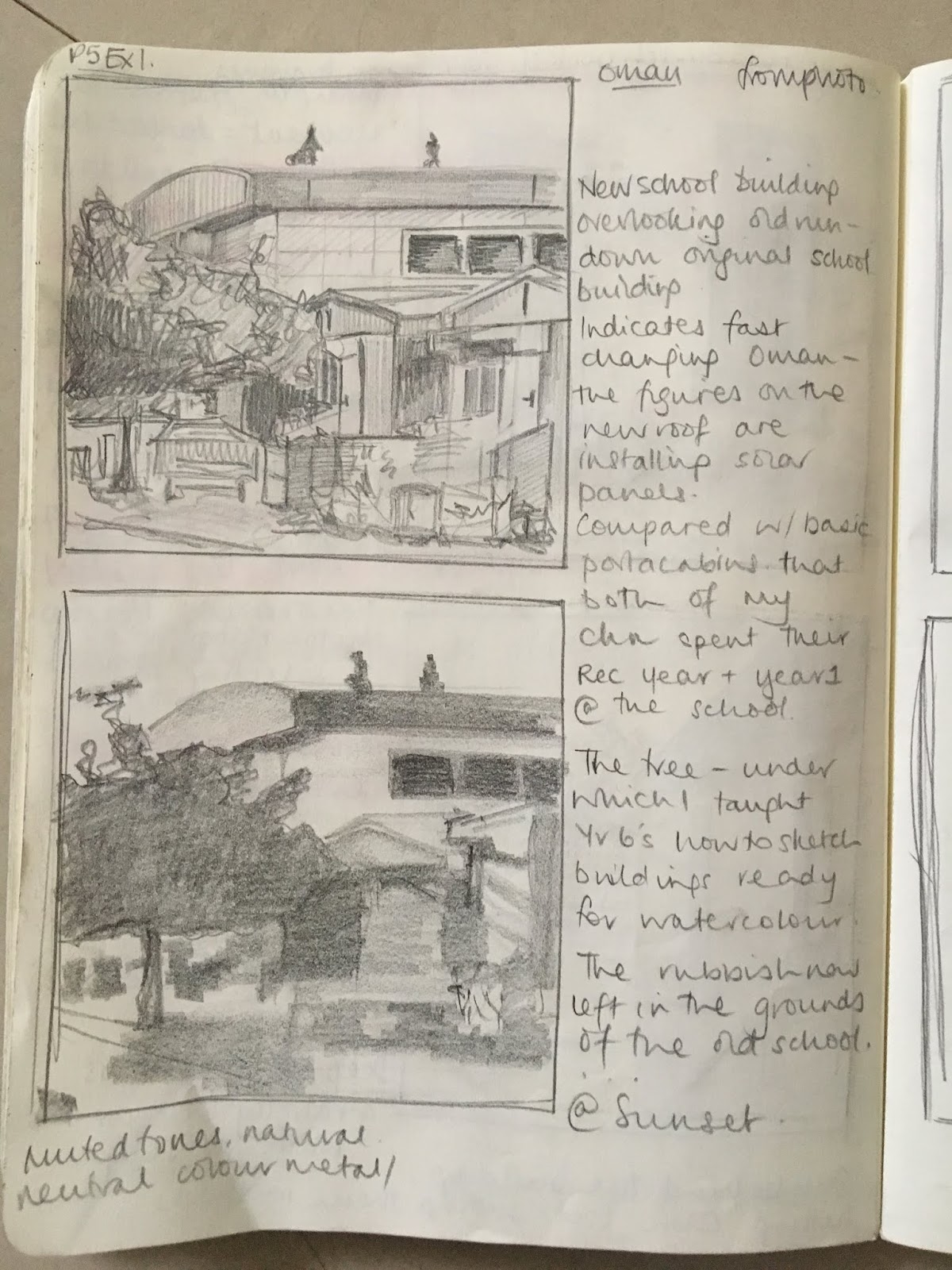
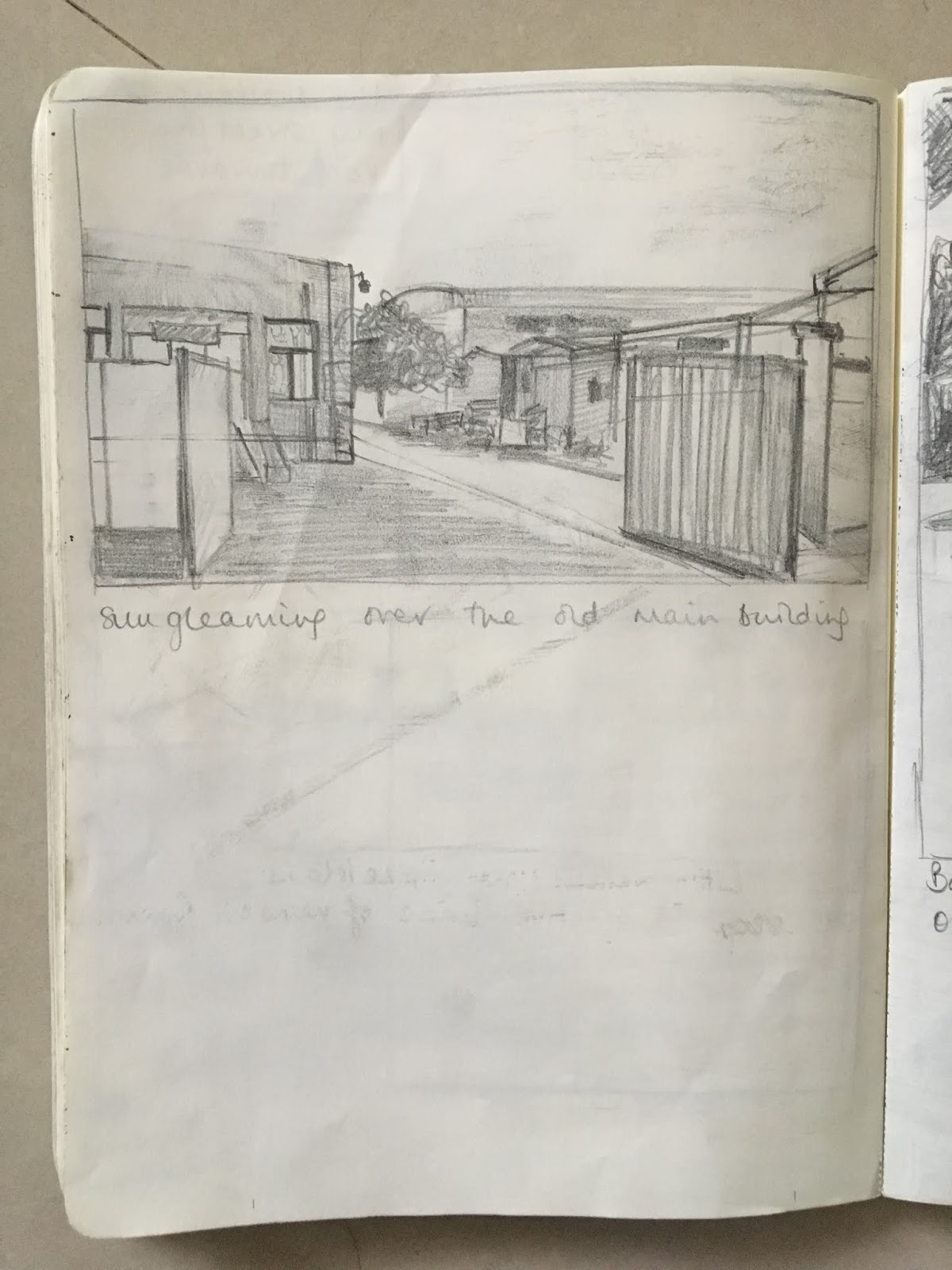
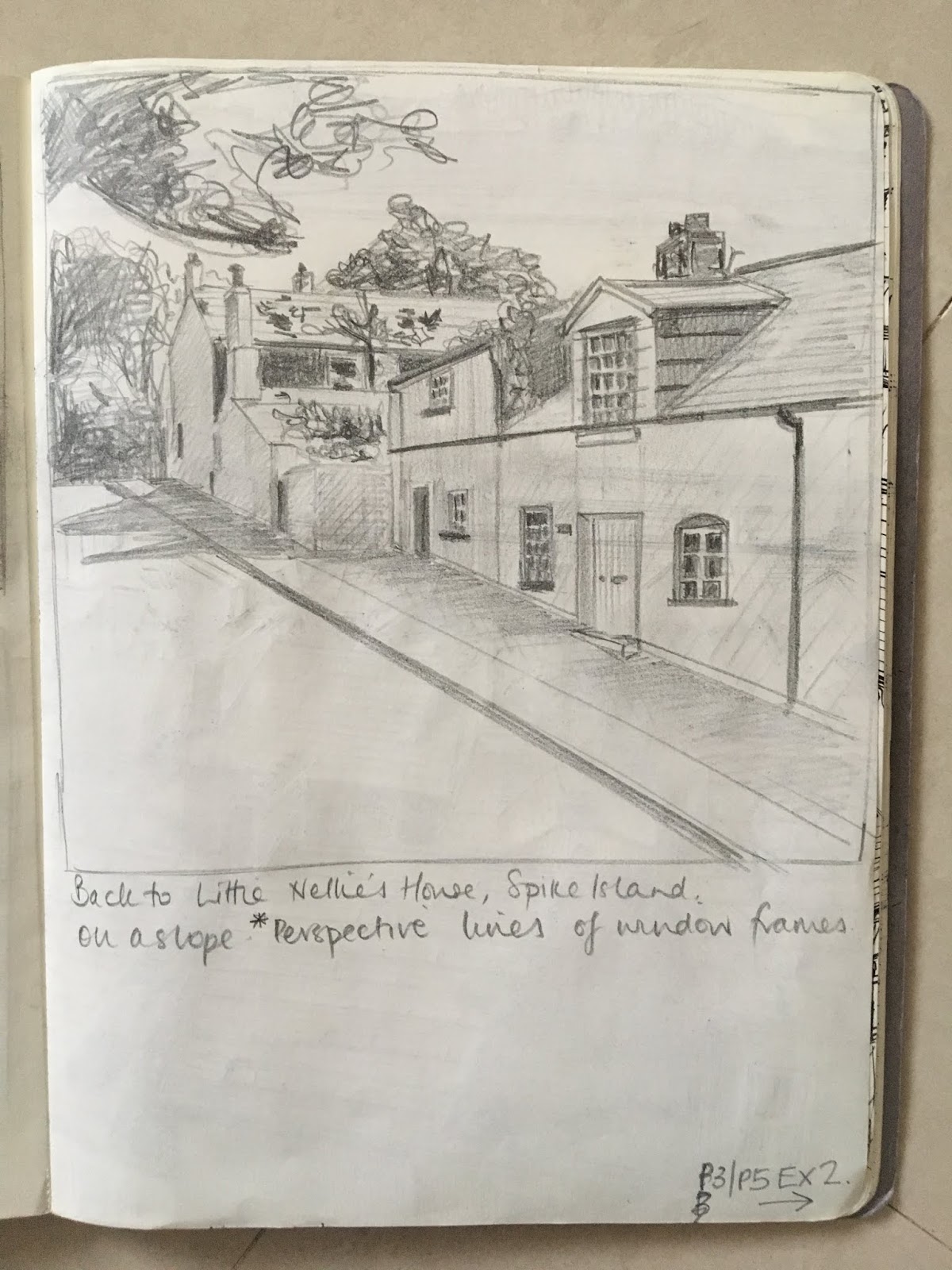
Do some preliminary drawings in your sketchbook to experiment with the composition.Try different versions, eliminating and moving objects if necessary to create a pleasing composition. Make some sketches to practise getting the perspective of the scene right. How are you going to create depth? Are you going to use receding lines (linear perspective) or use graduated tone (aerial perspective) and the receding size of objects, people and buildings?
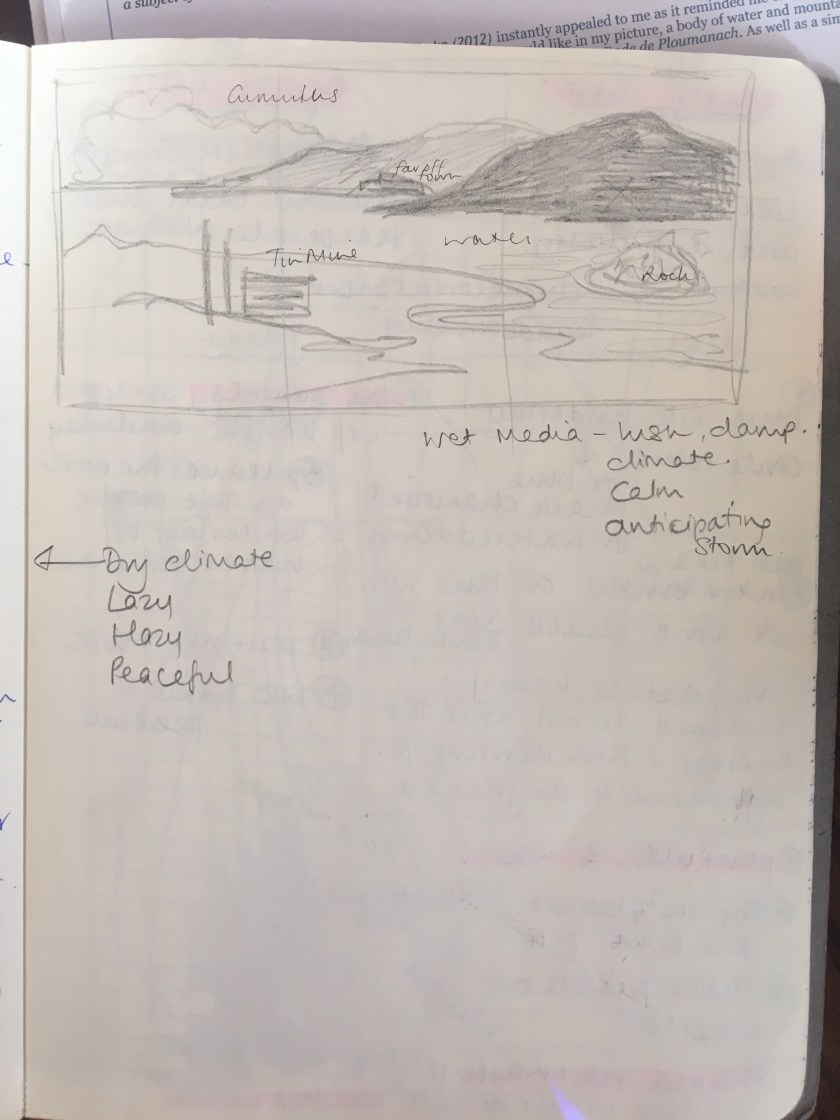
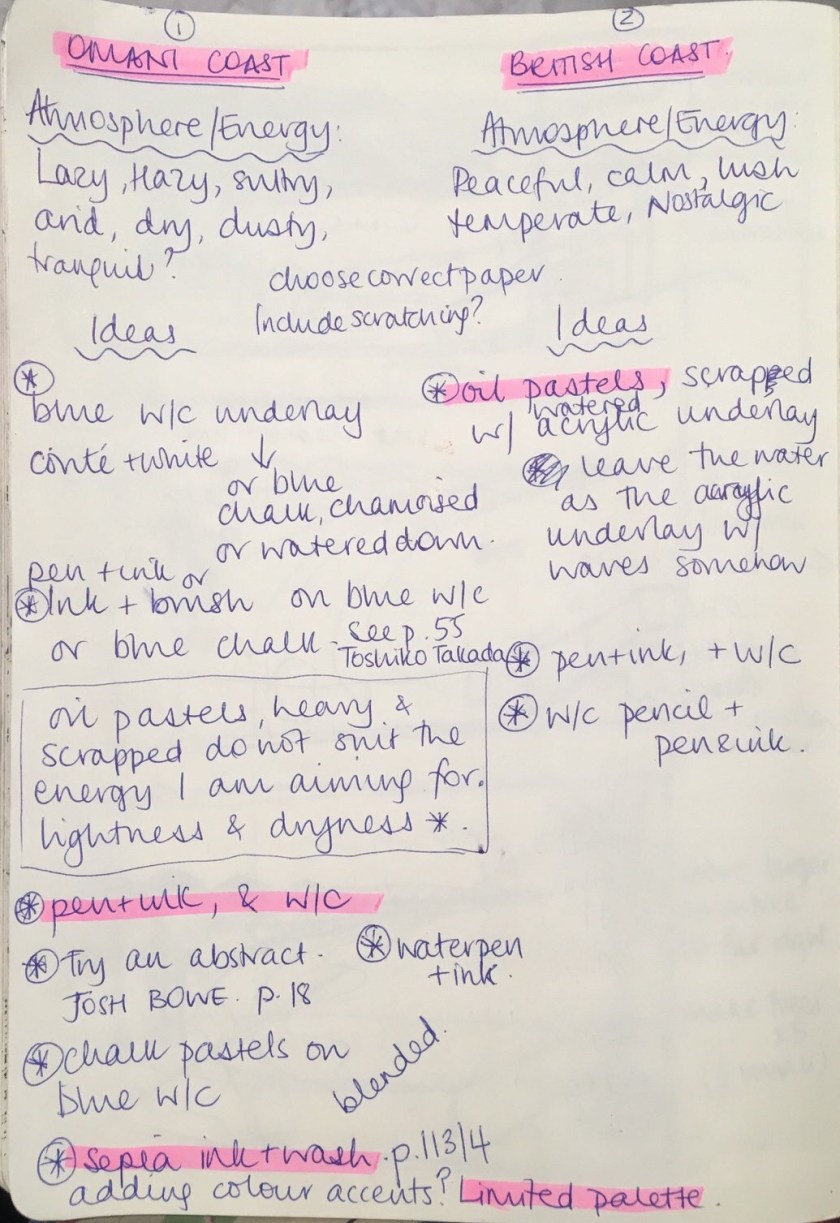
Next do some broad sketches in charcoal or diluted ink and brush and trial other media before you select which to use. Think about the atmosphere and energy of the place and whether you’ll be able to give a sense of this through your chosen material and approach to mark- making.
With an A2 or A1 sheet of paper pinned or taped on a board or on a pad, get settled comfortably and keep your preliminary sketches around you for reference. Think about your successes in previous exercises and look very carefully at the scene in front of you. You should spend anything up to two hours on this final drawing, not including all the preliminary work you’ve already done.
Demonstration of technical and visual skills – materials, techniques, observational skills, visual awareness, design and composition skills
I continue to notice an increased confidence in my composition skills; I feel I have more of an eye for balance and this is happening earlier on rather than it taking over the exercise. My observational skills are also developing further – I am becoming more tuned in and thinking about how I could intepret what I see and what materials may work best. I don’t feel I have experimented with materials to the fullest as I would have made myself fall behind more than I already was. I feel my mark-making and final work is too formal, and so the techniques need to be simplified. As I become more relaxed I think that my techniques will broaden.
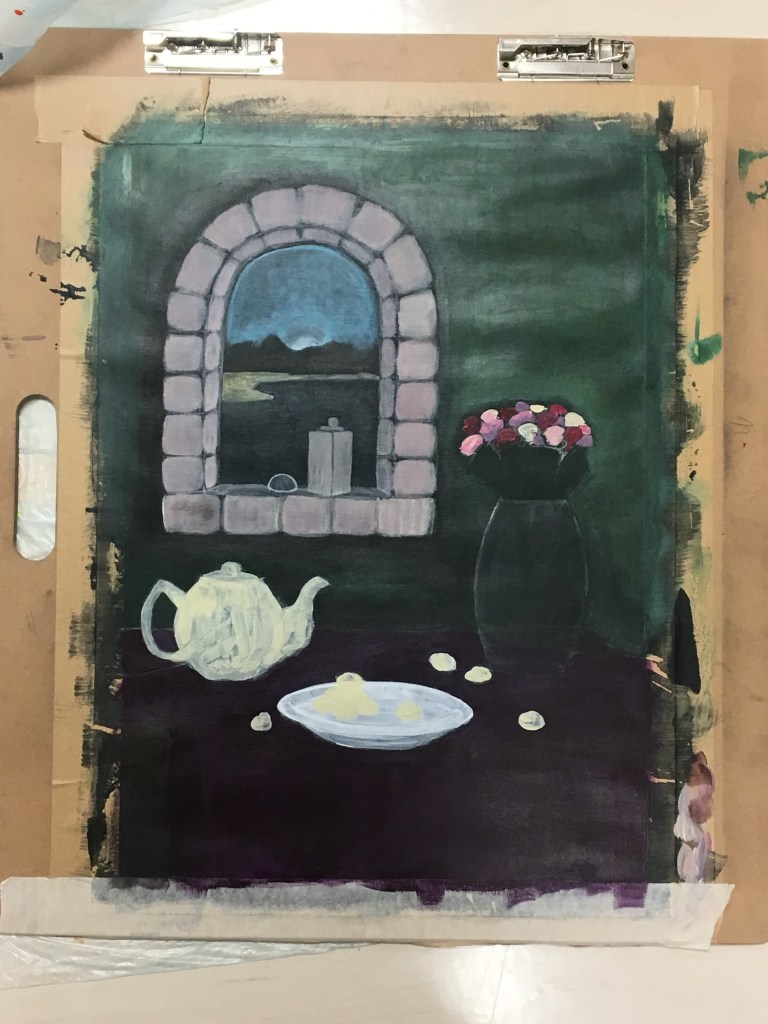
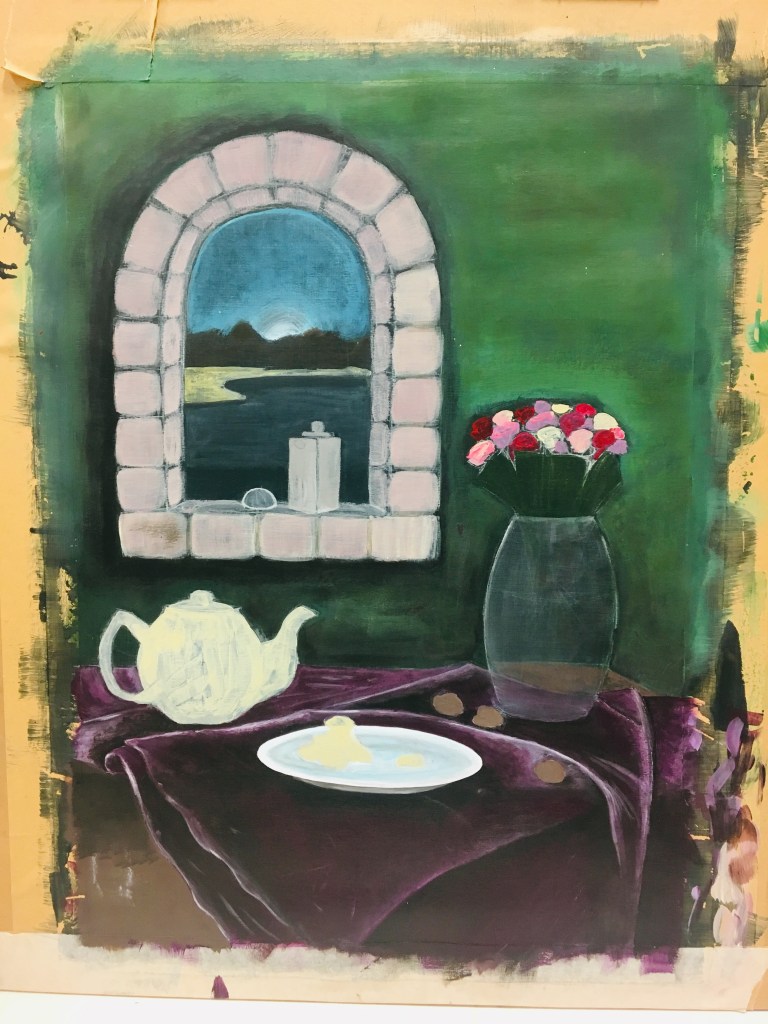
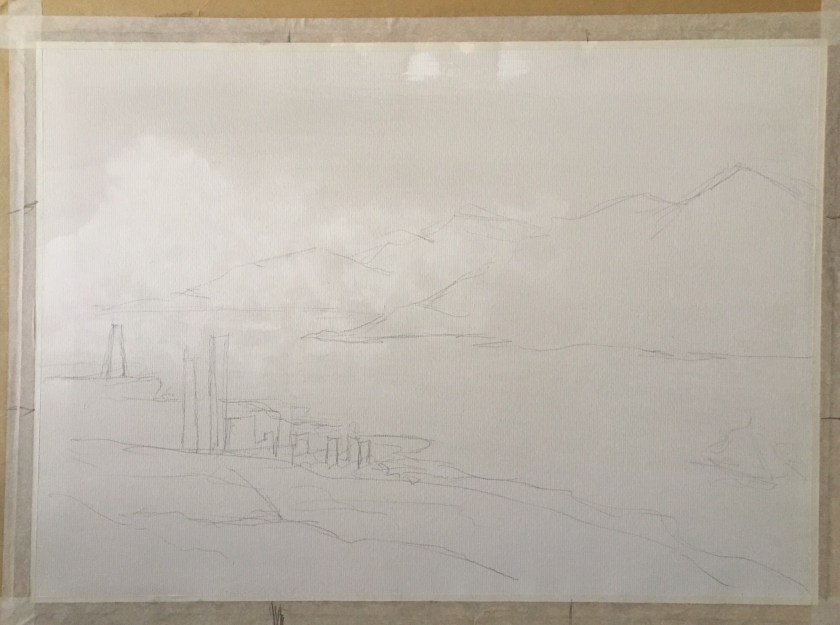
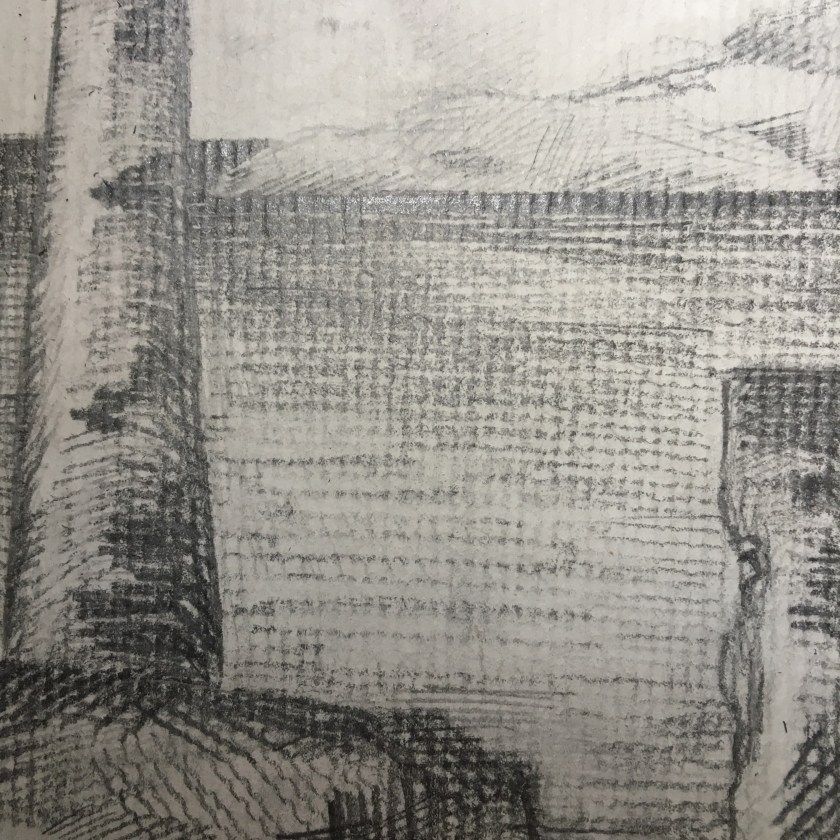
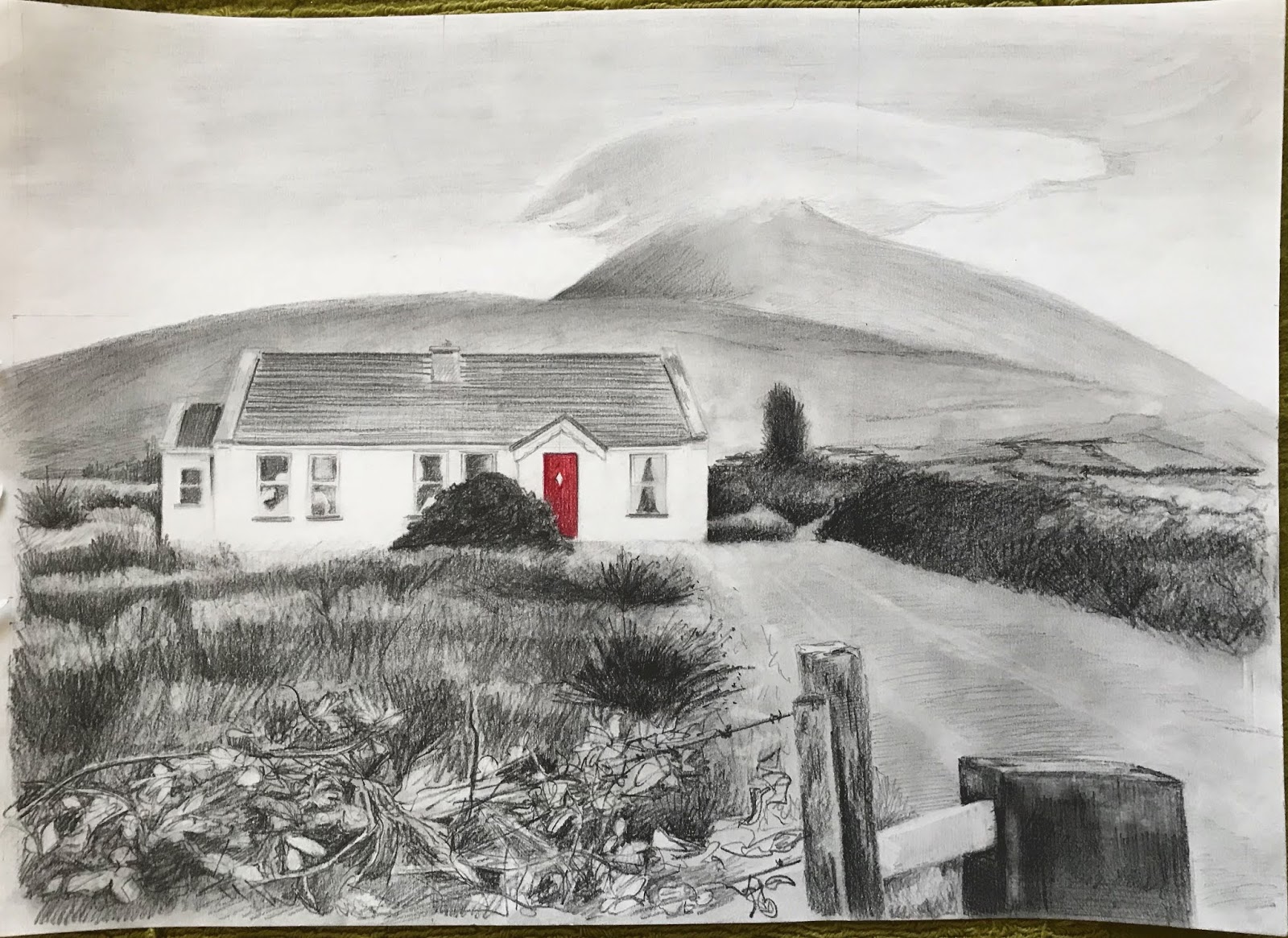
In attempt 1, I think I have lost the technicality with trying to represent the distance haziness of the buildings. In hindsight, I would not have started with a pen and ink outline as I ended up trying to cover this up with white and grey pastel. I would like to be less formal in this.
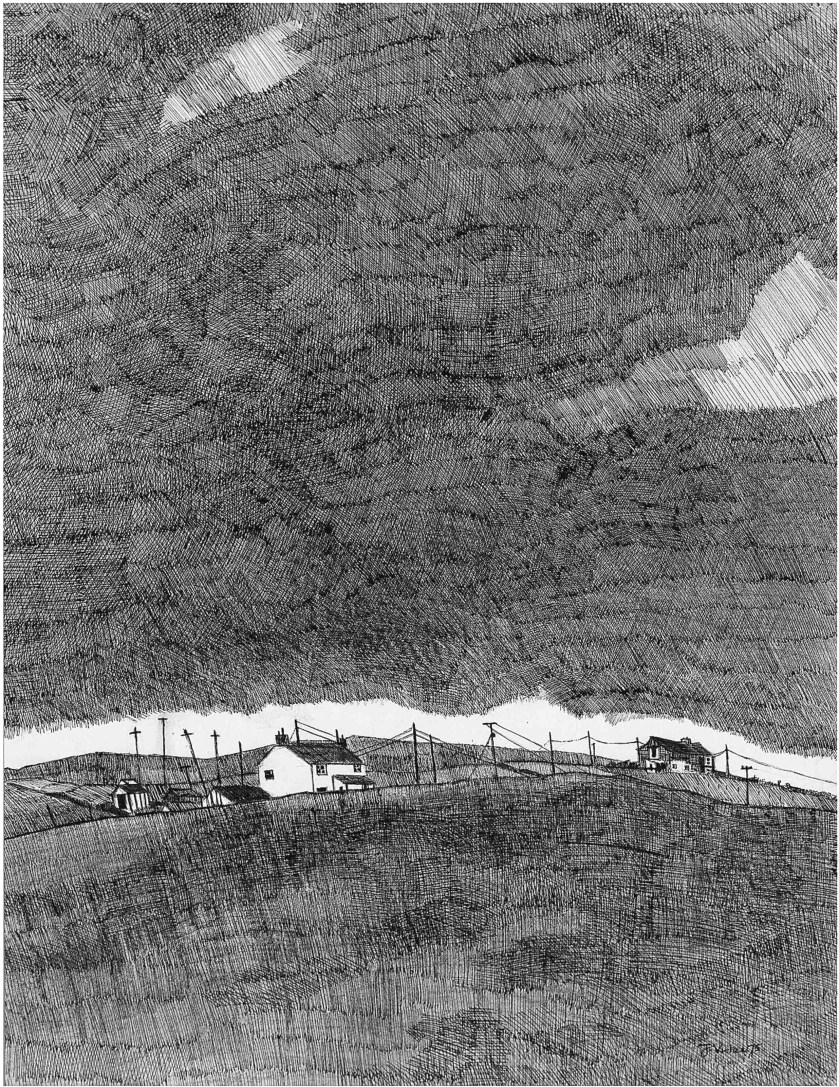
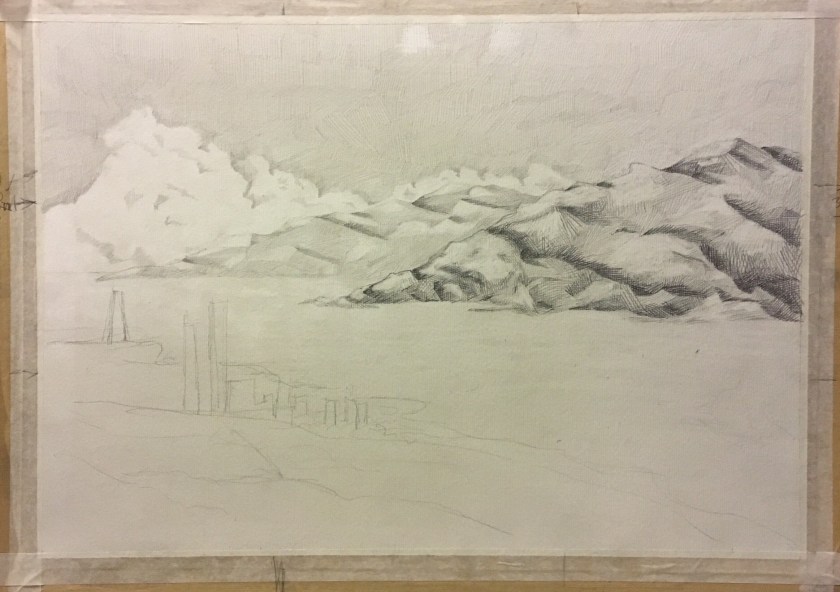
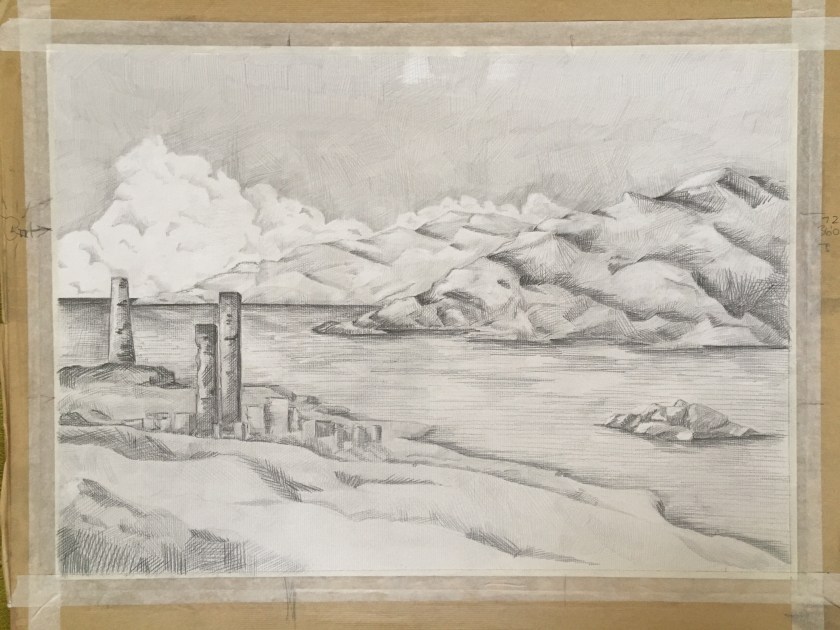
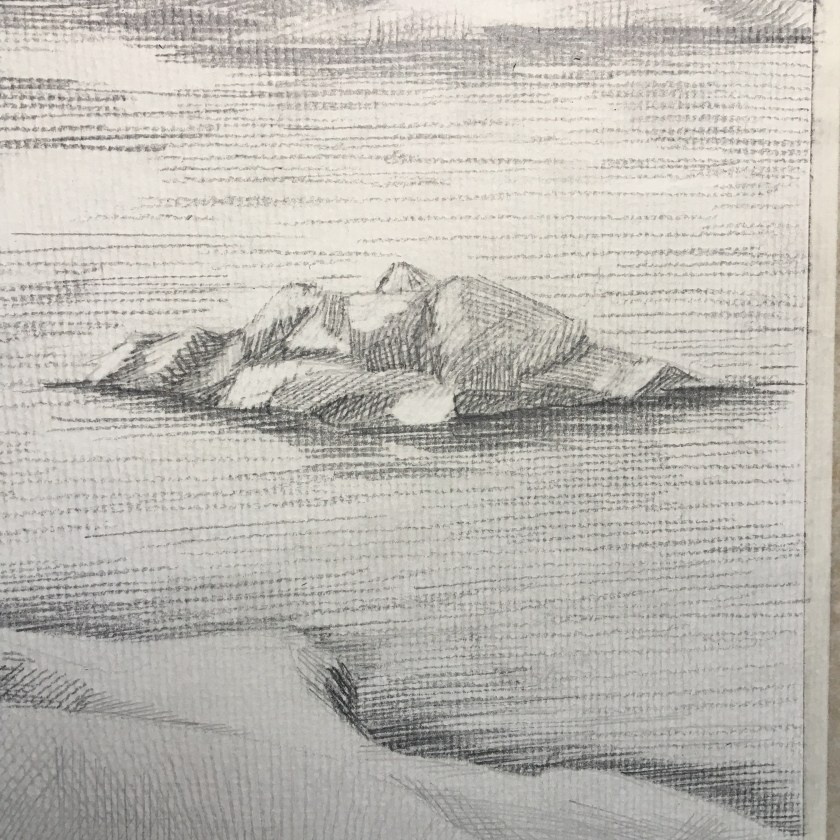
In attempt 2, more attention could have been paid to the size of marks in relation to the perspective, i.e. smaller further away. The marks on the first distant hill are the same as the marks in the foreground. I noticed this after as something was not quite right – the first hill seemed closer than I wanted it to be. I also need to think how the shadows of the towers should fall across the undulating ground.
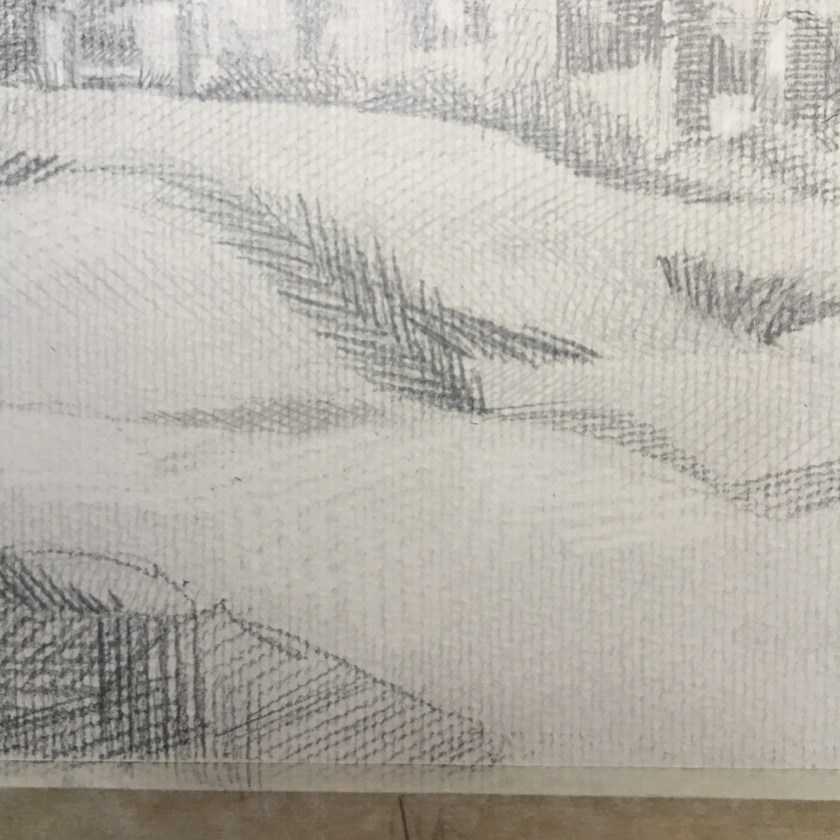
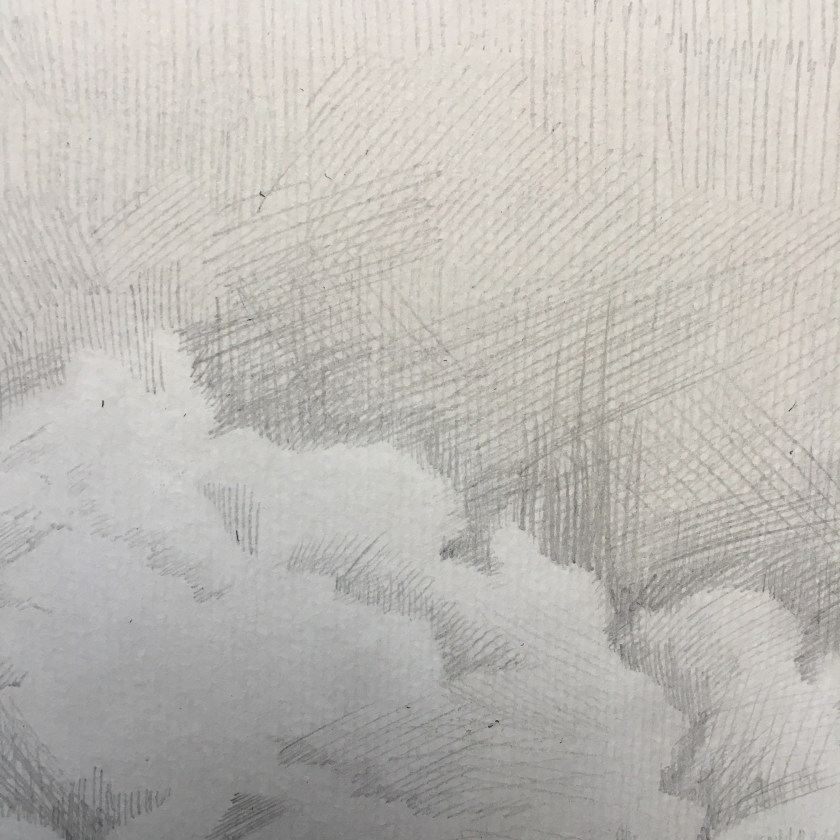
I liked how I used the electric eraser in the same way as a pencil, making the same linear marks to create highlights. I also like the texture of the water colour paper. Definitely will try this in pen and ink in the style of John Virtue.
The atmosphere and energy of each setting was high up on my list when I was developing each piece. Particularly in attempt 2, the energy was running alongside my ideas and drawing the whole time. It consisted of elements of landscape from my holidays in Ireland and Cornwall, both spiritually energetic places anyway.
Quality of outcome – content, application of knowledge, presentation of work in a coherent manner, discernment, conceptualisation of thoughts, communication of ideas
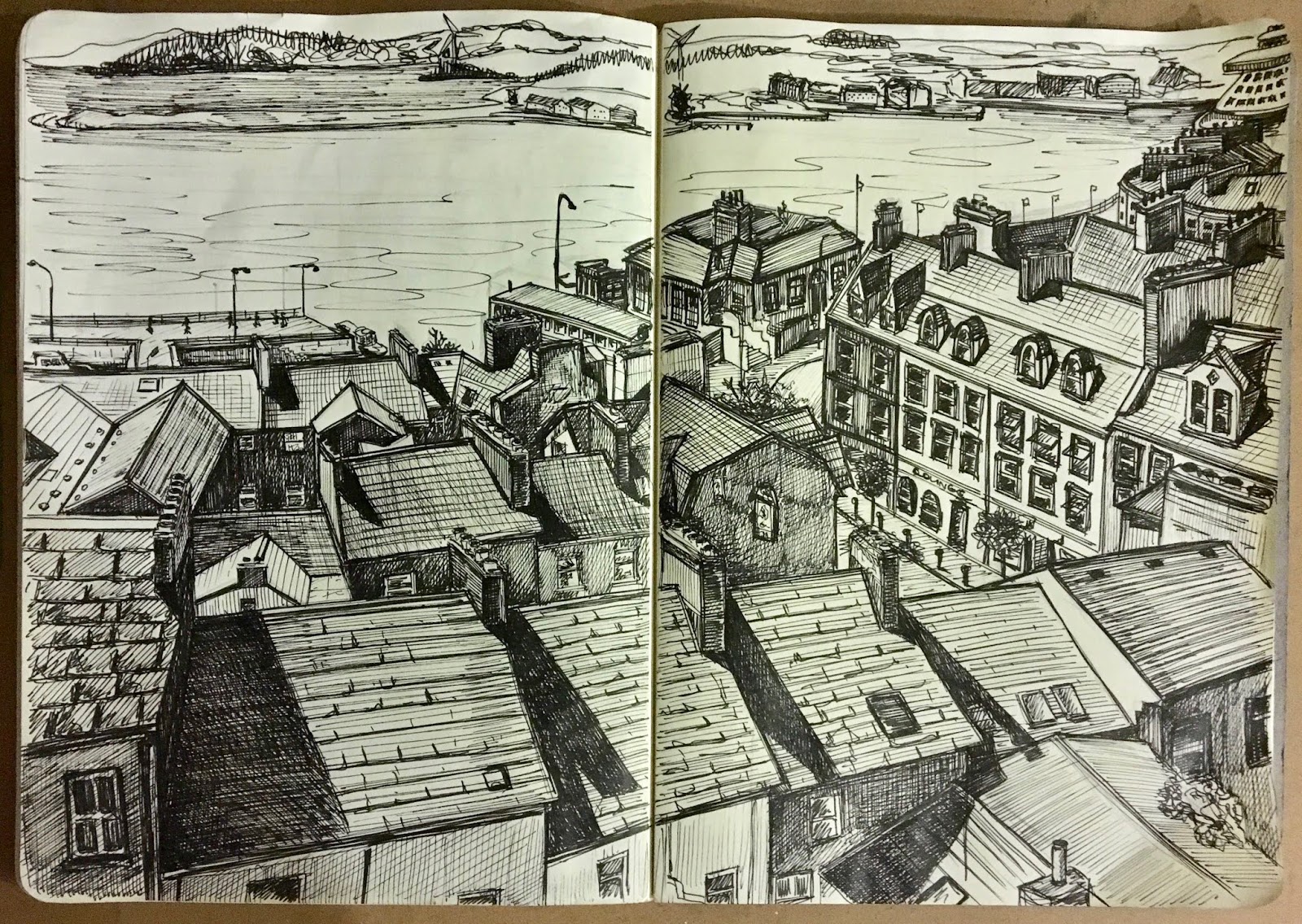
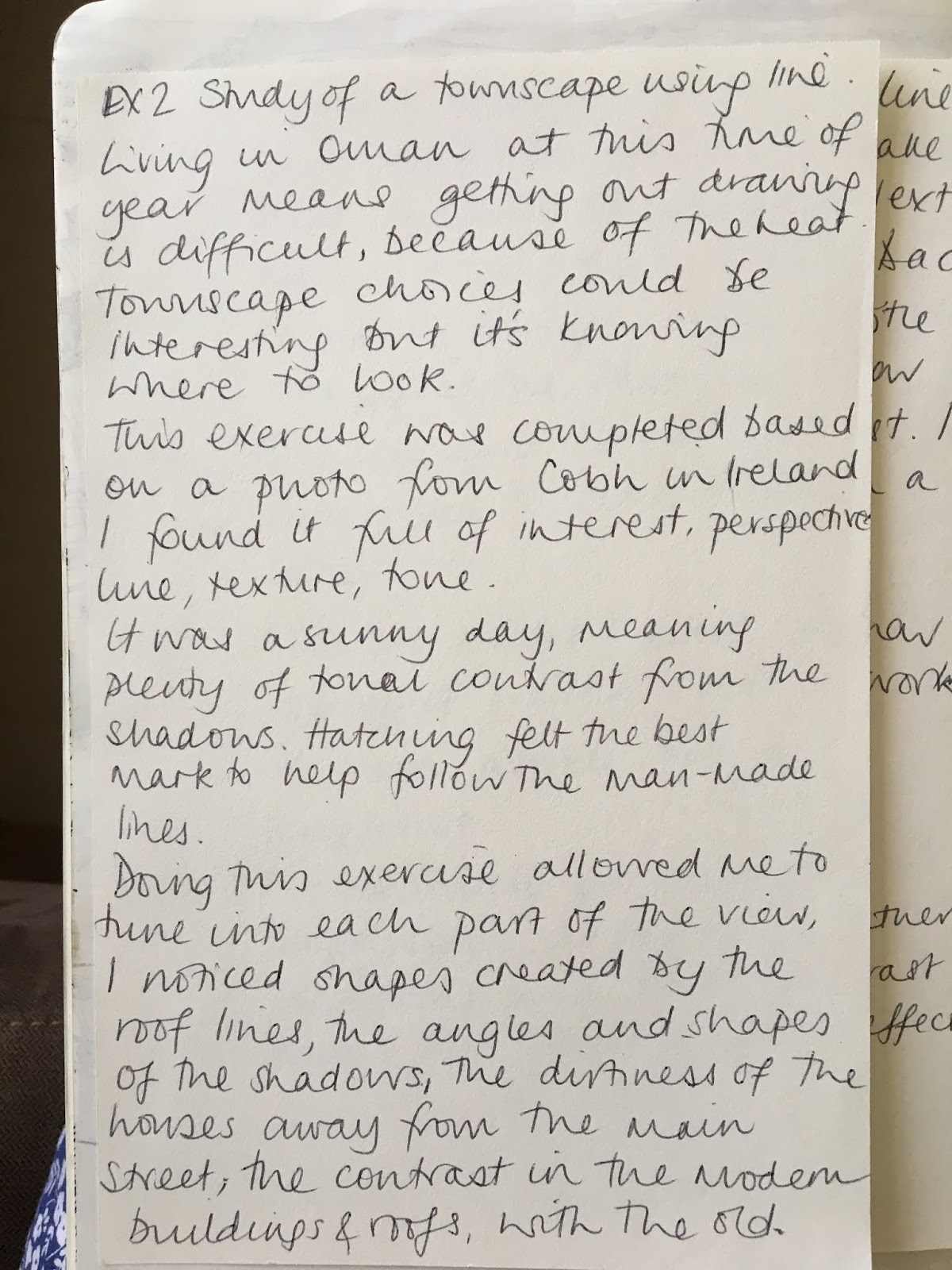
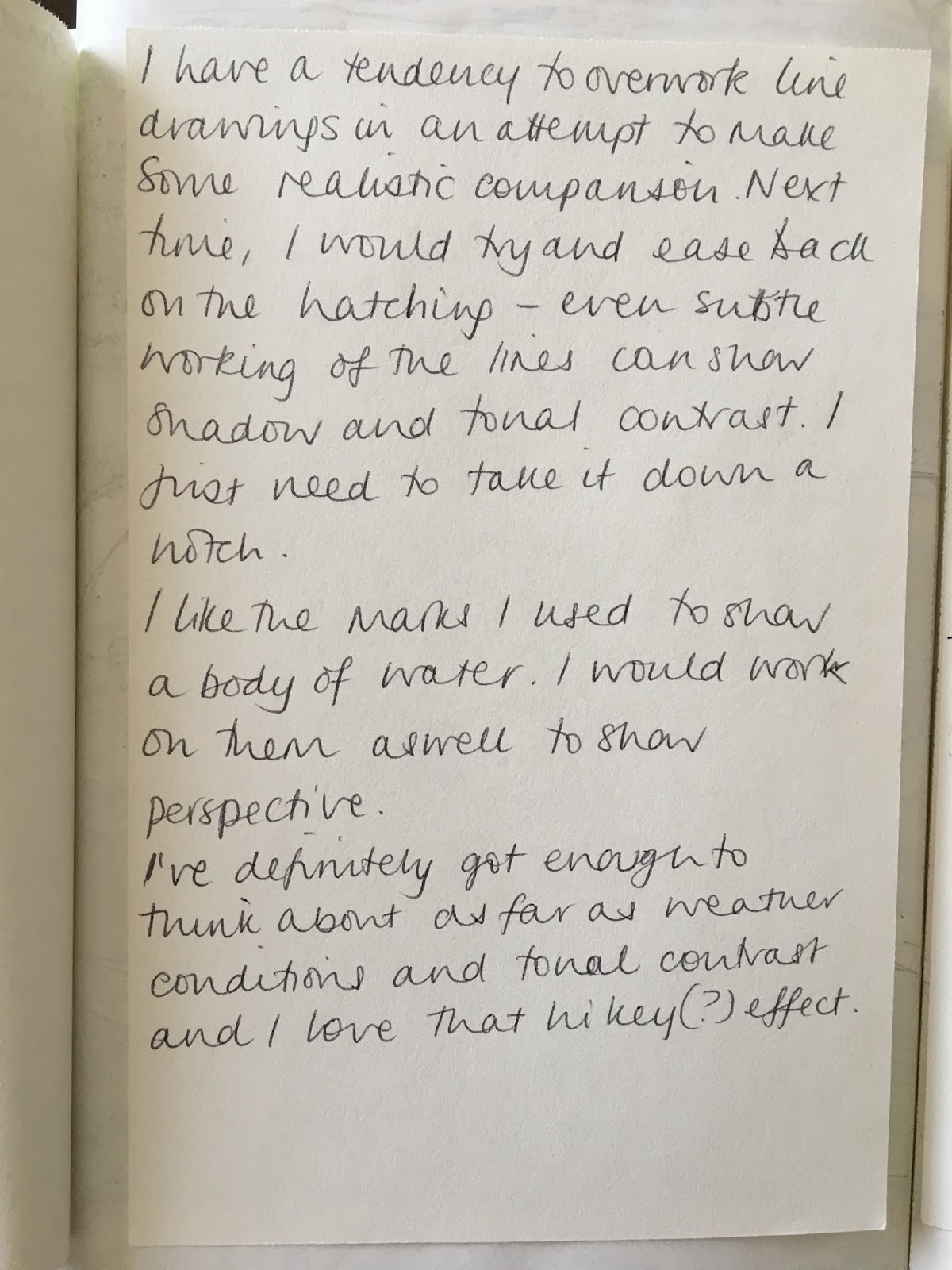
Both attempt 1 and 2 are still formal pieces, 2 less so. I risked overworking the first one in particular by trying to make it look realistic; I have tried to include everything so that there is no risk of the viewer losing any context or perspective; despite there being no chance of this, I still got hung up on this. It took longer than 2 hours and I was still seeing things to change. Realising this and asking myself the question should I simplify my choices more, led me to attempt the assignment a second time. I was not satisfied and needed to create something more fluid, especially after my Virtue research. For me, it became more of a case of simplifying the techniques rather than the content.
I am more satisfied with attempt 2, I relaxed more and this helped as I had more of a direction by following Virtue’s drawing style. This piece has less preliminary work carried out, I just wanted to get the idea out on paper. Although this did still take longer than 2 hours…
This is one I will work on again for assessment; I can already see what I need to do. I just hope I remember to not over-formalise it.
Demonstration of creativity – imagination, experimentation, invention, development of a personal voice
I think I am becoming more practised at the work for the assignments – I am getting my head in the game three assignments in!
There is no doubt I am tuning into my imagination, but on the other hand I often feel I get carried away with some many ideas and processes running through my mind. With that in mind, the chaos may be in my head but I think I communicate well enough to plan and narrow down my thoughts. I am becoming braver with experimentation of materials but I don’t think I’m experimenting to the fullest potential.
I am inspired by so many artists, works of art, and colours and objects around me and at this point I have an amazing exhibition of my work in my mind! To get these ideas out with the investigation and experimentation needed, would require me becoming a full-time artist and I find that thought frustrating as ideas go untapped.
Context reflection – research, critical thinking
As far as critical thinking is concerned I need to learn how to compare, contrast and analyse pieces of work. I teach my primary school children the questions to ask about a piece of work and maybe I should bring my thinking back to basics as well.
I could be doing more research. Compared to A-level, I have got out of the habit of creating artist study pages in my sketchbook, where I would copy an artist’s technique and picture and then apply this to a piece of my own work. I need to do this more often.
I am always critically thinking, just not communicating it, it seems. I am not communicating ideas in depth on blog, as I write notes down as I go. It is all in my book and I end up uploading the photos of the pages rather than doubling my work load. I guess as long as you can read my writing that is acceptable?
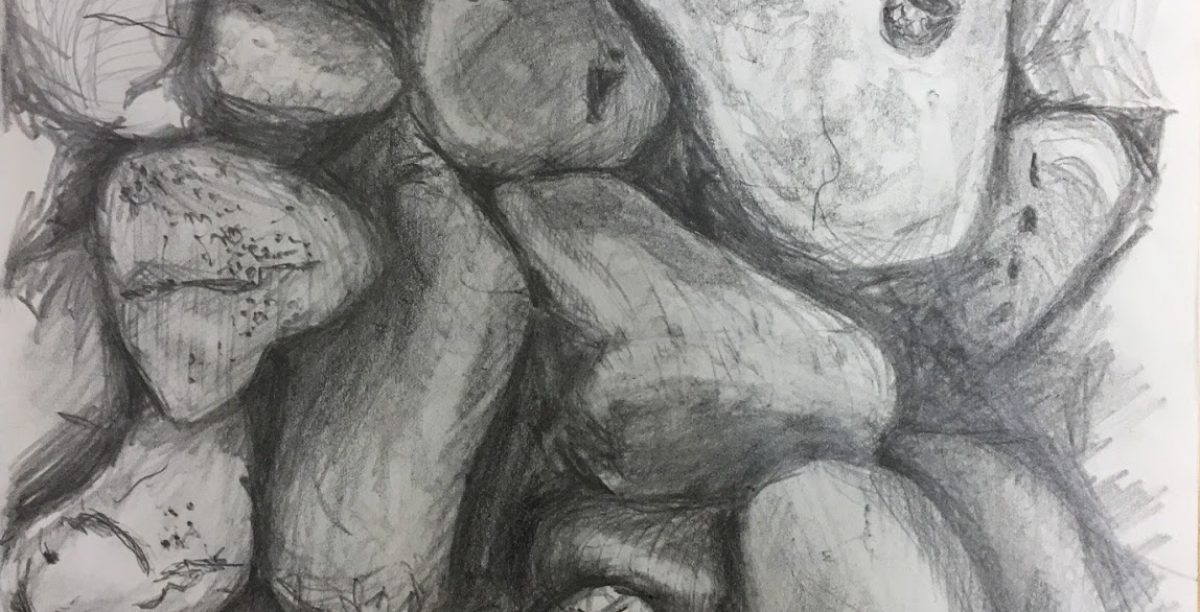






 Tea and Doodles