PART 1 P2: Exercise 4- Reflective light and shadows. Practice.

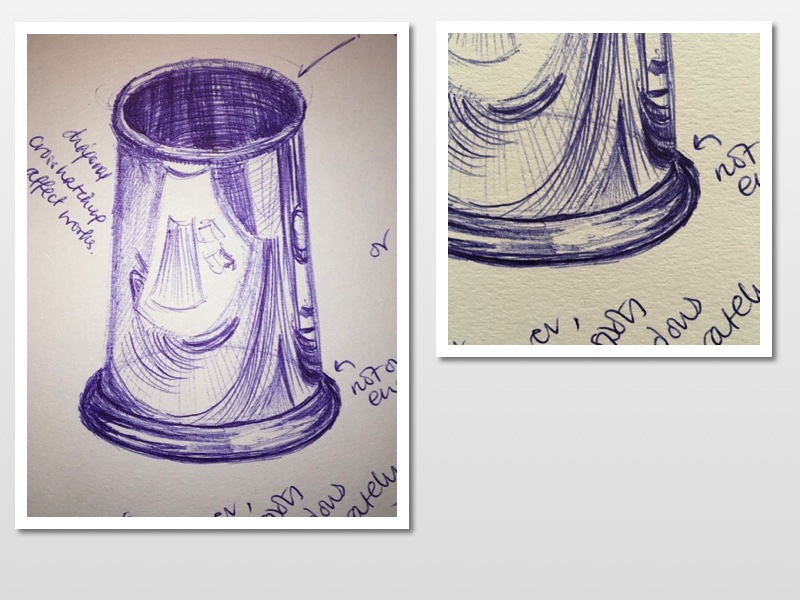
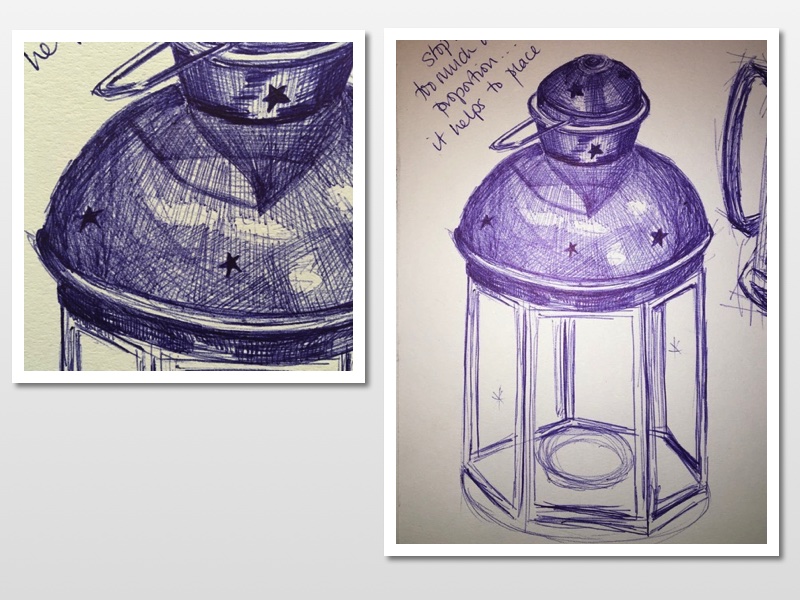
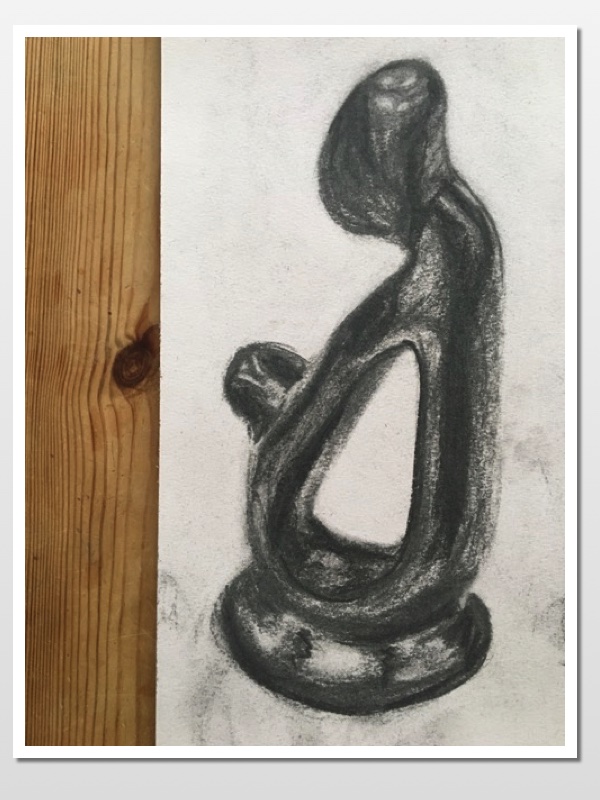
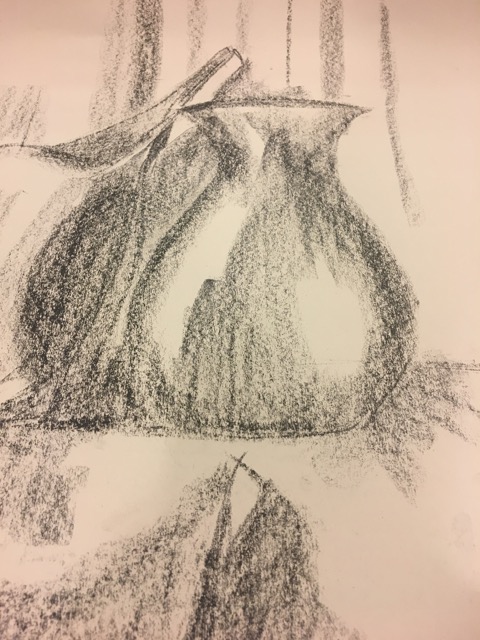
The exercise initially was hard, although maybe more for the fact that I thought it would be difficult to capture the sheen and reflections of a silver surface. I’ve been practicing this with different media just to have some playtime. I’ve never tried biro. This has a glow to it, I love it! 
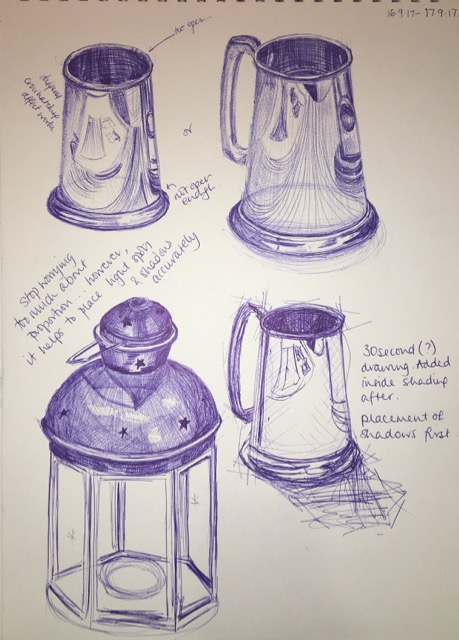
As my annotation shows, the proportion is out.
It is all too easy to focus on perfection sometimes and miss the aim of the exercise!

A brushed chrome seemed harder to replicate; a diffused reflection was difficult. Maybe in charcoal?

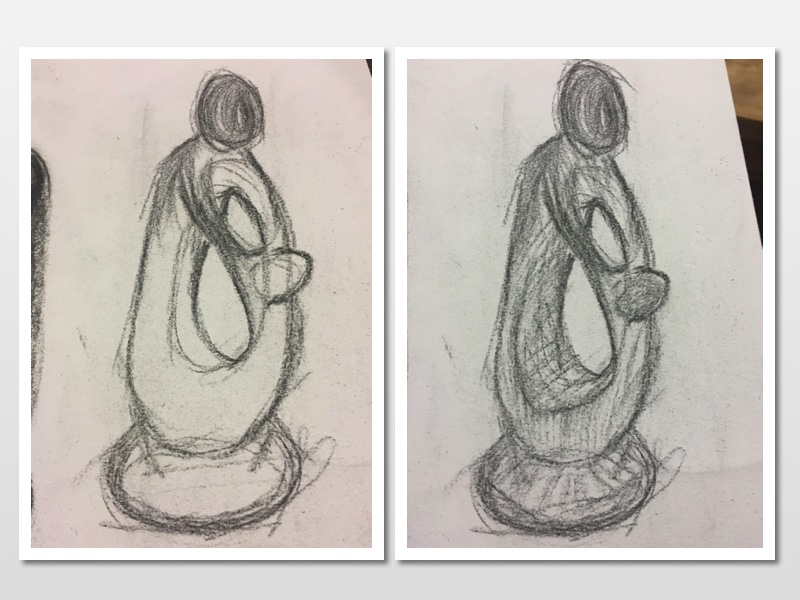
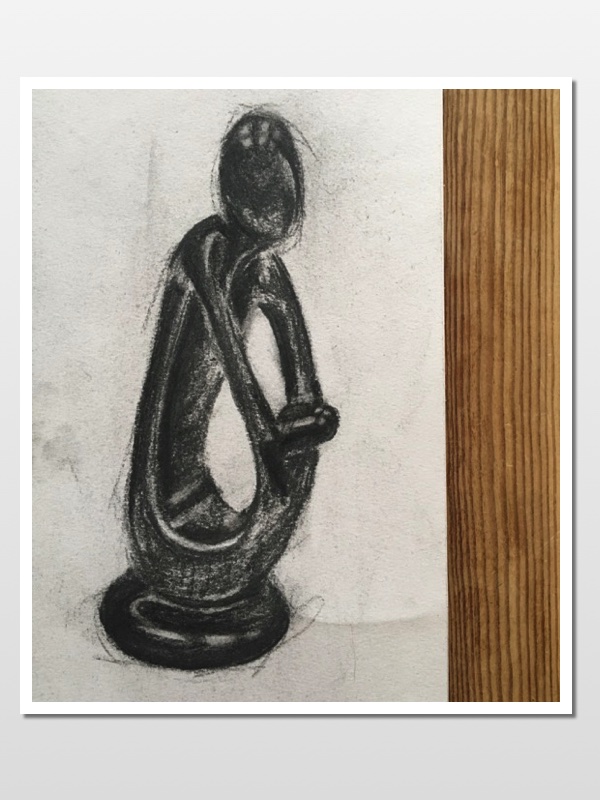
The ornament was easier initially as the reflective areas were more definitive against the contrast of the dark wood colour. However, lifting the conté to highlight the figure was not easy on such a small area – this would become easy when I work with a larger scale next for the actual exercise.

I’ve realised I need a much better quality sketchbook, this one is awful, the surface lifts and disintegrates as I wiped the conté dust with a chamois.
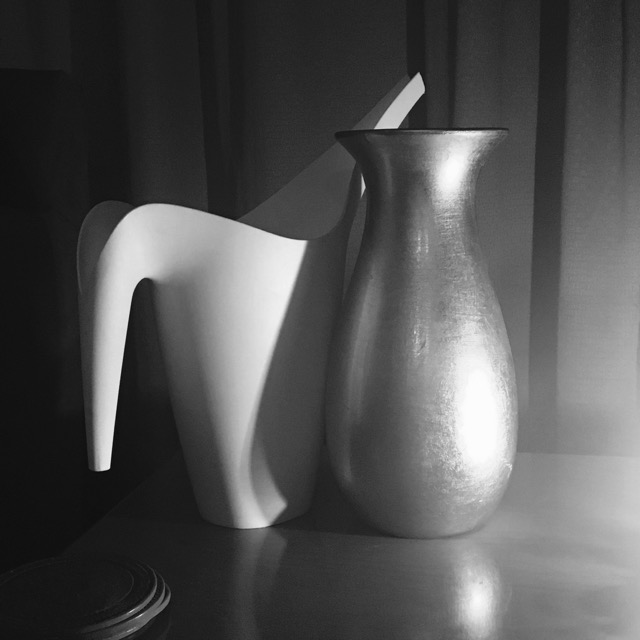
PART 1 P2: Exercise 2 – Observing Shadow using Blocks of Tone

On a 2D surface ‘real’ space is hard to create, especially without focus on tone. Showing light and dark on a surface gives an impression of three-dimensionality.


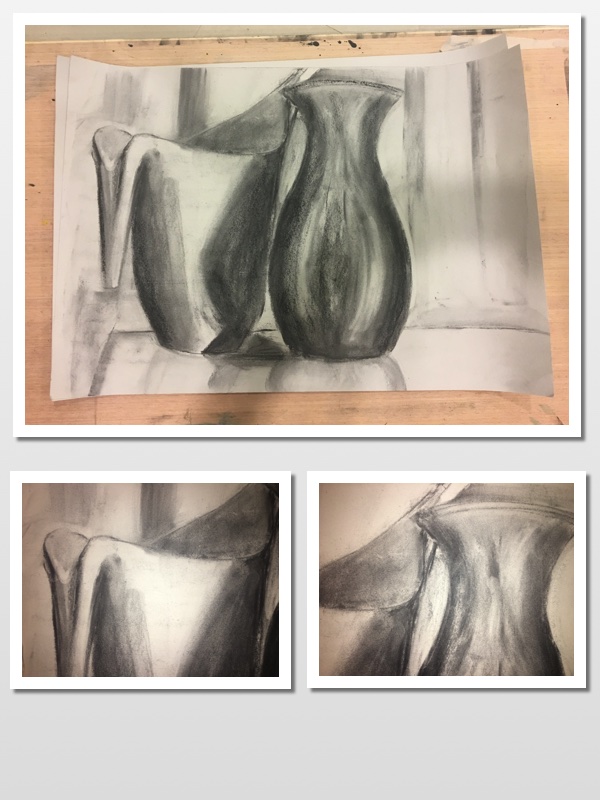
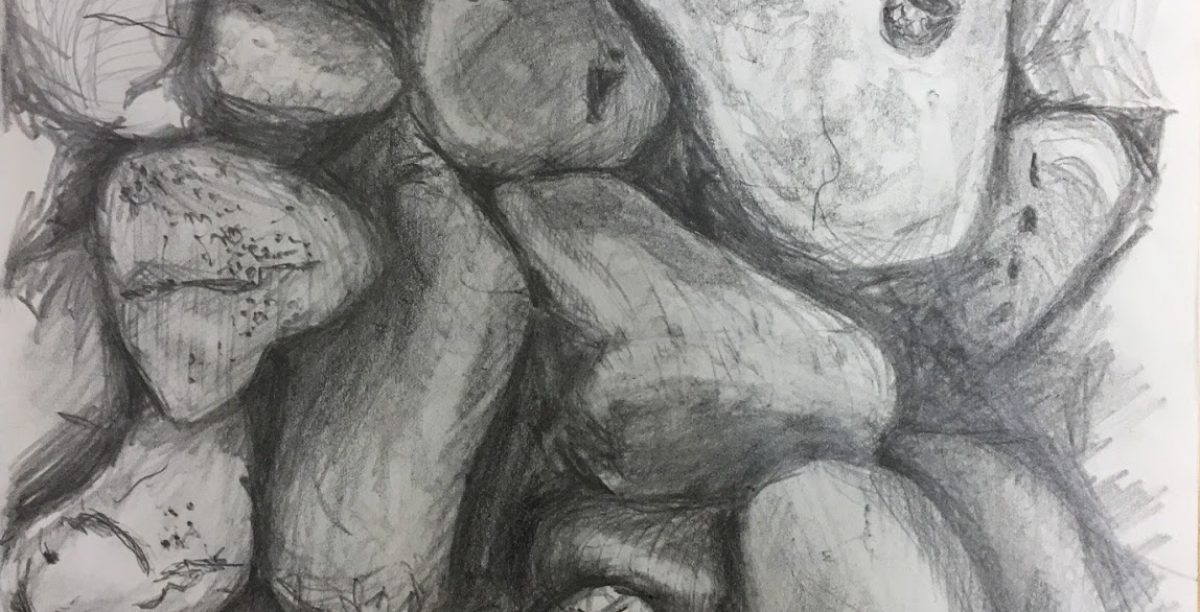
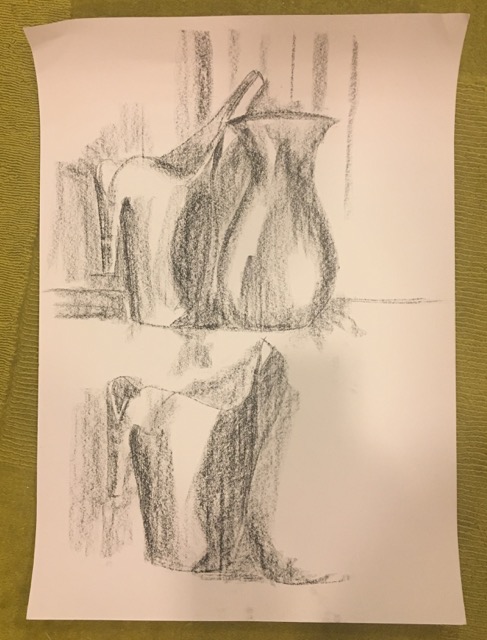
I started off with conté, as its one of my favourite mediums. Despite that, it is not an easy medium to use as charcoal in terms of building up or lifting tone.   
      
I initially misunderstood the instructions and filled the paper with drawings of the same objects. Rather than getting ‘all tones to work together in a series of total shifts’. I began again with charcoal and my work flowed better, maybe because I had my ‘eye in’ by this point. I cannot find A1 paper easily where I have so have worked on A2. 

I know that I could work more on this, especially to lift the highlights and soften the contrast on the right hand vase.

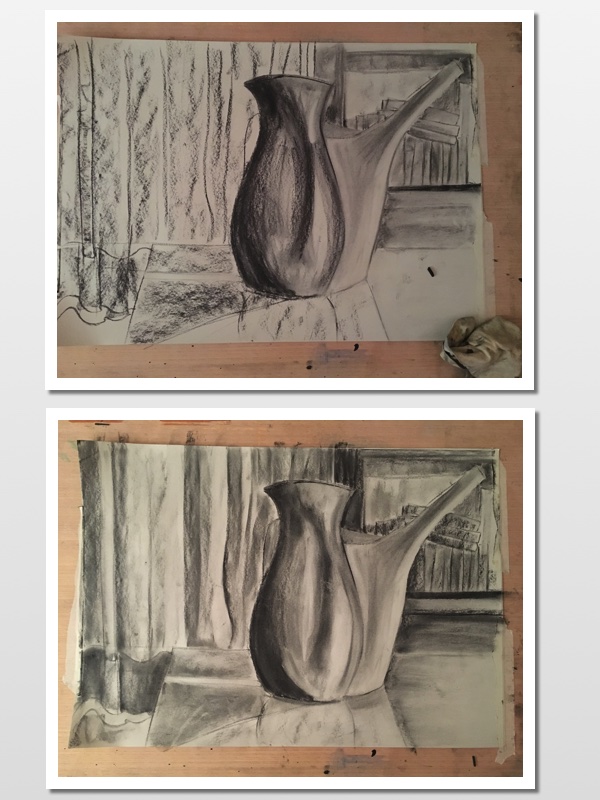
I wasn’t quite satisfied with the first attempts, not so much perfectionism creeping in but more that I don’t think I really followed the method well enough; I went straight into it with out building the picture up. Here is another attempt, focusing on each stage and building up the areas.

PART 1 P2: Exercise 1 – Groups of Objects

Already we see that lines and marks can be more than just that on a piece of paper. Expression and mood can be conveyed through the medium used, pressure, speed, intensity etc. An intention can now be given to a drawing as it takes on the mood of the flowing media. Even basic shapes and forms can take on an expression if the application is considered.

A flat piece of paper with a two-dimensional surface is the ‘picture plane’. When a line is drawn on the paper, it is still 2D. But building up these lines can give the illusion of three-dimension. They also help to show the objects in relation to each other. 

A method in the process of learning to draw is to recognise the basic shapes are flat and 2D. A build-up of lines can make these flat shapes appear 3D.

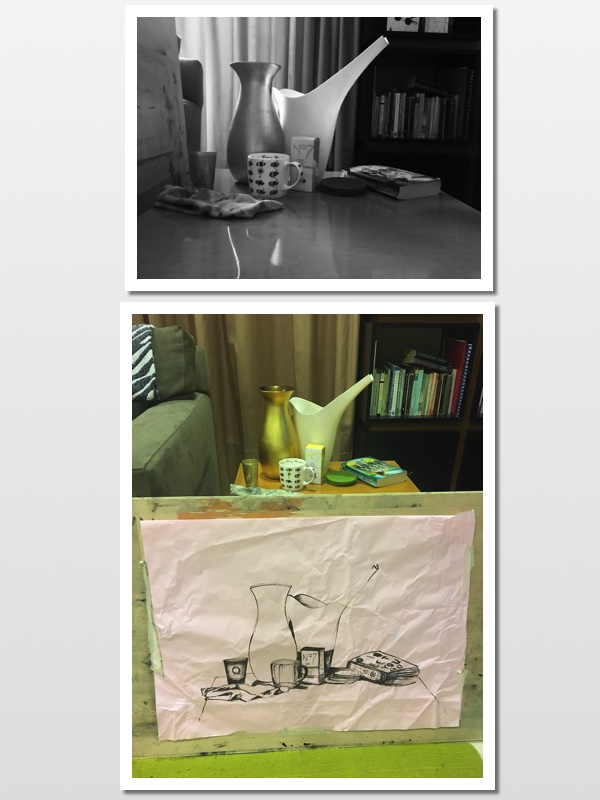
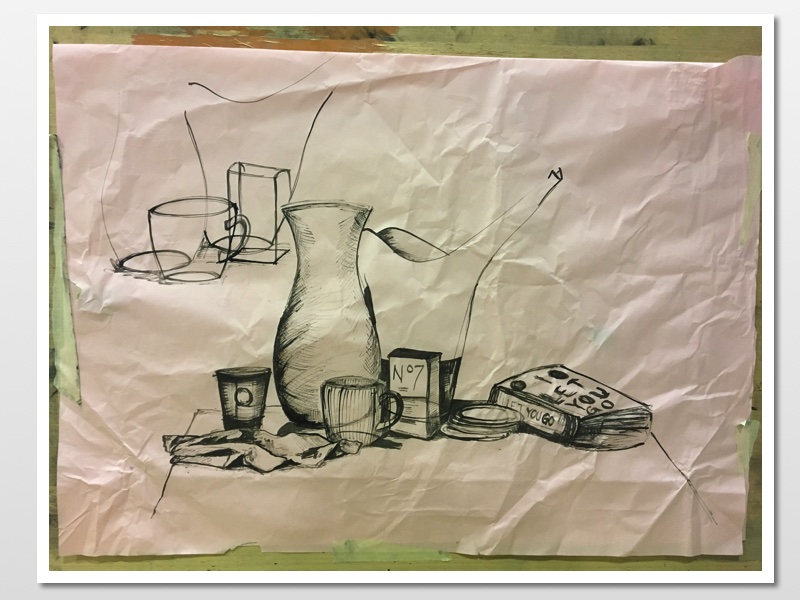
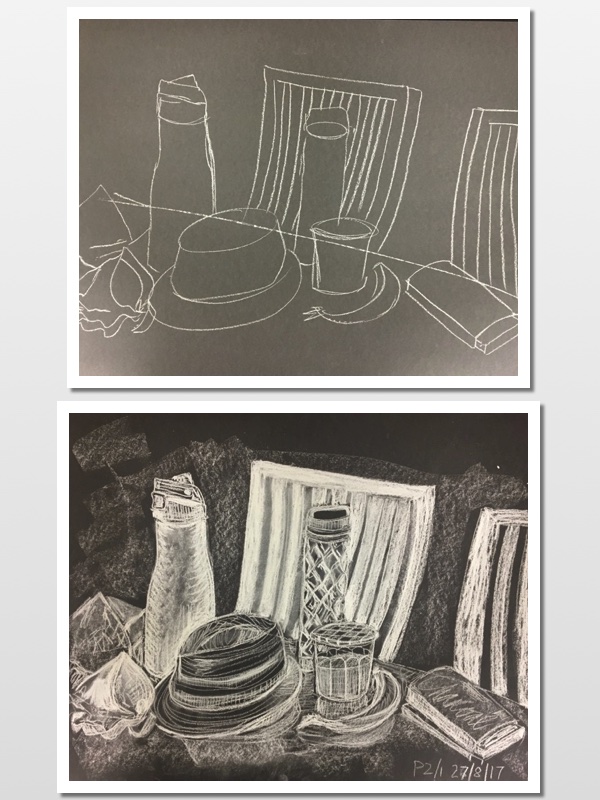
These are my attempts drawing a group of objects. I really enjoy this activity, especially after I relaxed and tried to stop making my drawings realistic.

The first work is stick and ink. 

I like looking for the shapes in the negative space, the space that the objects ‘leave behind’:

The second attempt was using compressed white chalk on black sugar paper. I need to work on my placement I think but I enjoy looking at how the shapes link to each other, if we imagined them as 3D and see-through. Although I focussed physically more on this in the first attempt, but still visualised it in the second.

Design a site like this with WordPress.com
Get started