Assignment 5 and reflection

2019-09-21 12-17 page 20

IMG_44132019-09-21 12-17 page 122019-09-21 12-17 page 112019-09-21 12-17 page 142019-09-21 12-17 page 13

IMG_4418IMG_4419IMG_4420IMG_4421

IMG_44122019-09-21 12-17 page 92019-09-21 12-17 page 82019-09-21 12-17 page 72019-09-21 12-17 page 62019-09-21 12-17 page 1

I was looking forward to this section for much of Parts 3 and 4! I think I was ready to be able to think out of the box and experiment in a more abstract manner. I wonder how students would approach this module if the contents of Part 5 was made to be Part 1 and they had to complete it first? My approach to painting would have been that I would have gained more inspiration and confidence doing the abstraction and material play first and then developed it into other standard study areas of painting. However, I do understand that the theory and basics need to be applied and practised. The introduction to Practise of Painting echoes my thoughts;

It can be hard to strike a balance between learning what we can from the great artists of the past and succumbing to the modern compulsion to always seek uniqueness and innovation.

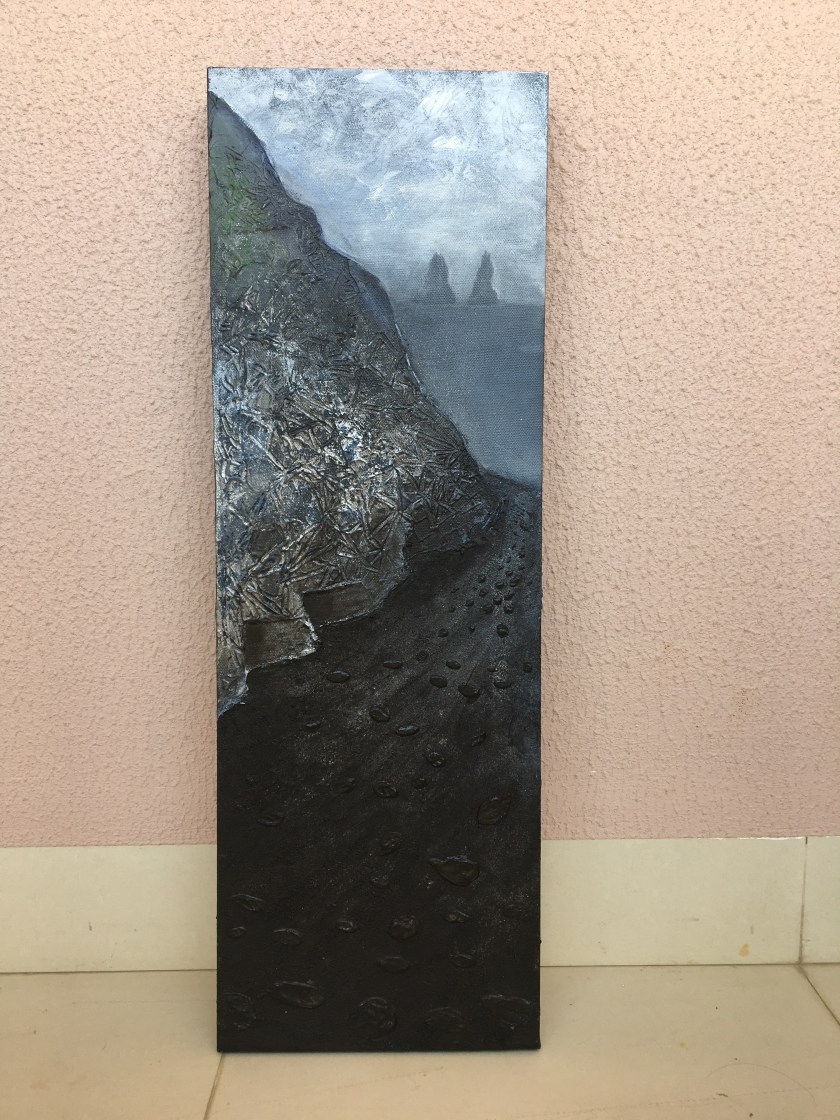
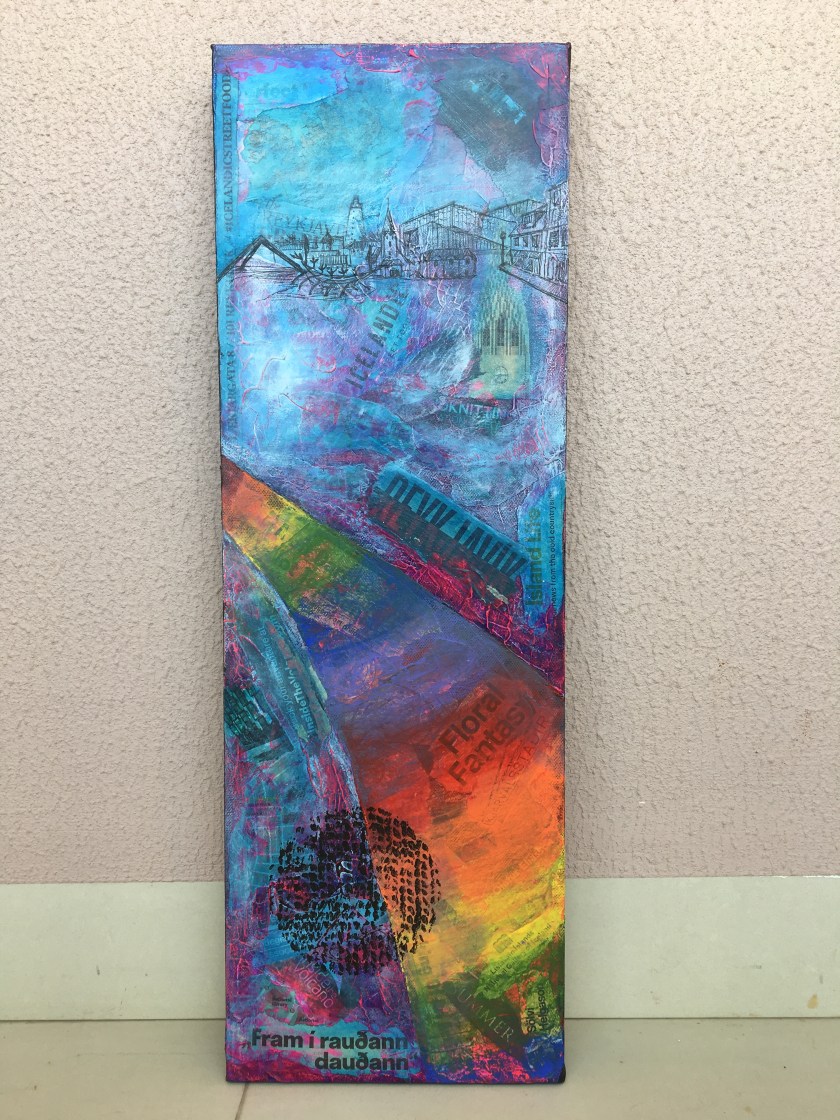
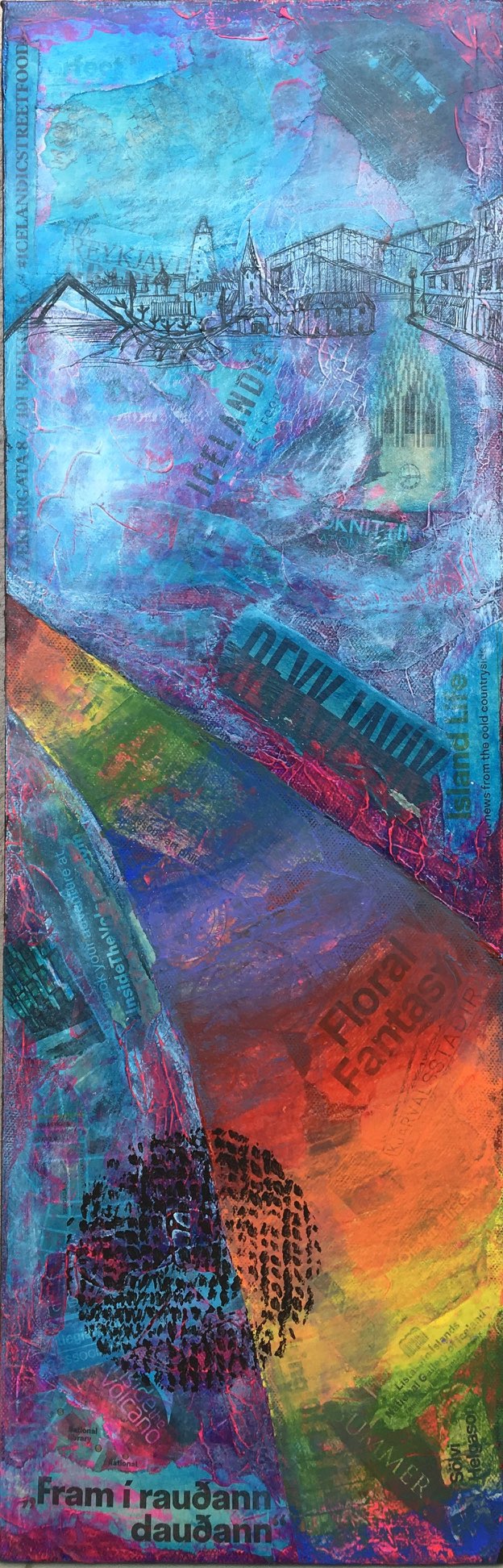
Part 5’s Assignment was always going to be based on my summer to Iceland. It was such a dynamic, varied country that offered plenty of inspiration for a series of paintings. This made me a little nervous to begin with as I did not particularly enjoy Part 4’s assignment development in landscape painting. It was the prospect of being able to abstract the features and feelings in some way that encouraged me to stick with my original ideas.

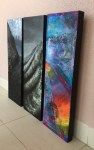
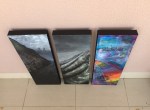
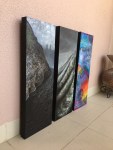
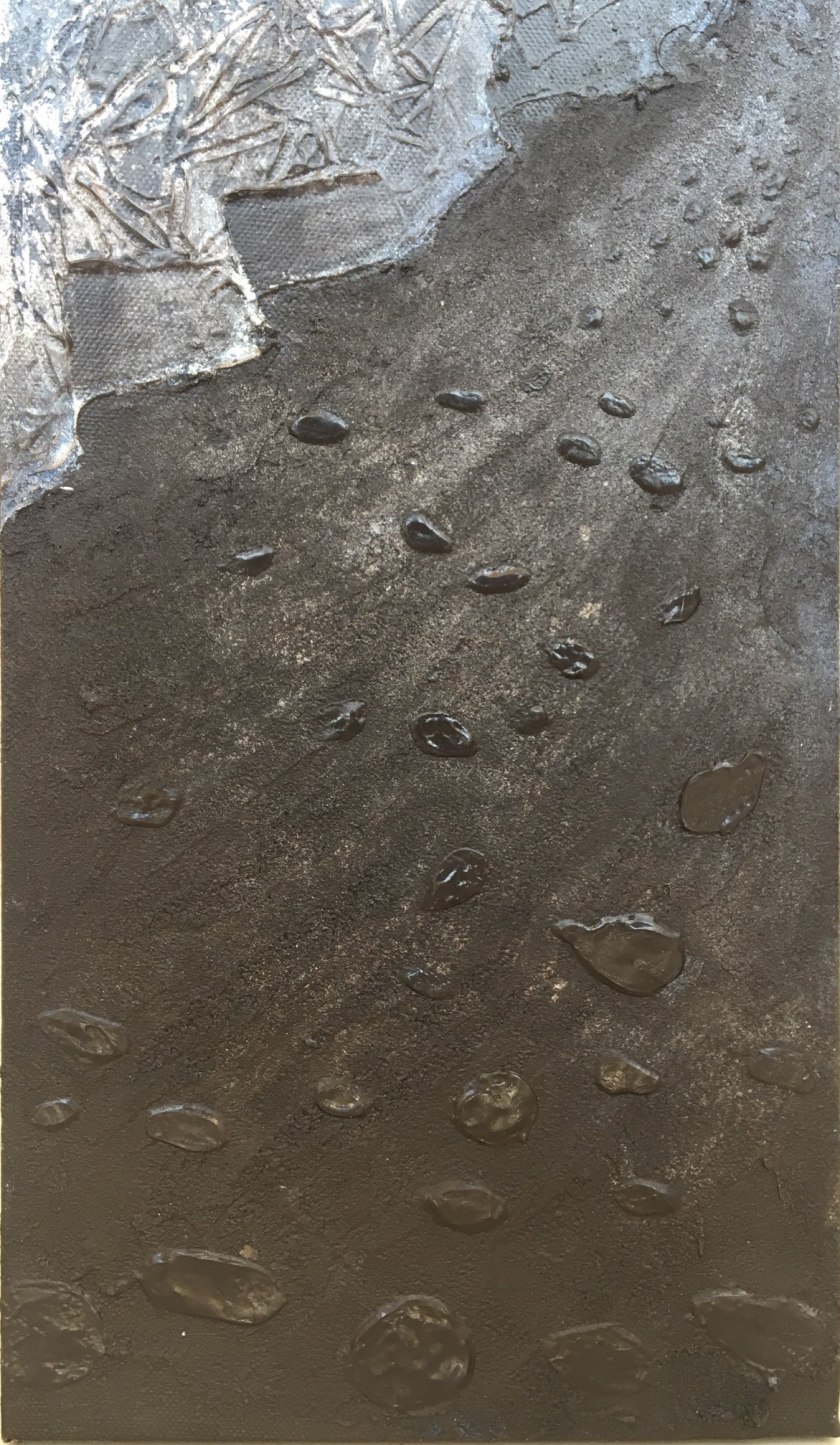
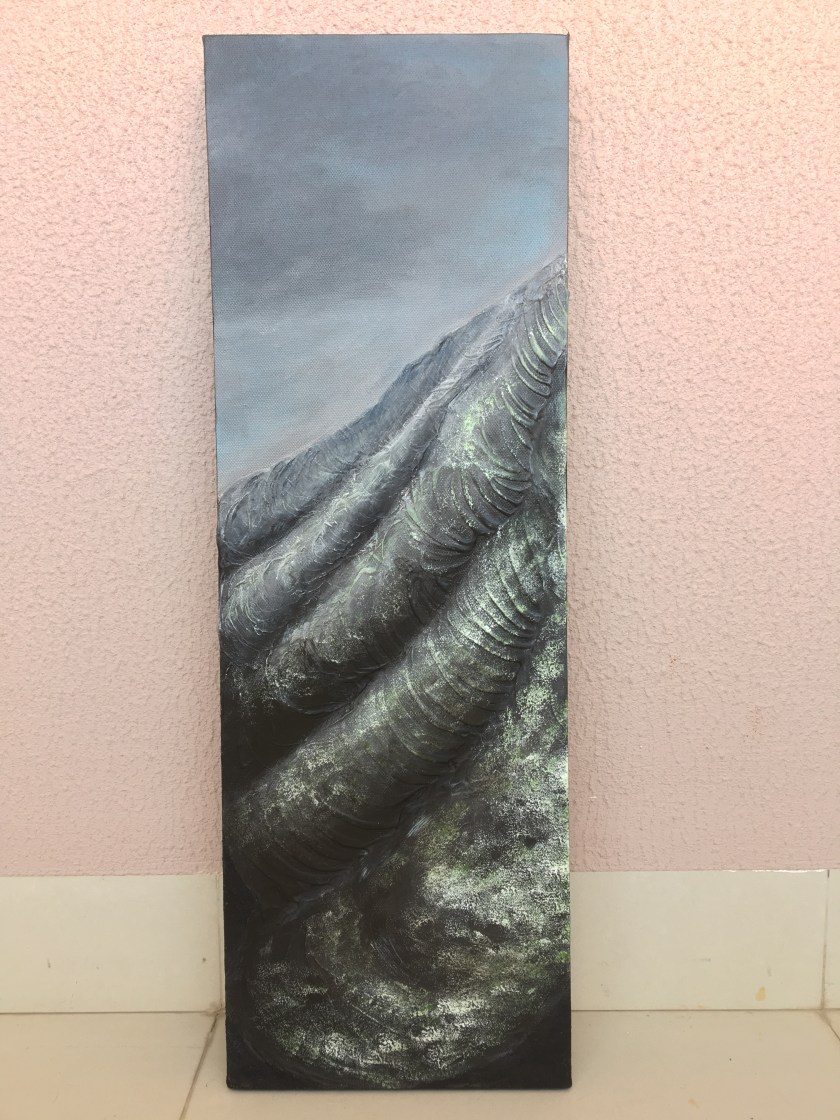
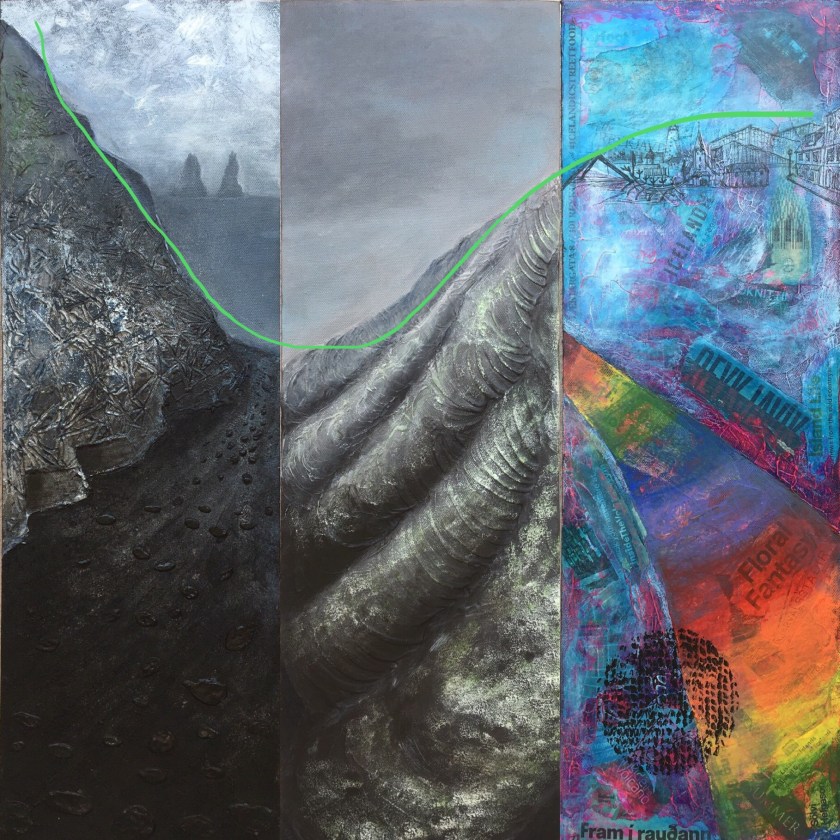
I knew I wanted to make 3-5 paintings that showed progression in an obvious linear connection. It was all rather fortuitous as I had three black deep canvases that matched my idea of linking the paintings in some way and so I developed the plans further based on these supports.

I initially thought I would work one painting at a time as they were each fundamentally different. But practically, allowing time for the media to dry and also using the energy and inspiration that Iceland gave me, I ended up happily working all three simultaneously, maintaining the same motivation for each.

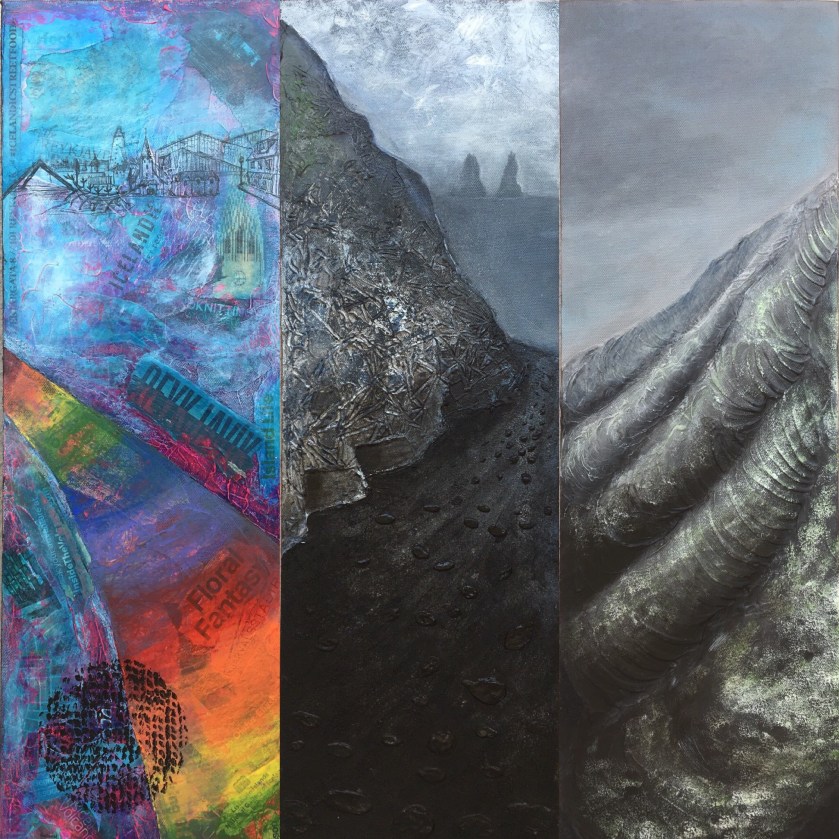
At the start and through the early development, I had a plan to arrange the three paintings like this, as this was the chronological order that we visited the places that were inspirational;
82025580-3F46-414D-AF53-8E6945ACA580.JPG

AS they developed I saw that the connecting line was not apparent and the black rock cut off on the left hand side jarred. Before I finished the colourful one based on Reykjavik, I moved only one and this allowed the continuation to remain.
18E73825-0762-4DAF-BADC-A9C63695A3E4

I am very pleased with the development of this series and the techniques that evolved throughout. I am glad I got to finish on a more creative note as far as my personal development is concerned. I feel circumstances rushed me in the last part and I was so disappointed. Having said that, I did reflect on the tasks to make sure I applied the techniques to the Black Beach painting in particular. Part 5 however, allowed me a freer approach in my work. Although time is of the essence for me at this stage, I have nonetheless been able to gain confidence again to experiment.

Demonstration of technical and Visual Skills. Materials, techniques, observational skills, visual awareness, design and compositional skills

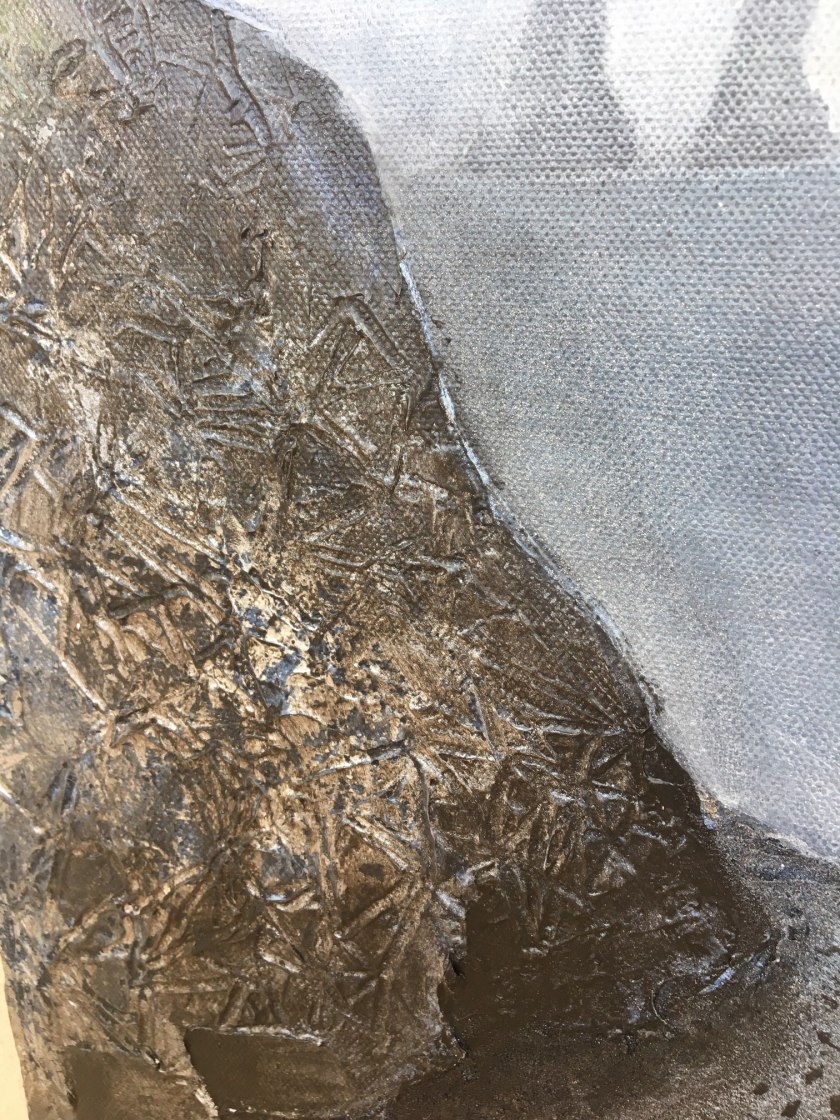
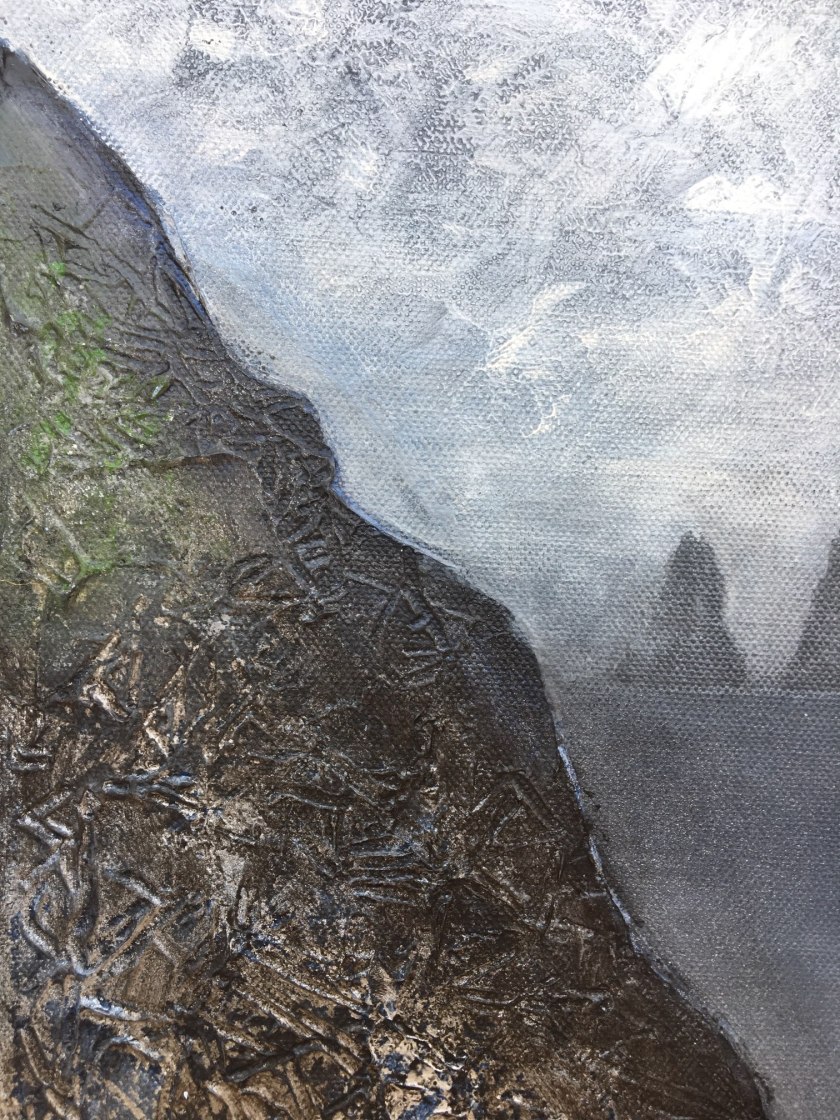
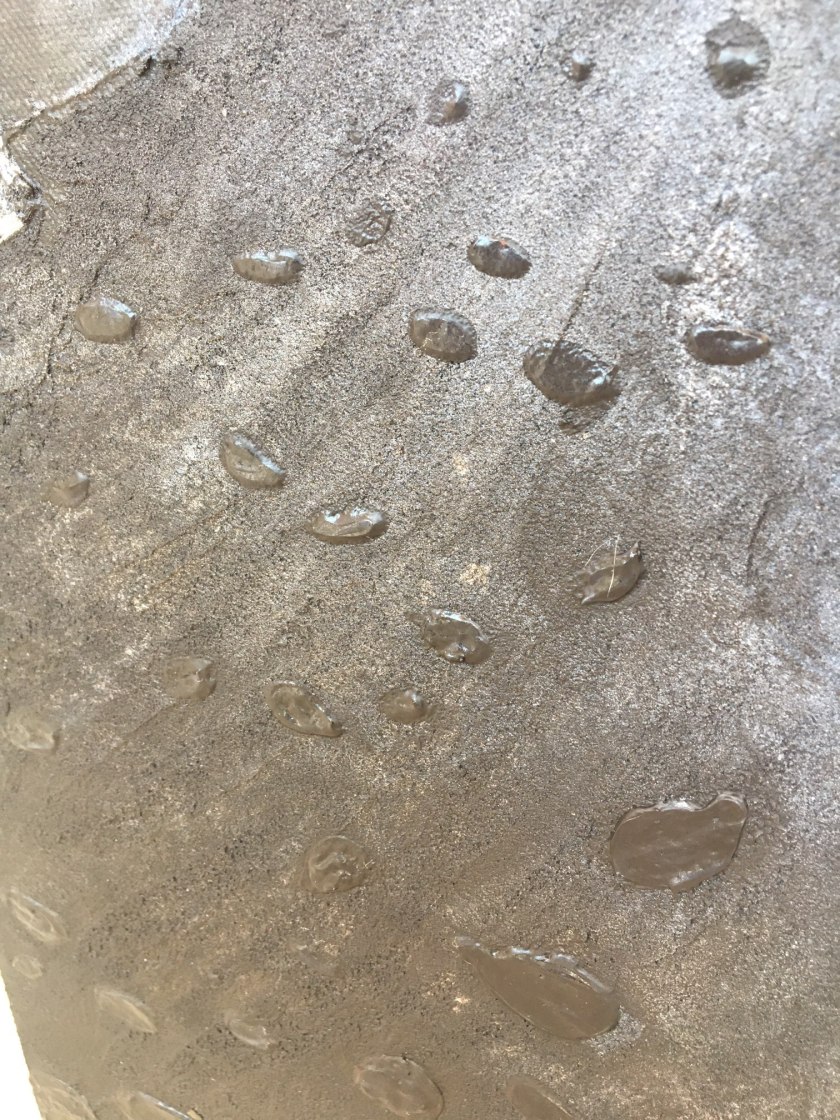
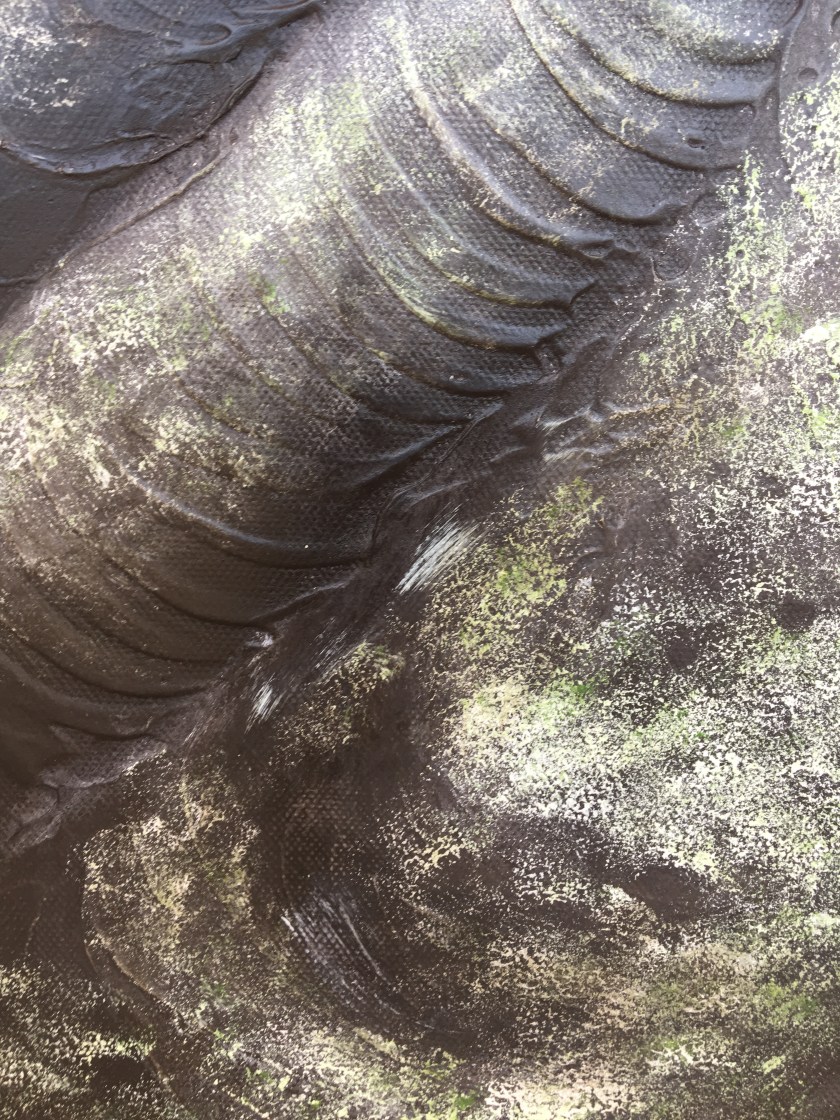
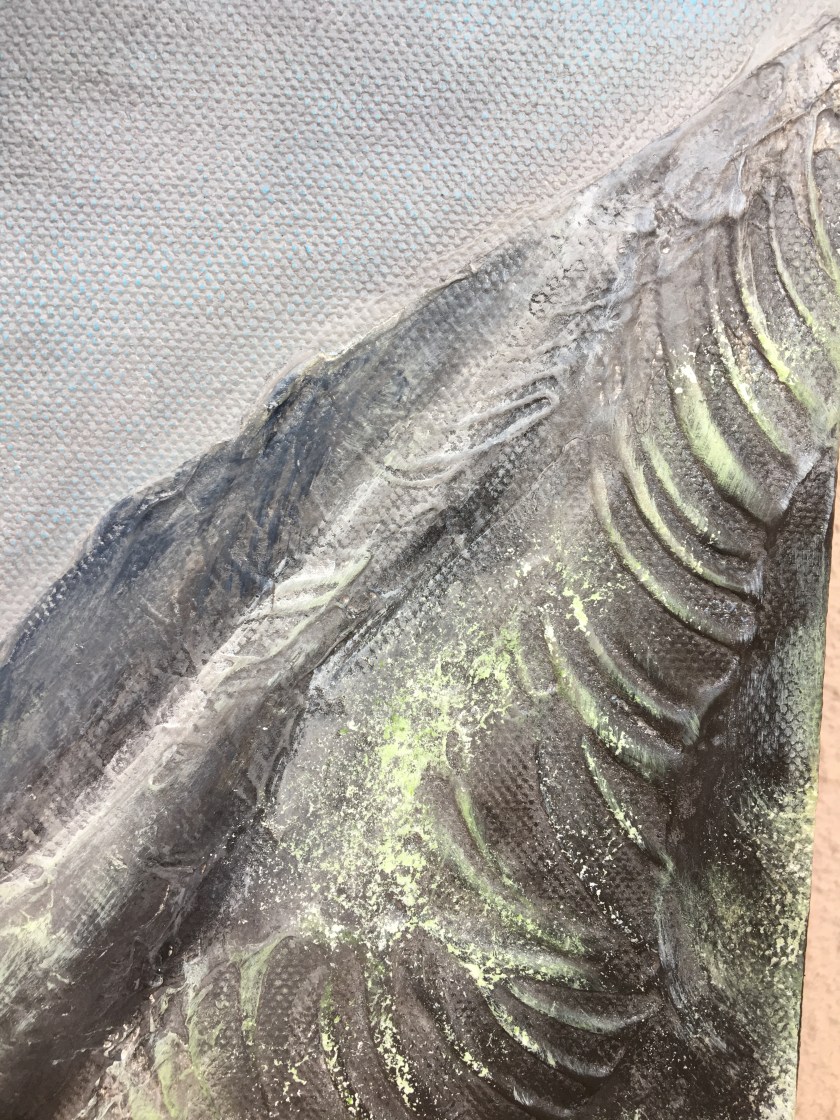
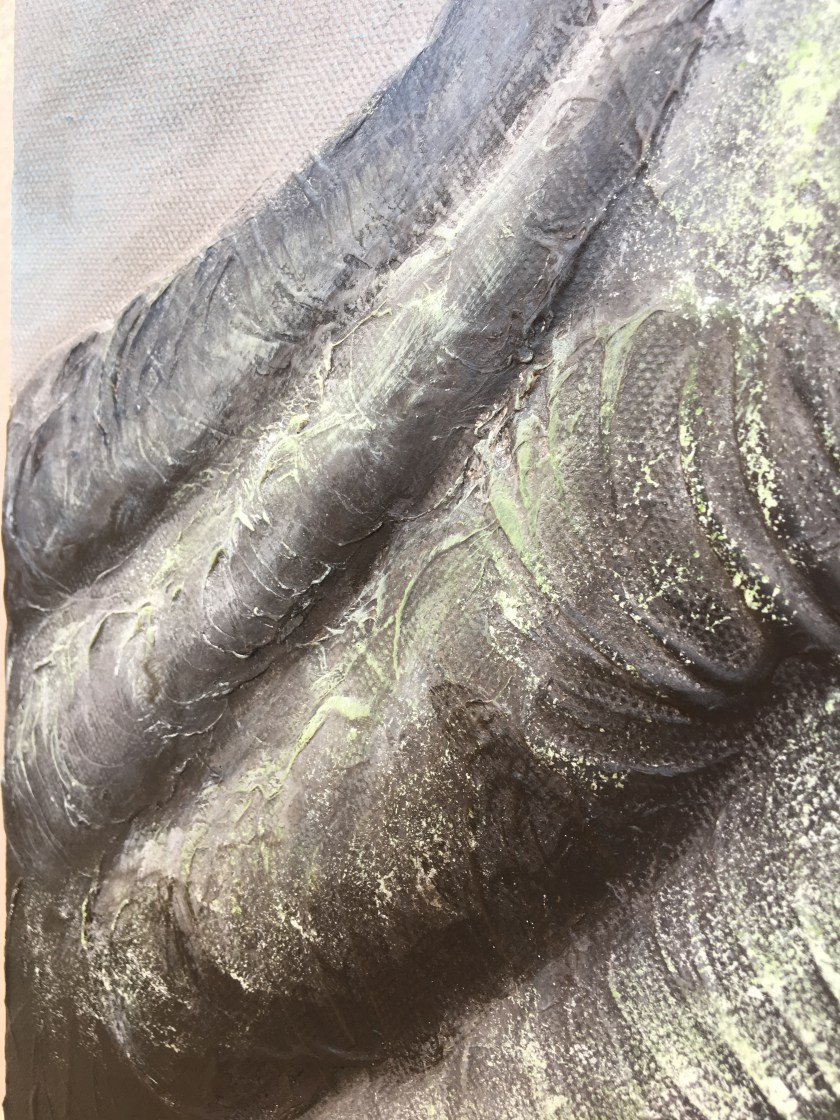
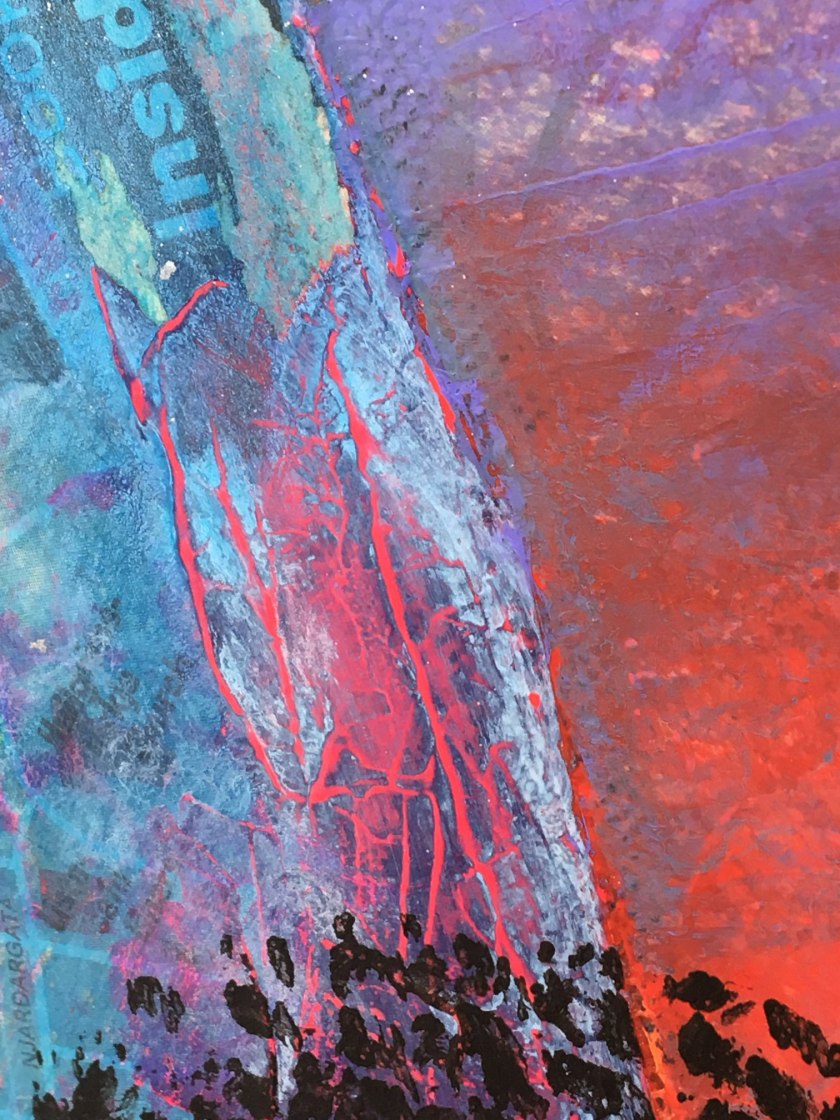
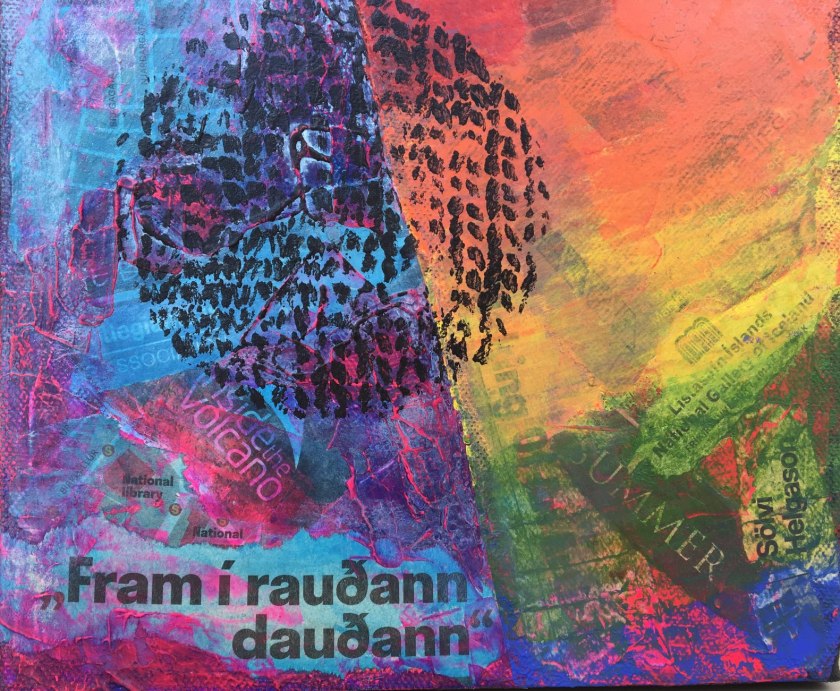
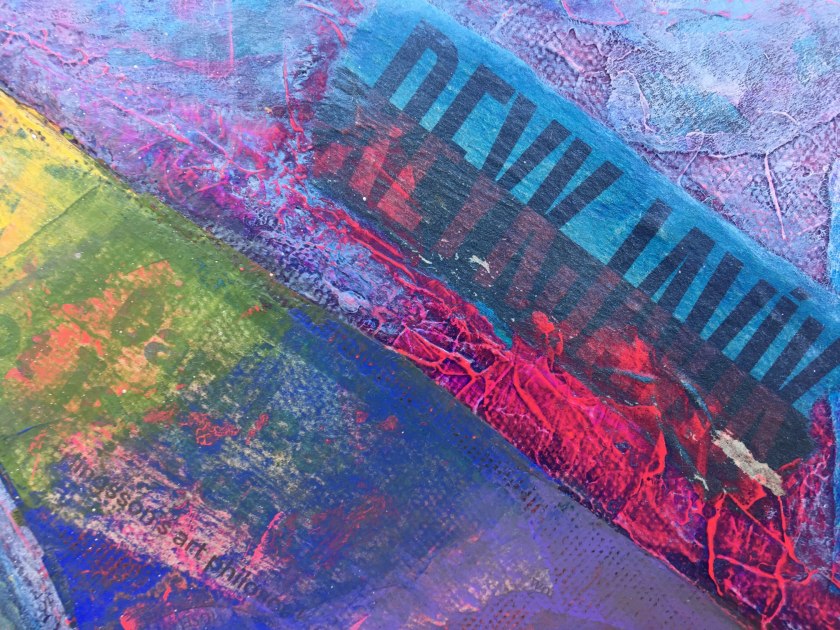
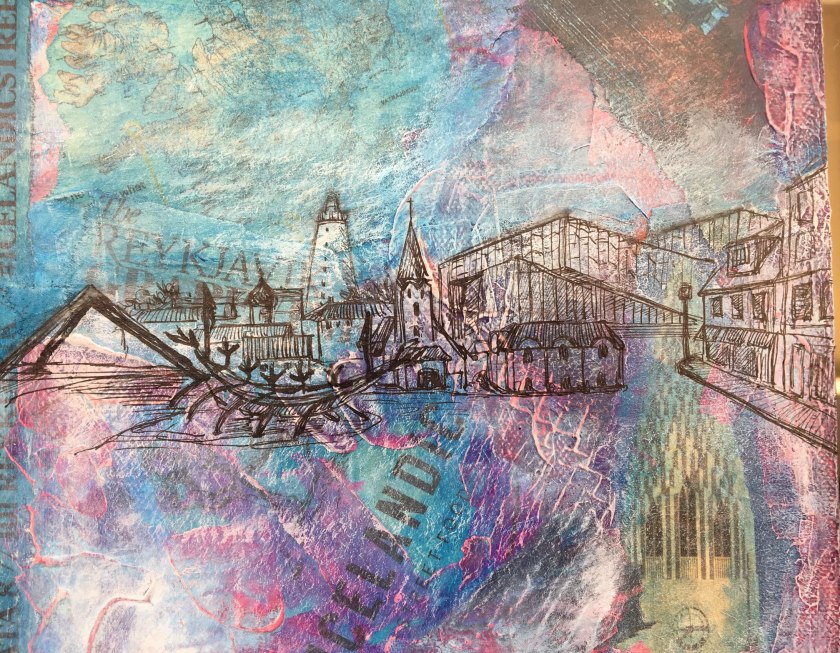
It could be said that I threw everything at this series in order to say I’ve used materials and techniques! I feel I have thought about, planned and ticked all these criteria in this assignment. Although not practised in depth, the exercises meant I could continue to develop something that interested me as the project evolved. As I knew what each picture would be based on, I worked on using the ideal material. Sand in modelling paste and black paint, modelling paste and a cut stencil to create black pebbles in relief, sgraffito, printing plastic film and a knitted piece, sculpting paint/modelling paste, newspaper ground, dry-brushing over the paint texture, drawing over. These all transpired as I went along, it was satisfying and I felt I was truly in the zone.

Quality of Outcome Content, application of knowledge, presentation of work in a coherent manner, with discernment.

The three paintings to me, show an application of knowledge and experimentation. It is a coherent presentation after a little amending and I like how the connecting line flows from the water’s edge through the lava field to the city.

Demonstration of Creativity Imagination, experimentation, invention, personal voice.

I really feel this part has allowed an increased demonstration of my creativity. It is a chance to put my personal voice through it. I envisioned this series and found the best ways to realise it, solving problems and queries along the way. More time would have allowed more experimentation but I have said that through the whole module. 

Context Reflection, research (learning logs)

The sketchbook development this time around was a little haphazard as I bounced between practising different exercises at different times, so a lot of reinserting pages. The result though, is coherent according the course’s development and shows development of my learning.

Written reflection and research has proved minimal again. I do look at artists that have inspired me but I just get on with the experimentation rather than reflecting on them and their work. I’ll get as far as putting a picture in my log and moving on. Academic development needs to be set in place for any future studies.

Any future studies will not be crammed into 7 months though 🙂
Assignment 5 and Artist’s Statement

I had this assignment in my mind for several weeks before I actually started the unit. Yet it feels that in a short space of time, this process has been intense; I have bounded so many ideas and concepts around it have been overwhelming at times.

Early on I knew that I was interested in form shape and line, and figures. I found I was looking at the negative space created between objects or people, making an abstraction of new positive spaces and shapes.

This thought process coincided with my reading Arthur J. Miller’s book, Einstein, Picasso: Space, Time, and the Beauty That Causes Havoc (2001). Miller looked at two of the greatest minds of the twentieth century and how they simultaneously had their most important moments of creativity and in relatively similar circumstances. This book reintroduced me to Pablo Picasso’s Demoiselles  D’Avignon. I saw so much more to this painting than before, how it was influenced by Picasso’s connection with the mathematician Henri Poincare and a resultant fascination in the fourth dimension – time and its geometrical representation.Thus followed an enjoyment of looking at and playing with negative space and shapes. It felt right, the timing of the book was serendipitous as negative space created by connected beings had been my initial seed of thought.

I digitally played with these thoughts; my ipad allowed me overlap images and see the negative spaces created. I played with line, negative spaces and colour.

Miller highlighted the fundamental link between Picasso and Einstein, talking about time travel; “Gyroscopes are required for the time machine to remain motionless a complex mechanical ether while the rider observes time passes by…much like an observer of one of Picasso’s paintings standing in one place while watching many different representations of an object unfold in time.” (Miller, 2001, p.104-5). Poincare suggested that different perspectives could be illustrated on a canvas; Picasso understood this as perspectives being shown in spatial simultaneity. And this led him to create Demoiselles.

Early on, I had so many ideas and materials, artists and inspiration that my sketchbook was very active to the point it was feeling disjointed and forced. I came to a point where I needed to return to simpler ideas. I was trying to be too precise and perfect, recreating the image in my head rather than going with the evolution of the work.

I experimented with the spaces in Demoiselles and also Matisse’s The Dance. At this point I started to focus on colour theory as I noticed the colours in The Dance were split complementary. This led me to Paul Klee.

At this point I was constantly thinking about this assignment so I ended up dreaming of an image! It was a layered pencil drawing, showing moments changing over time.

I thought that to keep with the layers and the idea of movement, I had to collage. But this became too ‘chunky’ and although effective in some respects, was not showing my drawing skills as it should do in Assignment 5.

After another break and brainstorm, I reflected on the charcoal life drawings I had made on a drawing course a few years ago. I thought this could be a pathway, particularly with Jenny Saville’s fluid charcoal drawings in mind. I returned to my course self-assessment at this stage to hopefully regain direction.

During this time that I broke from this, a cup of tea with a friend gave me a new direction. Human connection and moments frozen in time had me thinking of the placement and movement of the tea cups and biscuit plate.

At this time I also came across Francis Picabia. His layered work reminded me of my earlier digital layered line play. I finally had a clearer vision of my ideas, with Saville’s inspiration satisfying my need for movement.

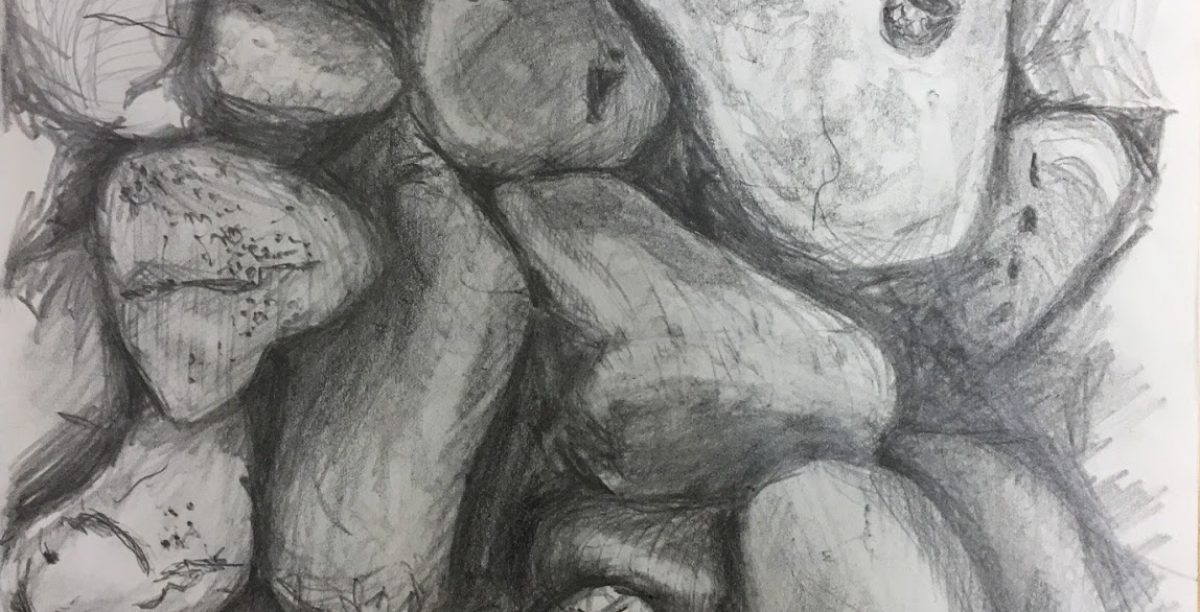
From this point on the piece evolved rather than followed a rigid plan. I layered a drawing with muted tones to illustrate precious moments caught in time but also its brevity. In turn new shapes were created between these moments.

The piece is made using pencil, charcoal, coloured pencil and chalk pastels. The coloured pencils were wax based so I learned that it becomes harder to draw over the top of the waxiness. In hindsight, I would add the colour last once the layers were drawn in but this defeated the object of creating the pictures as layers; one complete moment in time.

Assignment 4 and reflection

Demonstration of technical and visual skills – materials, techniques, observational skills, visual awareness, design and composition skills

As the course continues to develop I am becoming more aware that I need to use a wider range of materials. Like assignment 3, with more time a viable I think I have been developing the variety and instinct for materials. I know I am curious enough to experiment and try new combinations but such experimentation takes more time that I could give in this course along with my work-life. In a full time educational situation I know I would have the means to successfully follow such ideas through.

My visual awareness and compositional skills continue to progress and feel second nature. I am always looking at objects, people and connections to see how I could interpret and represent them; there is always room for learning!

Quality of outcome – content, application of knowledge, presentation of work in a coherent manner, discernment, conceptualisation of thoughts, communication of ideas

I am enjoying presenting my sketchbook as a working piece. Showing all thoughts and processes allows a concept to form, with which I can develop. I teach my school children to use their ‘Art’ (as opposed to ‘sketch’) books as a working book, to show me how they are thinking and developing.

Demonstration of creativity – imagination, experimentation, invention, development of a personal voice

I think this assessment criteria will become more evident through assignment 5 as the exercises so far have been quite prescriptive on the surface. Interpretation is key, I am seeing, and this has enabled me to relax, simplify and play again. I always remember that I was experimental through my A-level as it was less structured and I was not working through developmental exercises.

Context reflection – research, critical thinking

This is another criteria that could always benefit from more time being spent on it. I think in reflection, I need to make a study schedule so that I allow an  amount of time of research and reflection. In further levels this will become a priority.

I also need to allow myself to turn to artists for inspiration, even to replicate and use their techniques to inform my work. I was always a little reticent to do this but I am well aware of its advantages. Again, more time spent on this would be a benefit and a work flow and schedule would help this happen. Research – replicate – apply – reflect.

Design a site like this with WordPress.com
Get started