Assignment 2 and reflection

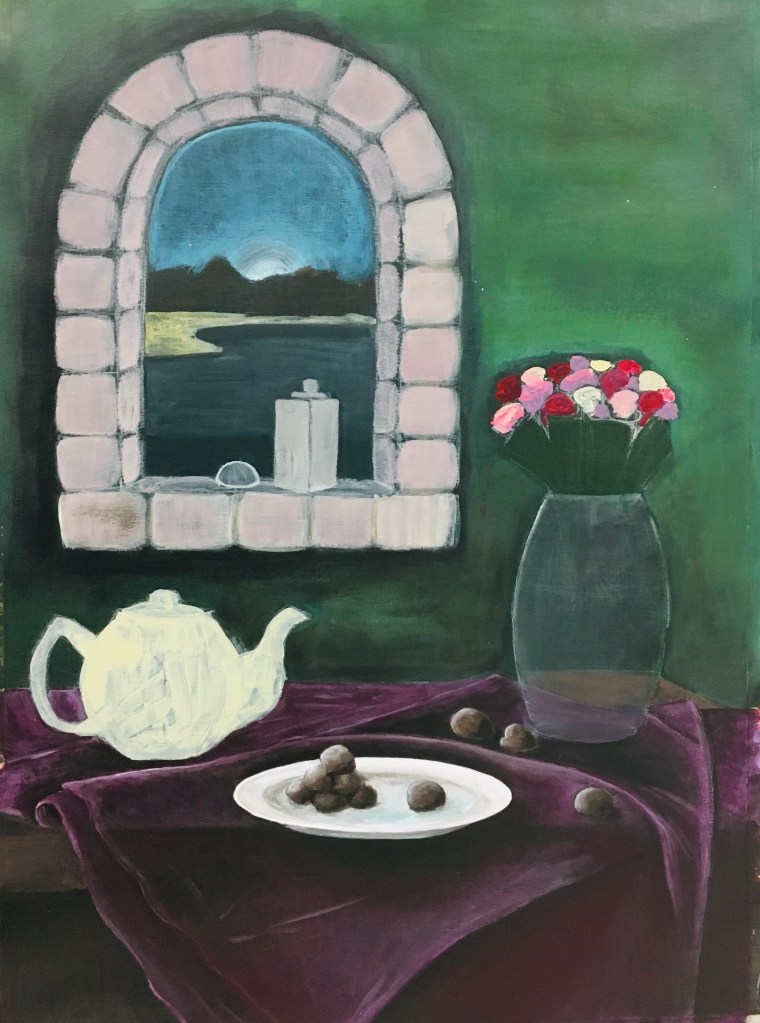
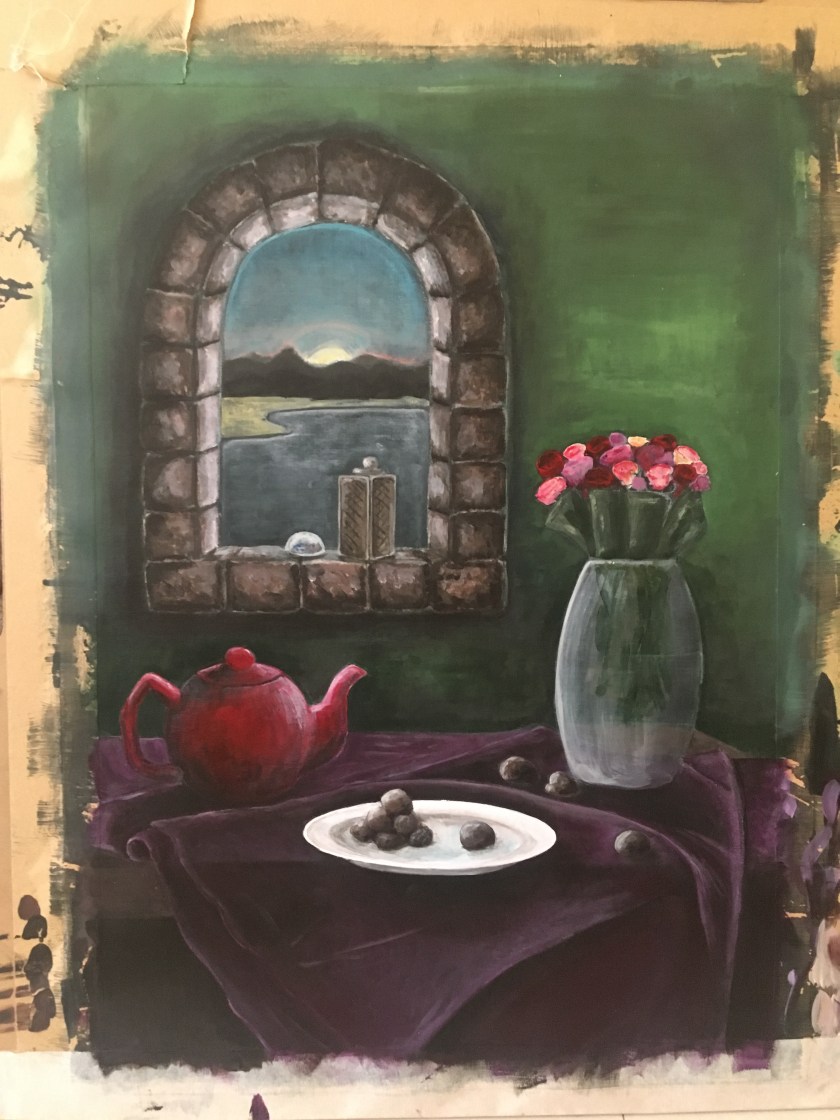
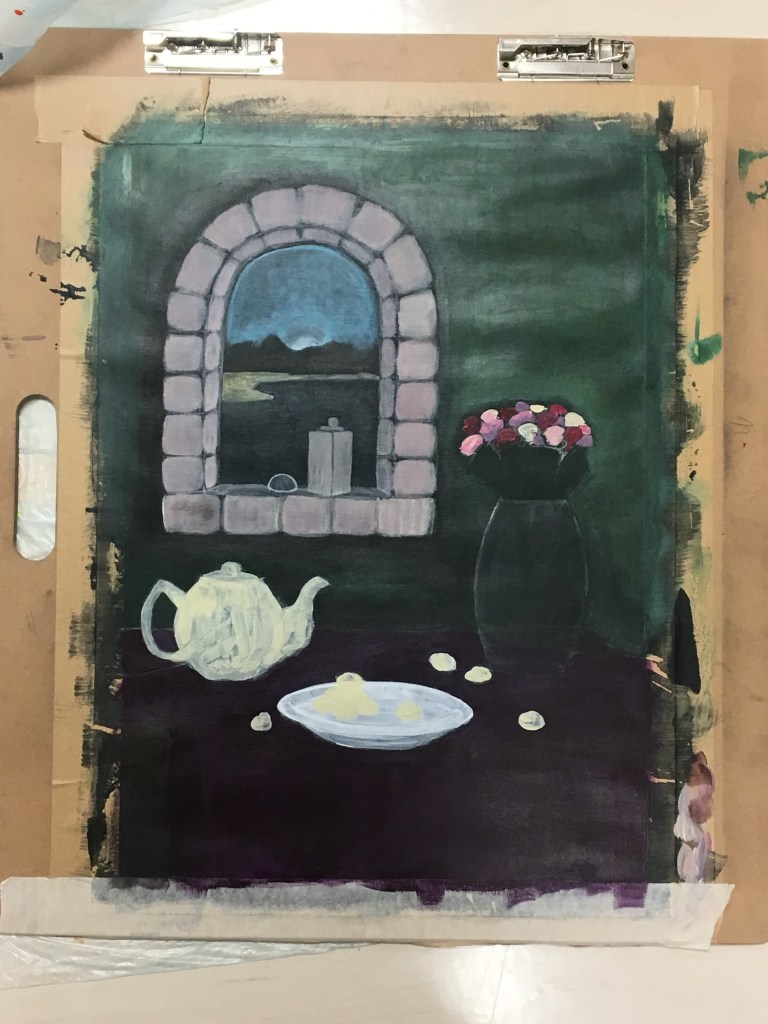
This still life was inspired by the incredible skills and arrangements of the Dutch Golden Age painters. I have been in awe of their richness and detail and am already a little concerned that the perfectionist in me will struggle with making this picture become realistic without looking cartoony.
img_0979
Blocking in the tones
img_1007-1
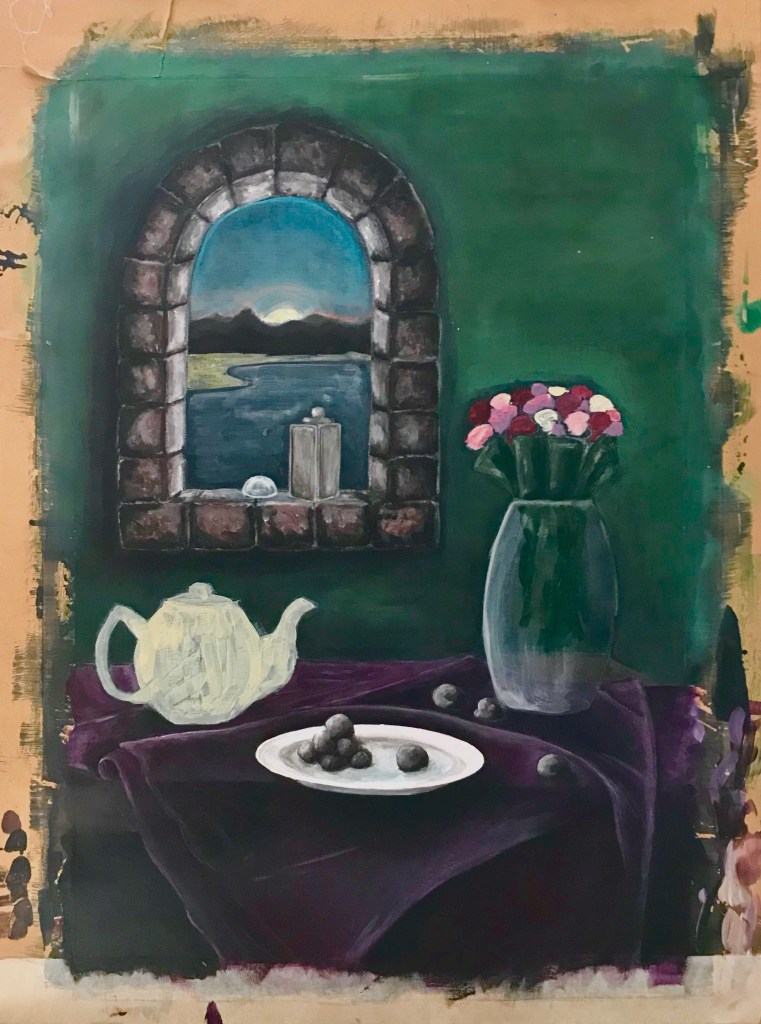
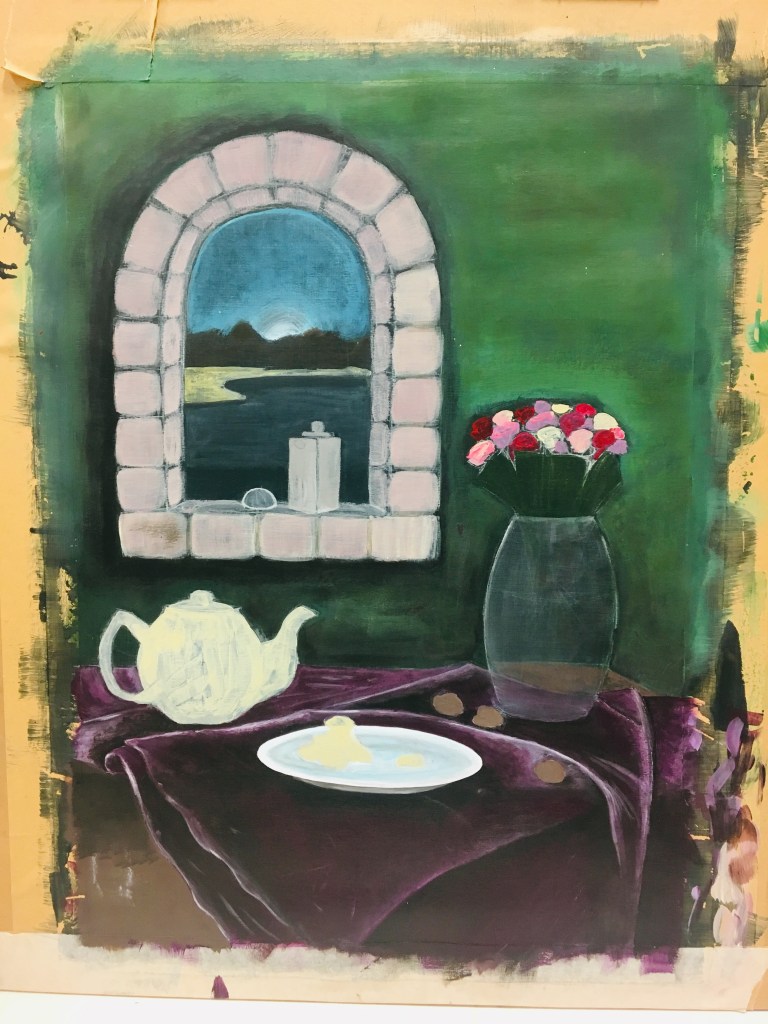
Adding detail and lifting tone

img_10182019-04-22 15-52img_1019

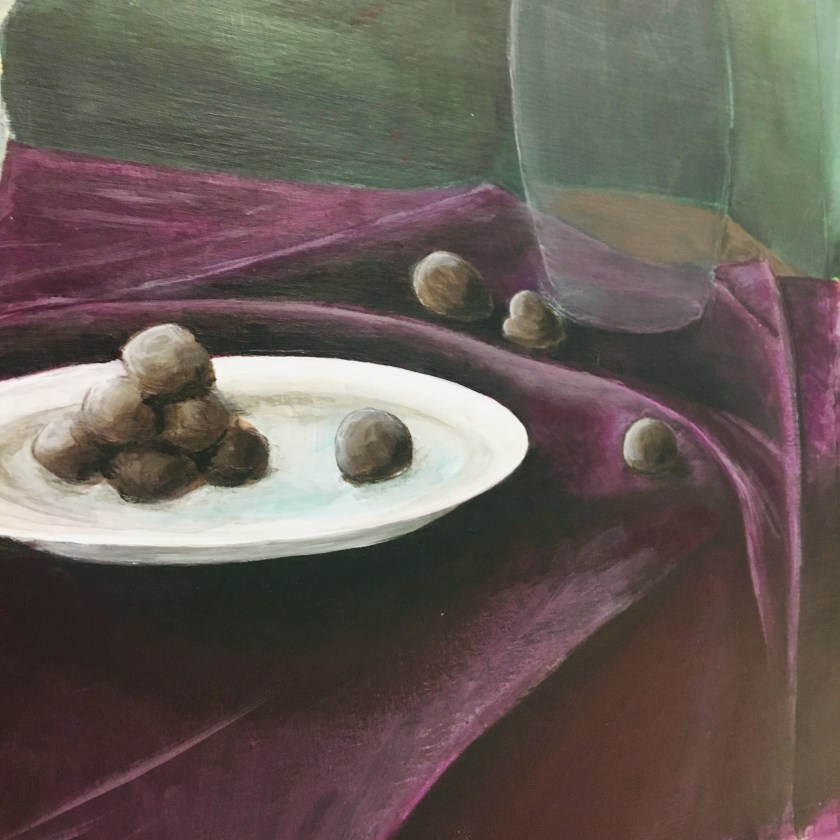
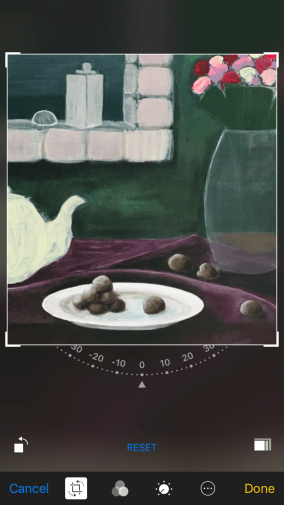
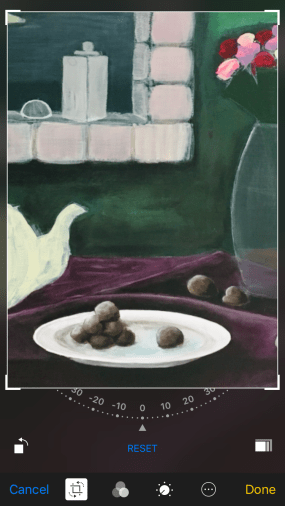
I initially enjoyed working on the fabric but ended up spending all my time on it. I had to move away from it. I was struggling with the making the tones looked realistic and accurate. I realise that I have probably made work for myself in making the painting up by referencing and observing only parts at a time.
2019-04-22 22-36

img_1231

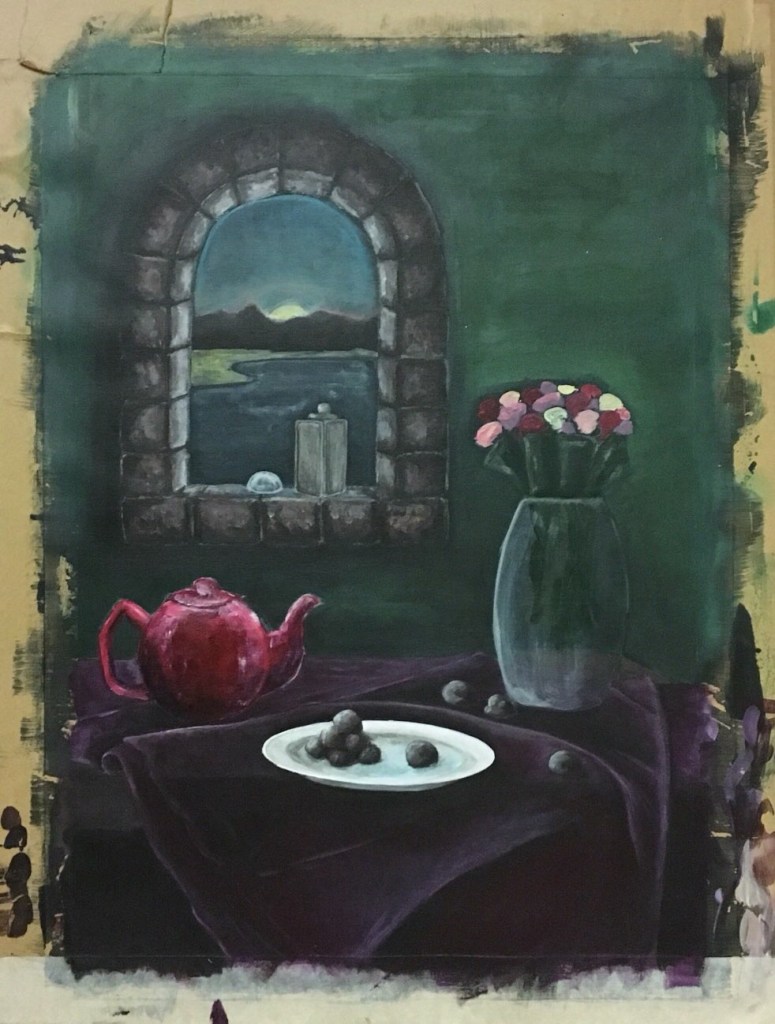
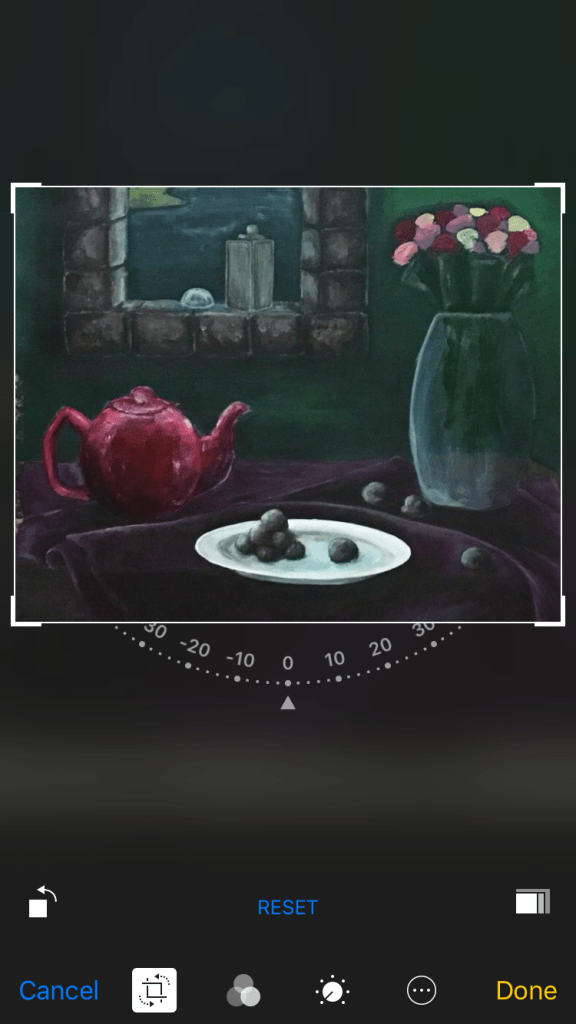
As I have progressed through this piece, I think what I would do differently. A more cropped version is a possibility.
img_1028                       img_1220

2019-04-23 14-37

IMG-1253
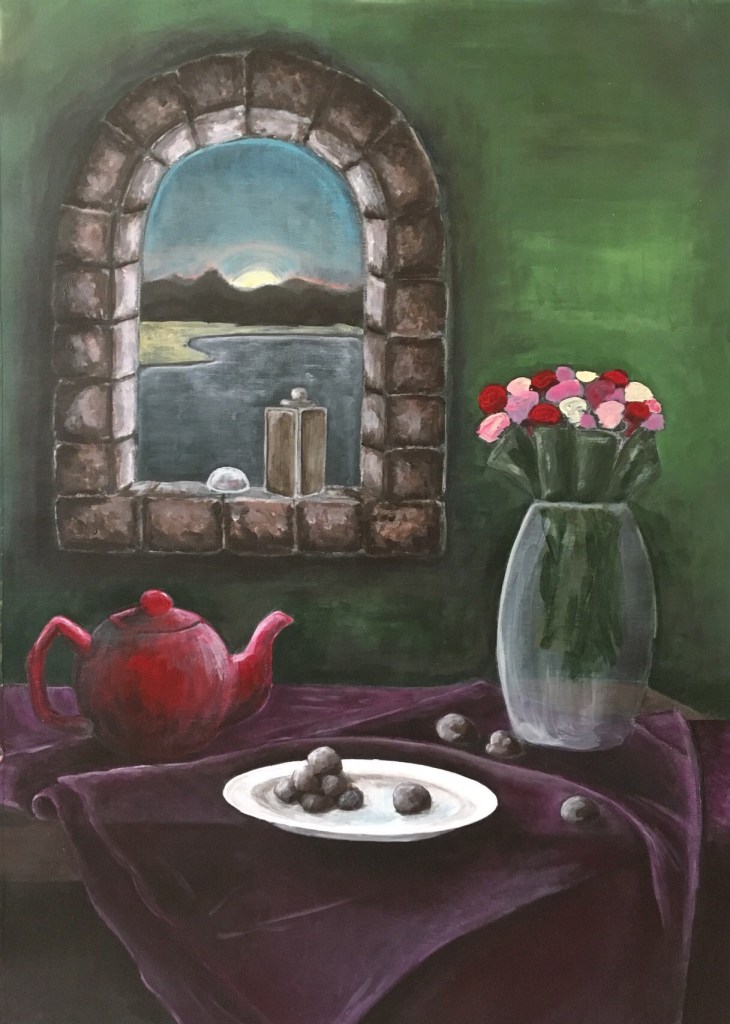
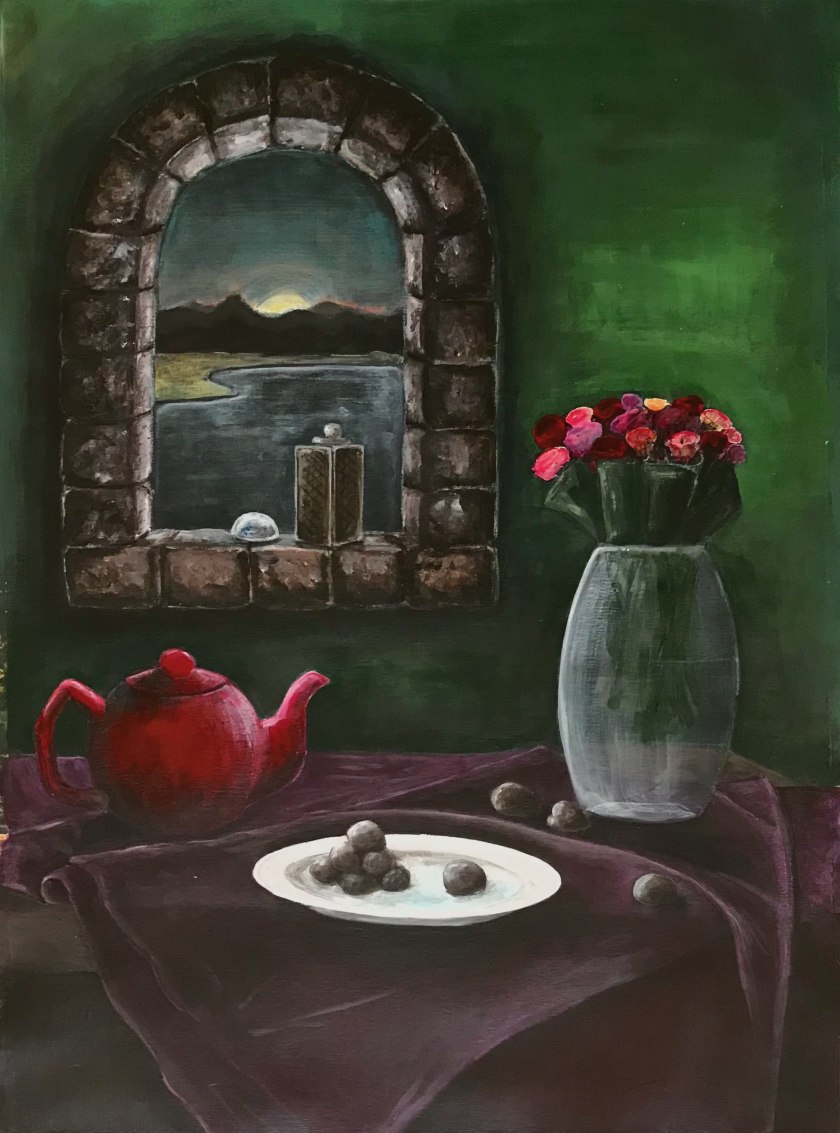
Completed Assignment 2 – idea 3

In the feedback given to Assignment 1 I made noisy brushstrokes on the stool holding the flower pot. I remember thinking I liked the effect as it was  a rough wooden trunk. Looking at it, it seems that it was a noisy effect across the whole picture. I thought this was a more relaxed, fluid approach that some artists have, with brushstrokes being visible. Maybe it was the texture of the paper making the noise. I think I have avoided that in Assignment 2 with smooth working and texture across the most part.

Looking back over the process of this painting, I see I have lost myself in each element and although I think I have flowed from one to the other in my composition, it feels disjointed to me. I could work on several aspects differently if I were to try this again. For a start, I would relax more. This took some time as I was constantly observing my still life elements in parts. Looking at the photograph of my painting I see that I need to add more shading on the flowers, leaves and the lantern and mountain shadow on the beach. I need to work on the glass vase as well. The perspective on the window stones is glaring at me. I think I could have made the window aperture bigger. With an infinite amount of time I could work on this continuously to amend and perfect. I will spend one more session amending and will call it a day.

I added a dark translucent wash over the blue sky as well as the beach.
2019-04-23 21-53
Completed Assignment 2 – idea 3

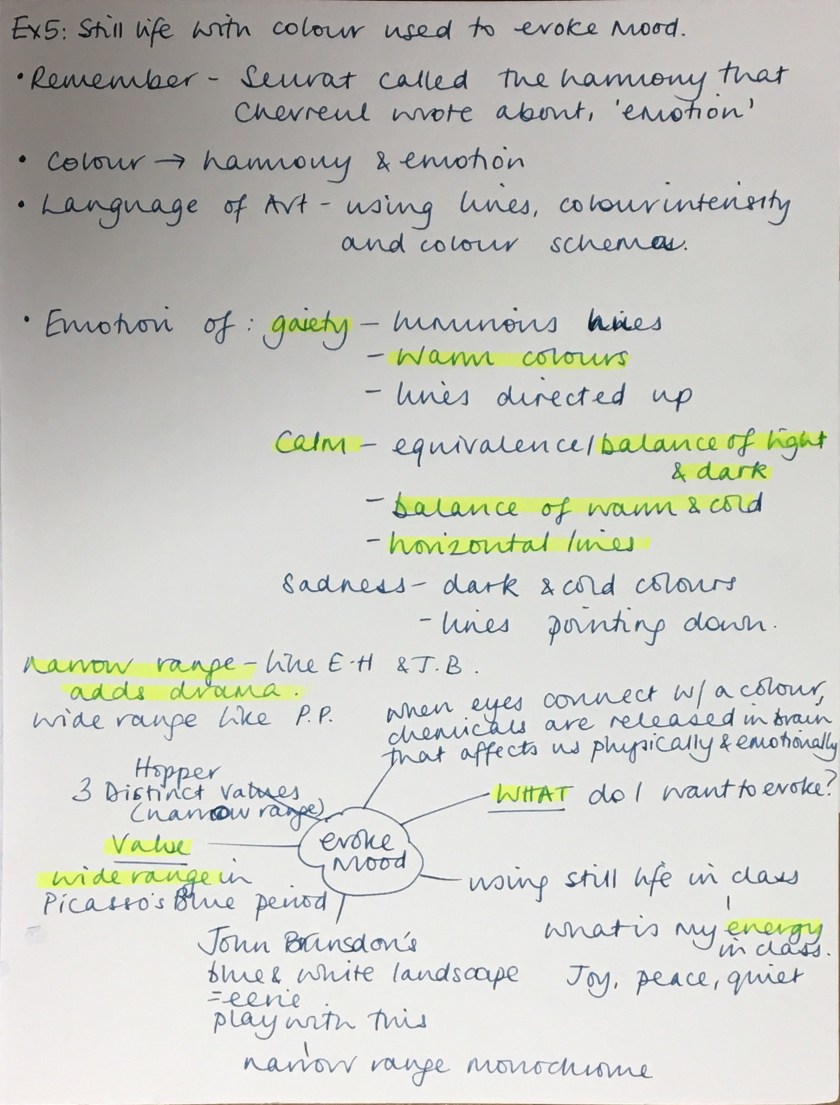
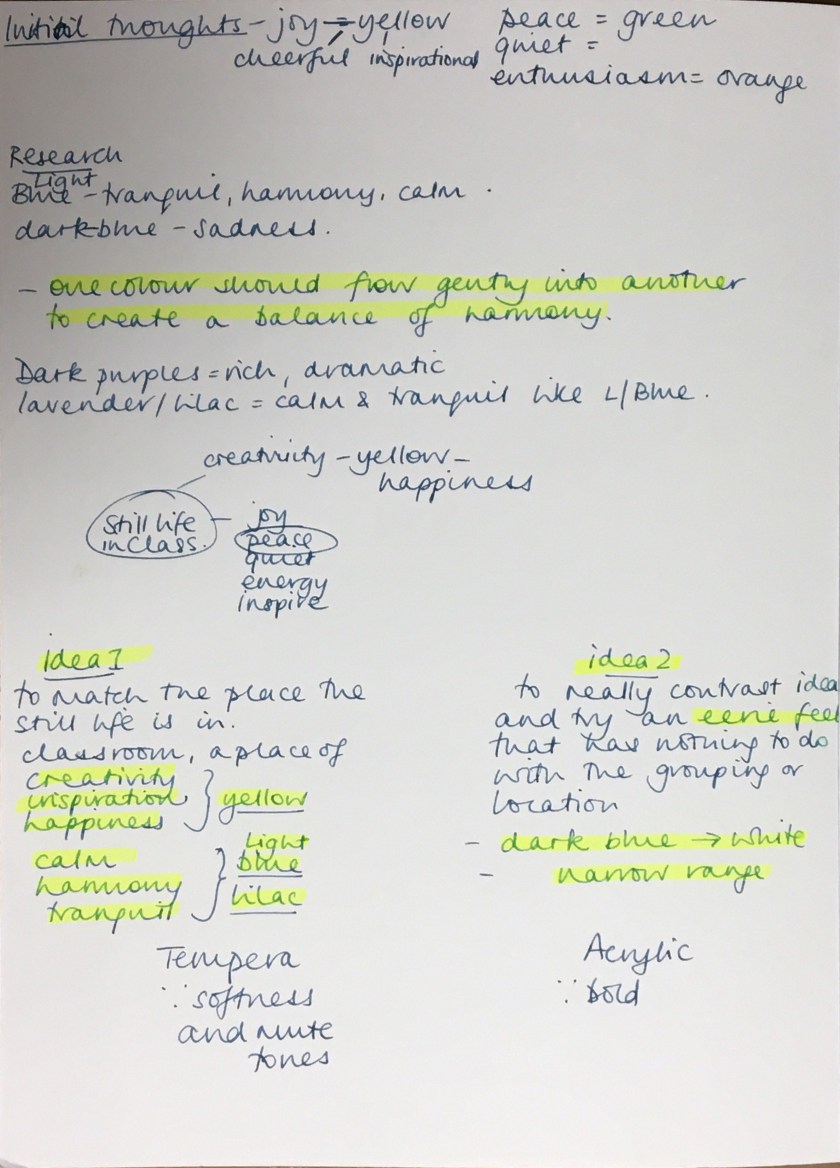
PoP 2.3.5 – Still life with colour to evoke mood

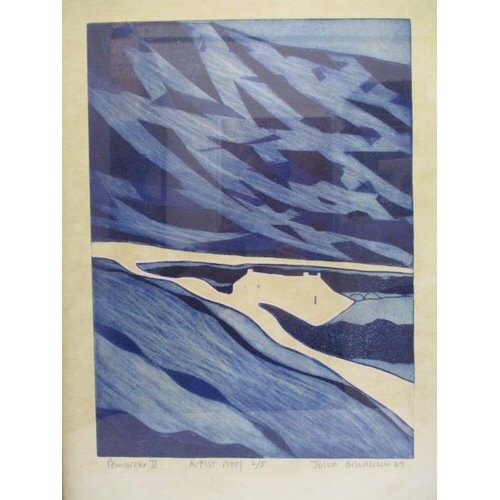
https://www.bourneendauctionrooms.co.uk/catalogue/lots/89FBD8D97A92BED8B2DFF647744A4C84C3CF33BCAACAD3A0BF12CC6DFA19E8FA/DF552CF371F2E3A723B4EBDB4BF38E80/antiques-collectors-sale-incorporating-wines-spirits-lot-184/?d&action=4

I’ve always liked John Brunsdon’s Pembroke II for the way he used a narrow range of tones, evoking, to me, an eerie atmosphere. When I show this to the children in my class, they mostly say they feel scared or nervous; it has a sense of foreboding. Some children feel nervous but hopeful when they think the house is a respite after being lost in the mountains. I decided to try to replicate a sinister, cold feel, just to be contrary as I always want to focus on the energy I feel when I’m painting, peace, calm…so I decided to play a bit. Same still life grouping but viewed from a different angle to generate a dominance of the objects.
I took on board the ‘language’ that Chevreul and Seurat, where sadness or other negative emotions could be interpreted through dark and cold colours with lines pointing down. With the latter, there are no obvious lines to point down but I found I was brushing in a downward direction, maybe subconsciously taking on this language.

(I need to be aware of white balance affecting tone when taking photographs of my work. The first photograph is truest to colour).

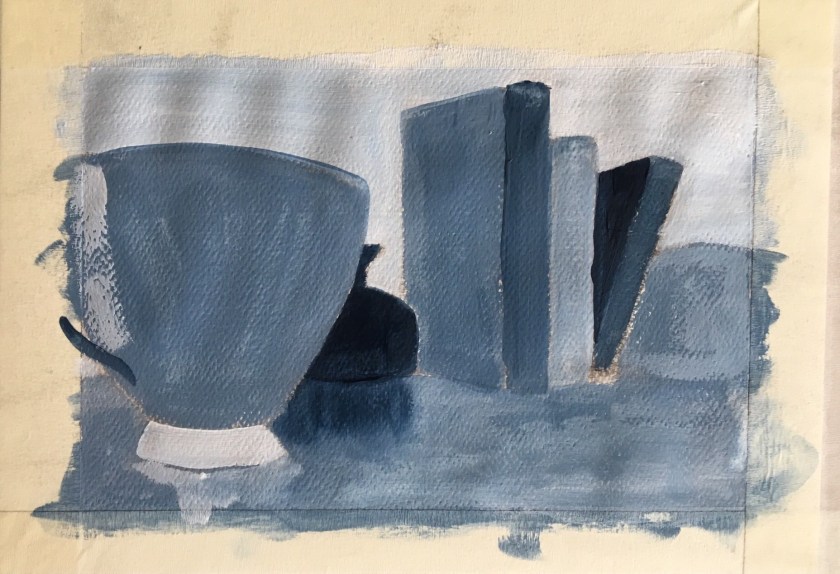
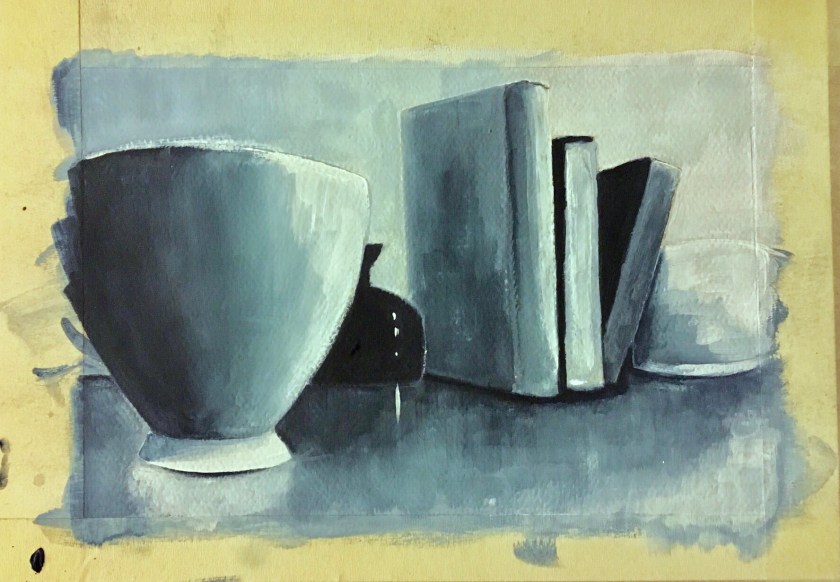
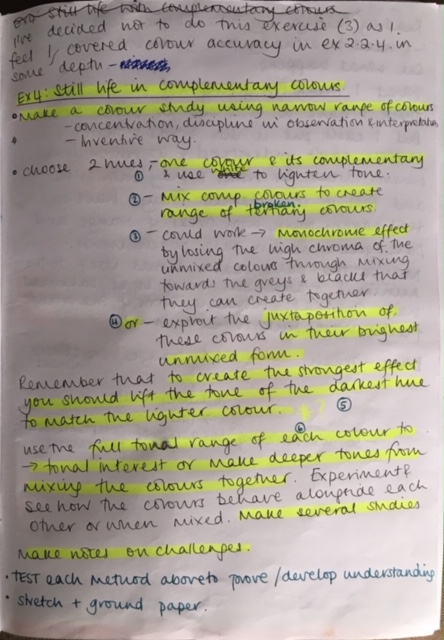
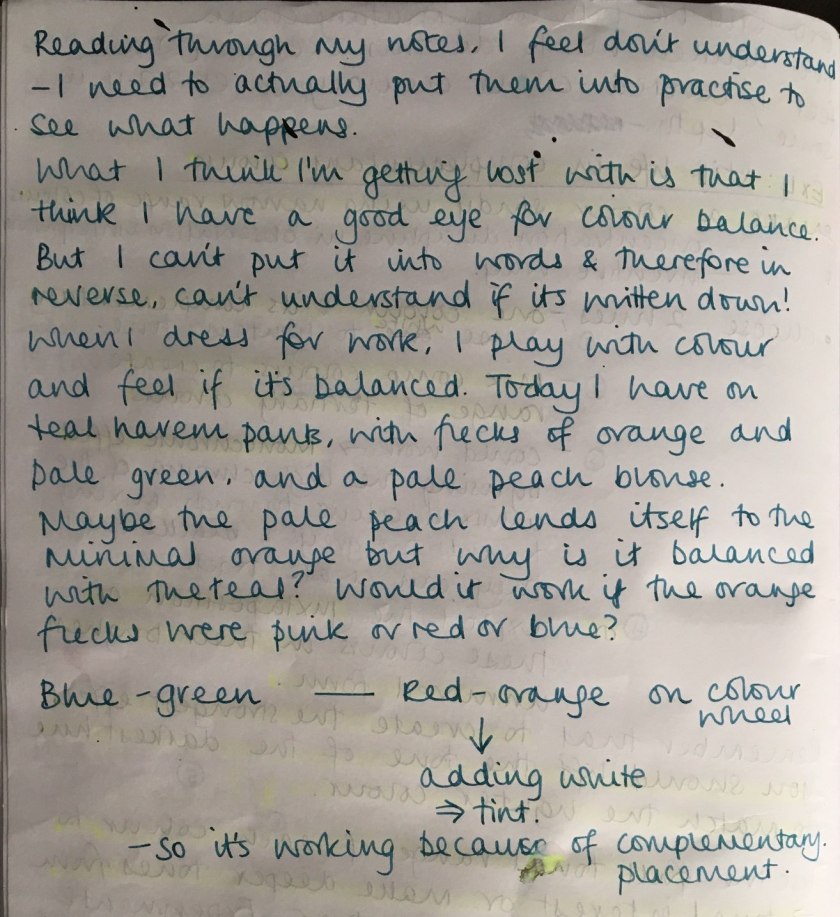
PoP 2.3.4 – Still life with complementary colours

2019-03-26 15-19 page 6

2019-03-26 15-19 page 7

2019-03-26 15-19 page 8
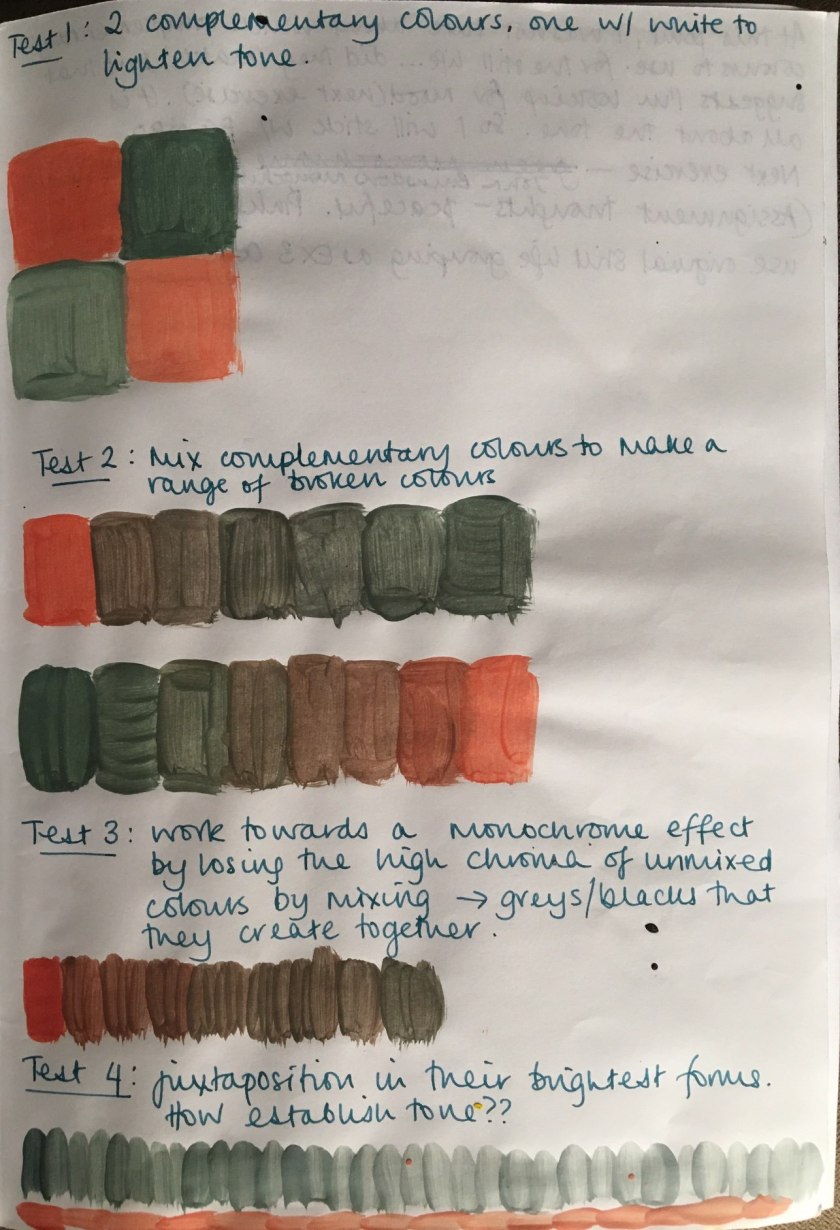
These were my initial colours to play with but I anticipated difficulty in creating a consistent starting colour every time.
2019-03-26 15-19
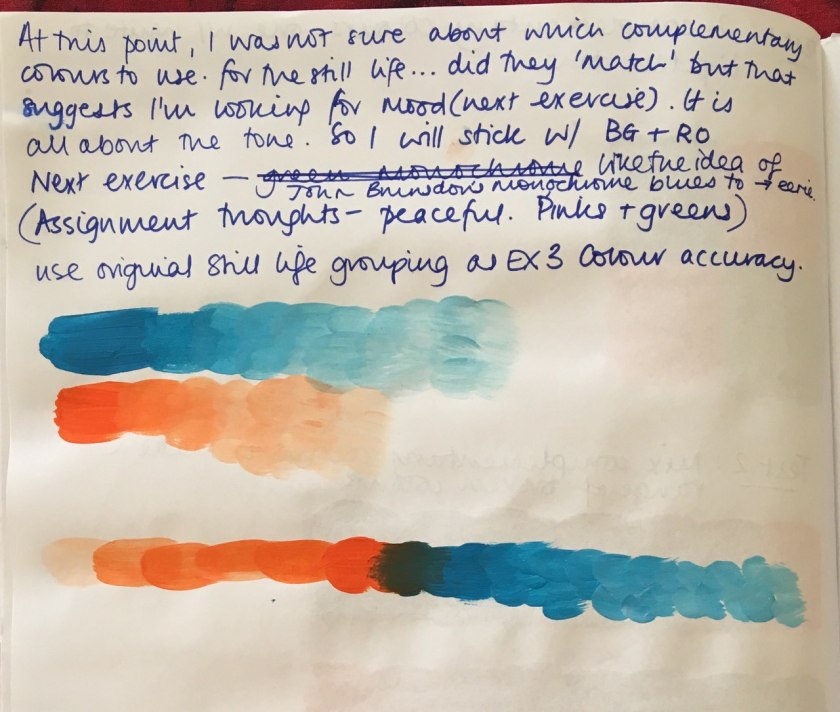
I decided to work with Brilliant Blue and Vermillion out of the tube for consistency
2019-03-26 15-19 page 6
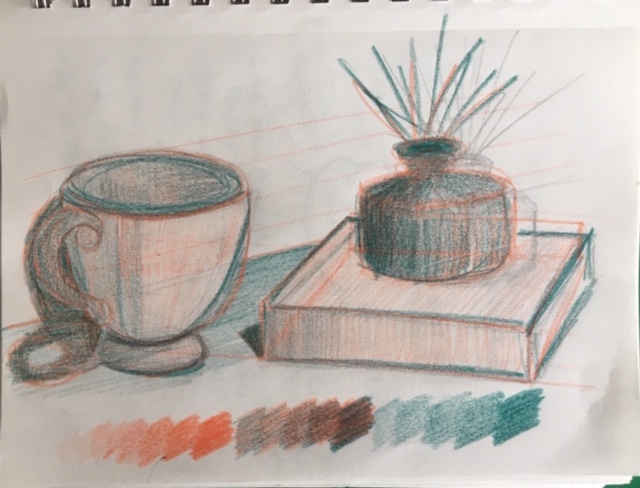
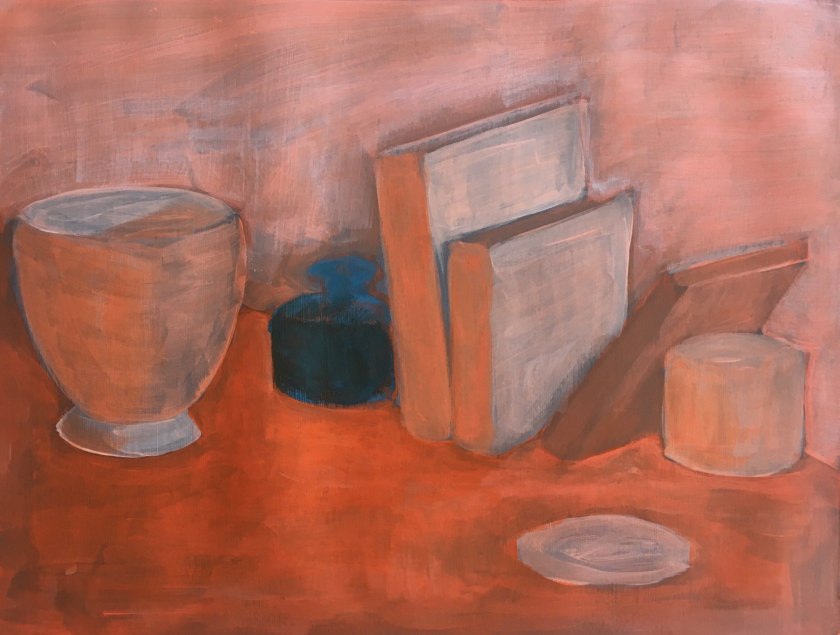
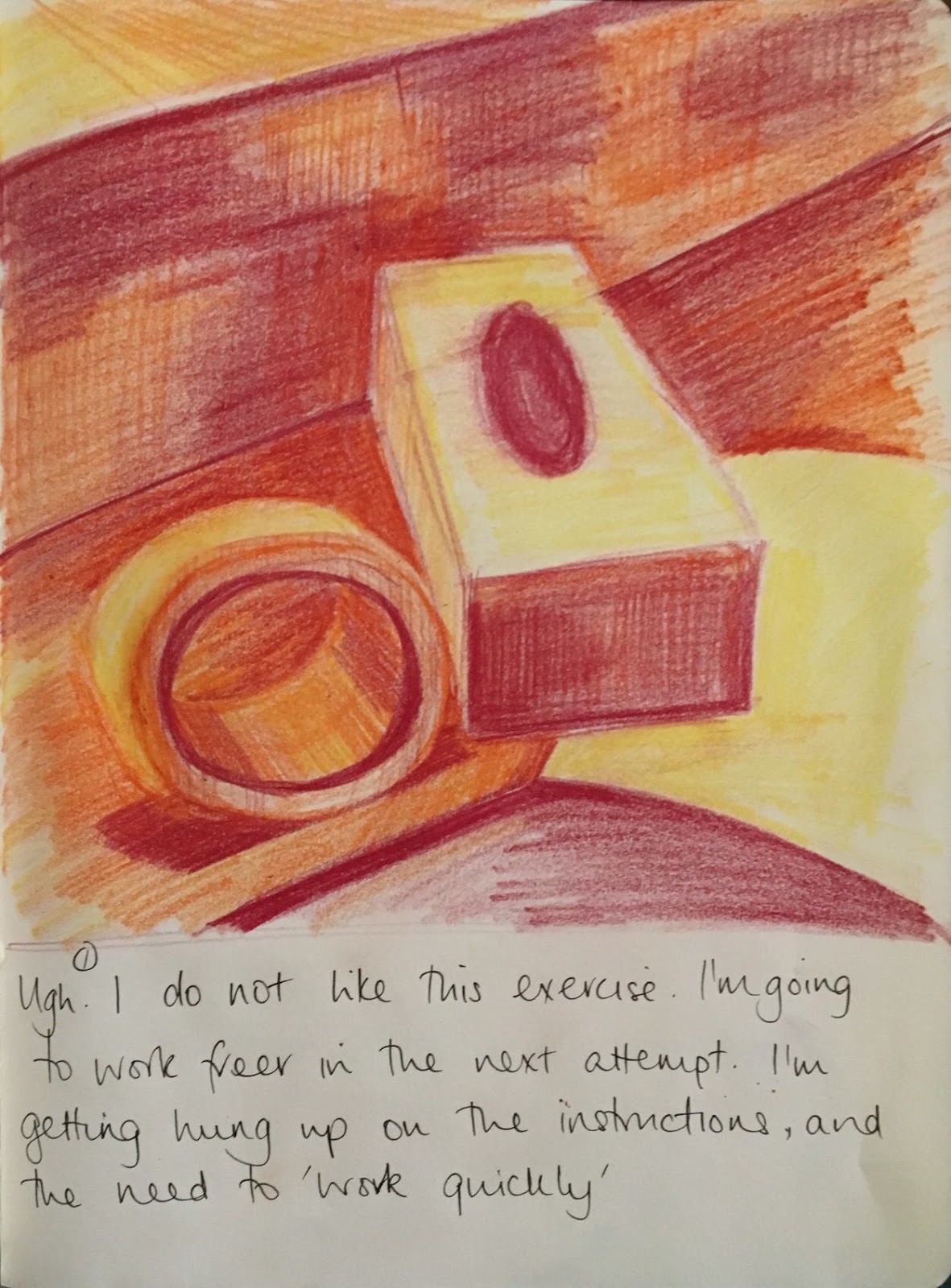
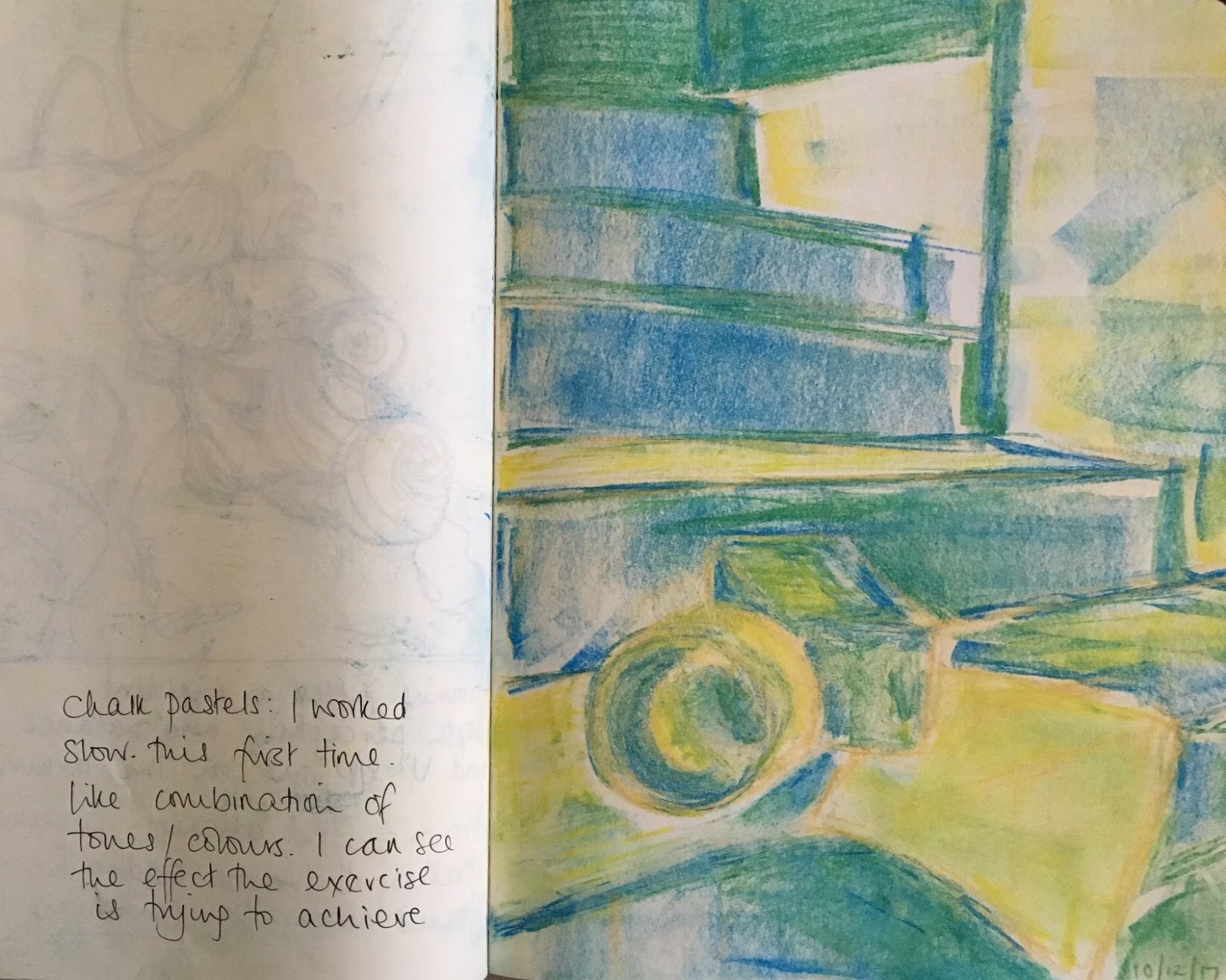
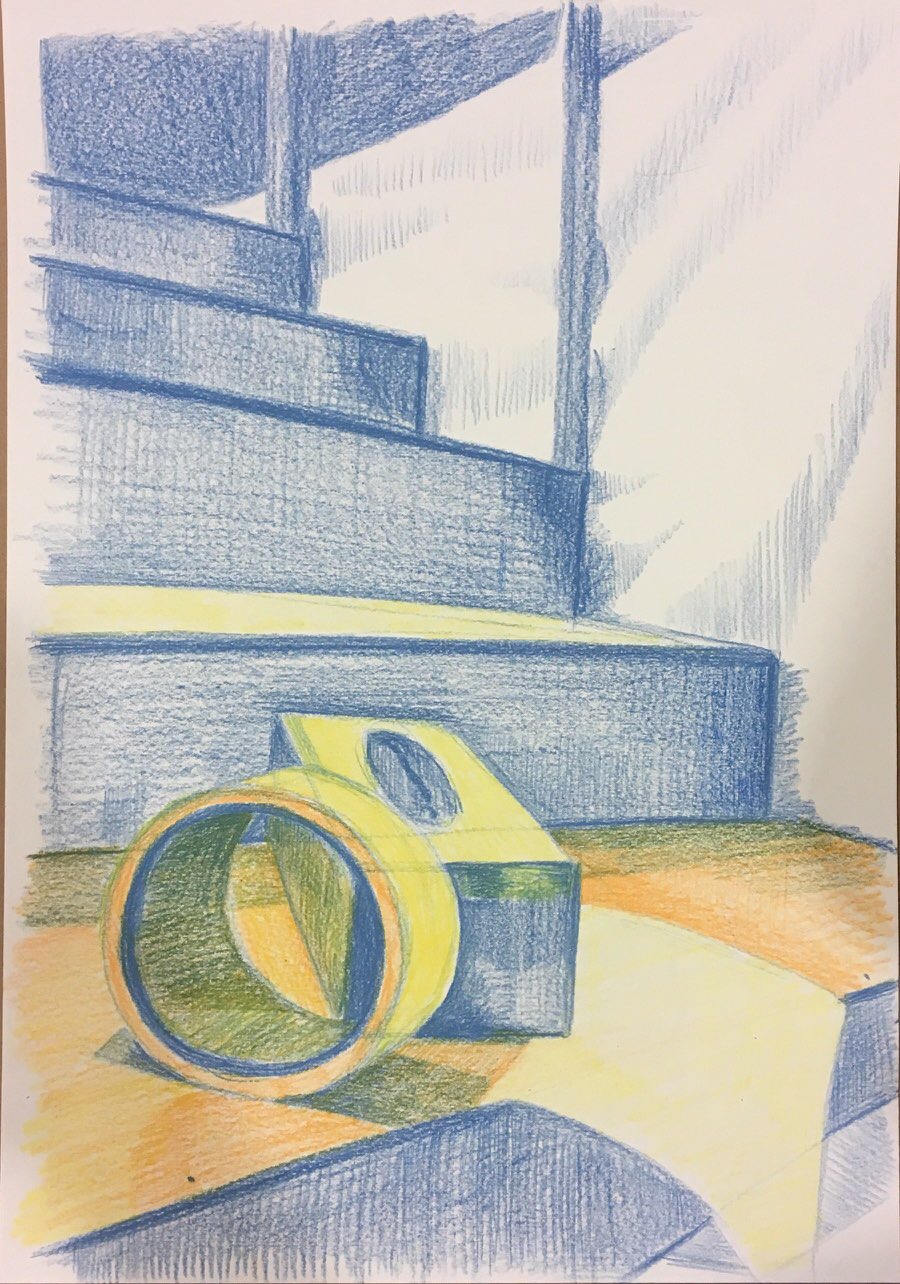
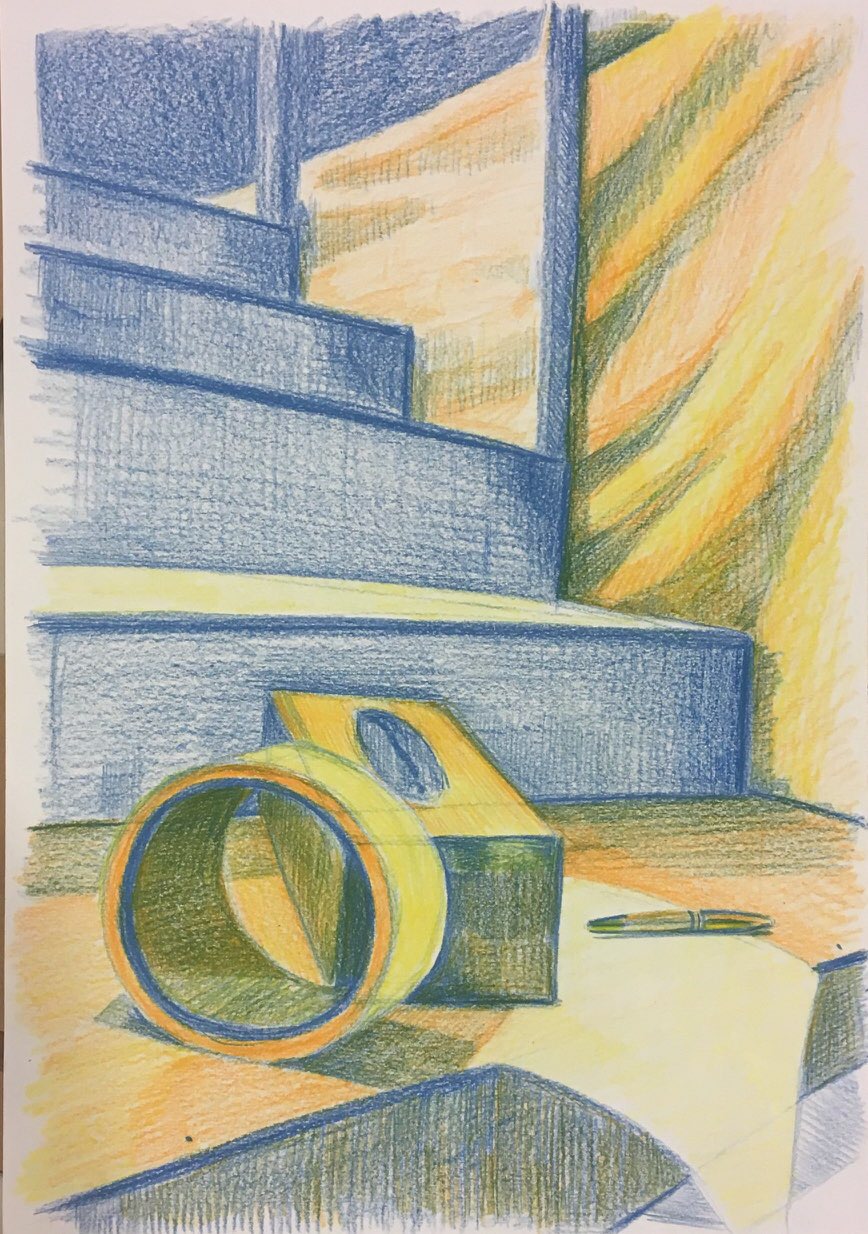
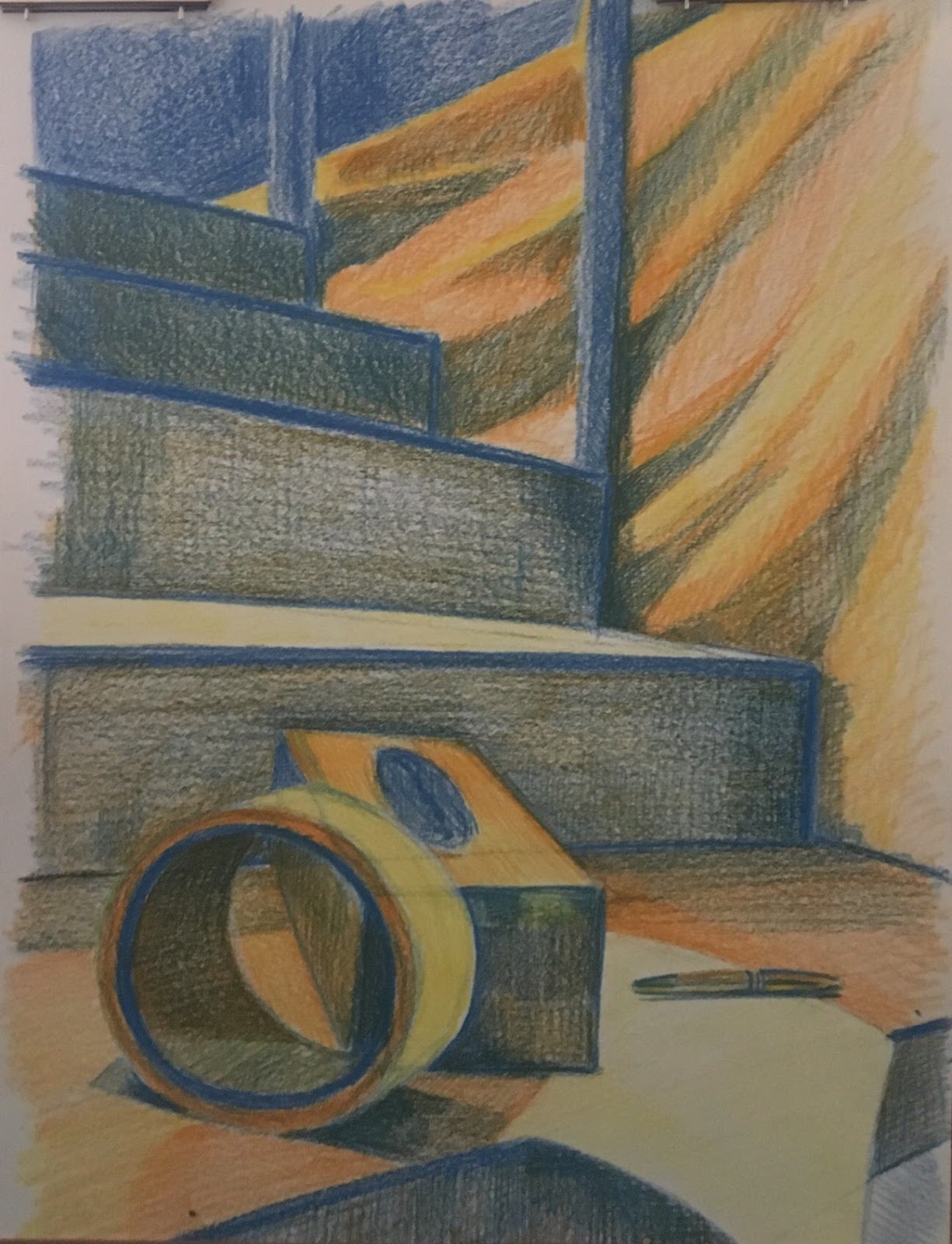
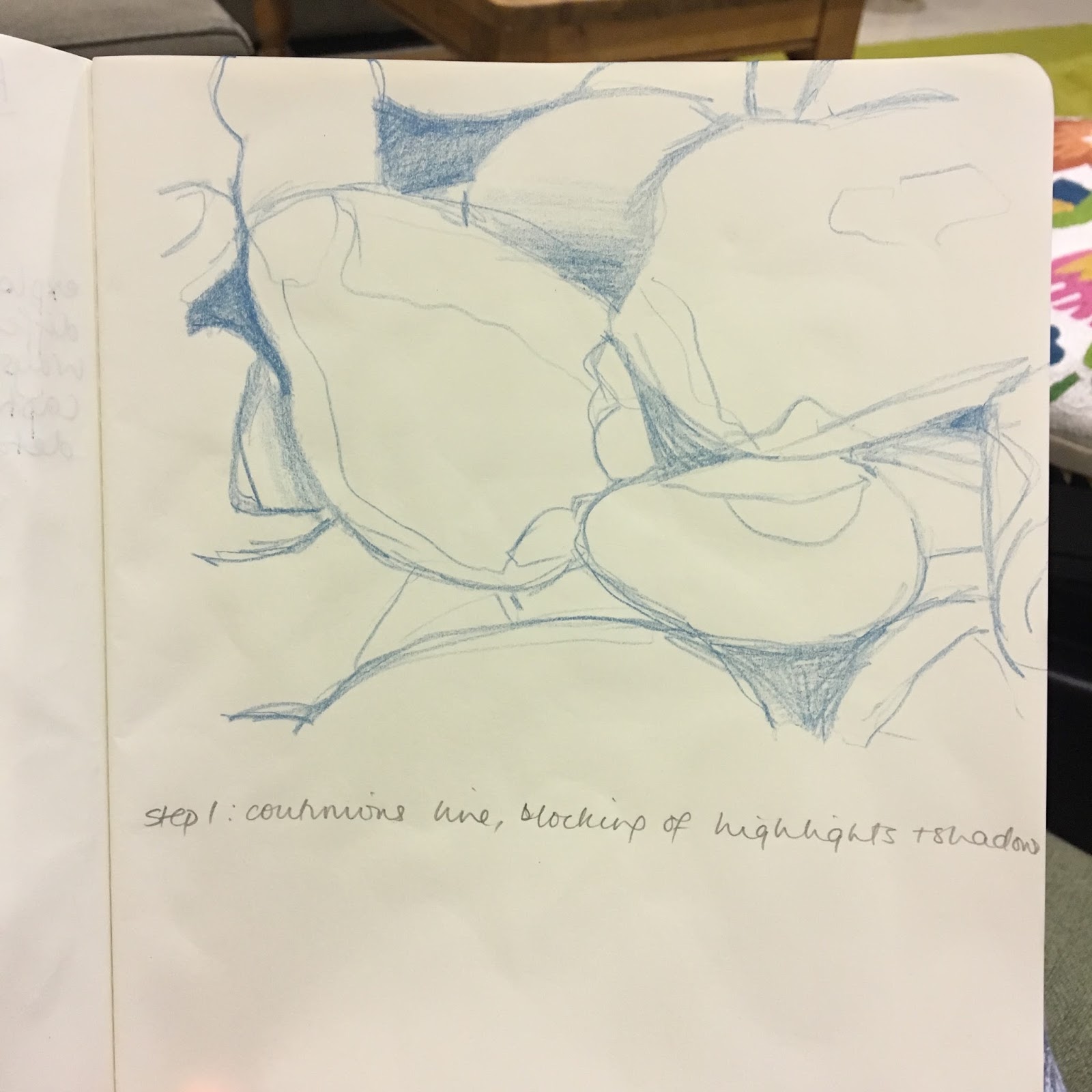
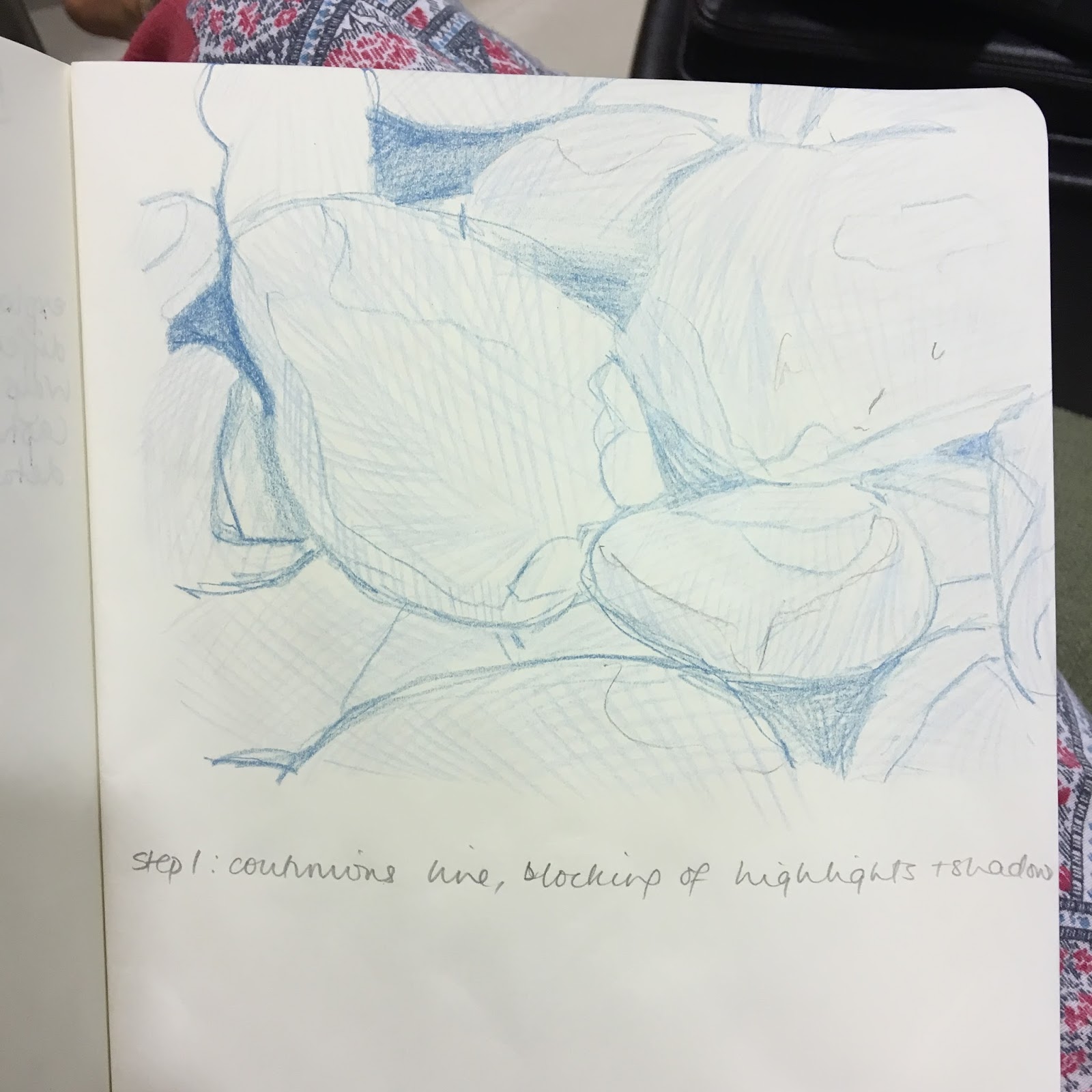
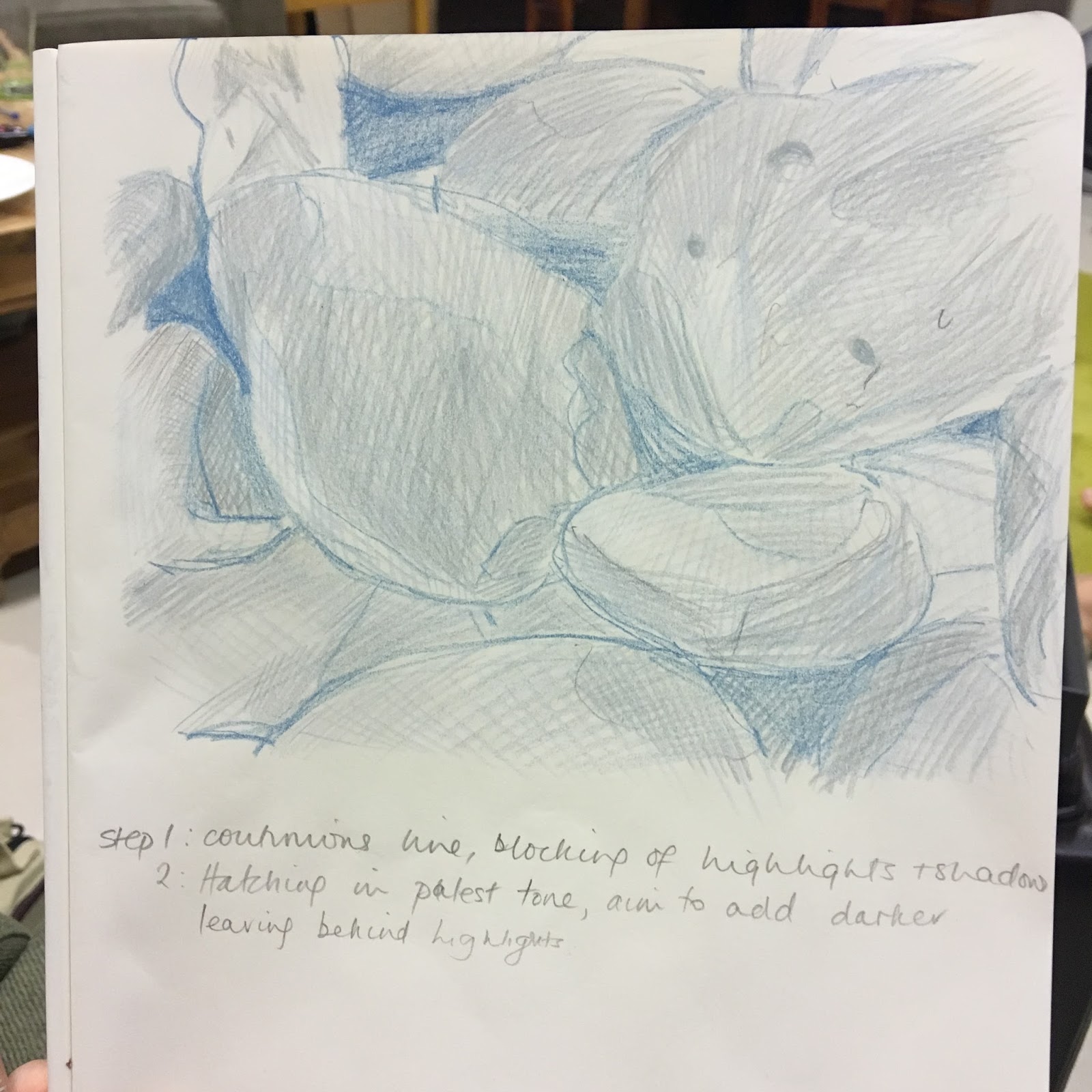
I initially found this concept hard to imagine so I tried it out in coloured pencils. This did help me especially where to combine the hues if to create shadow, where to lift tones for lighter values. It didn’t really help me think where to use which hue and its appropriate tone. At this stage RO was for lighter tones and BG was for darker tones in the objects.
2019-03-26 15-19 page 5
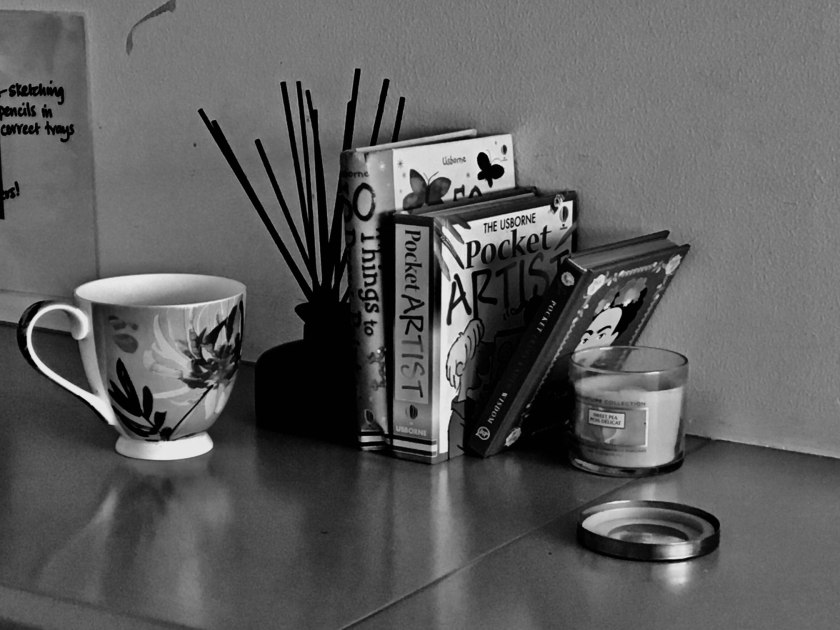
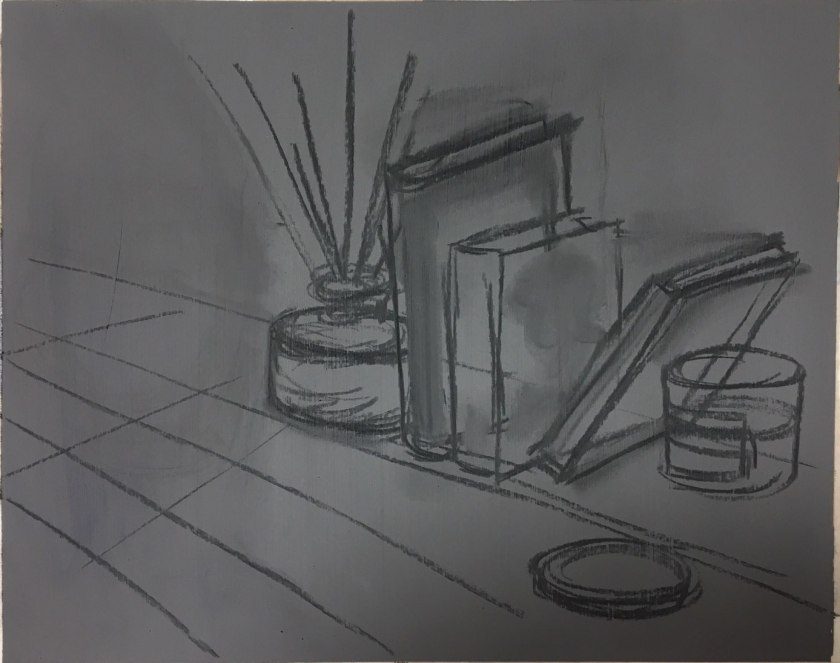
Black and white helped me establish the levels.
2019-03-26 15-19 page 4
Perspective lines
2019-03-26 15-19 page 3
Building up and lowering the values. I was starting to see how this works, especially in the darker shadowy areas.
2019-03-26 15-19 page 2
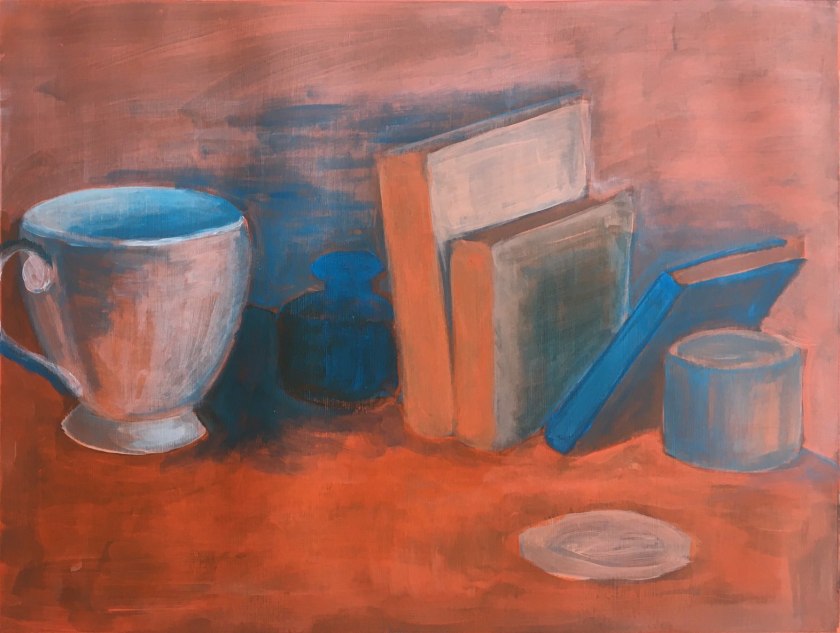
The blue became functional only in the creating of shadows where it was combined with vermillion.
2019-03-26 15-19 page 1
The dark glass bottle was tricky but I feel it needed the blue to dominant as an object rather than combine to make a shadow tone.

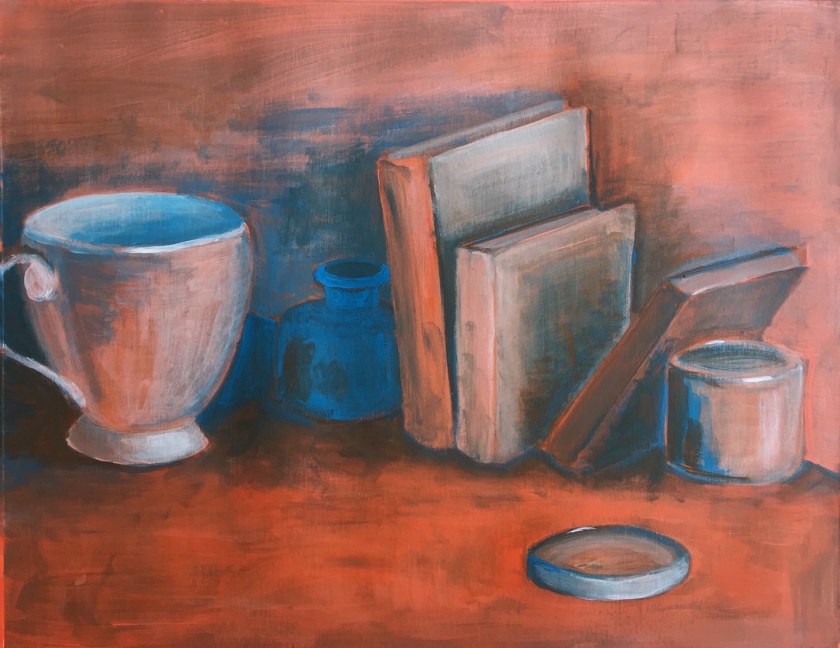
If I continued working on this exercise:

  • The surface was too vibrant and needed work to reduce its chroma. It is too high-key against the rest of the picture.
  • Create shadows around the jar lid
  • Experiment with creating the dark blue bottle in shadow. How would I combine colours to do this?
  • Keep the fluidity of my work pace. I was loose and relaxed and this allowed brushstrokes to remain and add atmosphere.

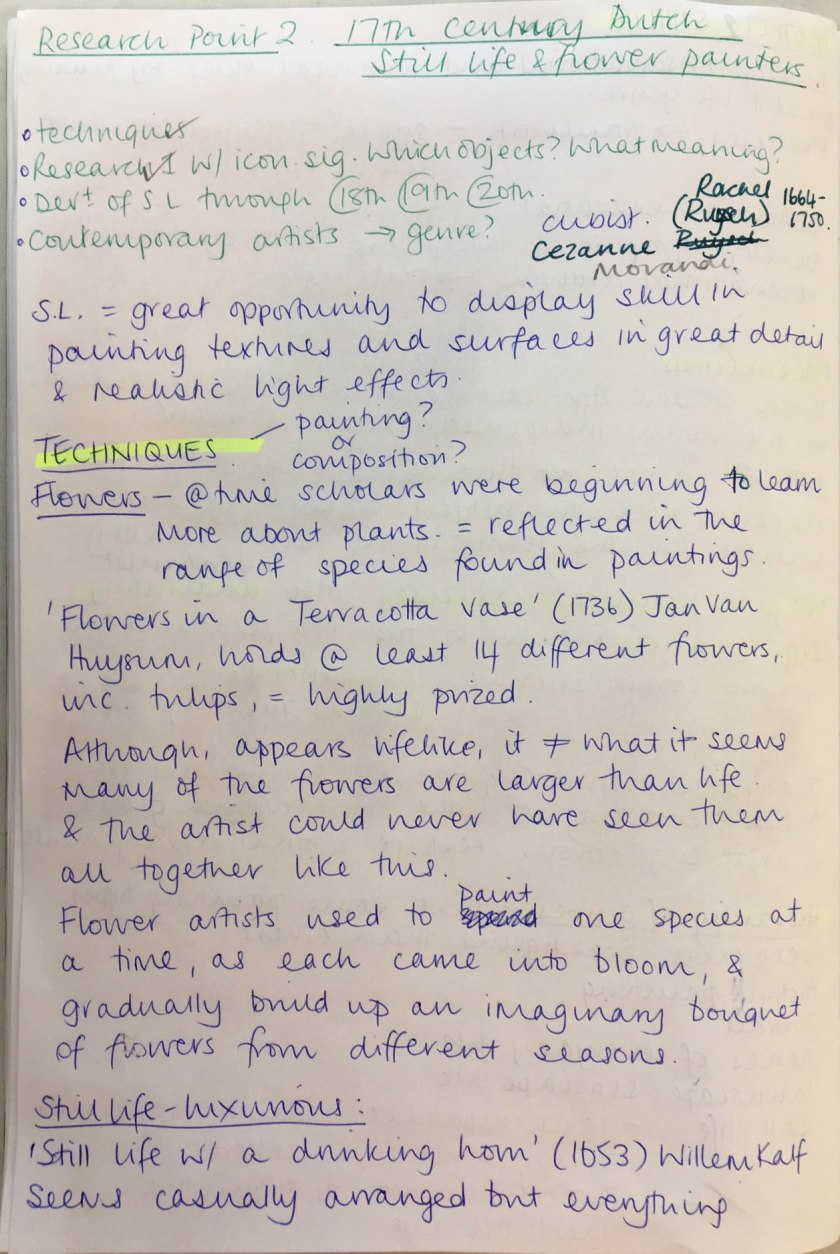
PoP Research 2 – 17th Century Still Life

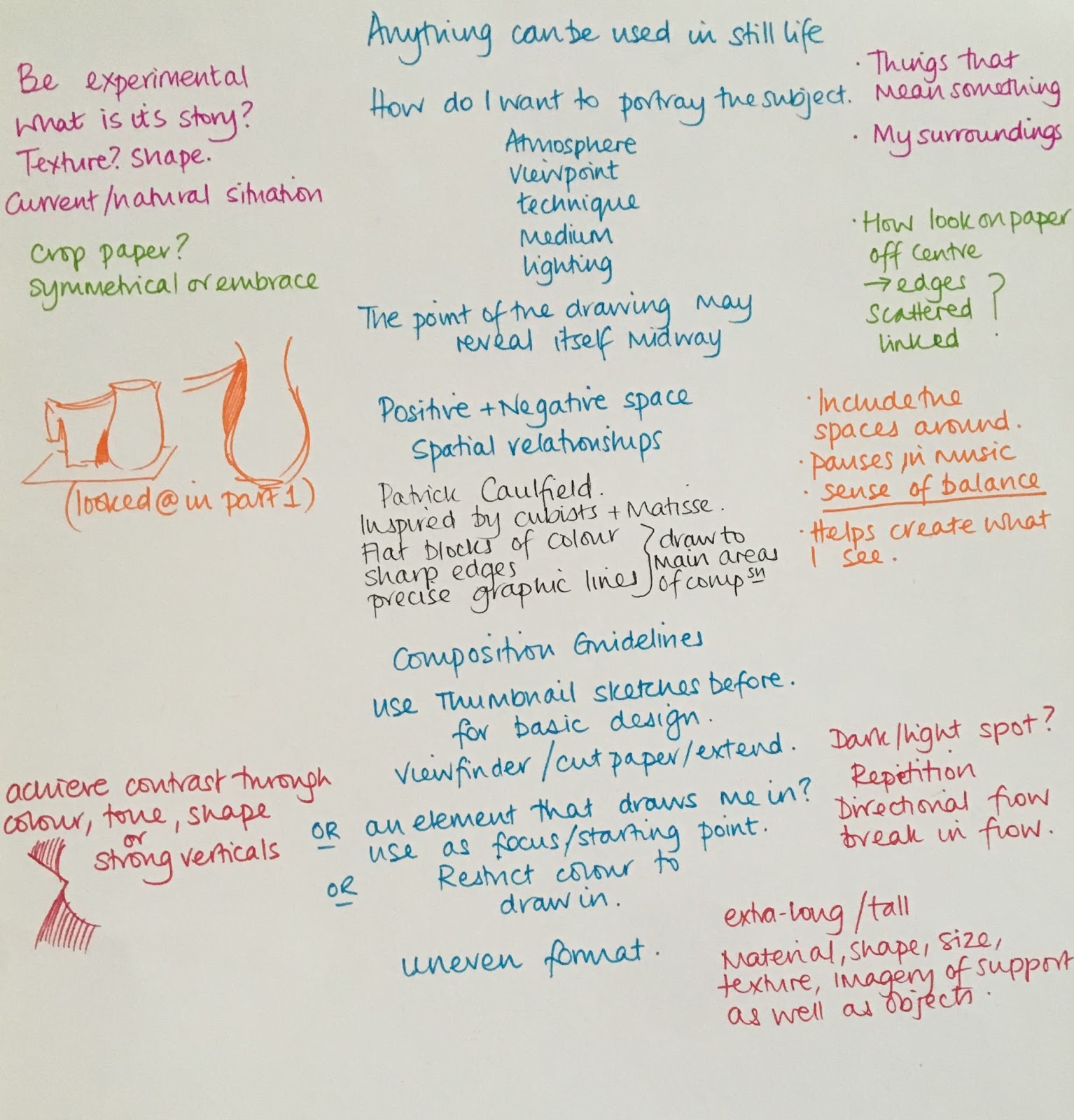
Project 2 is all about developing observational and technical skills by focusing in the still life genre. The exercises create a framework within which the choice of subject, colours and paint is free to me.

Drawing is essential to painting; it enables graphic and interpretative skills to be developed by using observational drawing to develop into painting.

The following research has helped me to tune into possible composition and symbolism but also the technical grace that is possible and is so distinctive of this 17th century Dutch still life artists.

Background

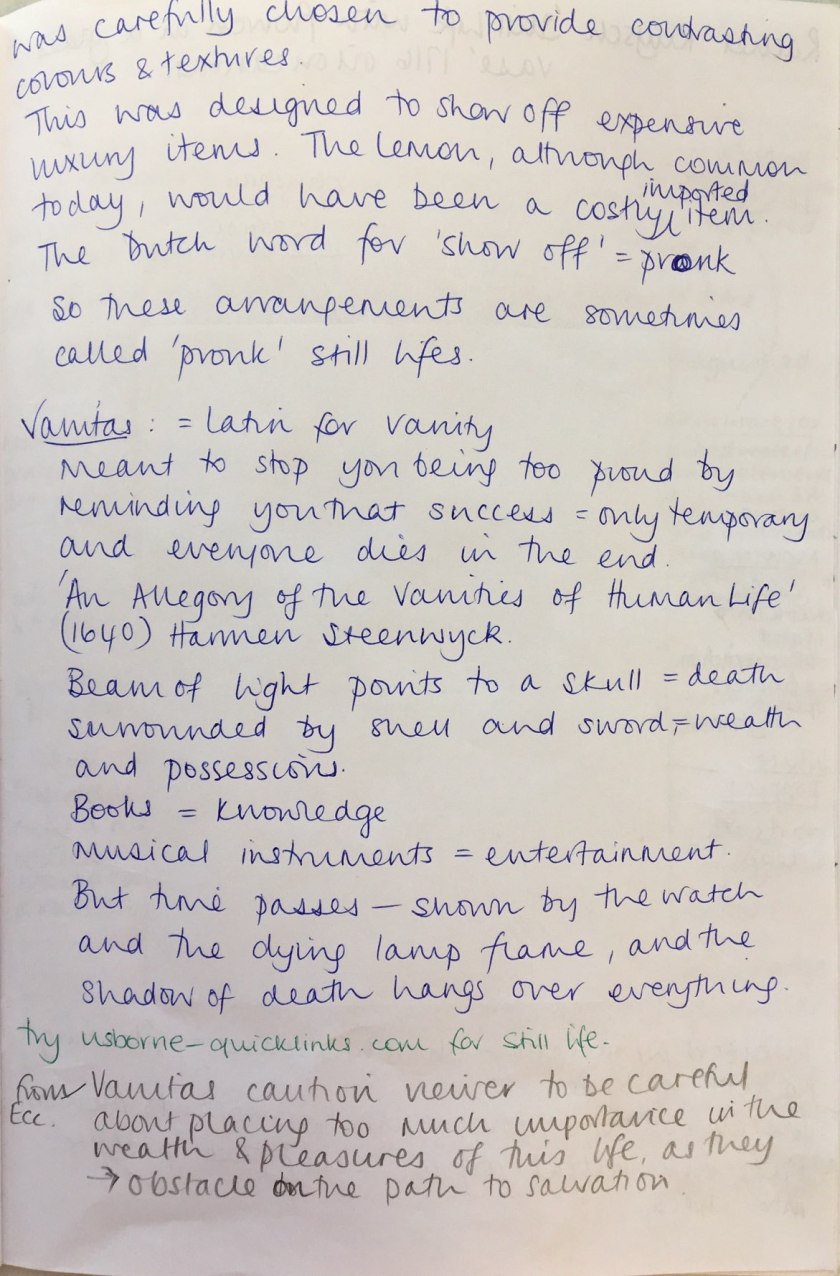
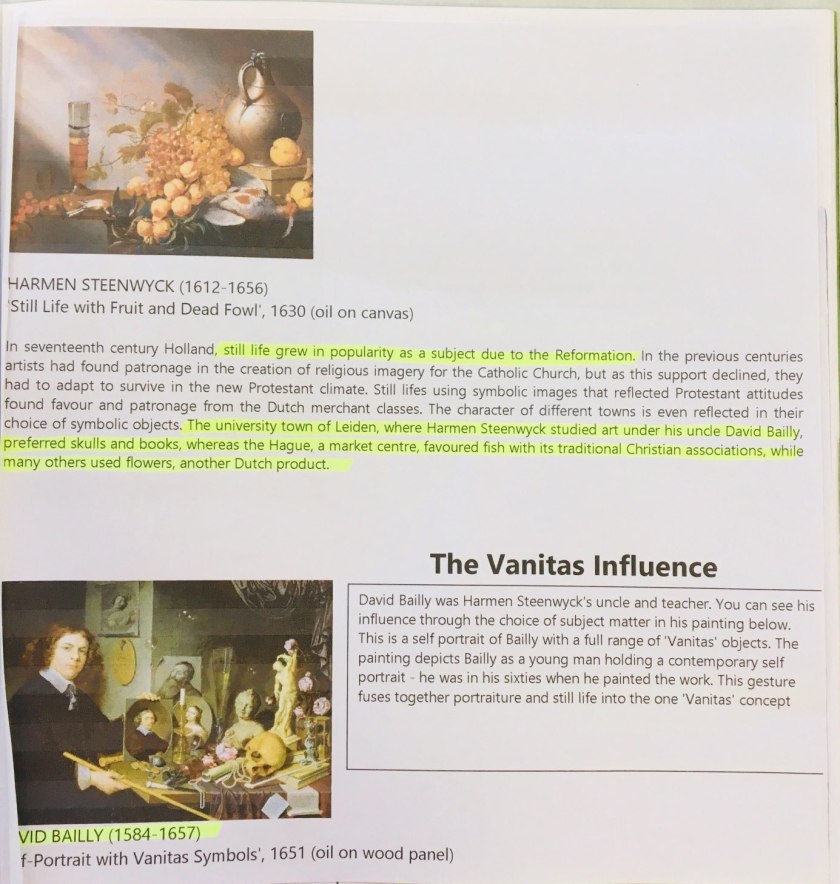
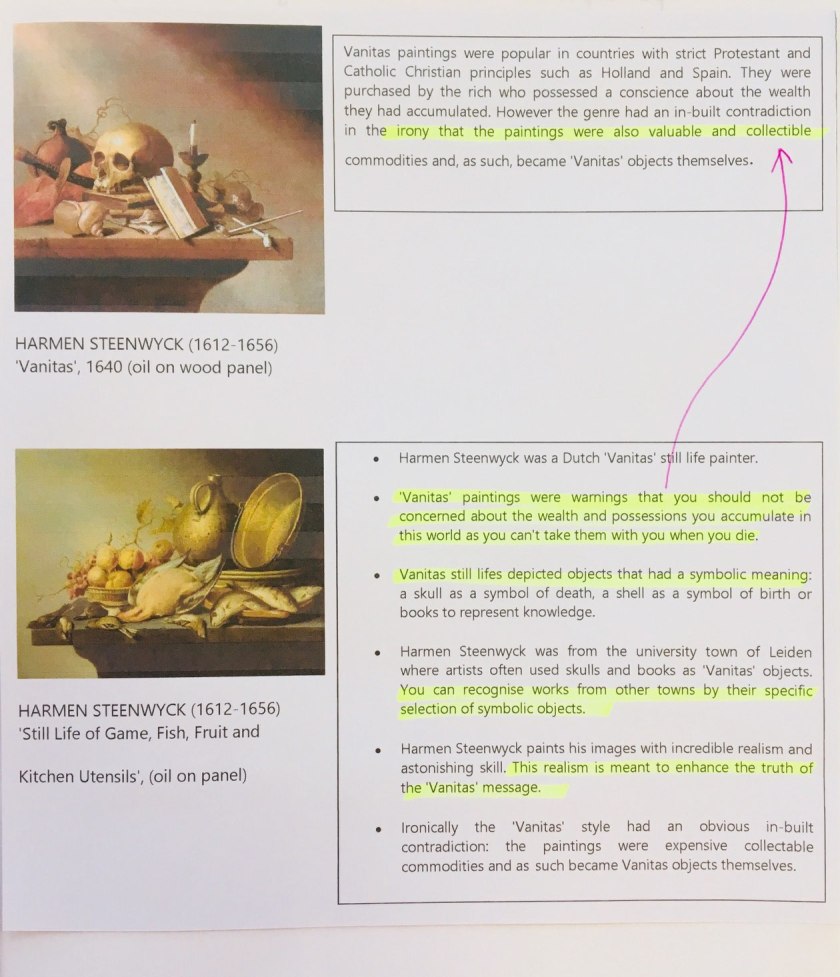
The Dutch Golden Age coincided with stability and wealth in the newly independent Dutch republic. Still life arose through a shift away from classical and religious subject matter to genres more suitable for the homes of the newly wealthy. This was the  shift to Calvinism. These pieces were not just technical exercises  – they were also of an underlying significance, maybe to the role or status of the person commissioning the work. ICONOGRAPHY. VANITAS paintings.

They pushed painting to new boundaries in their rendering of light on and through glass in exploring colour, texture and tonal arrangements.

They also created a hierarchy of genres – that some painting types were more prestigious than others:

  1. History painting
  2. Portrait
  3. Scenes of everyday life
  4. Landscape, seascape etc
  5. Still life. It was less important because they only seemed to copy how things looked BUT there is often more to them than meets the eye.

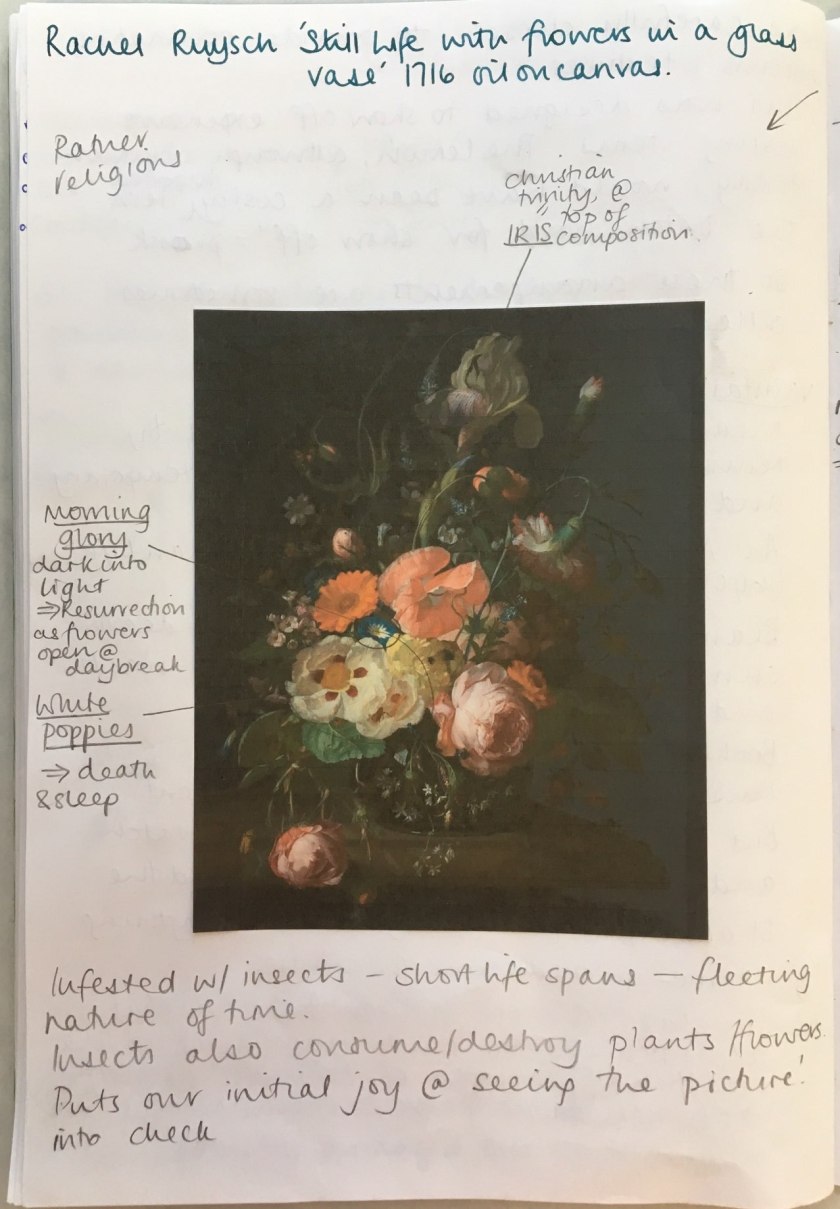
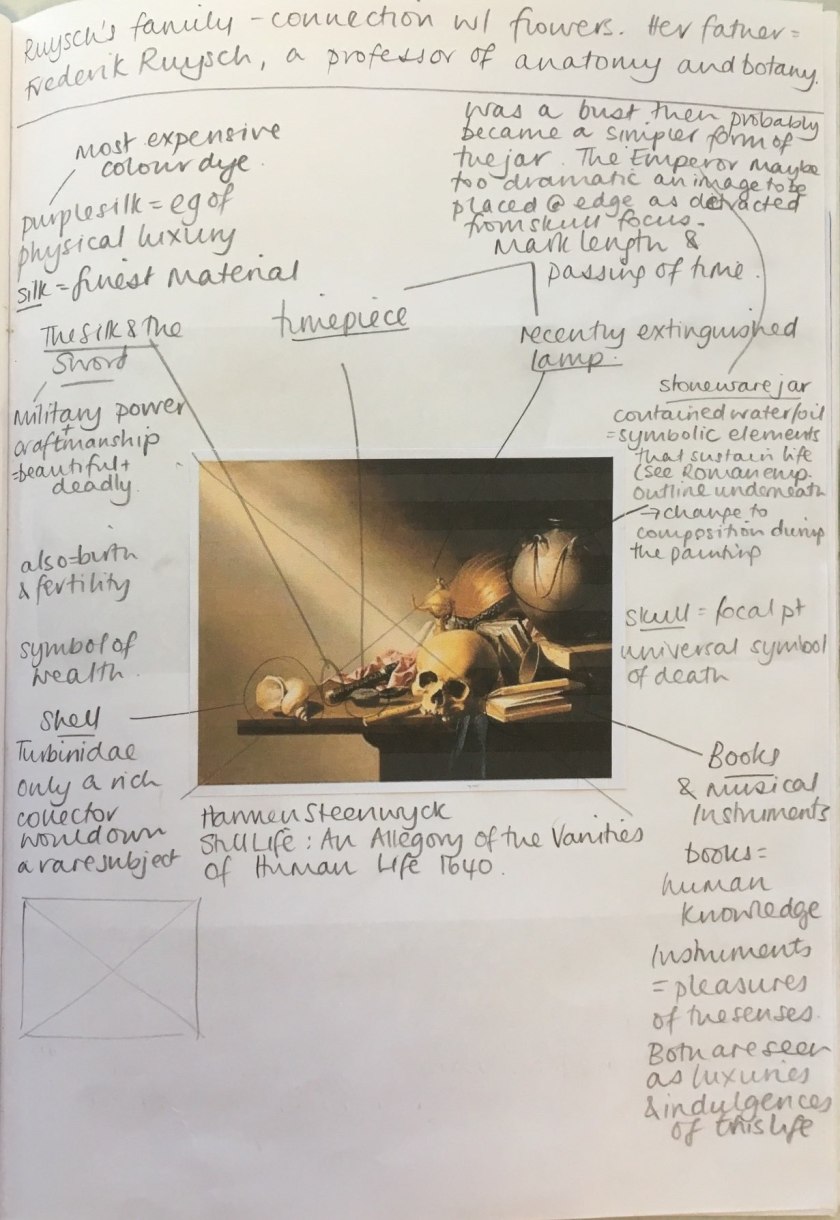
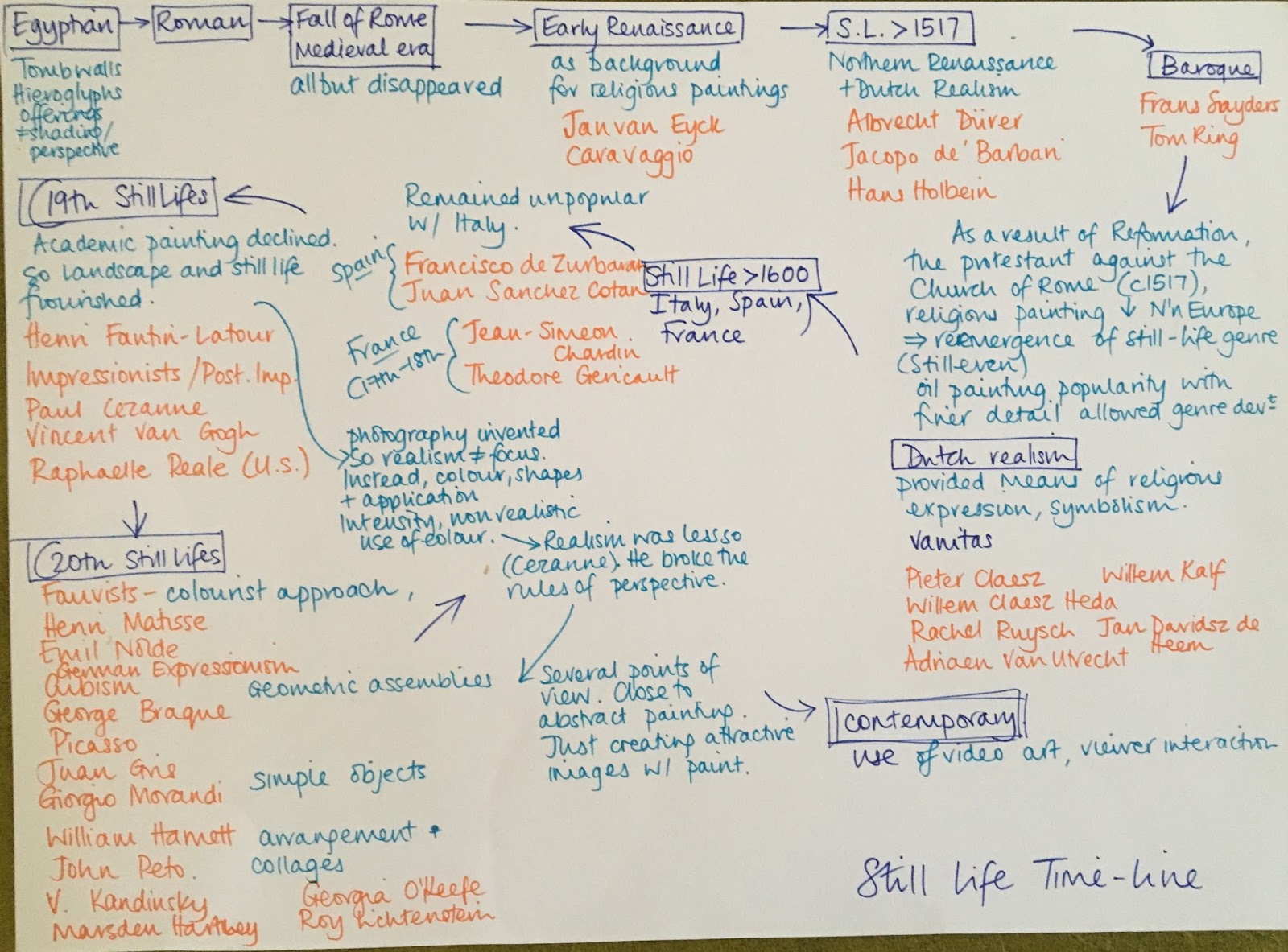
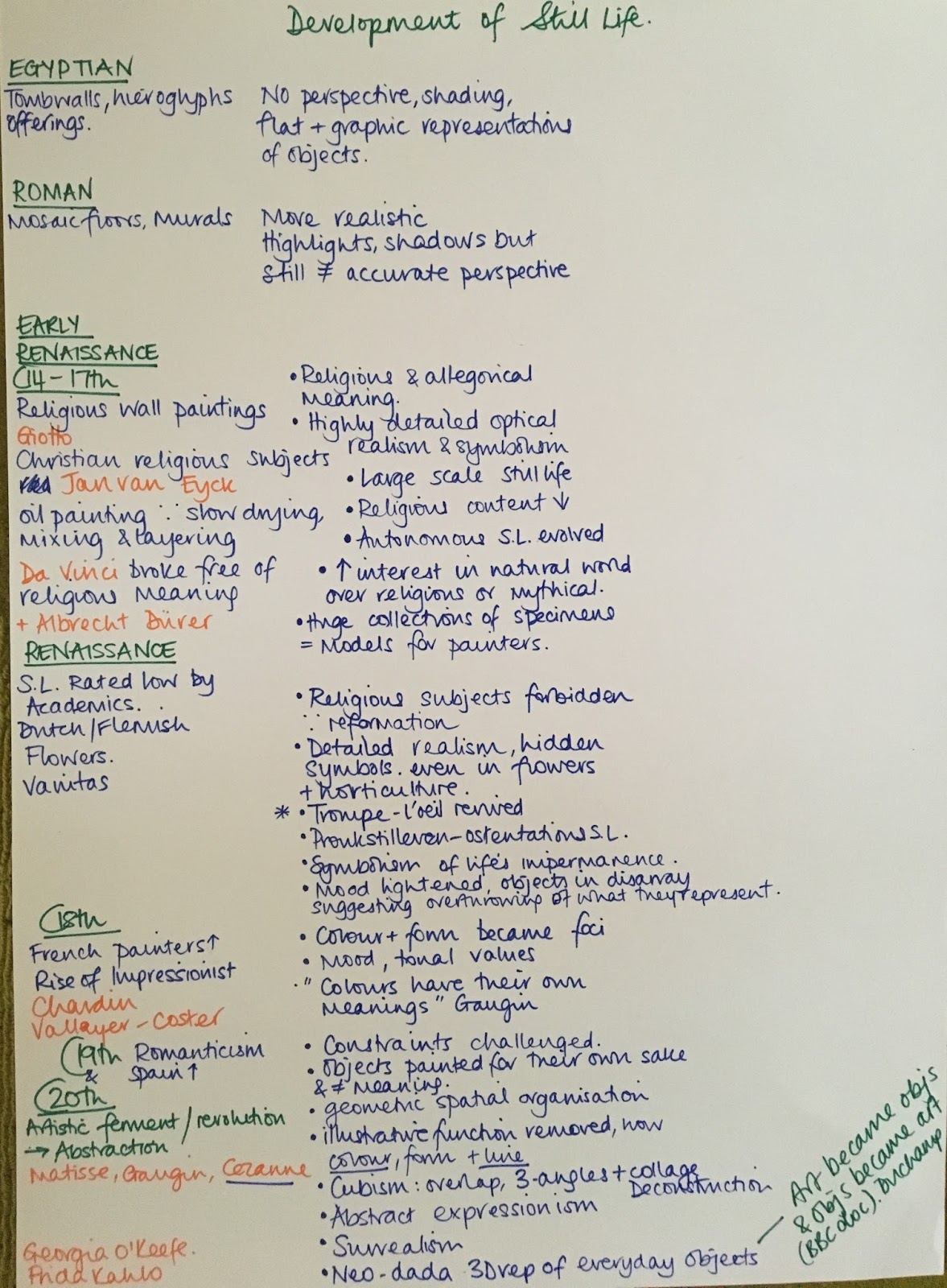
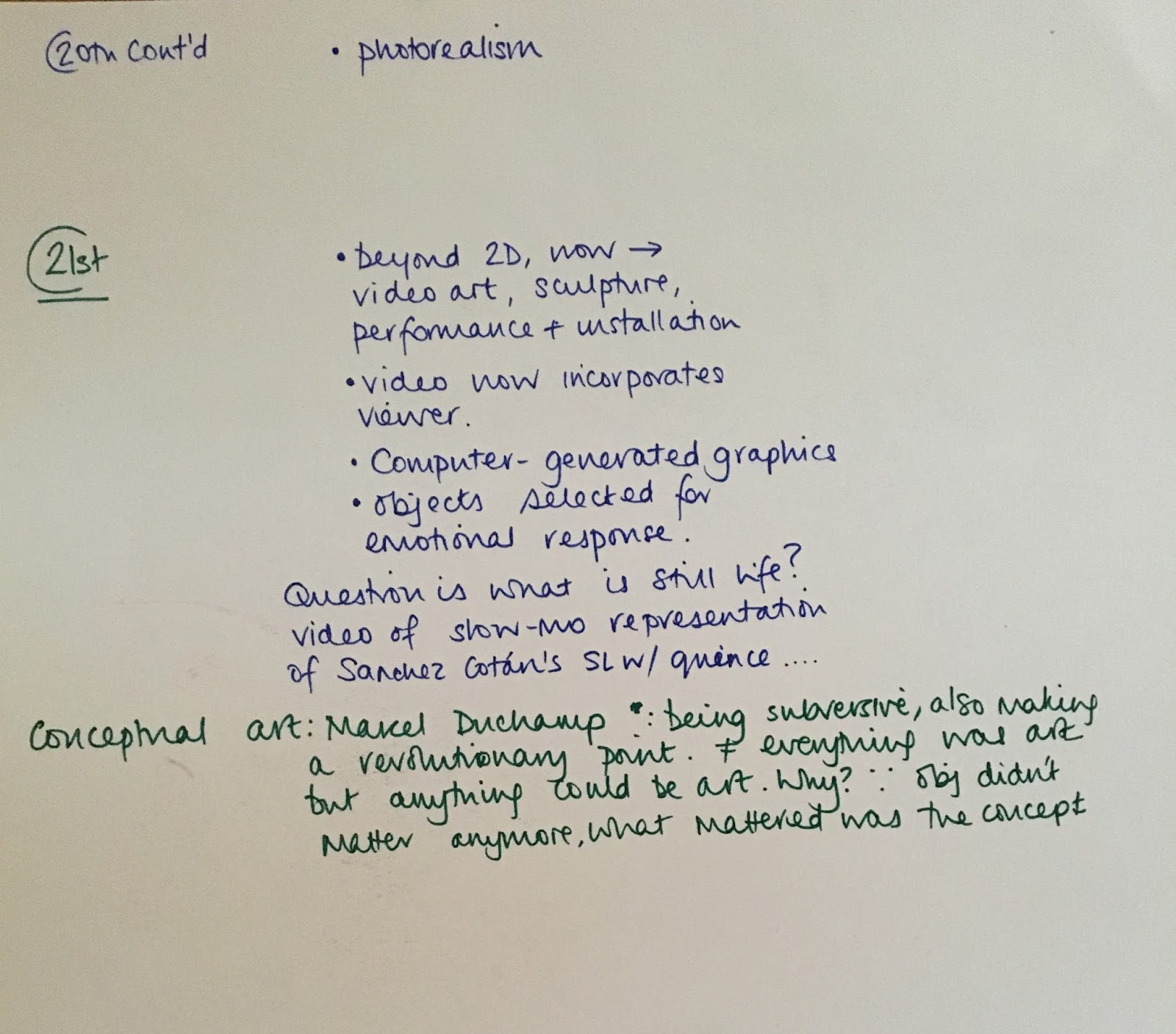
Research Point 2 – Consider the techniques of the 17th century Dutch still life and flower painters. Research a painting with iconic significance. What has been the development of still life through the following centuries including contemporary artists?

2019-03-10 14-04 page 92019-03-10 14-04 page 10

2019-03-10 14-04 page 11
Analysis of Rachel Ruysch’s ‘Still Life with flowers in a glass vase’ (1716). Oil on canvas.
2019-03-10 14-04 page 12
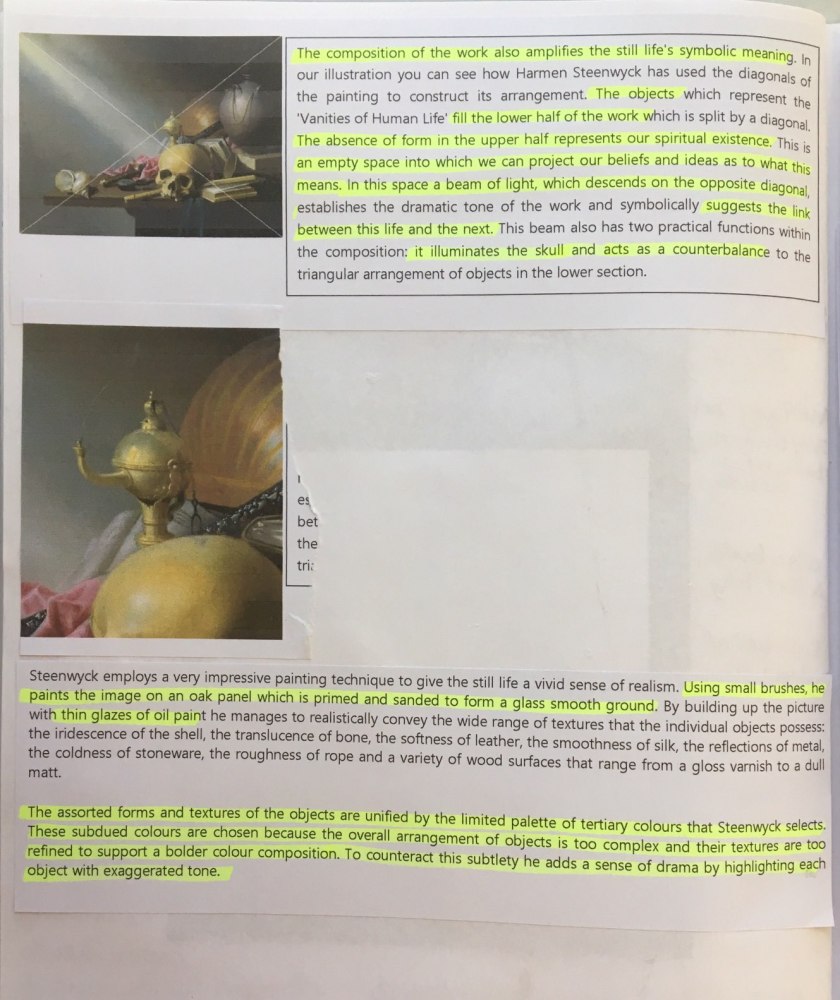
Analysis of Harmen Steenwyck’s ‘Still Life: An Allegoru of the Vanities of Human Life’ (1640)

2019-03-10 14-04 page 132019-03-10 14-04 page 142019-03-10 14-04 page 15


PART 2 Intimacy. Research Point.

Assignment 1 posted, now onto Part 2.

Starting with a research point on the still life genre. I wonder if this is better suited to Part 1 with its assignment in mind, but I guess it could fit anywhere. 

EDIT: Still life is running through this module so, fair enough!

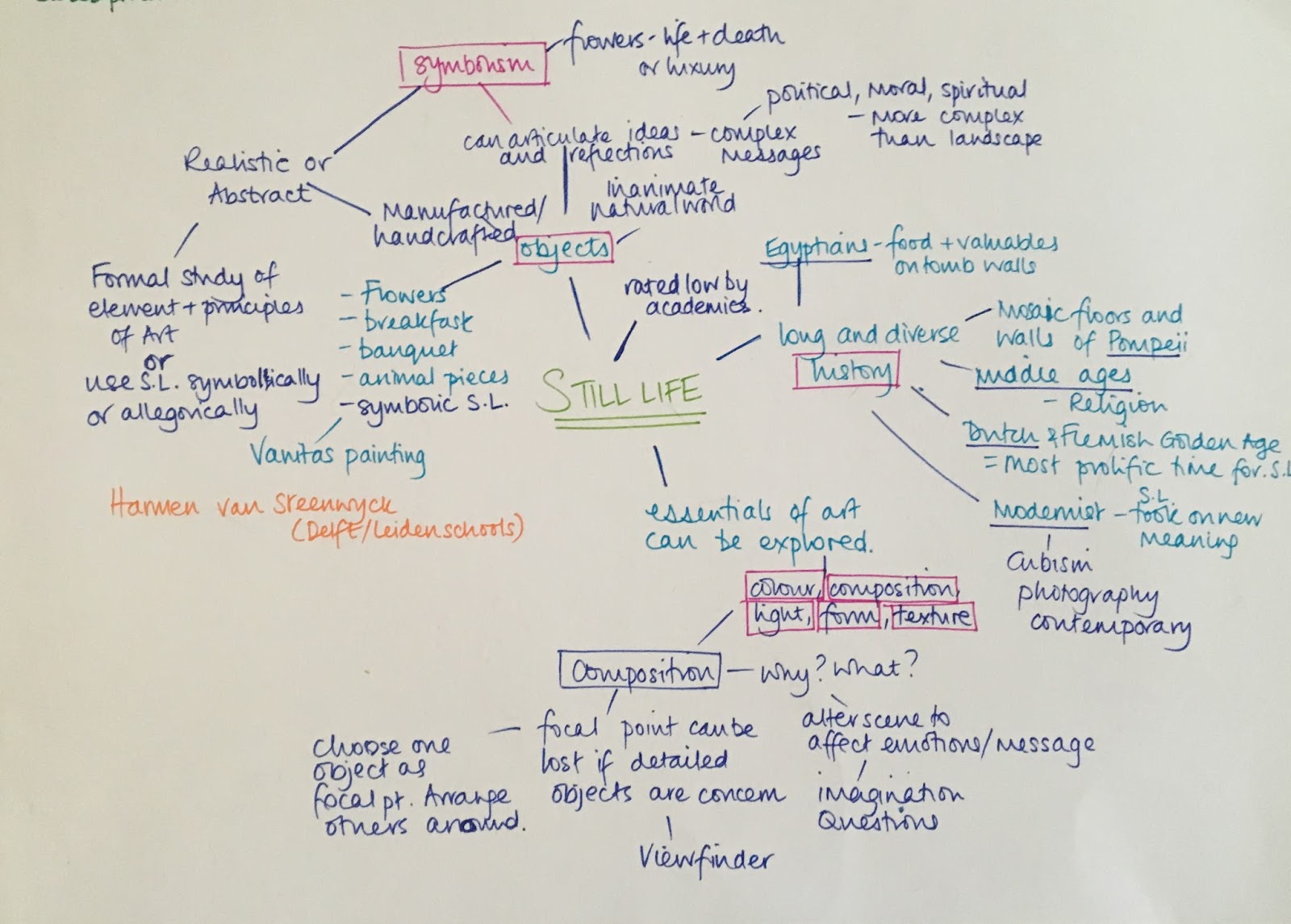
The History of the Still Life genre


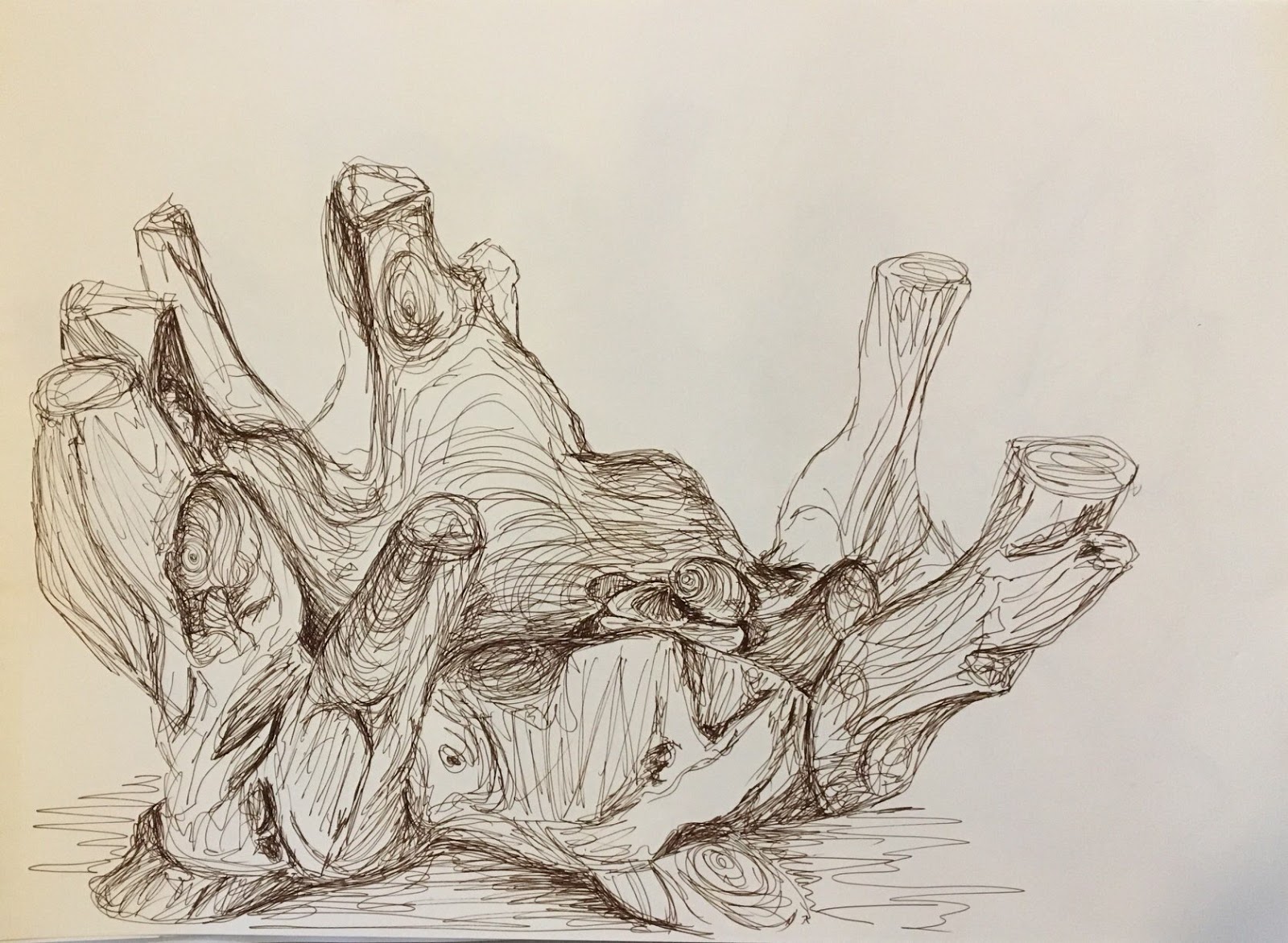
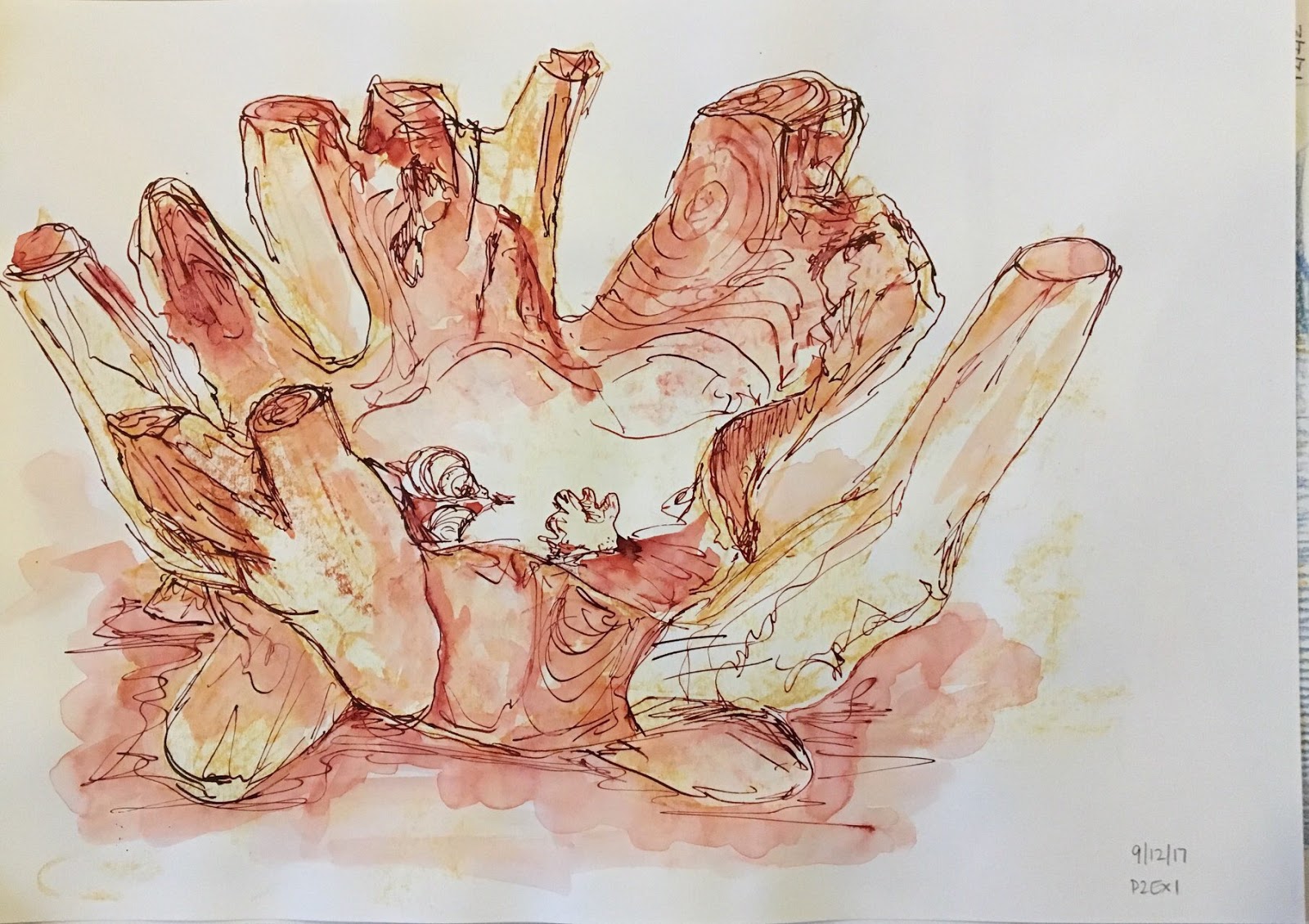
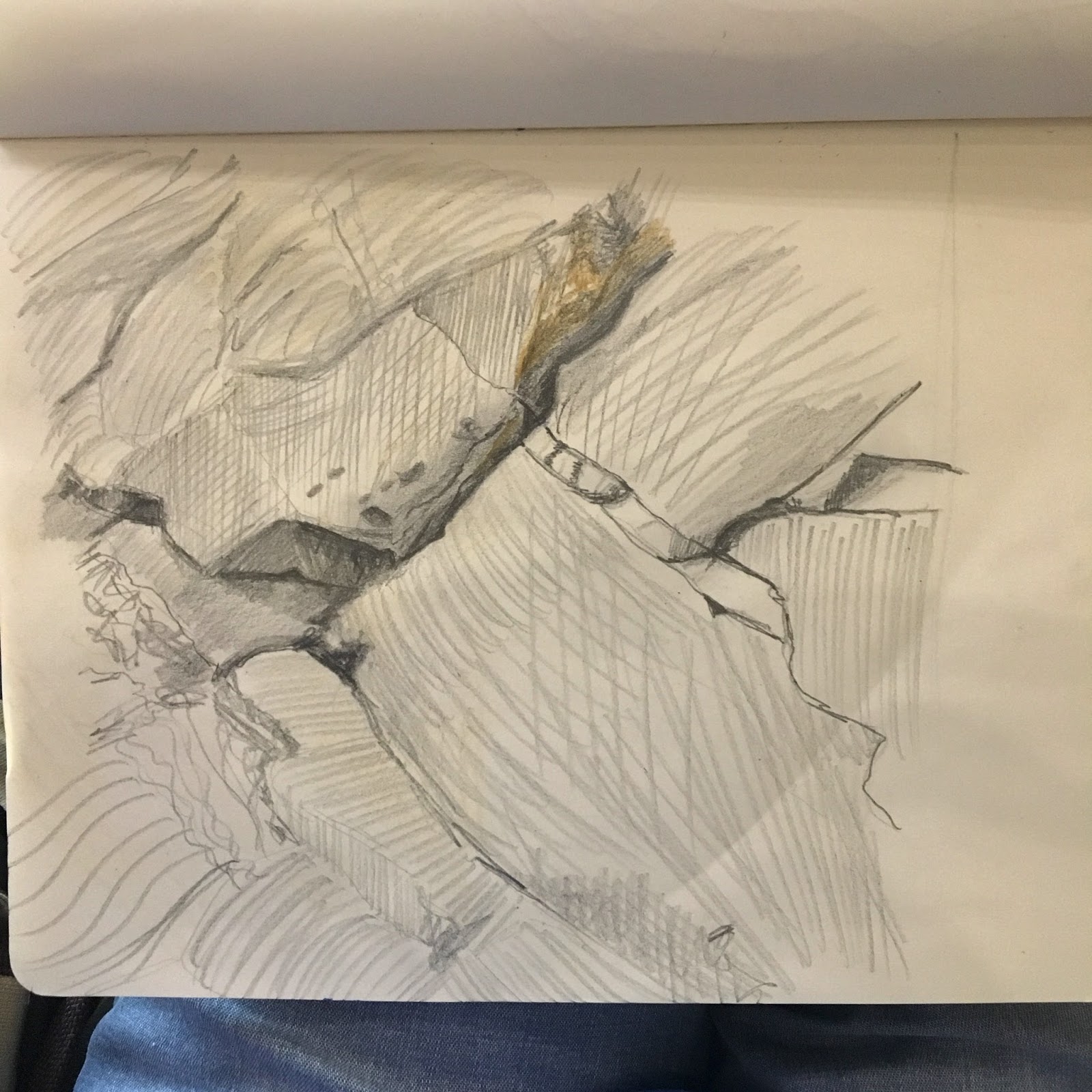
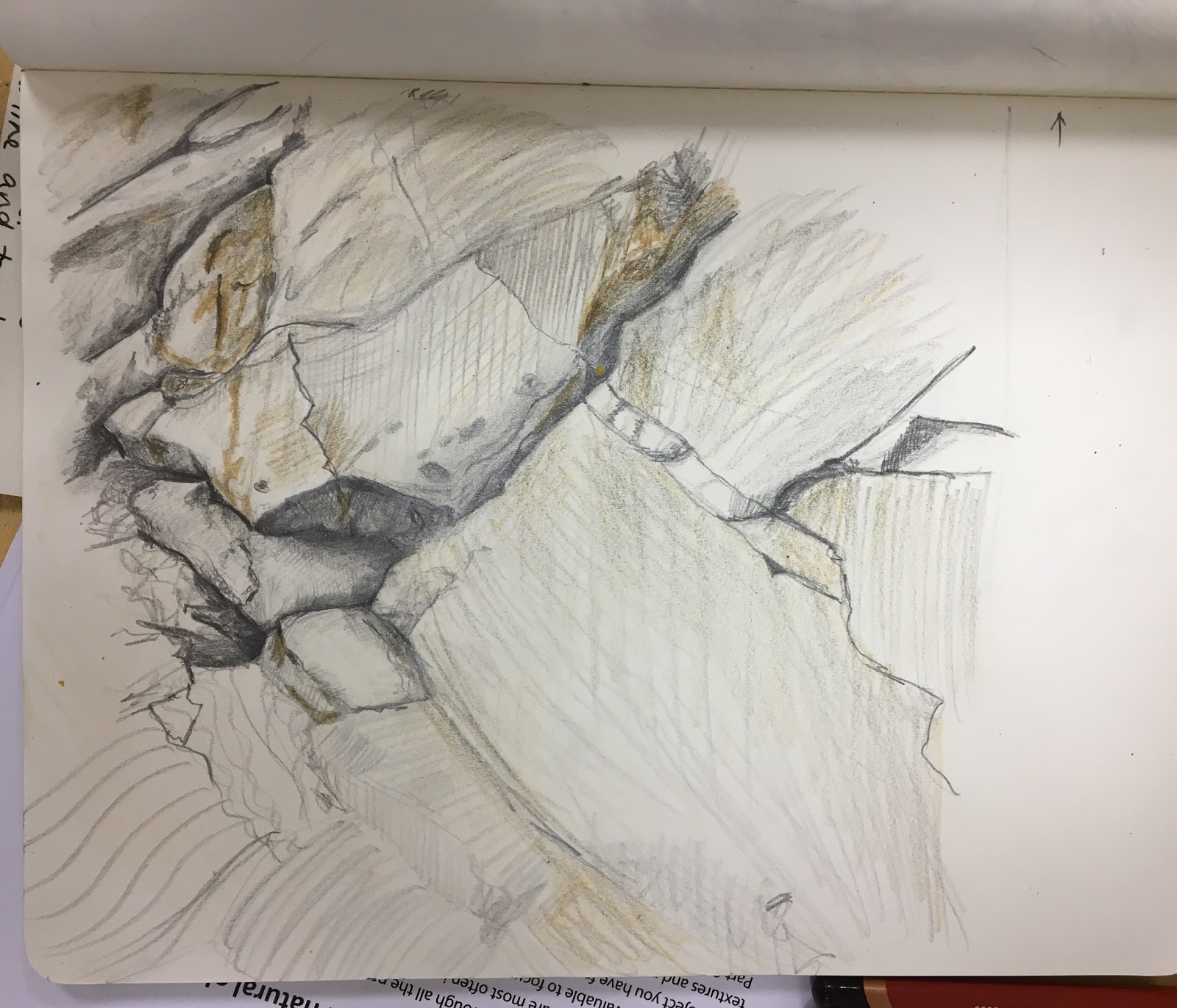
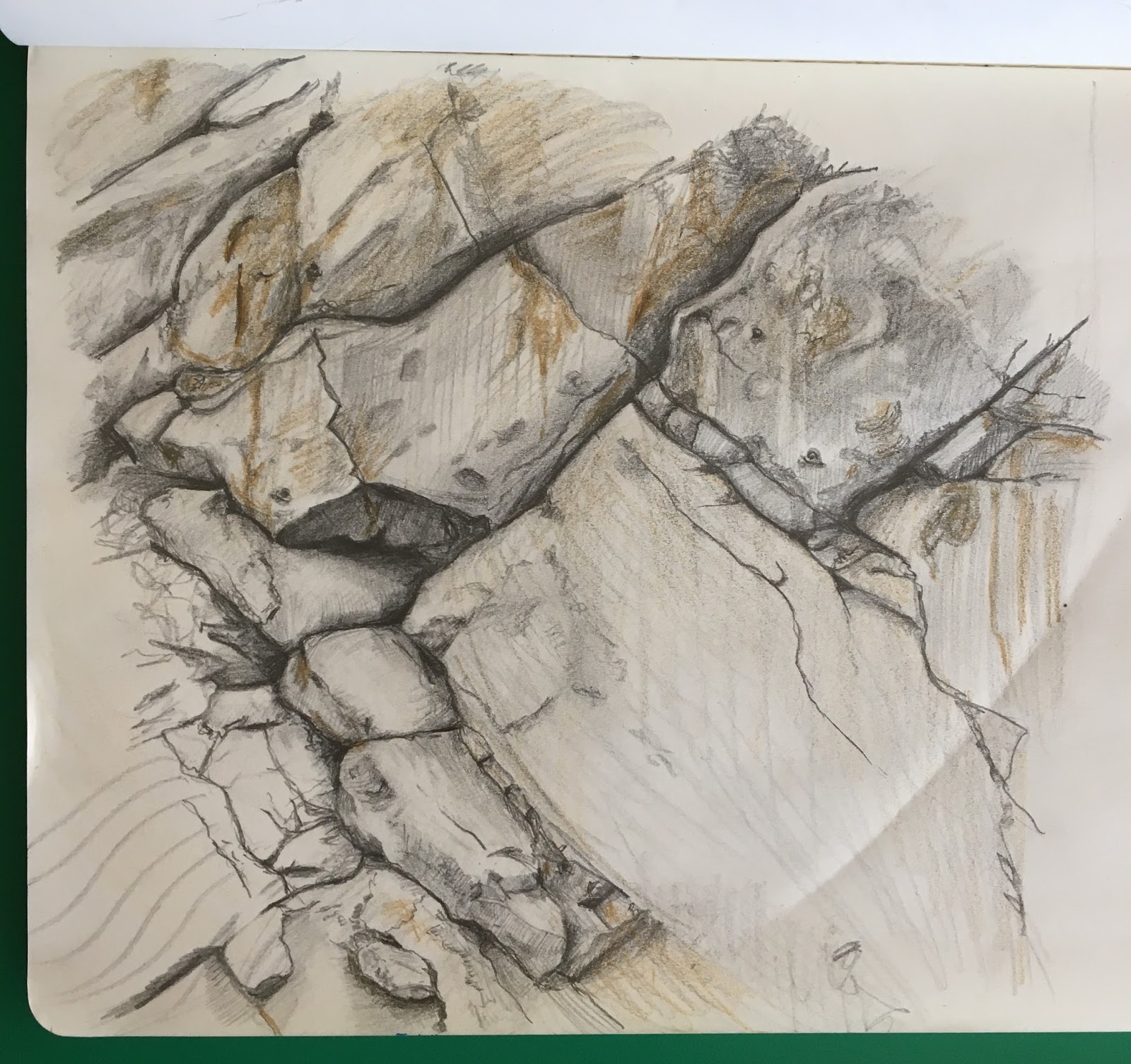
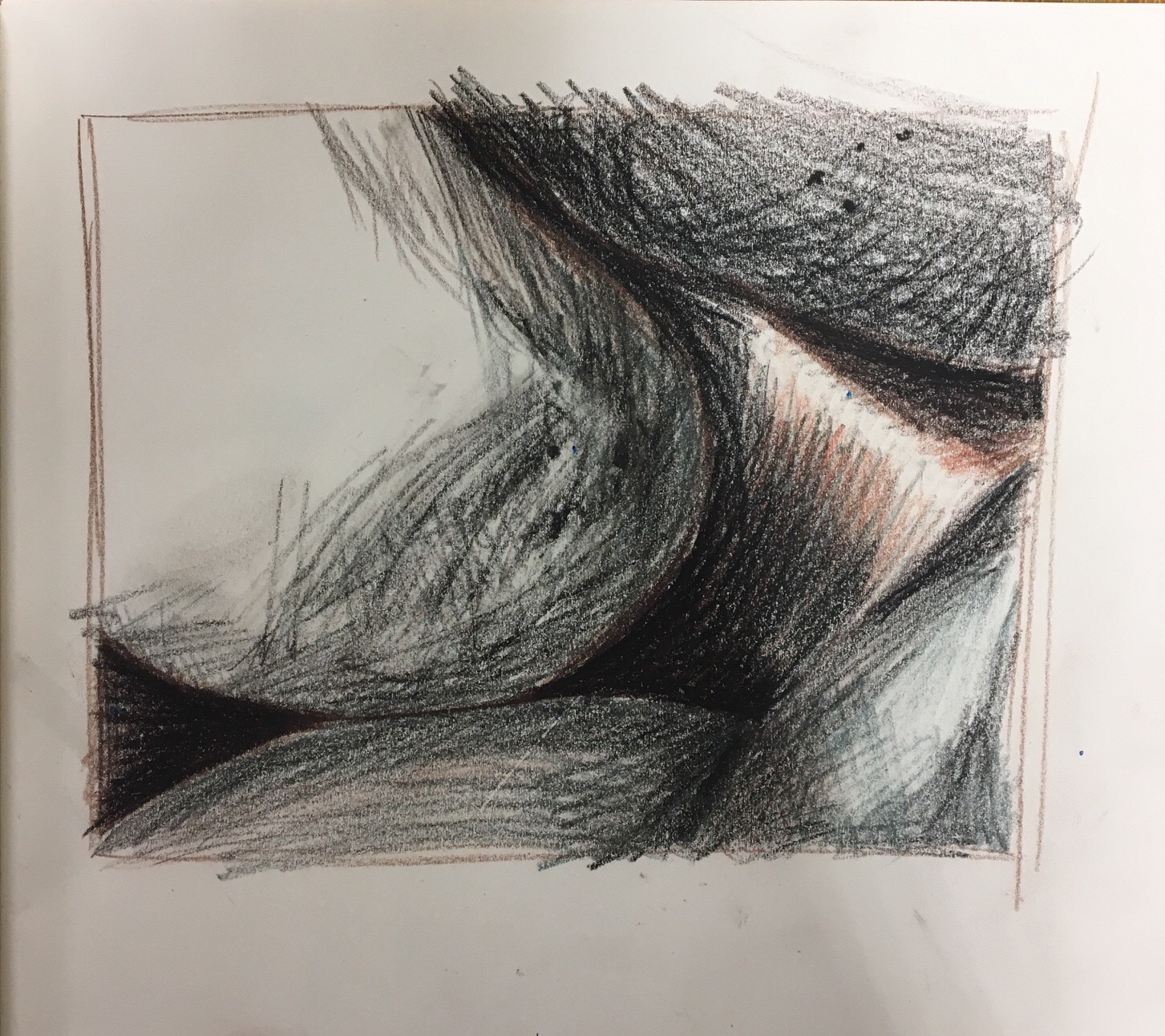
PART 2 P1 Ex 1: Detail and Tone

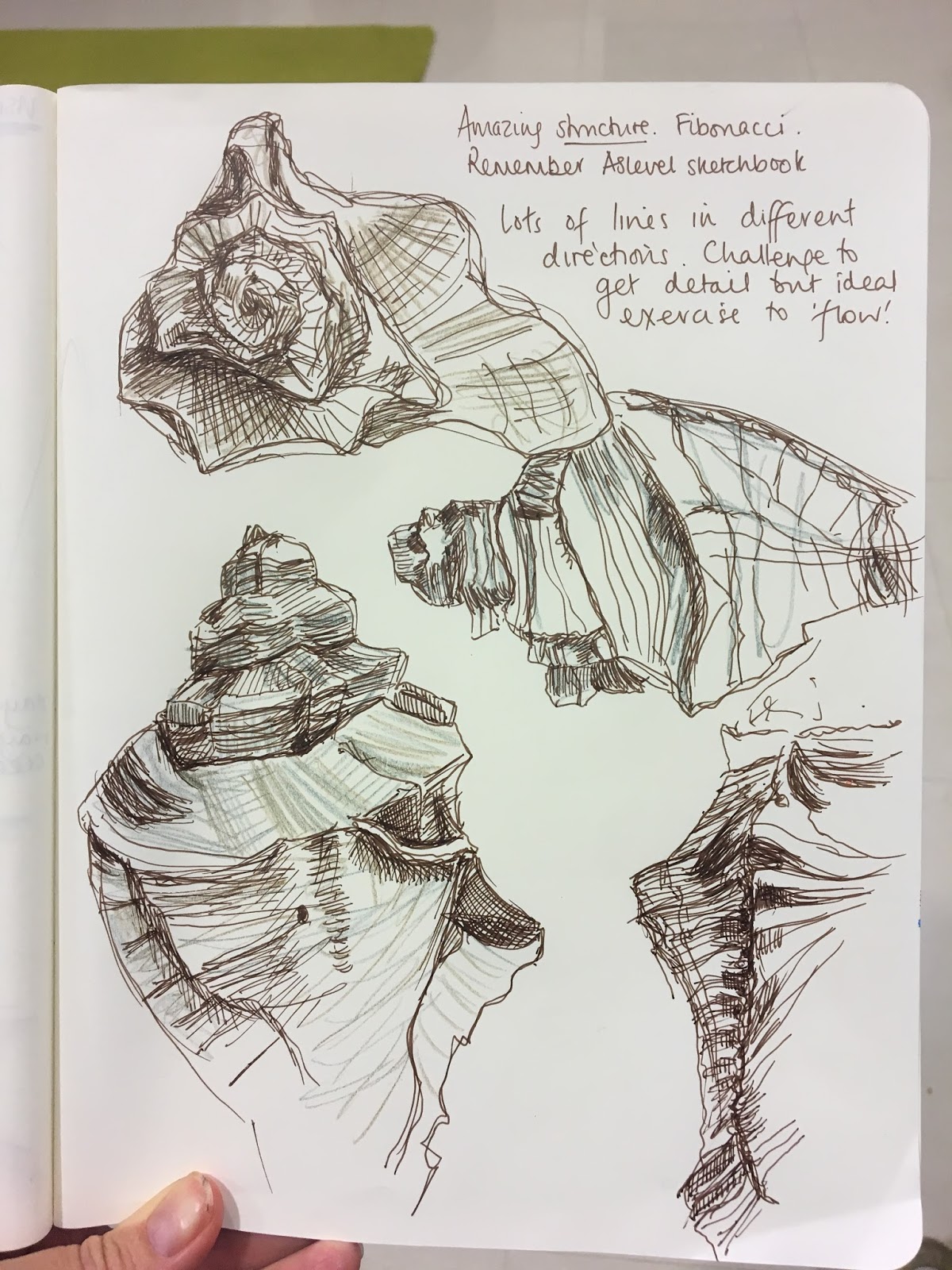
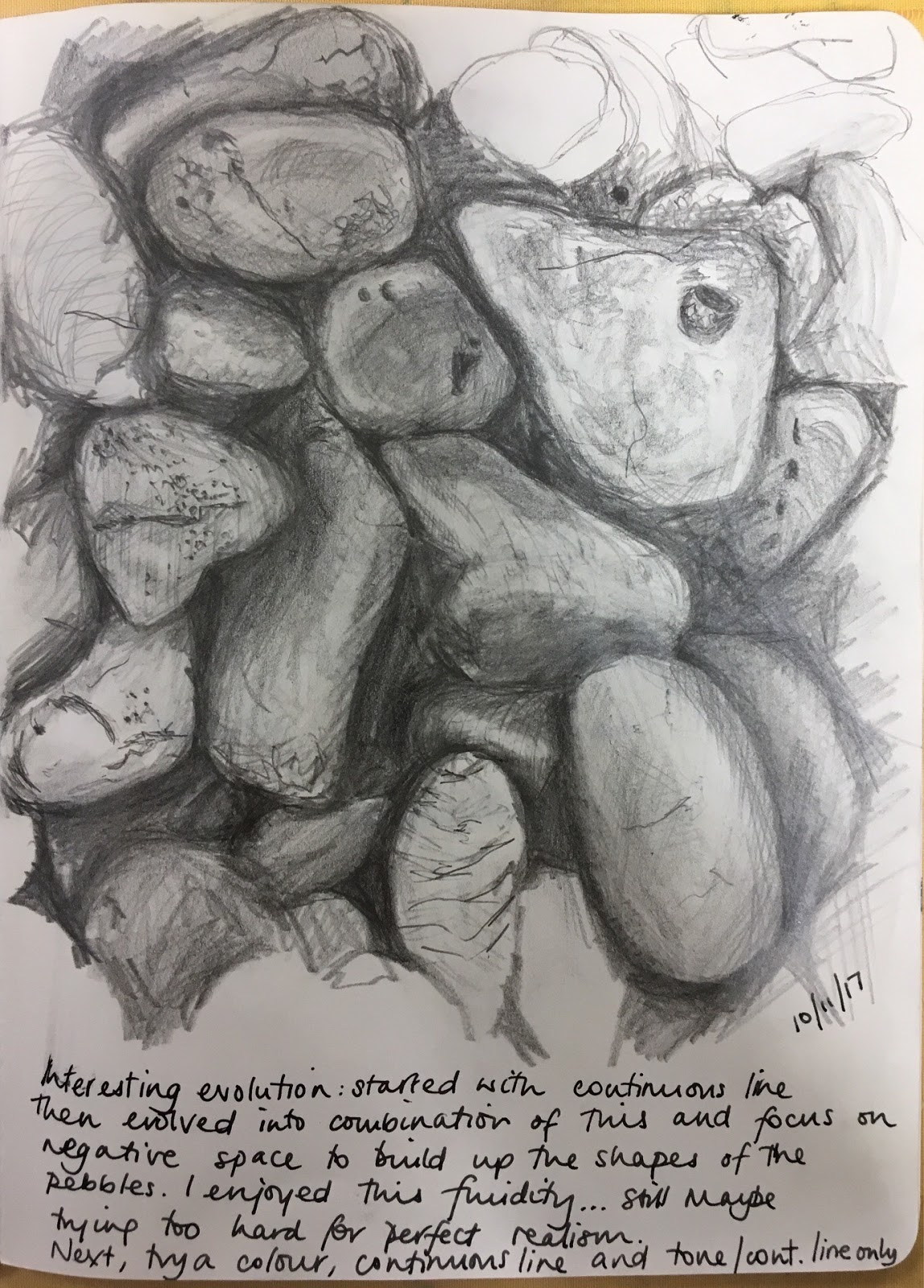
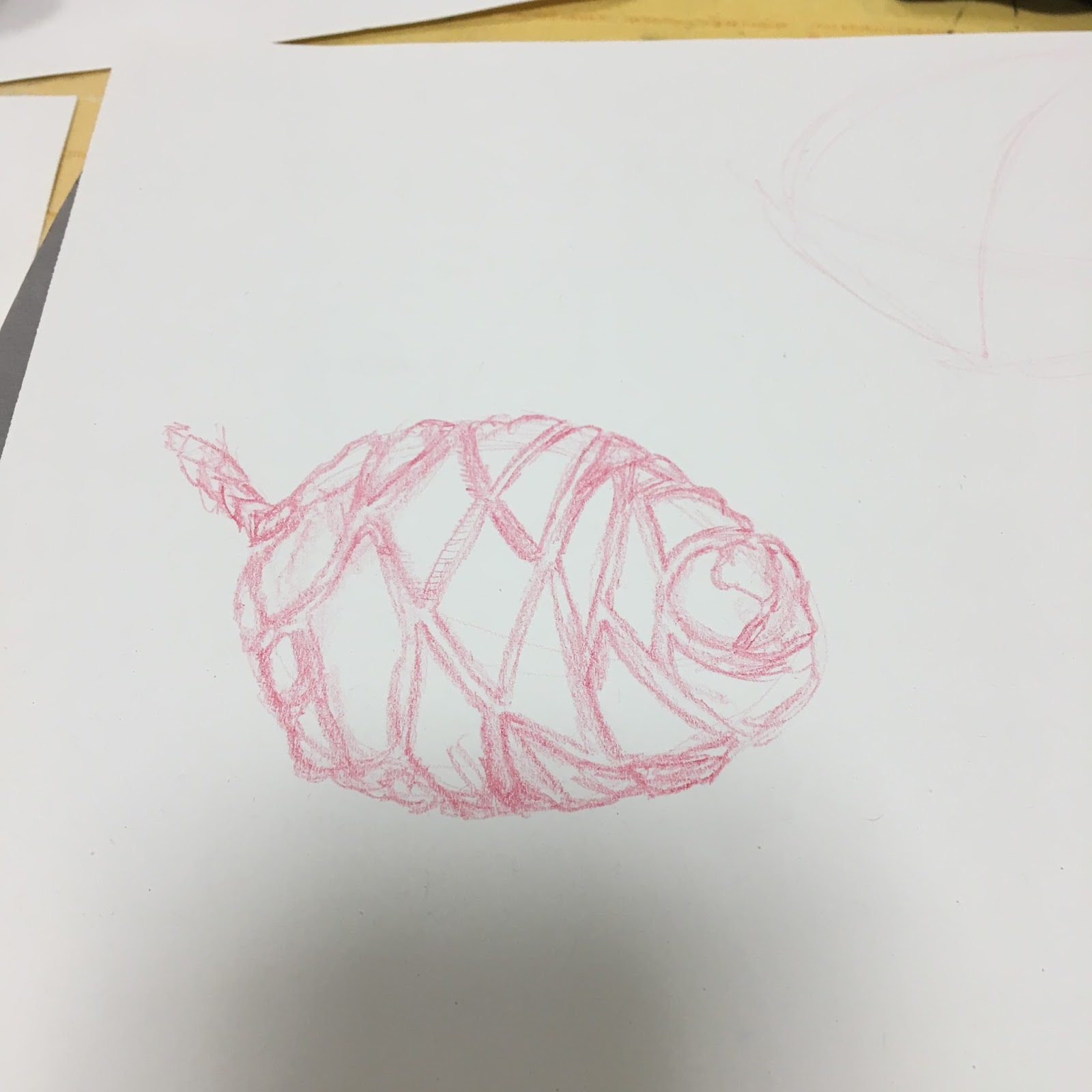
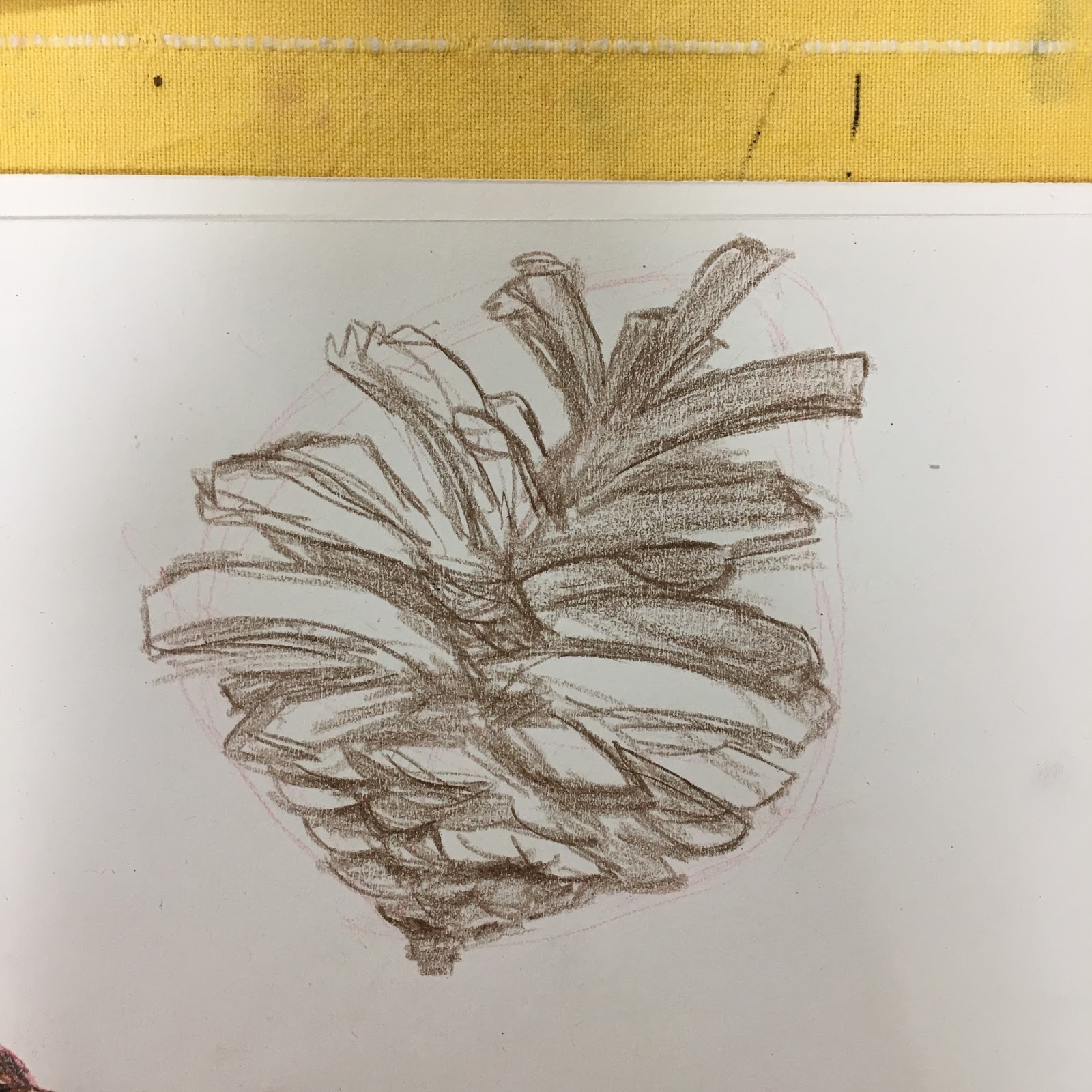
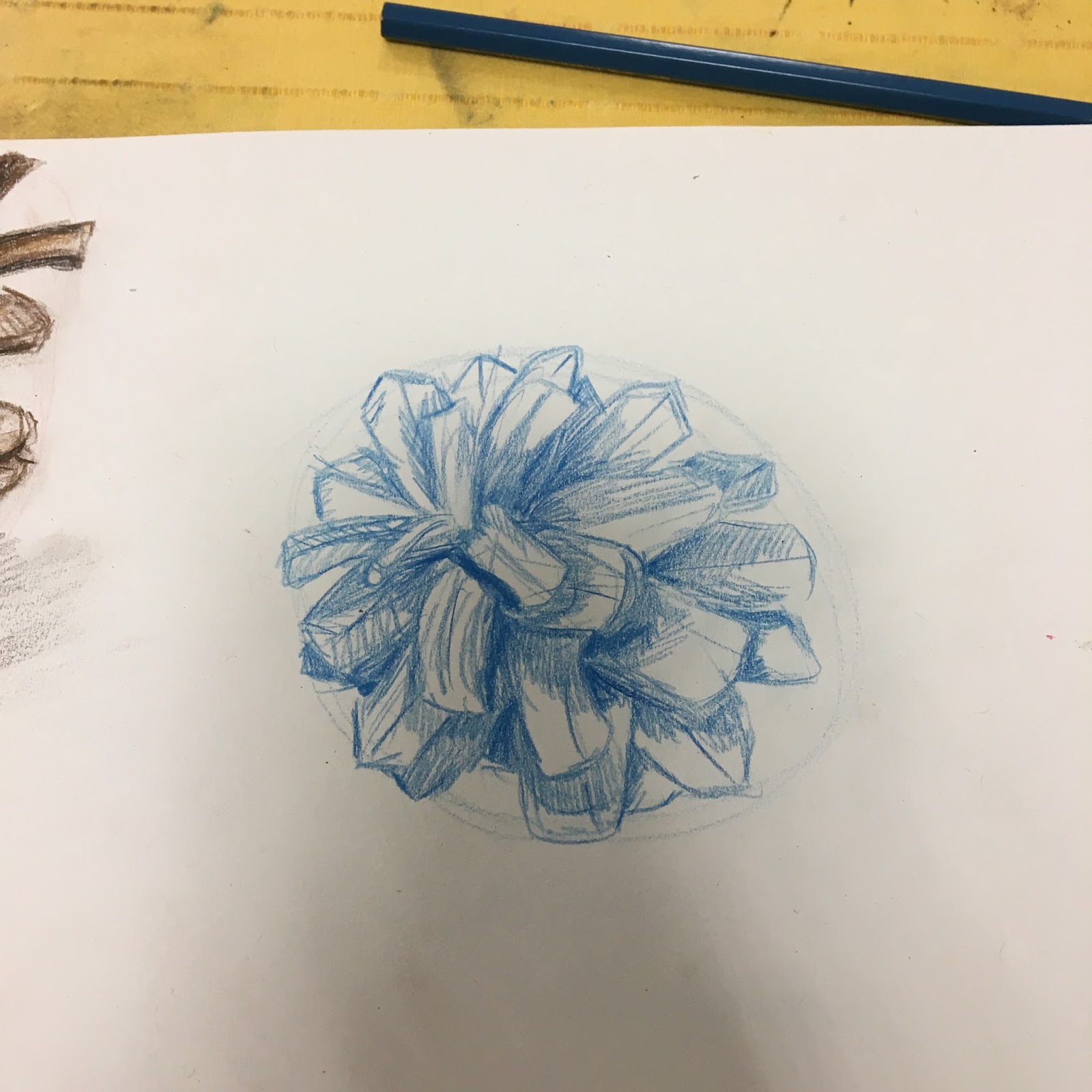
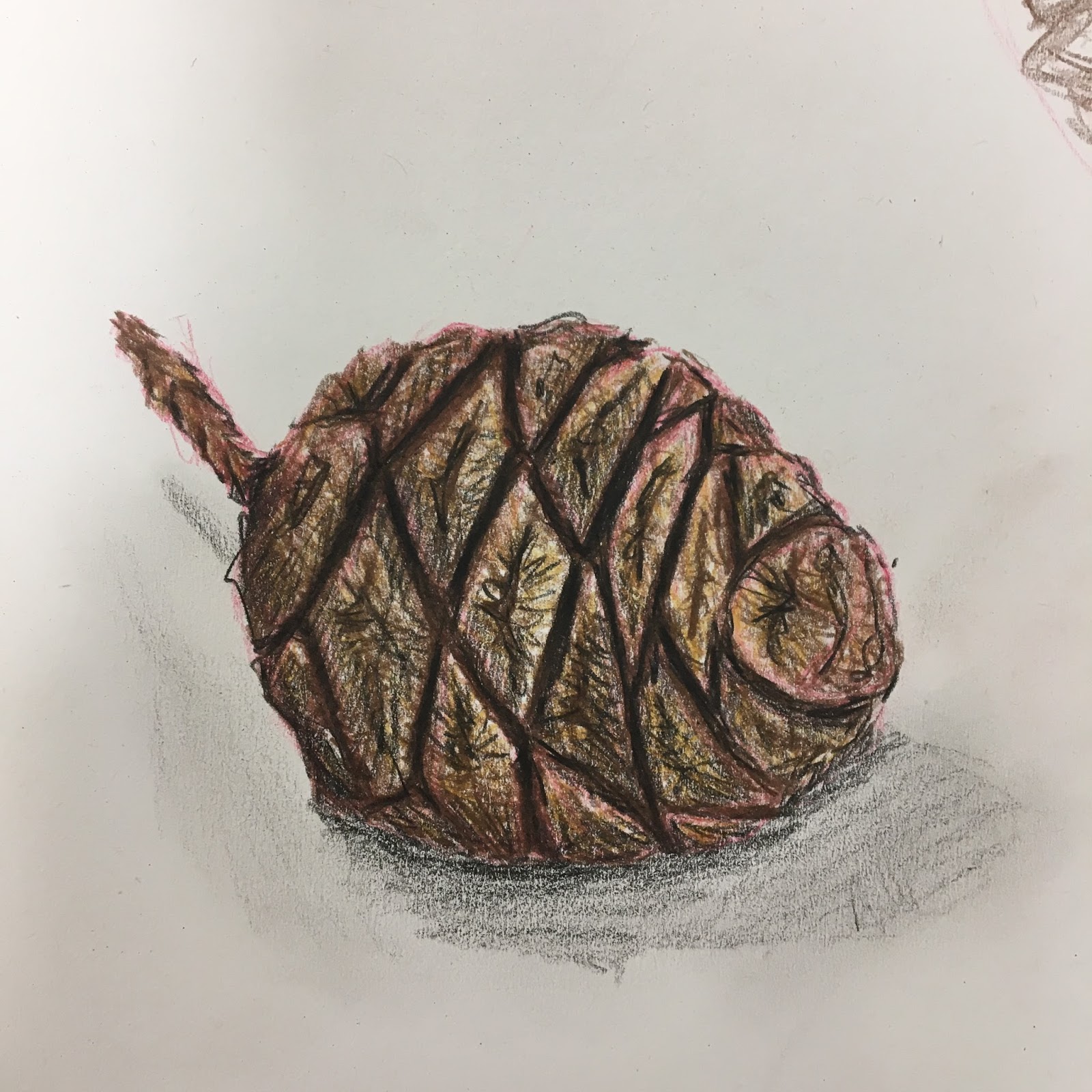
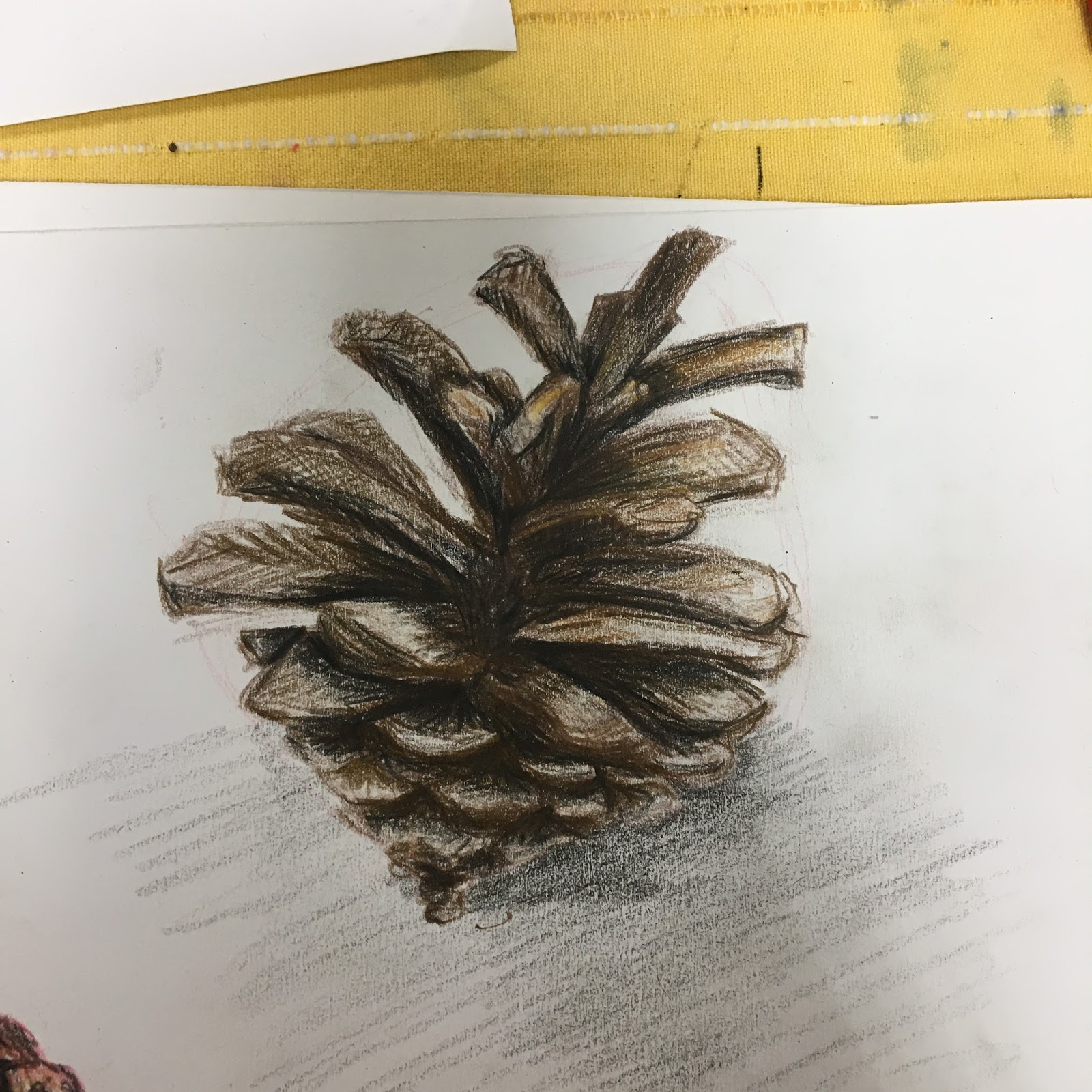
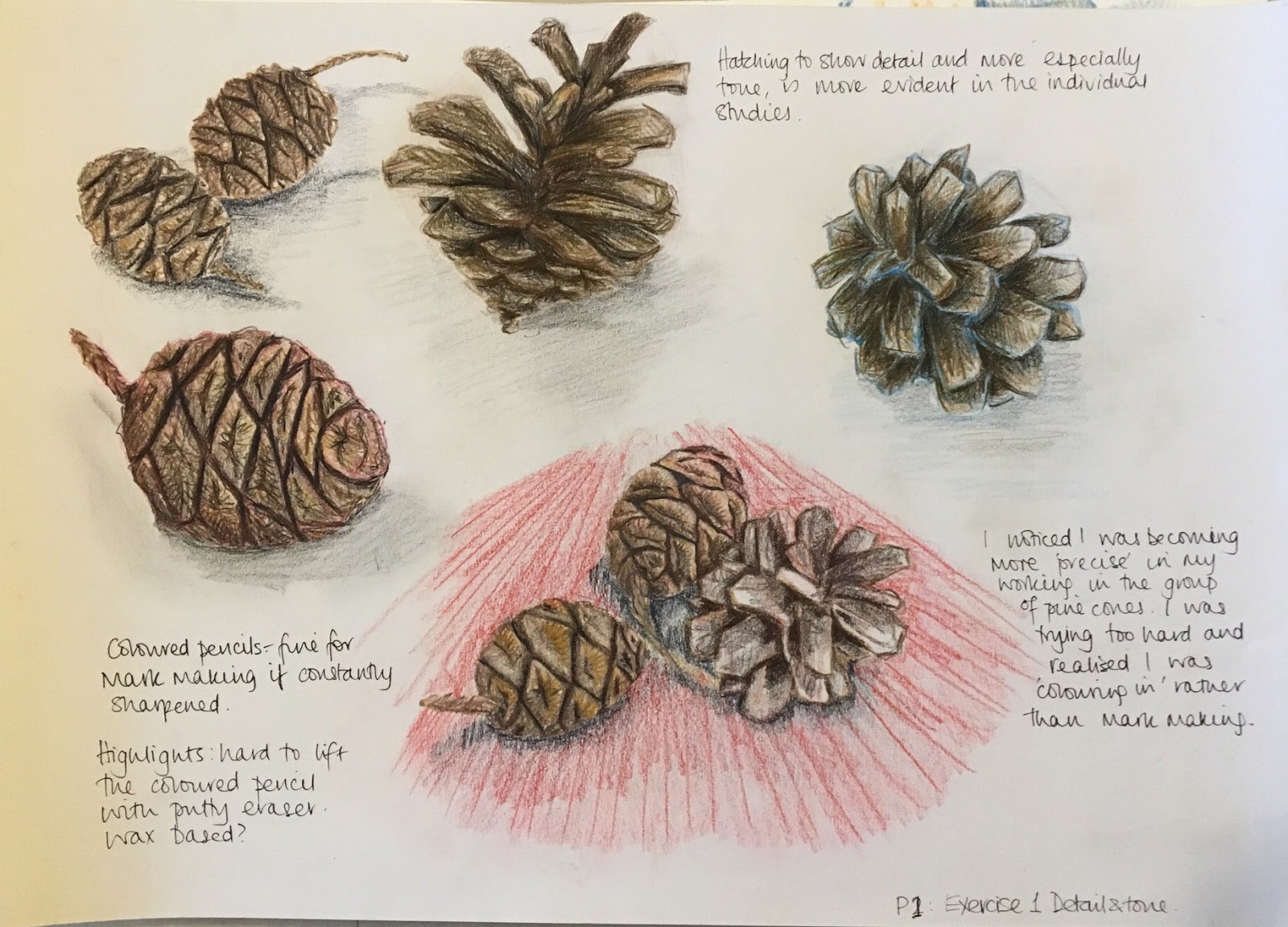
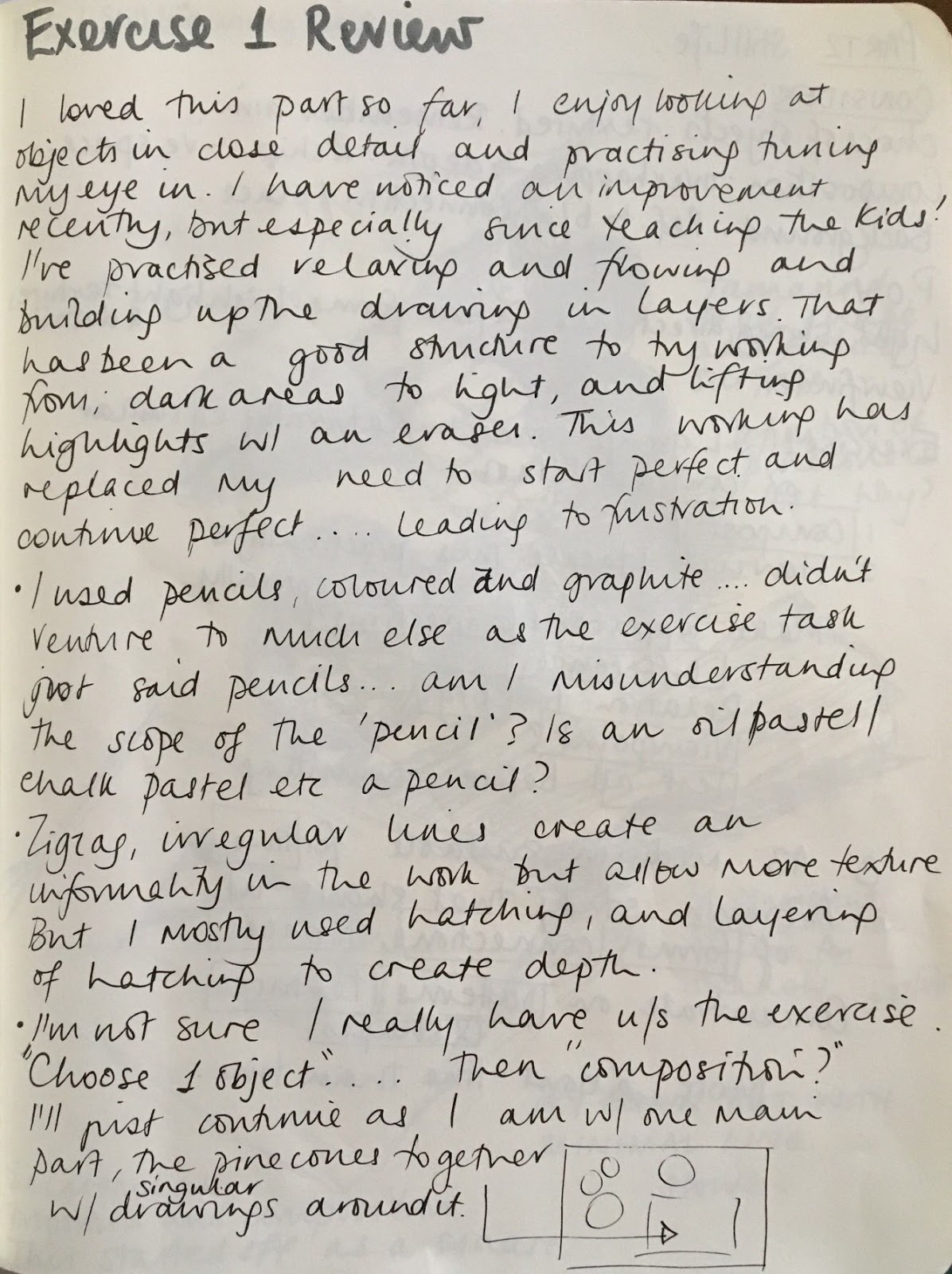
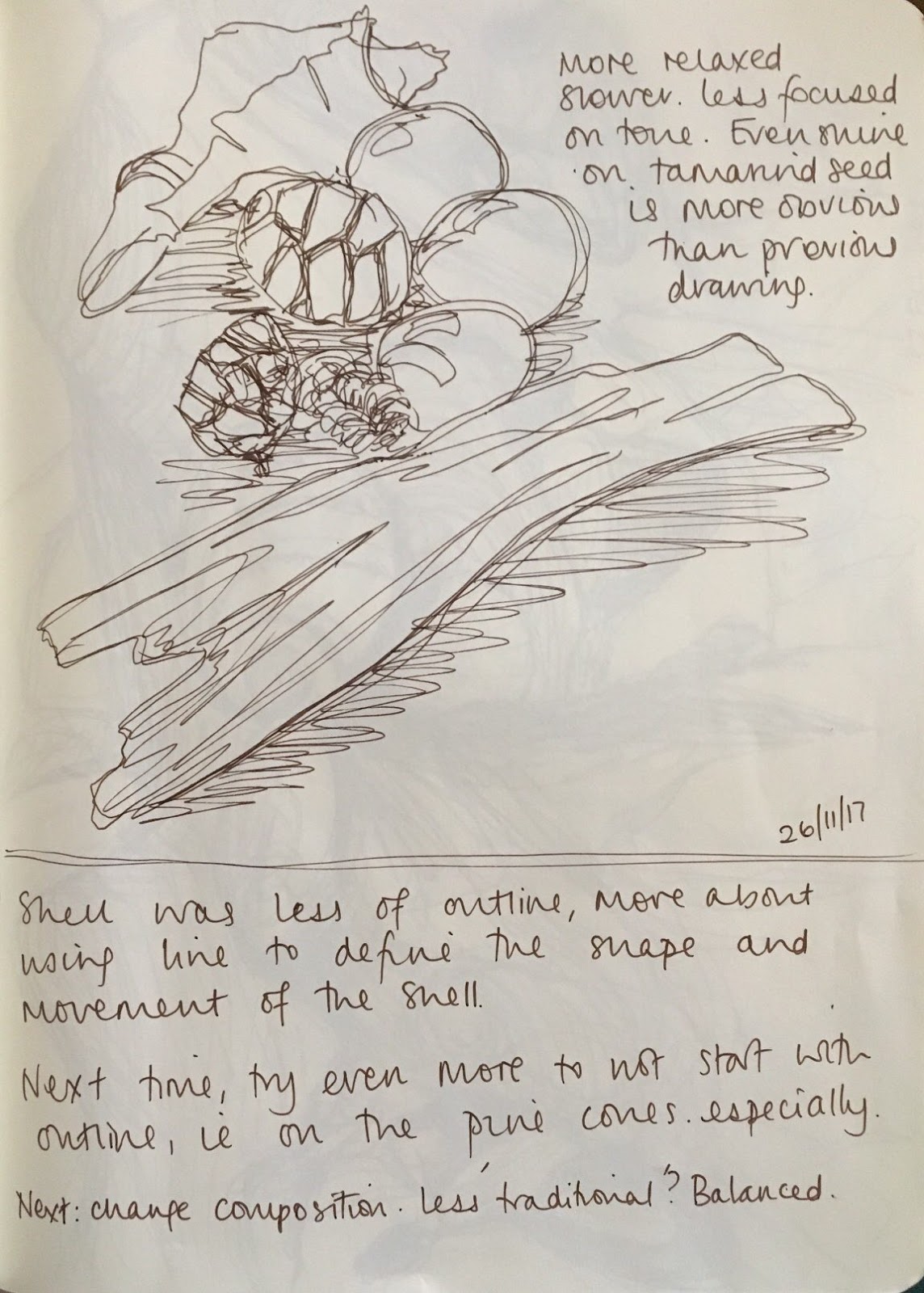
The fact that this part of the project is of natural objects has inspired me. Despite not really being naturally drawn to realistic drawing, I have enjoyed this as I can see improvements in my observation skills over time. And I just love looking at pattern and formations in nature.

In the past, I would build up the picture but it would be very flat at the end. I now realise that I was not being brave enough and creating additional layers. I feel that my drawing has been transformed through this layers of tone.

Design a site like this with WordPress.com
Get started